

BLOG
The creator and problem-solver in Damian Blumenkranc
How do you solve a problem like Damian Blumenkranc? The CEO of Creativa Videos loves solving problems and enjoys creating new concepts. Having a solution mind comes naturally to him.
How do you solve a problem like Damian Blumenkranc? The CEO of Creativa Videos loves solving problems and enjoys creating new concepts. Having a solution mind comes naturally to him.
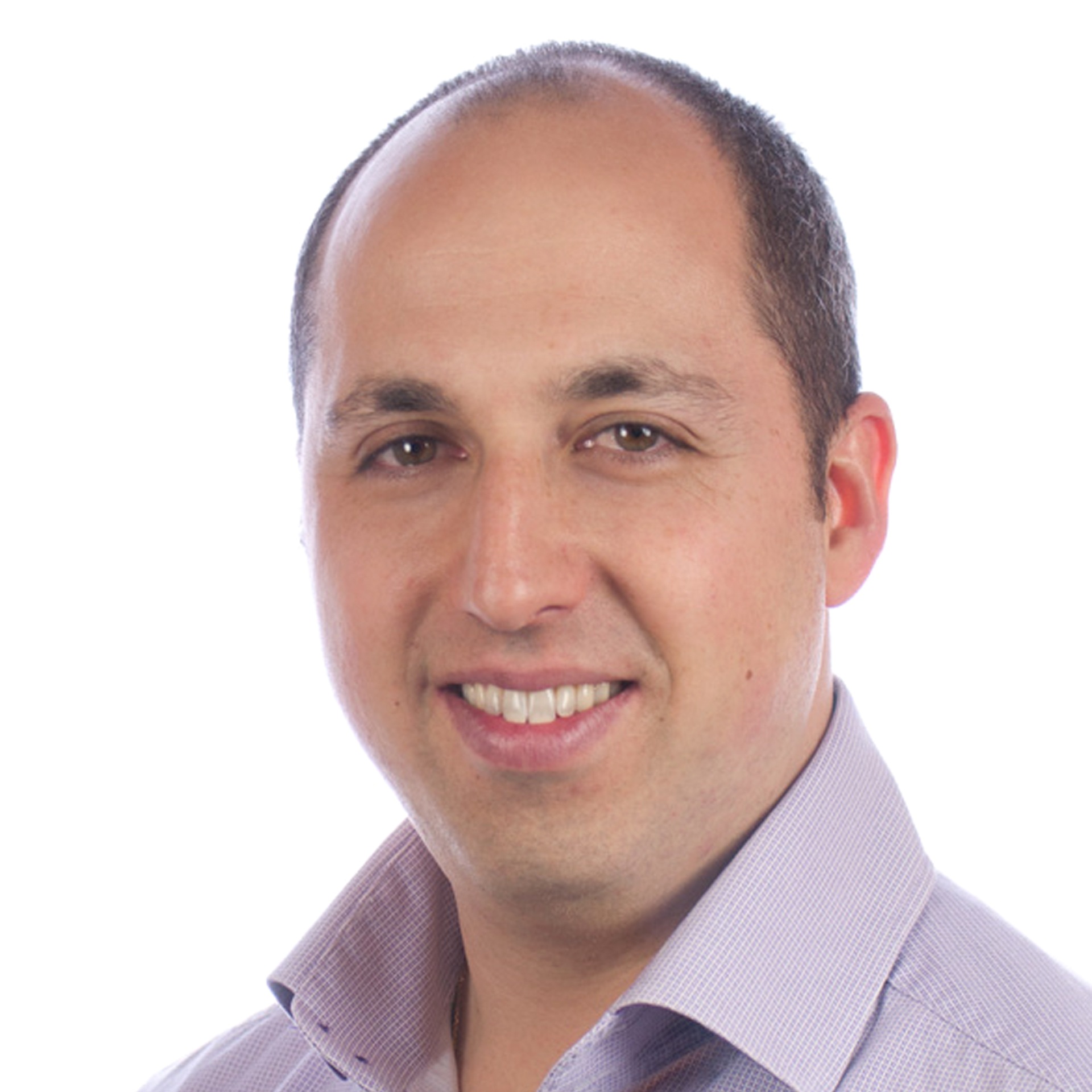
Since the age of 15 years old, he has built various businesses, from IT to several other industries, which he grew and then eventually sold. So, why did he retain a creative business out of all the ventures he has put up? “I'm a creator. I always need to do new things,” he simply quips.
Damian’s entrepreneurial journey started early on. In his teens, he has already put up a business venture that could be considered as a genuine business. That was in 1993 when he launched the first online shop in Argentina, selling computer parts to computer nets through an application called BBS, or bulletin board system, something that was prevalent before the explosion of the internet.
“That was probably my first really serious venture as an entrepreneur. From then on, I have always been looking for opportunities; building small businesses, running them and selling them,” he reminisces.
Although he has formal training on business, having a double degree on business and information technology (IT), he believes that his family background has a lot to do with his savvy when it comes to entrepreneurship. “I think most my acumen comes from the family. My father, being an entrepreneur, was always sharing, always getting us involved in the business, letting us know what happened, and letting us participate. He would tell us about the wins and the losses, as well as the problems and the good things that happened, and so on. And I learned. I learned that way,” recounts Damian.
Those learnings were the tools he brought with him when he came to Australia to study. As a student, his visa didn’t allow him to be employed by corporations, but he needed to survive. The only way for him to earn money in order to support himself was to create a business. “When I came to Australia, I started my own business and IT support which I ran for seven years during that time. I also started a pilates importing business, the first voice over IP integrator in Melbourne, and then later, a hair removal business as well. In time, we grew them, including a couple of online shops. We grew them, we made them profitable, and we sold them one by one,” he narrates. Damian now oversees Creativa Videos, which he co-founded with Miguel Donnenfeld, also his partner in his other businesses.
For someone who had the confidence to build a business at an early age, it was expected that he would survive in a foreign country. Which he eventually did, but it wasn’t an easy one, given that he had to plant those businesses in a land unknown to him. “Imagine parachuting into a new place where you know no one, where you have no connections. It is a place where everyone knows everyone because it's a smaller city than what you are used to. It's not your language, it's not your origin, it’s not the same culture as yours. So, it's always been a challenge – trying to network, trying to understand. What I did, I read a lot of books, like everything, because everything was new from tax legislation to mannerisms to language to pricing to negotiation methods. Everything was different,” he notes, describing those early days of starting his first venture in Australia.
The challenges didn’t stop there. The unusual business terrain of an unfamiliar soil was not the only stumbling block Damian had to confront as he went on building his own enterprises. Whilst nothing might have scared a 15-year old boy because he had nothing to lose for taking risks, it was no longer the same as Damian matured in age and experience. He recognised his vulnerability as he found further in his entrepreneurial journey that revenue and cash flow, which are significant components in sustaining a venture, always worried him. Since he bootstrapped all his businesses, which were typically self-funded, finances for capital were never in abundance. For him, generating not enough revenue is equivalent to failure, and that scared him.
Navigating through an unknown landscape with limited resources, it was inevitable for Damian to commit some gaffes along the way. One particular miscalculation he did was hiring the wrong people. “We were hiring too fast and firing too slow,” he interjects. Nonetheless, he has coped and managed to correct that mistake as he needed to, especially that his company is people-intensive; thus, having the right persons in the team is crucial to the success of their projects. Otherwise, they just have to make that important decision of letting go of the wrong people when things don’t work out fine. “When it happens, we have conversations with them. If we don't believe it is going to work, then we end it.”
Others may think that being a business owner gives one all the power and freedom in the world. “But that's not particularly true,” he corrects. Damian explains that being a business leader, there are a lot of responsibilities to attend to, whether to the staff or to clients or to partners. “The result is generally attached to what you do. Because you're attached to the business, you cannot do whatever you want. When it comes to the freedom as a business owner, you still have a lot of concerns that you have to work around with. You're also the one who sets examples and creates a culture because whatever you are doing, you can expect people to follow it as well. So, if you don't want them to do (something) that is not good for the business, then you shouldn't do it either.”
What others don’t see are the impediments a business owner has to deal with in order to keep the business going and make it grow. Some of these drawbacks that Damian has encountered he enumerates, “A big deal didn't come through, an investor said no, a letter of offer got rejected, staff that has not been committed as we like to… There were always setbacks. But I can't recall any massive disappointments.”
That’s because he chooses not to dwell on the undesirable things. His actions are guided by his business philosophies and work ethics of doing the right things, doing what he says he’s going to do, and honouring his mistakes by admitting when he makes one. “I always try to do the right thing. I find win-win scenarios for everyone and I make an effort to understand everyone else's point of view. Then, I come up with a solution that is great for everyone,” the creative problem-solver explains. “Sometimes, even if they take advantage of you. It's not worth it, it's not for me. It is better to focus on the future and not on the past,” he asserts.
The setbacks, the disappointments, and the challenges. They are obstacles along Damian’s path. Yet, he doesn’t allow these hindrances to put extra weight on his shoulder. He prefers to look at what’s ahead of him and focuses on it. He shares this piece of wisdom that aspiring entrepreneurs can apply in their respective experiences, “You must have a very clear vision of where are you going because that guides everyone else on the journey.”
Not only that. While having a goal is vital at the very beginning of everyone’s entrepreneurial track, it takes more than that to be able to carry on with the entrepreneurial voyage. “Start by listening. That's the one thing everyone should do. Start listening to clients, to markets and to people; that's how you can align yourself with them to understand them,” Damian advises.
As he went along, he picked more lessons that equipped him to be a better entrepreneur. These lessons also enabled him to evaluate his actions and mistakes and see where he could still improve on. If he could do things all over again, Damian thoughtfully thinks, “I will only consider businesses with a high leverage on my time. Businesses that can be propelled without having to take much of my time.”
Time is something that Damian puts a premium on and he ensures he manages his time efficiently. “Well, I have a very strict, very specific way of managing my calendar. It’s a method that I use that I created for myself, where I'm constantly reassigning priorities and putting absolutely everything I need to do in that calendar with the right times so that nothing slips and nothing falls through the cracks. That is important on an ongoing basis.”
There are a lot of other things he sees in himself that he admits he can still work on. One example is motivating a team. When asked how he manages his people, "With difficulty," he jokes. “That's still something I need to master, I guess. I'm still learning.” And another skill he needs to hone is celebrating his wins. “That's the thing, I don't. That's one of the things I have to learn more,” he laughs.
One particular element he came across that was most helpful to his professional and personal development as a startup founder was a support group. This he found in the form of EO Melbourne. “Last year I joined EO. Over the years, a lot of people have suggested that I join, so I made the call and last year I did. Through EO, I have picked a lot of knowledge, a lot of nuggets, and some really good fun as well. It’s mostly about inspiration to me. Going to these events, you get that one little thing that inspires you, that re-ignites you; that 1% you can change and make everything better.”
With all the businesses he has put up all those years, Damian has probably done so much that has changed the business landscape and made things a whole lot better. “We built one of the biggest production companies in Australia, in an industry that is extremely customized, extremely competitive, where most production companies failed in a short period of time. This is in an industry where I knew nothing about. So if I managed to build from scratch and run and create a brand – a recognised and successful brand – in a profitable way from day one, it is a massive success in itself,” he discloses.
So, how do you become an entrepreneur like Damian Blumenkranc? “Find something that you are most passionate about because it makes a lot of things easier. It's a cliché, but it's very real,” he imparts. And nothing more can drive Damian to even bigger successes than what he is most passionate about – solving problems. Now, Damian rushes on to something that needs his attention. This problem-solver is always on the move, and he is fueled by his desire to create new things and fix broken ones.
More of Damian Blumenkranc in his LinkedIn profile. Read about Creativa at http://www.creativa.com.au.
Zooming through Socrates Capouleas’ entrepreneurial lane
Socrates Capouleas loves three things: he reads business books that give him continuous learning; he bikes 4 to 6 times a week that pushes him through challenges and keeps him focused on his goals; and he collects timepieces that remind him of his wins, as well as inculcate a sense of urgency. Continuous learning, focus on goals, and sense of urgency are also some of the key takeaways he picked along his entrepreneurial path.
Socrates Capouleas loves three things: he reads business books that give him continuous learning; he bikes 4 to 6 times a week that pushes him through challenges and keeps him focused on his goals; and he collects timepieces that remind him of his wins, as well as inculcate a sense of urgency. Continuous learning, focus on goals, and sense of urgency are also some of the key takeaways he picked along his entrepreneurial path.

Anthony Iannarino’s book, “The Only Sales Guide You'll Ever Need”, was sitting on Socrates Capouleas’ desk, Director of PLP Building Surveyors and Consultants, at the time of the interview. It’s a book he has been reading recently, and he found in it some wonderful techniques that his sales team can use for the business.
“I only started reading business books about, I would say, 10 years ago, and that's been a gamechanger for me,” Socrates shares. But he doesn’t just flip through the pages of these tomes and park them afterwards. What he does is that he reads one book at a time and he doesn’t move on to his next book until he summarises the key issues in there and then organises a learning session with his team to talk them through everything that he learns from that book.
Reading books has also opened his mind to many ideas and discoveries, opening floodgates of potentials in him. For the longest time, he didn’t think of himself as the most innovative or creative person, something which held him back in the past. But when he uncovered that he could develop himself to be both creative and innovative through learning from these volumes, it presented a whole bunch of opportunities to him that helped him through his entrepreneurial journey.
This particular journey started in 1993, with Socrates merely straight out of university. At that time, he had a cadetship in a local government organisation, which he found uninspiring, as people were starting the day and leaving work looking grumpy. Thinking that it wasn’t for him, he looked for an opportunity to get into the private world.
That opportunity presented itself to him as he met an individual who later became his business partner. “He was working on a landmark Melbourne project, called the Southgate Complex, near the Yarra River. He needed some help and he was on his own. I said, ‘that sounds like the top of a landmark project and I want to be working on it,’ so I ended up quitting my job and effectively doing a startup with my business partner then just out of his garage,” he recounts.
Socrates had a building degree that could help them through their project, but he didn’t have any business or sales background with him that could support him in other aspects of the business. Not having run a business before and suddenly being exposed to the responsibility of running a profitable business, managing the numbers became the scariest thing for him. As he had to tend to tax office requirements, payroll, and all sorts of accounting issues without any previous training on the financial side, this unfamiliar territory became both a challenge and a scary thought for him. But that didn't stop him. To address that lack, he talked constantly with their accountant in order for him to absorb new learnings on that side of the business.
But he has his parents to thank for when it comes to his business savvy. They were extremely disciplined and had a high level of work ethic that had rubbed off on Socrates. By observing them, he had imbibed the habit of getting things done efficiently. Not only that, his dad ran his own business, and Socrates saw the rewards it extended to his father, particularly the flexibility to take the days off when he wanted to as well as the security that it provided him. But what looked like a wonderful prospect turned out to be an uphill battle when he finally found himself in the shoes of his dad as an entrepreneur.
“I certainly didn't think it was going to be as tough as what it was in those early years. There are so many learnings along the way that you have to pick up, and typically you learn from all the mistakes you made. I didn't realise that all of these are continuous challenges and mistakes you make along the way. I thought you will make a mistake in the first 6 to 12 months and then it will be like learning to ride a bike, that once you learn to ride, it will be all smooth sailing from there. While in the 20 years, it's never been smooth sailing. There are always bumps along the way,” the biking enthusiast professes.
The first bump was when they were starting out and there weren’t enough opportunities available. The marketplace was highly competitive and they didn’t have an established client base yet. They were not getting prospects to put forth proposals, and when they did, given the competitive nature and the lack of relationships, their strike rate was really low, at less than 20% only. It was frustrating for him not being able to convert any crucial win right.
Socrates also regards the whole people management thing as an extremely challenging part of running a business. According to him, “the challenge includes: managing people, first and foremost; learning to be a true leader rather than being a micromanager; and learning to recognise and understand the staff – who they are, what type of personality they are.” The latter has given him greater awareness as to how to adapt his management style to them. It has taken him years and years to do this as he continuously adapts the way he goes about it in order to keep up with the challenge.
He also counts not focusing on revenue growth as an oversight for them during the initial stages of the business. It was nearly a bit of a challenge for them in making sure that their cash flow and profit decisions were strong. In the early days, they were already content having a two-million-dollar business, then making it into a three-million-dollar business, and later becoming a four-million-dollar business. Now, they recognise that it’s not just about revenue, but it is also about having the profit position and the cash flow to support their growth.
Funds were definitely a big issue in running the business as they needed to reinvest some of it to generate more income, especially that their overhead also started to increase and their staff base was growing. At one point, they needed to relocate office which entailed a bigger expense on their part. The toughest part though was when they started a new business unit that caused an immense ordeal for them financially.
So much was invested in that business that it posed a huge risk to them. They recruited three senior consultants from a large global consulting firm to get on board, and significant wages had to be paid for these consultants. Plus, they had to build some brand-new software. Their investment ran to, more or less, around AUD 750,000 in total. They forecasted that within two years, they would be hitting certain targets. But as they were getting into the middle of year 2 and looking at their KPIs, things weren’t happening as they originally projected.
“We were four months coming into this mark of 24 months and we had to make a call whether this becomes a viable business moving forward or whether we had to cut it. It was really painful because we have already spent all of this money and we're thinking, how on earth can we just cut this business unit off,” Socrates expresses. If they would keep going, year 3 would even become more painful for them, so they had to terminate the contract before the 2-year mark.
As a biker who hits the trail regularly, he has learned to become more resilient as he pushes himself higher up his entrepreneurial path. He went ahead on his learning track by seeking out mentors, receiving an enormous amount of knowledge from them. And then, 7 years ago, a new opportunity to expand his horizons came upon him.
“I had lunch one day with a friend of mine who was in the tech industry and he was, at that stage, a member of EO Melbourne for 5 years. He explained it to me and what I liked about it was the idea of a more structured approach to the learning journey, because certainly, I’ve always been an advocate of trying to continuously upscale and learn new things,” Socrates enthusiastically remarks. He appreciates what EO offers to its members: the different avenues for causes; the ad hoc speaker events with an open forum; and the networking opportunities to speak with other business owners. This includes the occasions to chat with people who have similar issues – be it business, personal or family concerns – and be able to talk to them in confidence, which he regards as a fantastic support structure. One major thing he learned from the EO activities was on scaling up his business, particularly on parts and departments of the company that he wasn’t previously focusing on. Eventually, it became another profit stream for them.
Throughout his journey, finds great importance in establishing a solid relationship with clients. As a matter of fact, to this day, many of these clients have been with them for already 20 or more years. The key to this is that Socrates understands his own philosophies and he stays true to them: to act with integrity and honesty at all times; and to keep one’s promises. These philosophies have gone a long way in helping Socrates keep his clients. He found them as a proven recipe for continued loyalty and repeat business, as happy clients were open to refer them to more prospects.
His hard work, perseverance and values eventually bore fruit as one of his businesses landed some significant government contracts, muscling up some large competitors. Amidst all these wins, Socrates regards another success that is closer to his heart – his people. “The other great win is seeing a couple of our people really step up and run one of our business units. We have two team leaders that run that business unit, and it's been great watching their journey and seeing them able to grow the business unit, train all of our staff and keep an engaged group. It's been fantastic,” Socrates beams.
He and his team celebrate these wins by sharing plates and breaking bread or doing other activities that they all enjoy. In addition, Socrates, being a watch fanatic, rewards himself with a new watch every time they complete a project, as a token and reminder of their success. It is a very apt gift for his own self, given that he values time and puts a priority on executing strategies with a sense of urgency.
When he sums up his biggest learnings, he has this to say. “Executing fast has been a gamechanger for me. It’s just getting things done quickly, that’s been a real lesson. Then, the continuous learning through reading and mentoring. In my own perspective, I hope I’m still on this learning journey in my 80’s and 90’s. And then having precise goals and sharing them with the staff. I think they are powerful tools because when you share them and it’s out there, we all row to the same direction and we hit some of the precise goals that I have articulated to the team.”
For now, Socrates gets up early from bed almost every day to train for the Holden Giro Della Donna cycling event that is happening in two weeks from the time of interview. As he translates biking into his journey in the business world, he gets an indescribable feeling after a bike ride up the hills, beating his all-time high, driving him to continuously challenge himself.
More of Socrates Capouleas in his LinkedIn profile. Read about PLP Building Surveyors and Consultants at http://www.plpaust.com.
Dean Cherny drives Marketing Melodies to success
"As an entrepreneur, you have to be quite visionary. But not just visionary, you have to be willing to drive it. You have to drive it.” - Dean Cherny, Founder and Director at Marketing Melodies.
"As an entrepreneur, you have to be quite visionary. But not just visionary, you have to be willing to drive it. You have to drive it.” - Dean Cherny, Founder and Director at Marketing Melodies

Throughout Dean Cherny's 28-year entrepreneurial journey as Managing Director and Founder of Marketing Melodies, he has navigated his company solo for the majority of its existence. When Dean attended his first EO event, he was faced with the following questions: If you have a bus and you need to fill it with people, who will be the people you want to take in? How will you arrange them inside the bus? Will you drive it yourself or will you stay in the passenger seat? These were key questions Dean pondered on, and two pertinent takeaways stood out: one, he needed the right people on the right seats in his bus; and two, he must drive his bus and not just be a passenger.
Since his hands took the helm, Dean has happily driven his figurative bus – his company, Marketing Melodies – through an exciting ride, with his eyes set towards a more thrilling journey ahead.
When it comes to steering the wheel, Dean is persistent and unyielding. One particular example: He pursued his biggest client for 27 years until he finally got them to join him on his bus. That is why his proudest moment ever was when he eventually got a resounding “yes” from the Just Group after wooing them for almost three decades. Another feather in his cap was the launch of storePlay, an online app that makes the in-store music experience more convenient and satisfying. Since they say ‘good things come in threes’ Dean’s third conquest came one week prior to this interview, where he signed a reseller deal that would change the whole in-store landscape.
All these feats have gotten Dean to whistle a happy tune. Despite his accomplishments, he never forgets to glance at his metaphorical rear-view mirror every now and then, to look back to where his entrepreneurial bus started. It was in a classroom during his final year in the university back in 1989 when they were discussing points of sale. He raised his hand during the lecture and, being a DJ, asked about music in the retail environment. The lecturer acknowledged his question but also challenged his idea, so Dean decided to do his final year assignment on in-store music.
With two classmates, Dean worked on his idea and, as part of the assignment, presented it to the marketing manager of Portmans. Unexpectedly, the concept caught on with the retailers. As a matter of fact, Portmans wanted Dean to roll out the proposal straight away. High from that positive outcome, Dean went ahead and took the plunge. On the other hand, his colleagues backed out from implementing the concept. “Once we had done the presentation, they actually didn't think there was much opportunity in it that they decided not to be involved. So, I did it by myself. I still see those guys and we do have a bit of a laugh on that fact that this business has gone on to become successful, and that they chose not to get involved,” Dean chuckled.
You might say that Dean had the right tools that gave him a good head start on his entrepreneurial journey: he had training in marketing and he had experience with music as a DJ. Getting into the in-store music line of business was a rational one. Yet, it was his exposure to business through his parents -- his father was in shirt manufacturing while his mother had a travel agency -- that gave him valuable inputs on how to run his own. They also went through ups and downs as entrepreneurs, which opened Dean’s eyes to the realities of running a business.
“My parents, when we were growing up, they were doing it very hard. We were middle-income. There were times when they couldn't afford babysitters,” a thoughtful Dean remarked. For Dean and his two other siblings, school holidays meant going with mom or dad to work. Their playground was their parents' offices. They would help or be present with people working with their parents. Those experiences and their parent’s conversations about their respective businesses over dinner table provided Dean with the exposure he needed that became a foundation for his own business journey.
Dean had seen his father hit some tough times in his business, so he had a good grasp of the challenges that the journey entails. “I think some people do not realize the risk that entrepreneurs take.” Dean was quite pensive when he pointed out, “What people don't think about are the pressures. Generally, I'm the one who's at risk; it's my investment. Because it's essentially funded by me, if things don’t go well, that can very quickly have an adverse effect on my family. I've seen things like that happen with family members who were entrepreneurs and things didn't go well. And I've seen how that can affect them.”
But being a focused and tenacious businessman, failing wasn’t an option for him. “I didn't think failures were even something that I contemplated. Like I said, it was a risk to do it. But I knew I was going to be successful. I had no doubt that I would succeed,” the determined entrepreneur professed.
For instance, when he was starting out and was making inroads, his competitor underestimated him. “What they used to say was ‘ Dean’s just a fly by night. He is just a little kiddie. He's not going to be around in a couple of years.’ But I’m still here, and I don’t think there is anyone else in my industry who has operated longer than I have.”
Dean was out to prove the naysayers wrong. When he decided to turn his assignment into a business, he went ahead and secured the licensing of music so that the service he would offer would be legal, even when he had to toil hard just to get this done. He did the mixing of the records – from cassettes to burning it on CDs to creating it on hard drives – within the confines of his bedroom. He looked for suppliers and dealt with them when he needed to outsource some of the production. He made presentations, closed deals and looked after his client’s needs. He did all these on his own as he ran the business by himself until his first employee mid-2014.
These were bumps he endured, but because he loved what he was doing, the ride on his entrepreneurial shuttle was an unbelievably exciting one. The flipside of the risks and the intensive labours was the excitement and the adrenaline of achieving the goals. “If you put together the right plan to achieve the goals, and when you finally achieve your goals, the reward is second to none,” said Dean.
Being an entrepreneur, the success is magnified. Dean believes that when you’re working for someone and you win a deal, “it doesn’t compare to the excitement and the thrill as when you’re the owner.”
Unwavering in his fortitude to take his business even further, Dean went ahead with his other passion: learning. He gorged on workshops and talks when he joined EO Melbourne three years ago. And in that length of time, he's only missed five events. “I’ve gone to everything. I think I can truly say that I've got something out of every one of them. In that regard, I just love hearing people's experiences and the sharing of going down the path of leadership. I've exposed myself to EO members on the global level through GLC and through Ignite. I'm just like this kid in the candy shop, and I just want more and more and more because I'm loving the opportunity to learn.” Those learnings also boosted his confidence, especially on how to deal with clients and prospects.
These days, Dean furiously devours business books, inspired by speakers he heard from the talks. He is a tech geek, so he is learning more about how he can use technology to expand Marketing Melodies, not just geographically, but to other territories. His EO journey has strengthened his resolve of developing himself as a holistic entrepreneur – a businessman, a father and a husband – while he continually improves his skills, his mindset and capabilities.
Dean is content that he has good life balance. “I work from home. So, that's great as I get to see the kids when they come home from school, and I can go have dinner with them at 5:00, and bath them, and put them to bed or help my wife with domestic duties. And then if I need to do a little bit more work, I can do that,” the young father revealed.
For Dean, the best thing about his business is that he gets to have the personality that he wants to be. “I am also a commercial creative. I think commercial creatives are quite rare. Generally, people are either commercial and not creative or creative and not necessarily commercial. And I think that held me in good stead so I've been able to flirt and move between the two.”
Part of that commercial creative personality is constantly having a good relationship with his clients. “Call it crazy,” Dean quipped, “but all my clients have my mobile phone number. I am unbelievably responsive to clients’ needs.”
That’s a good driver who knows how to take care of his passengers. Nevertheless, despite his business acumen, there are incessant twists and turns throughout his entrepreneurial voyage. One, he has to navigate through the retail industry, which is undergoing turbulent times. Many brands are price conscious even though Marketing Melodies price their products and services very reasonably, and second, there’s the need for continuing education of businesses. “We supply in-store music and we're essentially like a version of Spotify for business. But people don't understand that Spotify isn't legal for in-store music or to use in their business. And so, they are probably our biggest competitor even though they shouldn't be competing with us. So, there's a big education piece.”
With his “never give up” attitude, Dean is keen on working his way through it. Looking back to that moment in university, Dean didn’t get a good mark from his assignment, but that didn't stop him from working on his idea.
“As an entrepreneur, you have to be quite visionary. But not just visionary, you have to be willing to drive it. You have to drive it.” These are sound words from a sound guy.
More of Dean Cherny in his LinkedIn profile. Read about Marketing Melodies and its service Store Play at http://www.storeplay.com.au.