
The Future of Longevity: Investing in the Health Behind the Business
Your business depends on one asset that no one else can replace: you.
Every founder understands the importance of investing in the assets that drive a business forward. But at The Future of Longevity, EO Melbourne members were challenged to consider whether they give the same attention to the asset that makes everything else possible: their own health.
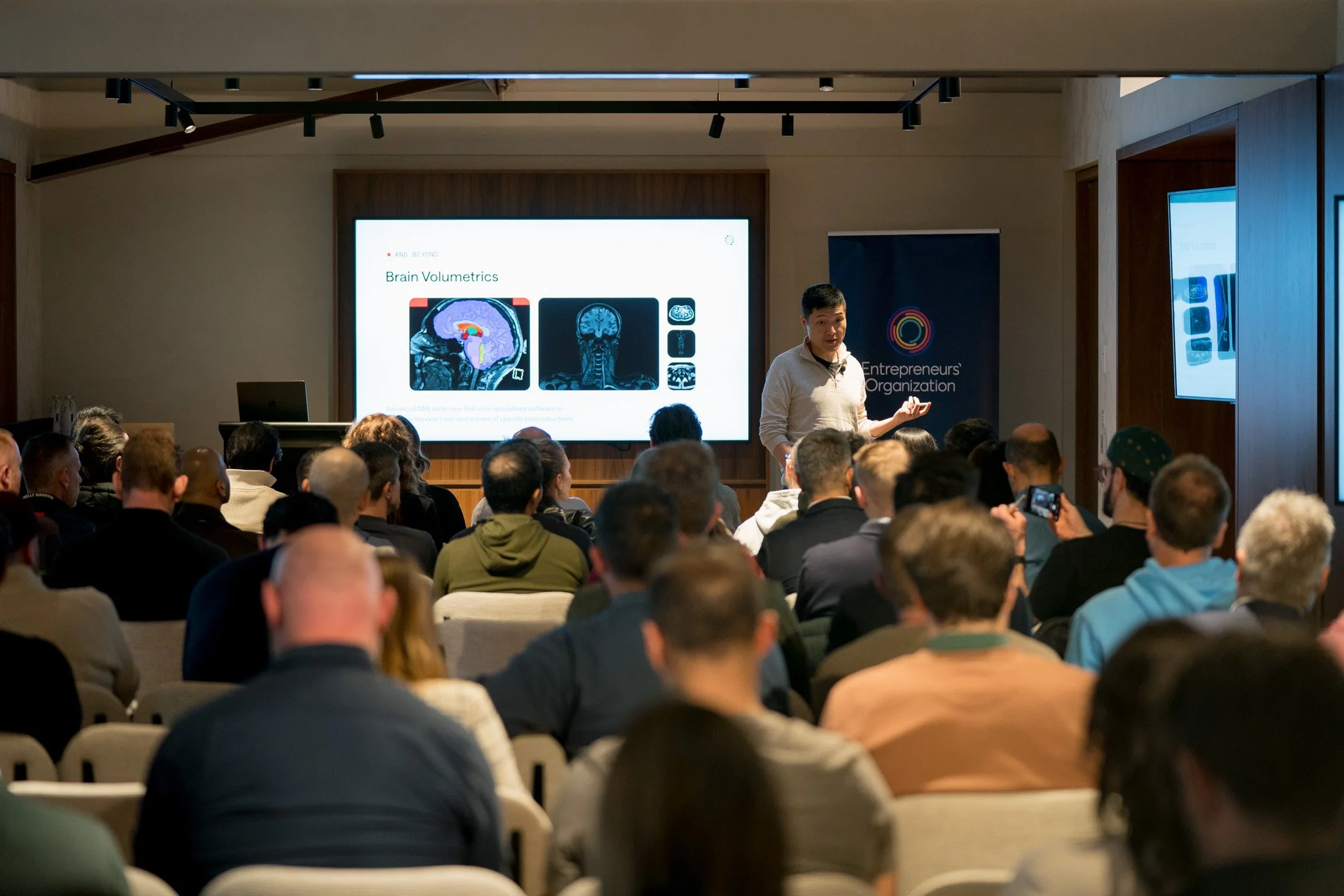
Presented with Strategic Alliance Partner Everlab, the event brought together Dr Steven Lu, Dr Jason Chen and Marieke Rodenstein for a practical and thought-provoking conversation about preventative health, performance and what it really means to invest in longevity.
Dr Steven Lu opened the session with a confronting statistic: the average Australian spends 13.9 years of life in poor health, placing Australia behind comparable OECD countries. It was a powerful reminder that not being sick does not necessarily mean being healthy — and that waiting for something to go wrong is a poor strategy for protecting one of our most valuable assets.
His message was to shift from reactive healthcare to proactive prevention. Just as entrepreneurs use data to understand and manage their businesses, they can apply the same mindset to their health: understand the risks, gather the right data and build a strategy around it. Advances in genetic testing, cardiac imaging and AI-assisted diagnostics are making this level of personalised health increasingly accessible, giving people the opportunity to identify potential risks before they become problems.
From there, Marieke Rodenstein brought the conversation back to the fundamentals. Data is not health, she reminded members, and no supplement or advanced intervention can compensate for foundations that have been neglected.
Sleep, light, movement, nutrition, recovery and connection remain essential to how our bodies function. Marieke also highlighted the importance of social connection, with social isolation carrying a mortality risk comparable to low cardiorespiratory fitness. Her advice was refreshingly practical: look at the environment around you and consider what behaviours you have made normal. Rather than attempting to change everything at once, make one meaningful improvement each week. Over time, those small changes can add up to a very different trajectory.
The conversation then moved into one of the more talked-about areas of longevity: peptides and emerging treatments. Dr Jason Chen cut through some of the hype, explaining that peptides themselves are nothing new — insulin, for example, is a peptide — but that the evidence behind newer compounds varies significantly, with parts of the market still operating in grey areas.
His message was not to chase the next breakthrough, but to understand what the data actually means and, importantly, who is interpreting it. As health testing and emerging treatments become increasingly accessible, having the expertise to make sense of the information becomes just as important as having access to it.
Dr Chen encouraged members to focus first on fundamentals such as inflammation, metabolism and immunity, and to test consistently so that health data can be viewed as part of a bigger picture rather than as isolated results. He closed with a question that stayed with the room: Who do you trust with the version of you that doesn’t yet exist?
The event brought the conversation back to a simple truth. Entrepreneurs spend years building businesses designed to create long-term value, but the ability to enjoy that success depends on having the health and capacity to be there for it.
The Future of Longevity encouraged members to think differently about that investment — moving from reactive healthcare to proactive prevention, strengthening the foundations of everyday health and becoming more informed about the rapidly evolving world of longevity.