

BLOG
Paying it forward in the entrepreneurial journey
In the challenging entrepreneurial path, where sometimes the roads are unpaved, being on the receiving end of an act of kindness is a huge help. It can often go a long way, especially for those who are just starting on their journey. Even seasoned entrepreneurs have been recipients of a good deed at some point in their lives, and so they are paying this forward to others as well.
In the challenging entrepreneurial path, where sometimes the roads are unpaved, being on the receiving end of an act of kindness is a huge help. It can often go a long way, especially for those who are just starting on their journey. Even seasoned entrepreneurs have been recipients of a good deed at some point in their lives, and so they are paying this forward to others as well.
Also, to be part of a community of entrepreneurs for entrepreneurs, such as EO, is like having a haven where one can grow in a safe environment and have a strong support system when the going gets tough. EO Members reminisce the time when they received an act of kindness and how they’re doing the same to others.

The sense of gratitude is evident to Joanne Camilleri, General Manager of Telco Business Solutions Group, due to the help she has received from others. She stated, “I have so many to be grateful for but the support and kindness I receive from my business partner, fellow EO’er John Rovas, who has been the standout. He has constantly supported me, mentored me and continues to do so – thus far, we have clocked up 11 years in business and built 3 businesses together. I like to pay it forward through mentoring and coaching people by sharing my journey.”
Ben Stickland, Founder and CEO of Alliance Software, recalled, “I took a job fresh out of uni and 3 months in, I decided to leave and start my own business. My old boss had every right to be bad and kick me out. Instead, he gave me three months of free rent, phone and use of the laptop (which mattered back then) while I got started. I've always appreciated it, and now, I pay it forward by encouraging and helping my staff with their side hustle ideas.”
And for any other business, having great people within your team, and those you interact with play a great role in helping grow your enterprise. It’s a give-and-take relationship where both can be the giver and receiver of kindness. Dion Castle, CEO of Struber, echoed this when he said, “Our team and clients have supported or invested in our mission along the way. I am thankful to them every day.”
Entrepreneurs are particularly thankful to those who are ahead of them in the journey and never hesitated to mentor them and point them in the right direction. This is why Rahul Kale, Director at Sunpower Renewables, values the people who have helped him along the way. “I have had some great mentorship (and still do) and have made an effort to mentor some new up and converse as well. Something I want to do more of.”
It was also the same for Austin Vaughan, Managing Director at Pacific Solar and he is now extending the kindness not just within his team but also to businesses they work with. He shared, “I had some early-stage mentors that offered key directions for efficient systems that established a methodology that we still embrace today. In our day-to-day business, we engage many small to medium contractors. I like to think we have assisted many of them to grow their businesses on the back of operational assistance and advice presented to them. We feel a real sense of appreciation from our contractors as we try to treat them as part of our team. It's great to be a part of their success, too.”
In tough situations, such as the one we currently have, Nyree Hibberd, CEO of Koh Living, appreciates people who have been kind to them despite the challenges and hardships everyone is facing. “As we are in retail and tourism, we were particularly affected by the impact of COVID. I immediately started cancelling services, and my CFO and Bookkeeper both said that it wasn’t necessary. My bookkeeper would continue as normal no matter when she was paid, and the CFO said that all billing was suspended, not to be billed at a later date, but stopped until we got to a point of recovery that we could afford the services again. I almost cried because the help I needed the most was how to navigate financially through the mess that unfolded,” she shared.
Nyree continued, “We paid that forward by contacting all retailers that owed us money to make sure they understood payment was appreciated but not expected for the initial 2 months, and we set about providing value to our retail customer base by setting up webinars on various topics to help them with positive ways to enhance their business while compiling our book “Keeping Retail Alive” that was released in 2020 with all the key tips and tricks to help any retailer get through the crisis that COVID was and continues to be. When Victoria had its recent lockdown, all retailers that wanted it got a free copy of that book, anything we could do to have a positive impact on our retailers business drives us forward.”
Surely, a little help can go a long way, especially in the tumultuous path of entrepreneurship. Having people around you reach out and extend a hand can mean a lot. If you have an experience of kindness or if you have extended one, we’d love to hear them from you through your comments below.
Realising true entrepreneurial freedom
by Jamie Lingham
As an entrepreneur, I want the benefits of not only being my own boss but also having the ability to do what I want, with who I want, where I want and when I want. After 20 years of running my immigration business, dealing with staffing issues, long nights, long weekends and time away from my family, COVID was the one to push me to take on the ultimate travel, work, and family adventure around Australia.
by Jamie Lingham
As an entrepreneur, I want the benefits of not only being my own boss but also having the ability to do what I want, with who I want, where I want and when I want. After 20 years of running my immigration business, dealing with staffing issues, long nights, long weekends and time away from my family, COVID was the one to push me to take on the ultimate travel, work, and family adventure around Australia.
“My business works better when I get out of the way. As much I would like to think that I am the centre of my business universe, the reality is that after 20 years, the business is just fine without me.”
The year 2020 was particularly bruising for the immigration advice industry. Instead of laying off staff, as our competitors did, we circled the wagons and took on the message from our EO Melbourne WhatsApp group to double down on marketing and use the resources around us to get through this together. As a result, we not only survived but also grew the team during this period. Personally, it was taxing and stressful, yet it was also exciting as it reignited my entrepreneurial fire and reconfirmed my ability to manage a crisis.
Fast-forward to January 2021, my wife, Penne, and I decided to purchase a camping trailer, take the kids out of school, rent our house out on Airbnb and drive around Australia, while still working on the business. Four months later, our Instagram handle ‘@leadingremotely’ was born and we were on the road!

Nine weeks in and I have already learned some great lessons:
Why didn’t we do this sooner? – Our business allows us to work anywhere with internet access, and our clients don’t care if we are in Melbourne or Mexico. As a family with young kids at this age (10, 7 and 5), we feel the timing is perfect. Home school can be a battle, but we figure that they are learning more every day than they will at school.
Systems, processes and preparation – We have spent the past few years (over)-engineering the systems and processes in the business. We have also employed the right people in the right seats and invested heavily in their success (two of my team are in EO’s KEP and we are trying to get something similar for another team member in New Zealand). These team members get the same buzz that I do after the forum and it’s amazing to see their growth.
My business works better when I get out of the way – As much I would like to think that I am the centre of my business universe, the reality is that after 20 years, the business is just fine without me. This has challenged my purpose and relevance, yet the best news is that it allows me to unshackle myself of everything but the top-level strategic decisions.
It’s my eat-love-pray moment – No matter how spontaneous the trip felt, it is apparent that there is a deeper meaning to this journey. Rather than a holiday, it is a lifestyle, outside of leading remotely. It’s about letting go, as well as it’s about connection - connection with myself, with Penne and, most importantly, with my kids, before they seek connection away from our guidance and are lost to us forever.
We have already travelled more than 14,000kms over this vast land, changed three tyres, busted the water tank on our camper, and I have also torn all of the ligaments in my ankle after falling off the roof of my car. Despite this, we are still only 40% in of our planned journey, and not only am I excited for the next six months but I am also eager to meet the family that will soon to Melbourne and the impact that this amazing life experience has had on us as individuals, as a couple and as a family unit.
For more updates on working remotely and our outback journey please follow us on Instagram @leadingremotely.
*Jamie Lingham is a member of EO Melbourne and the Global Immigration Leader of Absolute Immigration.
How do you communicate bad news to your clients?
In every business, there are times when things take a different turn and projects can often head south, may it be due to human error, unforeseen circumstances, or uncontrollable situations. When things go awry, how do you break the bad news to your clients?
There are different approaches to it, depending on your client’s characteristics and your relationship with them. A few entrepreneurs share with us their experience and how they tackle the problem when the situation calls for it.

In every business, there are times when things take a different turn and projects can often head south, may it be due to human error, unforeseen circumstances, or uncontrollable situations. When things go awry, how do you break the bad news to your clients?
“Bad news is never good to deliver, but developing a process over time has made it easier to handle.”
- Steve Jackson
There are different approaches to it, depending on your client’s characteristics and your relationship with them. A few entrepreneurs share with us their experience and how they tackle the problem when the situation calls for it.
However, all of them have one common word – HONESTY.
Truly, there’s no better way than to be upfront about things, especially in business. It saves all parties time, resources, and effort when things are talked out promptly and issues are tackled head on.
Austin Vaughan, Managing Director at Pacific Solar, confirms this. “I would commonly take a direct approach as we feel honesty applies in all our communications,” he said.
Nyree Hibberd, CEO of Koh Living, expounds on this further. “Honestly, as it’s one of our 5 brand values: “We are honest, authentic, and down-to-earth; ‘keep it real’ is our number one mantra. We tell the truth and strive to always do what we say we’re going to do.” For us, bad news may be around stocks selling out or delays in arrivals of replenishment. So at every stage, we aim to keep the customer informed with accurate information to limit the interruption to their business. In most cases, we find it’s about the communication of the news rather than the news itself, so we aim to always be upfront and honest with any bad news,” she remarked.
While unfavourable news cannot be avoided, it often depends on how the information is delivered. But having a method or careful approach can help mitigate the negative impact it may bring to the client or business. However, it doesn’t stop with just telling the client about the problem. Coming up with alternatives at the onset can also help ease the worries of the client.
Steve Jackson, Director at PurpleMonky and Founder of Moon & Back Co., shared, “Bad news is never good to deliver, but developing a process over time has made it easier to handle. Firstly, an urgent team meeting internally to discuss what happened, and what solutions are available. Then, we make an immediate phone call with complete honesty to the client about what happened and how we want to work together to find the best solution. No matter the outcome, the client always respects the honesty & willingness to find the solution.”
In short, crisp words, Dion Castle, CEO of Struber, stated it simply but powerfully, “Communicate quickly, clearly, honestly with a solution ready.”
This is echoed by Joanne Camilleri, General Manager of Telco Business Solutions Group, “With complete honesty, authenticity and ensuring, if necessary, that we are taking ownership. Ideally, we communicate face to face. If appropriate, we would finish it off with the challenge or opportunity that is arising from the bad news.”
A more detailed explanation is provided by Ben Stickland, Founder and CEO of Alliance Software, “We do it with brutal honestly and as quickly as possible. The formula is simple: we tell clients this is what happened, this is how it'll affect you and this is what we're doing to fix it. We also always tell clients that right now, we're focused on the fix and when the dust settles, we'll do a review and work out how we avoid these problems in the future and make it right. In our space, clients are very understanding if you're upfront and drop everything to make things right.”
Have you experienced a similar situation where you have to break some bad news to your clients or customers? How do you do it? Share with us your approach and its effect on your business.
Essential items in an entrepreneur’s business scorecard
What is a scorecard? It’s a tool or report that monitors the status or success of a project. In business, a scorecard allows teams to set their goals and rate their performance vis-à-vis what they have set for themselves. Every organisation may have different scorecards, depending on their targets, focus and key performance indicators.
For entrepreneurs, what are the most essential items in their business scorecard? EO Melbourne members share with us the important things they put in their scorecards.

What is a scorecard? It’s a tool or report that monitors the status or success of a project. In business, a scorecard allows teams to set their goals and rate their performance vis-à-vis what they have set for themselves. Every organisation may have different scorecards, depending on their targets, focus and key performance indicators.
For entrepreneurs, what are the most essential items in their business scorecard? EO Melbourne members share with us the important things they put in their scorecards and why they keep track of them.

Net cash flow – According to Rahul Kale, Director at Sunpower Renewables, one of the three most essential items on their scorecard their Net Cash flow position (current and forecast). “This can make or break your company. You can be profitable in the long run, but if your net cash flow position is negative or has the potential to be in the red then you are in serious trouble. For me, this is the most important metric to monitor,” Rahul explained.
Cash at bank – For Jeni Clift, Director/General Manager of DWM Solutions, “no cash = no more business. We need to know the cash position every week,” she stated, which is why they need to put Cash at Bank in their scorecard.
Total dollar amount quoted - Anthony Lam, Managing Director of Punchy Digital Media, remarked that knowing the “total dollar amount quoted gives us an indicator of our future work and pipeline.”
Headcount, revenue and net profit – Appscore Co-Founder & Managing Director Alex Louey shared that they have various scorecards in the various levels of their organisation. “At the company level, the most important ones are pretty boring – headcount, revenue and net profit. We use the headcount as a measure because our target is to be 300 persons in 24 months,” he expounded.
Performance measures – “At the team level, we use a dashboard to measure performance and predict outcomes. We normally have 2 leading indicators and 2 lagging indicators, i.e., for the sales team, each salesperson is to have a rolling $3M new business qualified pipeline for a $1M new business target. On the other hand, our recruitment team’s measure is on the number of interviews as a leading indicator and the number of contracts signed, targeted at 3 per week,” Alex added.
Customer and employee satisfaction – This is another item on Rahul’s scorecard. “This is not a regular metric as we update this semi-annually, but we have found this to be a great metric to monitor and shape our strategy. This gives us an external perspective of what our employees and customers are thinking of us and our products and it helps us improve, innovate, and get better.”
Days when projects are open – This is found in Anthony’s scorecard because for him and his team, “the average number of days that projects have been open gives us an idea of our current production pipeline.”
Total projects open – In addition to the number of days that their projects are open, Anthony also looks at their “Total number of projects open, which gives us an idea of our capacity.”
R&D and Non-R&D costs – These costs are important to Rahul because according to him, “We are all about innovation, and understanding the R&D spending is an important gauge on how we innovate and evolve our product offering.”
Depending on your industry and type of business, you may have different things on your business scorecard. Also, within your organisation, each level, department, unit or team member may have different scorecards based on their deliverables. Also, this tool helps in improving one’s performance, growth and development, whether as a group or as an individual.
Share with us in the comments section below what you have in your scorecards and why they are important to your business.
Local (Melbourne) leadership quotes for your entrepreneurial journey
Food for thoughts. They are often needed to keep us going, especially in the entrepreneurial journey. And so, we gathered some leadership quotes – either new nuggets of wisdom or familiar motivational pieces you have encountered before – which will help you move forward when things become rough.

Food for thoughts. They are often needed to keep us going, especially in the entrepreneurial journey. And so, we gathered some leadership quotes – either new nuggets of wisdom or familiar motivational pieces you have encountered before – which will help you move forward when things become rough.
Let’s start with some motivational lines that have inspired some of our EO members.
Aaron Smith, Founder of KX Pilates, finds entrepreneur Jim Rohn’s quote something helpful to his journey, which is “Care more about your customers than you do about the money you make from them, and you will be successful.”
On the other hand, Meirav Ambar, Partner at Trendtrade International, learned an important insight from her experience. “There is no such thing as a journey (especially a disruptive one) without failures – both professional and personal failures. As long as you learn from them, you are fine. (I am still working on accepting that.)”
“Be firm, but fair.” Many have probably said this line, but it is something that Lauren Staley, Managing Director of Infolio Property Advisors, has found useful and helpful to her leadership journey.
For Malcolm Bean, Director at Beanmkrgy, he holds on to two guiding statements, both of which pertains more to team composition: "It's all about the people - with the right people on board, you can go anywhere" and "You get the staff you deserve."
“The secret of leadership is simple: Do what you believe in. Paint a picture of the future. Go there. People will follow.”
- Seth Godin
Rahul Kale, Director at Sunpower Renewables, shares three inspirational quotes. The first one is “The secret of leadership is simple: Do what you believe in. Paint a picture of the future. Go there. People will follow” by Seth Godin. According to Rahul, “leaders that are entrepreneurs must first dare to dream. Yes, this must be backed up with significant and focused action, but they must be willing to create alternate realities that do not currently exist or are relatively uncommon. And for that, they must be dreamers.”
Another quote that keeps him motivated is Barbara Corcoran’s “My best success came on the heels of failures.” Rahul explained why he finds this inspiring, “Invariably, most Leaders in this space are relentless with their focus, discipline, drive, energy and ultimately faith in what they set out to accomplish. I have never met an entrepreneur who has not faced disappointment or failure in his/her career, but they don’t quit. Many have endured those instances multiple times, but they never let it faze them. It is an opportunity to return to the drawing board to re-strategise, examine or change course. It is an area I am proud to be a part of because I witness regularly how we use failure for what it's good for – a teacher to guide you onto your next achievement.”
Lastly, he finds Lisa Haisa’s quote very encouraging: “Great leaders don’t set out to be a leader…. they set out to make a difference. It's never about the role – always about the goal.” Rahul shared, “Our entrepreneurial journey started by wanting to make a difference - to provide energy independence and replace traditional fossil fuel consuming energy generators with clean, green, technically advanced, and economically cheaper renewable energy alternatives. Today, we have been recognized as one of Australia’s Most Innovative Companies. We wanted to create an alternative for a better future; being a leader just happened along the way.”
Other popular leadership quotes that you might find helpful in your growth as an entrepreneur are as follows:
"Do not follow where the path may lead. Go instead where there is no path and leave a trail."
- Ralph Waldo Emerson
“Before you are a leader, success is all about growing yourself. When you become a leader, success is all about growing others.” —Jack Welch
"To add value to others, one must first value others." - John Maxwell
“A genuine leader is not a searcher for consensus but a moulder of consensus.” - Martin Luther King Jr
"One of the tests of leadership is the ability to recognize a problem before it becomes an emergency." - Arnold Glasow
“A leader takes people where they want to go. A great leader takes people where they don't necessarily want to go, but ought to be.” - Rosalynn Carter
"Leadership is the capacity to translate vision into reality." - Warren G. Bennis
“Innovation distinguishes between a leader and a follower.” - Steve Jobs
“A true leader has the confidence to stand alone, the courage to make tough decisions, and the compassion to listen to the needs of others. He does not set out to be a leader but becomes one by the equality of his actions and the integrity of his intent.” - Douglas MacArthur
“Whenever you see a successful business, someone once made a courageous decision.” - Peter F. Drucker
"The price of greatness is responsibility." - Winston Churchill
“Effective leadership is putting first things first. Effective management is discipline, carrying it out.” - Stephen Covey
The best way to make good use of these quotes is to place your favourite ones somewhere where you can always see them – to remind you every day of why you’re on this path in the first place and push you forward to achieving your goals.
Share with us some of the quotes that have helped you keep going on your entrepreneurial journey.
Dealing with unsavoury reviews of your products or services
Feedback is necessary for improvement, especially in one’s business. While positive reviews are always welcome, one cannot avoid getting unsavoury comments as it is not all the time that customers and clients have happy experiences with a service or product. When this happens, how do you deal with them?

Feedback is necessary for improvement, especially in one’s business. While positive reviews are always welcome, one cannot avoid getting unsavoury comments as it is not all the time that customers and clients have happy experiences with a service or product. When this happens, how do you deal with them?
Respond and acknowledge the remark
There may be various reasons behind every negative comment, but the best way to approach it is to face it head-on. Lauren Staley, Managing Director of Infolio Property Advisors, sometimes encounter situations where they receive feedback on issues beyond their scope.
“This is a tricky one and often frustrating as I operate a property advisory and property management firm, so we can get tenants frustrated with something and wanting to express frustrations on Google reviews and it's typically about the landlord or maintenance issues which are mostly out of our control. My approach is to write back that we acknowledge their frustration, however, suggest that anyone reading the review contact me directly for a more informed and balanced view of the situation,” she stated.
Reach out to the customer
Getting complaints or unfavourable reviews are not uncommon in the hospitality industry where impeccable and quality service is of the utmost standard. Malcolm Bean, Director at Beanmkrgy, a company that is into hospitality consulting and investment, shared what they do whenever they get into this situation.
“We strive to recognise with a response from a senior manager as immediately as possible. The goal is for it to be a real response (not an obvious corporate robot type) addressing the specific issue/s and what the rectification/next steps are (sometimes to call out an untruth, too). I think being candid is appreciated by most. Often the response is a great marketing opportunity to let any reader know we are committed, will take action and also to lengthen the response to talk about our broader offering, too. In the hotel/hospitality industry, our goal is to then have the customer come back again and give them a normal experience. The most loyal customers are those who started as unsatisfied,” Malcolm explained.
Address the concern and resolve the issue
Similarly, Rahul Kale, Director at Sunpower Renewables, believed to tackle the issue as soon as possible by taking the first step in knowing the motive behind the feedback.
“Get in touch with the customer. Understand the reason for their unsavoury comments. Unsavoury feedback is not meant to hurt your ego and make you recoil - it is important feedback that benefits the company to get better, improve and grow. Ignoring the issue or defending your position does not help – instead, address the concern and work with them to resolve the issue. Nine out of ten times this has worked for us,” he remarked.
Learn and understand, then pivot if needed
Oftentimes, receiving feedback from a dissatisfied customer is an opportunity to step back, review your business and see if there’s anything that needs to be changed.
Meirav Ambar, Partner at Trendtrade International, take this as a learning exercise to know more about their customers and have a better look at their services. “It's very hard, especially when you are truly passionate about what you do. But by definition, a brand doesn't target everybody. I take the feedback, sometimes have a one-on-one discussion with that customer to understand more, learn from it and pivot if needed and move on,” Meirav shared.
Take as an opportunity to improve
Some feedback may affect a business positively or adversely. But even negative reviews can be turned into something positive by making improvements in the business.
Aaron Smith, Founder of KX Pilates understands this and makes it a motivation to better the offerings he extends to his target clients. “Productive feedback is the pathway to and necessary for continuous improvement, which is what KX is all about. Look at these reviews as a direct line from your customers on how you can improve, but make sure that this feedback is coming from a customer you want to retain. Remember, the customer is not always right, but the RIGHT customer is always right.”
In all these, discernment is key to taking whatever step you believe suits the negative feedback you receive. As shared by our members above, it is important to know where the comment is coming from and the details or reason behind them. If they are valid and justifiable, waste no time in taking action to lessen any adverse effect it may have on your business. Moreover, open communication can help in turning the situation around and resolving whatever issue was raised. Lastly, take it as a learning experience where you can further develop and improve your business.
If you have a similar experience, share with us below how you managed the situation.
How do you retain good employees?
This is a question that many business owners and managers often ask as having good employees and retaining them are important to running a successful business. There are no easy ways to do it, so we sought the help of some members of EO Melbourne on their experiences and best practices that may also be helpful to other entrepreneurs.
Meirav Ambar, Partner at Trendtrade International, Malcolm Bean, Director at Beanmkrgy Pty Ltd., Rahul Kale, Director at Sunpower Renewables, Aaron Smith, Founder of KX Pilates, and Lauren Staley, Managing Director of Infolio Property Advisors shared some of the things they do on how to keep good employees within their team.

This is a question that many business owners and managers often ask. It is because having good employees and retaining them are important to running a successful business. There are no easy ways to do it, so we sought the help of some members of EO Melbourne on their experiences and best practices that may also be helpful to other entrepreneurs.
Meirav Ambar, Partner at Trendtrade International, Malcolm Bean, Director at Beanmkrgy Pty Ltd., Rahul Kale, Director at Sunpower Renewables, Aaron Smith, Founder of KX Pilates, and Lauren Staley, Managing Director of Infolio Property Advisors shared some of the things they do on how to keep good employees within their team.
Build a healthy work environment

Looking after the well-being of your team members help in employee retention. For Lauren Staley, what she did is that “I created an office ‘Zen Den’ this is where staff can ‘zen out’, meditate, relax, etc. We also hold nutrition workshops for staff in this space, as well as yoga and mindfulness sessions. We have a masseuse come to the office once a month.” Apart from that they also provide clear feedback on staff performance and quality of work, regular training, and leadership paths.
Create a good corporate culture and path for growth

Culture is paramount in every organisation and it plays a significant role in the longevity of a business. It shapes the work landscape and the dynamics among team members. Aaron Smith shared that it is helpful to “create an amazing culture in an amazing environment through vulnerable and courageous leadership and be flexible with and care for each individual's circumstances. As the owner, it is your job to create a pathway for your employees to develop and grow. Give them ownership whilst providing accountability. And most importantly, have FUN! If people LOVE working for you and your company you'll retain them for the long run.”
Value your good employees

Employees tend to stay longer in an organisation where they feel they are being valued. Rahul Kale stressed the importance of this. “First, you must respect your employees and understand the value they bring to your organization. If you judge a fish on its ability to climb a mountain it will always disappoint you. You must value the individual’s skill set that they bring to the table and empower them to function at their optimal level.”
He added, “I like to ensure that the worthy employees are compensated well, both in terms of monetary benefits and job satisfaction, and give them their space to work. By worthy, I mean those who take on responsibility and like to see things through. Our process starts right from the interview stage where we try and understand the employees’ strengths and weaknesses and then give them the required support, training, and opportunities to excel in their role. Investing in our employees to upskill, train and motivate them is another great employee retention strategy as it works well for both – the employee and the organisation.”
“The company’s culture and policies play an important role in defining the working parameters for your team – once defined, it is important to empower and allow someone the space to do what they do best. I am not a big micromanager and prefer employees who take on the responsibility and accountability to go above and beyond. Understanding each employee’s learning curve and giving them the time to settle in truly do wonders for their self-development and overall team morale,” he iterated. Rahul also quoted Sam Walton wherein, “Outstanding leaders go out of the way to boost the self-esteem of their personnel. If people believe in themselves, it's amazing what they can accomplish.”
Put clear action plans and customise strategies for different employees

Meirav Ambar also discussed some of the strategies she does within her business in keeping good employees. “I do a few things, and of course adapt the strategy according to the specific employee:
1.) The people we work with are the people we play most time with. While we manage a highly professionally driven environment, we also have a lot of fun.
2.) Every employee has clear KPIs and a clear action plan which we regularly review. Clear KPIs are important for our sense of accomplishment and value.
3.) Most importantly, I trust them. I truly believe that micromanagement is the worst form of management and is the main reason ambitious employees leave their place of work.”
Maintain a strong relationship with your employees

On the other hand, what Malcolm Bean usually does is that he "strives to have independent direct relationships with my team members, especially with the A-players, and work on these weekly. Each person is different, and a deep relationship results in a customised or independent career and life plan. Often, people don't leave the job, they leave you because there wasn't true mutual understanding and connection.”
---
How about you? What do you do to retain your good employees? Share with us your tips through the comments section below.
Mentorship: Accelerating growth by learning from others’ experiences - The Salt & Fuessel’s experience
We have always come across this quote by Jordan B. Peterson: “Experience is the best teacher, and the worst experiences teach the best lessons.” Although the hard lessons are those you experience yourself, there are ways to avoid the common pitfalls and save yourself from losing time and money by learning from the experiences of others. It can only be done if you devote enough time listening to and learning from the story and lessons of those who are ahead of you in the entrepreneurial path.
Have you come across this quote by Jordan B. Peterson: “Experience is the best teacher, and the worst experiences teach the best lessons”? True, hard lessons are those you experience yourself, but surely, there are other ways to avoid the common pitfalls and save yourself from losing time and money, which can be done by learning from the experiences of others.
This is the beauty of mentorship because one can get tips and tools on how to fix things and do them right through having one-on-one conversations with entrepreneurs who have more experience than you. It is one of the many benefits of having a mentor that Gabriel Esseesse, Co-Founder at TestMate and Salt&Fuessel, has come to recognise as a participant of EO Melbourne’s Mentorship Program. It is why he is thankful to have Sue Jackson, Chair and Director of Solterbeck Events, as a mentor who provides him with guidance, support, and assurances.


Finding like-minded individuals
Entrepreneurship is not an easy road, and often a solitary one. Sue has experienced it herself and hopes she can be there to guide and keep Gabriel’s company at this part of his entrepreneurial journey.
“It's very lonely when you run your own business and there's no one there to defer to or ask a question. It's helpful if you've got a business partner so you're in it with someone else, but still, every single decision is yours because the buck stops with you,” she described.
Gabriel agrees that it is reassuring when someone more advanced in the entrepreneurial journey helps those who are still getting to the point where mentors are right now.
“That reassurance of someone tapping on your shoulder and saying, ‘Yeah, everything is going to be okay. Just keep at it, as I've done that. I know how hard it is, so just keep moving.’ That is sometimes all you need and people from the outside don't see that. I mean, my wife would not understand that, my friends would not understand that. It's just someone who has done that road and built the businesses that know the constant struggle and the lonely struggles that you face. That's why I'm always thankful to Sue for all the words and knowledge that she provides.”
Opportunity for growth
Growth is an ongoing thing that even entrepreneurs have come to recognise as something important in personal and professional development. “Since I joined EO, I realised more and more how important education was and how important learning from others was going to be in my career. Just by having a mentor, especially like Sue, someone who has done it and was already in a place where I would love to be in a few years, I thought it was going to be an amazing opportunity for me to accelerate that growth and that knowledge,” Gabriel explained.
However, it is not just Gabriel who is growing through mentorship. Sue also admits she’s picking some insights from Gabriel as well. “I equally learn from Gabriel. I don't know everything about his business, so that's fascinating. I'm always interested in other businesses and other stories so I can continue to learn,” she shared.
“It is valuable and enjoyable because when you get to my stage of your career, you sometimes forget how much you've learned and how many trials you had along the way. It's not until you know the younger entrepreneurs coming up and you realise that they're facing the same things that you did – from how you manage your time to how you manage your growing business and the different phases of the business and what it's like managing five people versus 15 people versus 35 people versus 80 people. I think it's fascinating and it's valuable to share those insights and try to help. I hope I can fast-track Gabriel a little bit and that he can learn how to cope with those things faster than I did. If I can save him a month or a year or three years then it’s fantastic,” Sue added.
Key learnings
One of the many tips and tools that Gabriel has picked from his conversations with Sue was getting middle managers and filling certain positions in his company. “Aside from getting amazing tools and tips on how to fix things that aid me along the way at whatever I'm going through, it's that feeling to be reassured that things will turn out fine. It's going to be good and then we will continue growing. So far, every single time I come out with two or three or four specific action items that I need to do, I can go back to the office and implement with the team,” Gabriel noted.
“The number one thing that I enjoyed the most is realising that not everything bad is that bad and not everything good is that good. It's just a journey. To start learning that, you will find that there is light at the end of the tunnel. There are batches where things are not that good but better times will come. At the same time, when better times come, there might be times when things will get rocky so you just need to keep pushing forward. But you need to start enjoying the journey. Whenever I spoke with Sue, it’s like, ‘Oh yeah, I've done that and this is what happened. And yes, you will get there.’ That's always the feeling that I get out of my mentoring sessions and I get reinvigorated and re-energized, telling myself, ‘Well, it's not that bad. Let's move on. We will improve it,’” he added.
Sense of fulfilment
One of the reasons why Sue has taken part in the program is that it has allowed her to help other entrepreneurs, which is a rewarding feeling and a worthwhile experience.
“As I was once part of EO Melbourne, I always found it invaluable to hear the insights and experiences of both EO members and other business people. Given that I found it valuable then, it may be that at this stage in my career, as I’m on the other side now in terms of the time frame, wherein my experiences equally might be valuable to someone else as well. So, that was the primary motivator. The secondary motivator was to give back to EO because it's a fantastic forum for entrepreneurs worldwide,” Sue remarked.
She went on, “I think, as a mentor, you get enormous satisfaction out of being able to share stories and histories of what you've been through and hope that it could be valuable to someone else. It's great to be able to give back and be able to support the next generation of entrepreneurs because entrepreneurs are incredibly valuable to the business world. Personally, it helps keep that fire and how to help you continue to see that that fire in the belly of people. That spirit is uplifting for yourself because it's not just you’re sitting there and telling a few stories but also you're getting much more out of it.”
In a challenging journey like entrepreneurship, it is helpful to find other people who can guide you along the way and help you accelerate your growth so that you can achieve your goals at a faster rate. This is what mentorship has provided Gabriel and many more who took part in the program.
Managing the daily influx of emails – is it possible?
Email is one of the necessary means of communication, especially in business. With a lot of official messages, personal matters, spam and email threads where you are copied, how do you ensure that you don’t waste too much time going through your inbox without missing out on the more important ones? It may not be too much of a deal but there are repercussions when you fail to read an urgent message, while there are also consequences when you spend too much time on your emails than on other pressing issues.

Going through the daily messages is one of the constant concerns of busy entrepreneurs and business owners. Jeni Clift, Director/General Manager of DWM Solutions and a Professional EOS Implementer admitted that she needs help when it comes to managing and organising the daily influx of emails she receives.
“Unfortunately, I use my inbox as a repository of emails. I am open to seeing how others do this as it is not an effective method,”
But not all is lost, here are a few tips we put together from some of our EO members that may help you get ahead of the game.
Schedule reading your emails
According to Arosh Fernando, Founder and Director of WooHah Productions, “The biggest time killer in our world right now is email, especially when you’re getting cc’d in everything and the inbox is filling up fast if you don’t check it. Fellow EO Member Dean Cherny had a great idea which I adopted – checking emails at given times of the day. So I do this at 10 am and 2 pm, for 30 minutes to an hour, depending on whatever your business needs are at the moment. This helps me manage time around and, as a CEO, get to tick off the real objectives like my long term goals to grow the business. As I have learnt in EO many times over, it’s not about what we start doing but it’s what we STOP doing that is important to enable us to focus our time and energy on the big goals.”
Scheduling reading and responding to your emails is a brilliant idea that can be a big help, as long as it suits your work schedule and lifestyle as well as the requirements of your business. You can calendar going through your messages at certain times of the day and make sure you have the discipline to carry it through.
File and have separate inboxes
Another helpful tip is to file your messages in folders so that it’s easier for you to check them. You might need to allocate some time to do the preliminary work, such as creating folders and segregating messages, so that the succeeding ones that arrive in your inbox get filtered easily.
Anthony Lam, Managing Director of Punchy Digital Media, shared, “I have separate inboxes and tackle each one at separate times. I have one for clients, prospects, and teams. I try to set a timer and tackle each inbox one at a time.”
On the other hand, Appscore Co-Founder & Managing Director Alex Louey tries to undertake the challenge of sorting through his emails through their levels of priority. “My inbox is a disaster, and I wish I could tell you that it is well-sorted and filed. The only ones that I focus on that are a must-do are customer-related ones. They get top priority and my full attention. The rest get attended to in terms of the priority of my task list that I run throughout the day or week. I can’t respond to everyone that tries to contact me so I don’t,” he professed.
Work on “zero” emails
Having “0 emails on inbox” is one of the policies that Damian Blumenkranc, co-Founder of Creativa, Attento and Just Click Videos and CEO of Sunset Sleepers, personally follows. “I use a very simple decision tree to tackle them as they come:
1 - Can I respond to this quickly on the fly? If yes, then I just respond to it and archive it;
2 - If no: Is this something I will read/look into on spare time? Then I move it to my ‘read later’ folder that I can read on the train or when I finish work;
3 - Is this something I need to work on for more than a few minutes to respond to it? I set a time on the calendar to work on it and even copy the link of the email or the content of the email as a reference, then I can archive it as I will be working on it when the time comes;
4 - For those emails that we want to keep as a reference for something but really have no need to reply, I move them to an 'important info’ folder and those that I want to use as a reminder to follow up later I also put on the calendar or I snooze them for later.”
Automate it
In this era when technology has created so many breakthroughs in fast-tracking everything we do, one can get a little help by automating their emails. It is one of the things that Nathan Chan, CEO & Publisher of Foundr Magazine, does to lessen the workload brought about by daily emails. “I have automation rules,” he declared. “Also, “I view my inbox as everyone else's to-do list and treat that accordingly.”
Depending on the email software or platform you use, various email automation tools can make things easier for you, sometimes sending automated replies, based on the rules you create. You can consult with an IT professional or explore how you can make this work for you and your business.
Hire an assistant
But apart from automating his emails, Nathan also gets a little help from his staff. “I have an incredible EA (executive assistant),” he added. If the tasks are too many and going through your daily emails can often become a burden to you, don’t hesitate to delegate to your team or have someone help you with it so that you can attend more on other important matters.
If you’ve been in this situation before – getting overwhelmed with the number of emails you receive and you’ve surpassed it, share with us how you have overcome it as it may also be helpful to those who are currently stuck in this predicament.
Do the universal laws play a part in business?
By Tui Cordemans
A few months ago, I overheard two entrepreneurs discussing holidays. One of them said to the other, “Didn’t you just have a holiday, you always seem to be on holiday. I can’t remember when I was last on holiday.” The other one responded by saying, “That is why you are more successful than me, mate.”
I couldn't help but intervene. I laughed and asked, 'Isn't having a life where you always feel as if you are on holiday a sign of great success?” They both stared at me and then laughed as if to say 'good point' .... made complete sense to me!

By Tui Cordemans
A few months ago, I overheard two entrepreneurs discussing holidays. One of them said to the other, “Didn’t you just have a holiday, you always seem to be on holiday. I can’t remember when I was last on holiday.” The other one responded by saying, “That is why you are more successful than me, mate.”
I couldn't help but intervene. I laughed and asked, 'Isn't having a life where you always feel as if you are on holiday a sign of great success?” They both stared at me and then laughed as if to say 'good point'… it made complete sense to me!
We live in a world where we are constantly busy, where we are bombarded with ideas of what represents a successful life. There seems to be a stigma attached to the notion that if you own more things, do more stuff (busy), make more money and be more of yourself, you will be happier. Says who?
I read that rather than constantly chasing something like success, we should just allow ourselves ‘to be’ and to go with the flow, in tune with nature. Is that even possible when you own a business?
As business owners, most of us would struggle with this concept. In fact, of all the people on the planet, we are the people who need it the most. The need to control everything often leaves us totally stressed. Our left brain thinks that we can control our destiny; the concept that the universe is actually guiding and protecting us seems impossible - bah! What universe?
Entrepreneurs and business owners are rushing, pushing, pulling, chasing, controlling, and stressing to reach a never-ending goal, often at the cost of their physical, mental and spiritual health. We may even become alienated from family and friends. We are often not living by our highest values. These are some of the concerns that Entrepreneurs’ Organization endeavours to help its members through its various programs, such as the Forum.
Being grateful for what you have achieved and enjoying the journey of life is really important. The best thing about this strategy is “The more you are grateful for what you have, the more you will get of that for which you are grateful for.” To me, this implies that being mindful and grateful will bring us more 'success' (or the feeling of it) than being constantly stressed and feeling as if we are not good enough.
Recently, I have been working on connecting with the universe. This involves sitting every night at my shrine and offering gratitude for everything that ‘is.’ I acknowledge that I am not alone - that no matter what risk I take or decision I make, the universe has my back, and is guiding me. Letting go of fear and the need to control dissolves the stress. Rather than becoming frazzled thinking we have all the answers, we can trust in the universe to guide us (or God, Buddha or whoever your guide might be).
I am practising letting go and accepting what ‘is’ - connecting to my life and business vision. I am working on enjoying the journey of life, rather than waiting for something to be achieved. This way, when I do work, I am working on things I feel inspired about, things that help me live my vision right now.
By embracing hope and faith, one can live a peaceful life. Constantly setting goals creates a mindset that you must achieve something to feel fulfilled. The key is to gently hold onto your goals, and visions and to surrender them to the universe. You know you have surrendered when you trust in the wisdom of the universe.
What is your life vision? What is your idea of success? Do you know what your values are and are you aligned to them? Are you feeling happy, relaxed and inspired every day? Do you have fun? Are you leading from a place of love or fear?
I encourage every business owner and entrepreneur to take a day out to just sit and visualise what your ideal life would look like. How would you feel? How would you behave, and who would you have around you? I believe that we all want the same thing, we all want the feeling of love in our lives. If we are not feeling this right now, then surely this should be the priority? When we have the feeling of love around us, everything else just seems to fall into place.
About the author: Tui Cordemans is the Co-founder and Creative Director of Koh Living. She is also a member of EO Melbourne.
How to become an impactful public speaker
Every entrepreneur has a good story to tell. But, how do you tell a story and make a difference? How do you deal with stage fright? How do you make sure that you create an impact every time you come in front of the audience? Some of our EO Melbourne members share how they overcome this fear and make sure that their story and learnings reach their audience effectively.
We’ve got help from Appscore Co-Founder and Managing Director Alex Louey; Punchy Digital Media Managing Director Anthony Lam; WooHah Productions Founder and Director Arosh Fernando; DWM Solutions Director/General Manager and Professional EOS Implementer Jeni Clift; and Foundr Magazine CEO and Publisher Nathan Chan, who shared with us their learnings on how to become an impactful public speaker.
Every entrepreneur has a good story to tell. But, how do you tell a story and make a difference? How do you deal with stage fright? How do you make sure that you create an impact every time you come in front of the audience? Some of our EO Melbourne members share how they overcome this fear and make sure that their story and learnings reach their audience effectively.

We’ve got help from Appscore Co-Founder and Managing Director Alex Louey; Punchy Digital Media Managing Director Anthony Lam; WooHah Productions Founder and Director Arosh Fernando; DWM Solutions Director/General Manager and Professional EOS Implementer Jeni Clift; and Foundr Magazine CEO and Publisher Nathan Chan, who shared with us their learnings on how to become an impactful public speaker.
Preparation
“Public Speaking is something I enjoy doing, although I still get nervous after 20 years. But I know this is a good thing as preparation is key to a flawless presentation in any public speaking event,” Arosh Fernando pointed out.
This is why many public speakers always say this, “Practice, practice, practice,” which Anthony Lam also reiterated. “The first proper public speaking event I did was the Digital Marketing Summit 3 years ago. I practised the presentation until I knew it by heart. I had 4 weeks to learn and I practised 2-3 times throughout the day. But having done it once, I think it would be pretty easy to do it again, going forward,” Anthony enthused.
Proper preparation also includes putting together the right materials needed for the presentation. “Make sure your slides don't have too much text,” Nathan Chan stated, to which Jeni Clift added, “Just a handful of slides – not death by PowerPoint.”
Connecting with the audience
Being able to resonate with your audience is an important factor in a powerful presentation. “Really make sure that you understand the audience you are speaking to,” Nathan remarked. That entails “Talking TO the audience and not to the lectern or the screen behind you,” as Jeni advised.
In order to keep your audience focused on your message, “Keep still and stay in control of your hands. It is so distracting for people to be pacing the stage or waving their hands around as that will probably make you lose your audience,” Jeni added.
It also helps that you acknowledge your audience every now and then during your presentation. “My biggest tip for public speaking is to pump up your audience by telling them how amazing they are,” Alex Louey said.
On the other hand, Anthony shared an interesting insight. “Lower the bar. I always try to share very advanced tips, which I find they confuse the audience at times. It's always better to lower the bar on how ‘amazing’ the content needs to be and keep it simple. More times than not, what I find as ‘common knowledge’ is what the audience will relate to and find most interesting,” he stated.
Delivery and presentation proper
Once you have prepared well and connected with your audience, be mindful of the delivery of your messages. Arosh’s tip is to break it into segments. “Have an intro or icebreaker, make your content interesting like ‘5 Things I Love Doing When Public Speaking’, and highlight the value and summary. This helps the content to stick because sticky content is what people remember. Keeping it short and sharp will make it impactful rather than long drawn out speeches,” he shared.
For Alex, it is also important that you “slow down your speaking by pausing so you don’t sound rushed.”
Moreover, a good story can make the audience relate to you and remember what you are trying to convey. “I love to use a story to articulate what I need to get across,” Arosh said. This is echoed by Nathan, “Tell as many stories as you can. They are what people remember the most. Lastly, be vulnerable.”
These are simple yet very helpful tips for those who may soon be facing a group of people to speak about their business or a particular topic. If you have additional tips on public speaking that you’d want to share, please feel free to drop them in our comment section below.
Ways to motivate your staff at work: 5 tips from EO Melbourne Members
One of the factors of a successful business is having a strong and dedicated team that keeps the organisation running like a well-oiled machine. However, no matter how passionate, hardworking and talented your people are, they still experience exhaustion, burnout, boredom, frustration, disappointment and all other things that may slow down or hinder your progress.
Your workforce is an important asset of your business. It is just fitting that you look after their welfare and keep them motivated at work to inspire them to do their best, perform well and hit their targets. EO Melbourne members share various ways on how to encourage your team members and inspire them to keep going.
One of the factors of a successful business is having a strong and dedicated team that keeps the organisation running like a well-oiled machine. However, no matter how passionate, hardworking and talented your people are, they still experience exhaustion, burnout, boredom, frustration, disappointment and all other things that may slow down or hinder your progress.

Your workforce is an important asset of your business. It is just fitting that you look after their welfare and keep them motivated at work to inspire them to do their best, perform well and hit their targets. EO Melbourne members share various ways on how to encourage your team members and inspire them to keep going.
Communicate your vision and plans
Having a shared vision and goal, such as where you want to bring the business and how you want to get there, is essential in leading a team. Apart from being transparent when it comes to your objectives and plans for your enterprise, there are also advantages when you present to them how they can grow and develop within your organisation because it helps them to visualise and understand that when your business advances, it also has a positive ripple effect on them.
A helpful tip from John Liston, Director at Liston Newton Advisory is “I try to communicate clearly the vision of the business and where we are going together. The vision of the business is that we grow in size, and there are more opportunities for career growth, development and personal wealth for all those involved. The price of admission to be on that journey is that all staff own their numbers and hit their targets.”
Give affirmation
Sometimes, all it takes is a little push or a few words of encouragement to bring out the best in them. Trusting in your team’s capabilities enables them to prove themselves worthy of such trust and empowers them to come up with strategies and plans that will help them achieve their targets. Affirming their good works also emboldens them to always put their best foot forward in everything they do. That is why Carlo Santoro, Founder of RetailCare, makes sure that he is “standing alongside the team at all times and giving them deep confidence in their skills and ability.”
Conduct regular huddles
Constant interaction and communication is key to a stronger team. And even when some of your staff may be working from home or in remote locations, find time to have regular contact and huddles to discuss various updates, concerns and other aspects of their job and areas that may also be affecting their work. Take this also as an opportunity to talk about light matters that can make your regular meetings more interesting and fun.
As an example, Punchy Digital Media Managing Director Anthony Lam shared, “One of my favourite things that we do is we start our Friday weekly huddle with a communication starter and go around the team. These can range from light-hearted to some very deep questions that let us learn more about each other.”
Jason Ellenport and his team at Edison Partners also do something similar to what Anthony imparted. “During the lockdown, we ran regular short 30-minute daily WIP sessions to ensure the team was on the same page. This was supplemented by a ‘Friday drinks’ session to maintain informal team interaction and culture,” Jason conveyed.
Have some fun activities with the staff
Organise some fun activities and interesting initiatives for you and your team outside of your regular meetings. You can do team building sessions or have monthly or quarterly get-togethers or arrange for small put a hobby corner at your workplace. There are many things you can do and you can even tap on your staff to take the initiative on this. Sometimes, it’s good to see the various sides of your team members where they are not confined to stiff and structured environments.
Professional EOS Implementer and the Director/General Manager of DWM Solutions Jeni Clift shares a brilliant idea on how to inject enjoyment in the workplace. “I am an eDISC Practitioner and run some activities around the different behaviour styles to give people a greater understanding of how different people behave. One of these is set in a pretend café and is always different and fun.”
Reward them for a job well done
Having a reward system is one of the methods business owners implement in organisations because it’s a key motivation as well as a form of recognition to those who do their job well and even beyond expectations. Some rewards may come in the form of incentives, awards, promotions or gifts. It’s also important that you understand the kind of remunerations that will appeal to your team. There may be those who appreciate getting material gifts while others may prefer having a one-of-a-kind experience.
One example is going on trips like how Nathan Chan, CEO and Publisher of Foundr Magazine, and his team has done. “We did an all-expenses-paid trip with our team to Thailand for hitting our annual revenue goal targets. It was an incredible shared experience and brought the team closer together.”
There are various ways to encourage your staff to perform well and achieve their goals and targets. Please share with us your experience on how you have done it in your organisation through the comment section below. We’d love to hear your story as it may also inspire others to do the same.
EO: A strong business support system during challenging times
“Alone we can do so little; together we can do so much.” – Helen Keller
A few years back, no one has ever imagined that we would be experiencing this tough global crunch that we have today. Every corner of the world has been affected by the pandemic, affecting many industries and economies. It is undeniable that it has also taken a lot of toll on business owners.
“Alone we can do so little; together we can do so much.”
– Helen Keller
A few years back, no one has ever imagined that we would be experiencing this tough global crunch that we have today. Every corner of the world has been affected by the pandemic, affecting many industries and economies. It is undeniable that it has also taken a lot of toll on business owners.
However, being among peers and colleagues and surrounded by like-minded individuals who are going through the same worries and lending support to each other can be a huge help during this time of crisis. As depicted in a fable, a single stick can be easily broken while it would be difficult to do it on a bundle of sticks.

The same can be said for entrepreneurs who have strong support from a group like EO. For members of EO Melbourne, the chapter is a huge help and comfort as they navigated through the crisis. One of the benefits that they pointed out in belonging to this group is the Forum.
Jason Ellenport, Principal at Edison Partners, echoed this sentiment. “Above all else, it was my forum which assisted me to navigate the crisis. We went to twice forum meetings per month to ensure we were there for one another.”
Information sharing
At a time when movements were limited and things were at a standstill, connecting with people is essential and helpful. It is also necessary for business owners, especially in getting the necessary information about various industries and recommendations for leads.
“The (EO Melbourne) WhatsApp group helps a lot by quickly sharing information and links to resources. Because of the rapidly changing nature of the COVID-19 crises, it was good to have information shared so quickly and, more importantly, verified or dismissed as a rumour. We changed our forum to twice monthly, which helped to disengage from the frenzy and take a higher-level view of life with the other forum members,” said Liston Newton Advisory Director John Liston.
These sharings also includes first-hand experiences, especially on products and services that others have availed and used. For RetailCare Founder Carlo Santoro, the network of connected like-minded people has helped him ensure that he stays on top of all the latest ideas and government regulations by learning from the experiences of others.
Relatability
Having someone or a group that understands what you are going through is very important at this crucial point of our global events. People who can empathise with your situation can often help lift the burdens that you have been carrying all along.
According to Cesar Aldea, Founder and Managing Director of Aldea Consulting, “As a group of business owners, we shared our challenges, fears and wins during these difficult times. The level of relatability makes the group a safe platform to share EVERYTHING that’s happening to you personally or with your family and business.”
Supporting each other
When one is going through difficulties, whatever kind of help – big or small – can go a long way. “Certainly, having my forum has been the biggest support,” Cesar declared.
Gry Tomte, HÜD Skin + Body Director + Founder, still remembered how it was when the pandemic started. “I was fortunate enough to start EO at the beginning of COVID. I remember clearly my forum training with Carlos the very day everything went haywire. One of my first experiences was a breakfast meeting where listening to so many EO members already having lost their entire business – but with the resolve to turn things around – was a humbling, emotional and pivotal moment.”
She further elaborated, “When I was placed in a forum, I had no idea what to expect. It’s taken me a long time to understand exactly what forum is about. But now that I do, I can honestly say my forum has pulled me through some of the most difficult times I’ve ever experienced in business and life. I said this just recently, ‘I am so lucky to have stumbled into this forum at the perfect time.’ Having a group of absolutely awesome humans with such vastly different but often with the same core experiences is priceless. It’s such a blessing knowing you’re not alone. And all the things you go through as an entrepreneur, while it seems as though everyone else is breezing through it, most have been there or will be there. Oftentimes, we can’t see the gold because we’re too absorbed in digging through the dirt. My forum had helped me see the gold in so many situations. I’m forever grateful for joining EO.”
At this time, we may still not know what the future – short-term or long-term – holds for every one of us. But having a strong support business during a challenging entrepreneurial journey can help you stay on track and continue towards your goals by a considerable margin than when you’re all by yourself. Helen Keller’s inspiring quote “Alone we can do so little; together we can do so much” still rings true in our present time.
Mentorship Story: Reflecting from the rearview mirror to drive forward on the entrepreneurial highway
To be a better leader – this is the goal this year of James Murray, Founder and Managing Director of Work Healthy Australia. And for him to drive himself forward in achieving this goal, he recognises the value that the mentorship program is offering entrepreneurs like him, who aims for continuous personal and professional growth.
James is thankful to have Steve Sacks, Chairman of Sonnant, as his mentor because of the value that their relationship has brought to James’ professional development. “My journey for my self this year is to become a better leader, which means to become a better listener. Steve has been very helpful. Even if I've only changed 1% or 2%, I attribute a lot of that to some of my conversations with Steve because he's just such a good listener,” James professed.
To be a better leader – this is the goal this year of James Murray, Founder and Managing Director of Work Healthy Australia. And for him to drive himself forward in achieving this goal, he recognises the value that the mentorship program is offering entrepreneurs like him, who aims for continuous personal and professional growth.
James is thankful to have Steve Sacks, Chairman of Sonnant, as his mentor because of the value that their relationship has brought to James’ professional development. “My journey for my self this year is to become a better leader, which means to become a better listener. Steve has been very helpful. Even if I've only changed 1% or 2%, I attribute a lot of that to some of my conversations with Steve because he's just such a good listener,” James professed.

For both James and Steve, their mentor-mentee relationship is like a two-way street where they get to learn from each other and be inspired by what the other has done in his entrepreneurial journey, notwithstanding the differences they have in their respective phase in the journey.
Restoring things to make them more efficient
Steve has enjoyed being a mentor to James because of the many facets of entrepreneurship that James brings to the table. “I've enjoyed hearing James' agenda of activity, like the amount of stuff that he packs into a week is pretty inspiring. But I've enjoyed telling him to slow down as well. I've found great value in learning about a completely different sort of business sector. Well, it’s two actually, between the egg farm and Work Healthy Australia. And also, I like hearing about James' various non-work activities like his passion for old Saabs,” Steve shared.
Whilst Steve is learning from James’ involvement in such a diverse range of activities – both business and personal interests – he is also imparting with James some of his learnings from his entrepreneurial journey. “One of the things we've talked about has been around where James’ company is at now, with 70 staff members. I've taken a couple of companies from startup up to that number of people, and some of the challenges that you face when you get to around 25 and then around 50 are that the management structures typically need to change. Some of the control needs to devolve. Some of that I learned painfully and I think most founders learn painfully even if they hear it from somebody else. But I've tried to reflect on that in some of the conversations with James as he goes through that same challenge. I'm sure he'll get through it,” Steve said.
From Steve’s experience, James could draw out his thoughts and realisations and then apply them to his business, hoping to make it better, the same way as to making his Saabs up and running. “It’s helpful hearing about what you have to do at 25 people, which is a lot different than what you have to do at 50 and how different those businesses are because, for me, I've just been adding a couple of people at a time. I haven't looked at it like it’s 25 then 50. That reflective view, back in the rearview mirror, is helpful because as an entrepreneur, sometimes we don't want to let go of things, especially if they were like our favourite thing or they were something that we used to think we're good at. That ability to recognise that you've got to let some stuff go to let other people do well is a great experience to hear,” James reflected.
He added, “When Steve shares some war stories from a couple of the other business he was in – some of his tough times, the hard things that he's had to get through and the hard decisions he's needed to make – those are awesome learnings because typically in my experience, I've had to make every mistake to learn from it. Those are much cheaper lessons to work my way through, so I appreciate how genuine and how deeply Steve shares them with me.”
Slowing down but moving ahead to the future
Driving a bus loaded with a lot of people towards the goal can often be tiresome for entrepreneurs. Trying to accelerate their speed to get to their destination faster can sometimes take a toll on their wellbeing, which may affect their families, businesses and those who rely on them.
In James’ situation, “There's a lot of people around me right now. I've got 70 staff members and four kids as well, and everyone just wants a little bit of me. They just want to pull me here and there. Sometimes, I don't know how to say ‘no’. It's great that I like to help people but it's also really hard on me. What I've learned from Steve, and he’s good at telling me this, is to just slow down a little bit or make a better choice or just find some time to turn down the volume in my brain and chill out. I think that's good because no one who works with me is going to tell me that. Having someone external to me who can just say, ‘hey James, grab a hold of that volume button and turn it down a couple of notches.’ It's helpful because I can't see myself from an outsider's perspective. That deeper reflection from a good place has been helpful. I have learned a lot from that.”
“Steve's been successful and he's done a lot of great things. He's in a different phase than me. That phase where you get to pick and choose what you want to do and you don't have a lot of people who are on to you all the time, that ability to embrace your own choices and then also be disciplined within your own choices and enjoy those, it has given me a lot of hope for the future and a lot of inspiration to create my own life,” James remarked.
Driving the Mentorship Program forward
As a former EOer himself, Steve appreciates how mentoring is done in the organisation. “The past few years, I've been doing increased involvement in more informal types of mentorship situations, but given this is EO and I can relate to the culture and the ethos of experience-sharing rather than telling people what to do, I thought that it'd be a good one to have a more formalised kind of mentor-mentee relationship. I think part of it is that we're trying to keep to a reasonable structure here. I think it has worked well trying to structure the program and have some intentionality into what you're going to cover and how you prepare them.”
On the other hand, for James who is currently the Mentorship Chair, the program is a significant pillar of the chapter. So, while he works towards further strengthening the program, he also participates in it as a mentee and gets various benefits from it. “I think it's a great program because if you look at the calibre of mentors that we've attracted into the program this year in Melbourne, and we're talking about over 30 mentors now in in the program, we've got some incredibly experienced individuals and they're volunteering which is amazing. I love the program and I’m going to do it next year. Because the maximum that you can do in EO is three years, I think I'll probably keep it for the third year. I’ll try and build it up to be a real cornerstone of the chapter experience for the members of Melbourne. I don't think there are any downsides being part of it.”
Moreover, James couldn’t stress enough the idea that “Mentorship creates the environment through which both of us can share our experiences for mutual benefit. I hope that Steve would like to continue our relationship after the official mentorship is over. This isn't a business transaction and the mentorship relationships provide critical value that is added to our membership in Melbourne. This is part of our entrepreneurial journey where we can continue to learn and grow.”
----
If you’re an EO Melbourne Member, have you already signed up for the next mentorship intake? Find out more on our Mentorship page.
3 different ways innovative entrepreneurs use cryptocurrency for their business
As the online space and financial world merge more and more and break boundaries, the interest in cryptocurrency is increasing by the minute. People looked into it as a way of boosting their financial resources. As its popularity rises, cryptocurrency has become an option for entrepreneurs to use in their business. How can it be done?
While many cannot still wrap their heads around this new concept, we tapped into the expertise of EO Melbourne Member and Nugget’s News Executive Director Ben Simpson, who shared with us his thoughts on the subject matter.
As the online space and financial world merge more and more and break boundaries, the interest in cryptocurrency is increasing by the minute. People looked into it as a way of boosting their financial resources. As its popularity rises, cryptocurrency has become an option for entrepreneurs to use in their business. How can it be done?
While many can not wrap their heads around this new concept, we tapped into the expertise of EO Melbourne Member and Nugget’s News Executive Director Ben Simpson, who shared with us his thoughts on the subject matter.

1. Investment
Eliminating financial institutions in the process, cryptocurrency provides an alternative method for investment, which may be advantageous to startups and small and medium-sized enterprises. One thing to note, however, is that while it provides opportunities for expanding one’s business, it can also pose certain threats because it’s highly volatile.

According to Ben, “Cryptocurrency is one of the best performing asset classes of the past decade, but it’s also the most volatile. There is a wave of innovation in the space that can touch a range of different industries and create a huge amount of opportunity, and I think entrepreneurial types are very much drawn to that. It also helps that entrepreneurs typically possess a relatively high-risk tolerance and a thick skin which is very much needed if you’re going to participate in this space in any way.”
2. Payment
As it can be used worldwide without going through banks, cryptocurrency can make processes swifter and cheaper. Given that, Ben said that businesses can use it for payment transactions, international payments included. “One method (which is what we do in our business) is to use cryptocurrency as a method of payment. For most of our team outside of Australia (predominantly the US), we pay them via cryptocurrency to avoid the excess fees, poor exchange rates and slow transaction times offered by our local bank,” he said.
3. Trade and other transactions
Cryptocurrency is also advantageous to use not only in sending money but also in receiving them easily. Ben added, “Another method is to start accepting cryptocurrency payments in exchange for products or services. These days, it’s far easier for businesses to set up cryptocurrency payment gateways, and also to automatically convert it into their local currency if they want to avoid volatility risk. Of course, entrepreneurs will first want to consider their customer base before deciding to accept cryptocurrency payments.”
While cryptocurrency seems to be attractive to many, particularly business owners, it is still good to have a full grasp of its advantages and disadvantages, as well as opportunities and risks. Ben’s recommendation is to “Educate yourself. Blockchain is a bleeding-edge technology that can deliver great opportunities, but with great opportunity comes great risk. Users are faced with several challenges including (but certainly not limited to) scams, security and price volatility underpinned by the knowledge that most mistakes are often irreversible.”
If you feel that you still need to know more about cryptocurrency despite the many resources available, don’t rush yourself. Seek experts’ advice, if needed. As Ben pointed out, “There’s a rather steep learning curve to understanding the basics of cryptocurrency and blockchain, which leads many people to invest blindly in the space without taking the time to learn, research and understand it. A little bit of knowledge can go a long way in this space to ensuring you act safely and securely and take advantage of as many opportunities as possible without exposing yourself to a disproportionate amount of risk.”
Investing your money and resources into cryptocurrency also entails investing your time and effort in learning more about it before dipping your feet into the water. Look into it more closely and see how it can benefit your business growth and resilience. Cryptocurrency holds great promise, so it’s better to be prepared for what is to come as cryptocurrency can usher businesses to the future of financial technology.
On trends and predictions: how it will help chart your business growth
Setting targets and goals is an important part of keeping a business running. It provides the team with the direction of where the company is heading and allows them to come up with strategies based on the objective set. Looking ahead may include forecasting, which helps gauge if the target is attainable and feasible within the given timeframe and resources on hand.
Entrepreneurs prepare for the future by looking at trends and coming up with a prognosis of what is to happen. EO Members share how they keep themselves updated on the latest trend in their industry.

Setting targets and goals is an important part of keeping a business running. It provides the team with the direction of where the company is heading and allows them to come up with strategies based on the objective set. Looking ahead may include forecasting, which helps gauge if the target is attainable and feasible within the given timeframe and resources on hand.
Entrepreneurs prepare for the future by looking at trends and coming up with a prognosis of what is to happen. EO Members share how they keep themselves updated on the latest trend in their industry.
I talk to suppliers and partners to get to understand where the business is changing, as well as to the leading businesses in each industry category that we work in. – Carlo Santoro, RetailCare Founder
Being an avid reader certainly helps with staying abreast of the latest trends in the translation and localisation industry. In my spare time, I regularly read global industry news, blogs and reports. When I am on the move, I also listen to industry podcasts. I also enjoy exploring research papers from academia to help understand how research and evaluation can help influence our translation company. Finally, staying connected with other professionals in the industry, including attending networking events, as well as arranging one-on-one meetings has been incredibly valuable. – Costa Vasili, EthnoLink CEO and Founder
I read a lot of books, listen to podcasts and follow thought leaders on LinkedIn. – John Liston, Liston Newton Advisory Director
Edison has M&A Advisory, Strategy & Transformation Consulting and Private Equity business lines, so it’s important I’m up-to-date across all three areas. To do so, I read extensively, listen to podcasts – including www.Disciplinn.com (which Edison proudly sponsors) – but most importantly, I engage with entrepreneurs and business owners to understand their priorities and listen to how their respective landscapes are changing. – Jason Ellenport, Principal at Edison Partners
Watching out for trends and conducting research enable business owners to have a foresight of what to come. It may not be 100% accurate, but it gives one a preview of what to expect and prepare for possible opportunities and threats. It also provides a different perspective on how we would be doing things and have a better understanding of things around us.
And what are some of the business predictions entrepreneurs have for the rest of the year? Here are a few we’ve gathered from our members:
I believe many businesses have simply realised the number of unnecessary processes-protocols-routines that are nothing more than decorative stuff, mostly a waste of time and energy that until now has never been questioned. Today, we know that people can be more productive working from home and managing their own time. We know that we don’t always need fancy offices; that you can maintain relationships without travel; and that Zoom overtime sucks! I’m predicting a simplification to the way we do business. This is the time when we have the opportunity to adjust our work our lifestyle and start living the life we always wanted. – Cesar Aldea, Aldea Consulting Founder and Managing Director
Heightened activity in M&A markets, with continued domestic and cross-border inbound interest in ANZ assets. – Jason Ellenport, Principal at Edison Partners
Integrations and automation is the biggest growth area for business in 2021. – Carlo Santoro, RetailCare Founder
Staff will not go back to normal pre-COVID work. As a business, we’ve seen the fall out of extended lockdowns and the way it’s affected how people prioritise work-life balance. Several team members have decided that travelling 2 hours every day for a job they love with an incredible culture - isn’t enough when they can work 5 minutes from home and be home at 5 every day. Priorities have shifted with people working from home and I am expecting many offices will see their people demanding to spend some of their time working from home with more flexible hours. I think we’ll also see a lot of people changing careers. – Gry Tomte, HÜD Skin + Body Director + Founder
Increased volatility in listed-equity markets will likely drive an increased appetite for alternative private equity investment classes. – Jason Ellenport, Principal at Edison Partners
E-commerce and digital products will be bigger than ever. I can see that the convenience of having everything accessible online at any time is something that won’t be going anywhere. And I think this world will see a lot more exciting innovation in the coming years as companies have pivoted their technology and operations to adjust to a covid normal. But I think the businesses in the tech space who will do best are those who have a broader purpose clear to the consumer. Even though we’ve gone online people still crave connection and genuine care. – Gry Tomte, HÜD Skin + Body Director + Founder
High growth for all business that is focused and listening to their customers. – Carlo Santoro, RetailCare Founder
My biggest prediction is that people will prioritize happiness; spending more time doing the things you love with those you love, over money and career. Therefore employers will need to shifts their focus from KPIs to KHIs to motivate, retain and attract new people. – Cesar Aldea, Aldea Consulting Founder and Managing Director
How about in your industry? What are the trends you currently see and from those, what predictions can you formulate for the rest of the year and the coming year? Share with us your thoughts through the comment section below.
The path of entrepreneurship through acquisition
When we talk about entrepreneurship, the first thing that comes to mind is starting a company from a garage. However, there are various ways towards a successful business journey, and one of these paths is entrepreneurship by acquisition. Top-level universities and business schools like the Harvard Business School, Columbia University, The University of Chicago, and Duke University, among many others, even offer Entrepreneurship by Acquisition in their curricula.

Not all entrepreneurs start their journey from a garage; some entrepreneurs decide to jumpstart the process and follow the entrepreneurship by acquisition path.
This is not a made-up term. As a matter of fact, top-level universities and business schools like the Harvard Business School, Columbia University, The University of Chicago, and Duke University, among many others, offer Entrepreneurship by Acquisition in their main MBA curricula.
The truth is that you don’t really need to have a brilliant new idea or a unique opportunity to become an entrepreneur. Some people prefer to look for an existing business that already has the available resources and assets and then scale it or do a pivot or bring the company to a better position than from where it was before. Acquisition entrepreneurship is a good option for those who want to put their advanced entrepreneurial skills into good use from the get-go because they can spend more time on implementation and putting things into motion rather than be stuck on conceptualisation, trial-and-error, and ascertaining the business environment.
Is it the right path for you?

This was the route that Mobile Skips Owner and Managing Director Jacob Spencer took, who acquired the business from the original owners. He said, “Whether choosing to start a business from scratch or acquiring an established business, both have their relative pros and cons, usually quite different from the other. In my case, I chose acquisition, as the option best suited my strengths and weaknesses.”
“Before making this decision, I spent quite some time identifying and listing clearly what I needed (and wanted) in a business to acquire—with fundamentals like valuation and profit a given. I then spent the lion share of my time on the non-financial attributes that would complement my experience and skills. The first challenge then presented itself: a very limited amount of acquirable businesses that fit my detailed list of requirements…there were none. So, the first lesson was prioritising the list so that the right compromises could be made,” Jacob continued.
While buying a company may seem less risky than creating a start-up from zero and then building it, there are still varied difficulties to face for those who choose this path. One of these challenges is looking for the right business that corresponds to the needs, wants, capacity and capability of the entrepreneur.
To successfully acquire a business, would-be business owners must be able to:

1.) Do a proper search for the right business to acquire
This is a crucial phase in acquiring a business. According to Damian Blumenkranc, who has founded and sold businesses before like Creativa Videos and now taking the entrepreneurship by acquisition path, recently acquiring Sunset, a concrete precast factory in Melbourne, “The first challenge, and it is not a small one, is to find a business you are comfortable with to buy and run and close a deal.” It has to be done properly, checking into the background of prospective companies you want to buy, their profitability, and other factors qualitative that are important to you.
2.) Review or come up with a good proposal and negotiate
When you have done proper research and preliminary due diligence, you can then prepare an offer and negotiate all the terms of the deal. It is critical to try to get the whole picture of where the company currently stands and what is important for the current owner for this transaction.
Another important factor in acquiring a business is having the capital needed to invest in the company. Here are a few options when it comes to financing the business:
Direct investment – you put your own resources to invest as capital to acquire the assets or ownership of an enterprise. This is usually done without an intermediary or broker.
Loans from banks – you apply for a business acquisition loan which you can use to acquire an existing company, buy a franchise or buy out your business partner.
Search funds – if you have limited resources for capital, you can look for other investors to pool funds into acquiring and financing a business.
3.) Take the reins and lead the transition of the company
The success of the acquisition does not end with the signing of the agreement. As Damian stated, “That is just the beginning. I would say the second big challenge of buying a running small business is that the business won't wait for you to adapt, learn and take over. You, as a foreign entity, need to catch up quickly and find your place in the new business. It is like jumping in the cockpit of a commercial plane in mid-flight and taking over the controls without causing too much turbulence.”
Once the deal is done and the sale is closed, immerse yourself in the company, engage with your internal and external stakeholders and review your plans and the changes needed to implement. You may need to reassure your new employees and customers, present a plan and work towards adapting your team, systems and processes.
Lessons learned
Damian shared the lessons he learned in every stage of the process. “For the search stage, I would say, you must have real clarity of the parameters of the business you are looking for (i.e., industry, size, markets, financials, structure, capital requirement, etc). For the deal stage, be as clear and specific in the letter of offer as you can regarding the deal – from what type of contract you will expect to use to even specific guarantees you will expect to have. If you have investors, keep in constant communication with them, and set clear expectations of the type of shareholders agreement you will want to sign. Finally, for the handover stage, make a good 90-day plan, grab every key aspect of the business, such as people, cash, occupational health & safety, marketing, sales, and manufacturing, and set a weekly plan for 15 days to 90 days with all the things you want to do for each area of interest. This will help you manage the workflow, prioritise and ensure that you don't drop the ball on something critical to the business.”
He added, “To be able to launch and build a brand that existed before, the first thing for me is to understand the history and heritage of the brand, do nothing until we totally get it and understand the market and consumers well. Once we feel comfortable that we understand and get the brand, it is time to plan the strategy for the next few years.”
The rewards of entrepreneurship through acquisition
Despite the challenges, struggles and difficulties, the whole experience and the results can be rewarding. “One of the significant rewards is that instead of having to start from scratch, you can immediately grow the business and make it more profitable, experiments and small changes can be meaningful from day one compared to a startup where you need to build momentum first. With a running business, you might be able to make small adjustments and get significant rewards quicker,” Damian pointed out.
Similarly, Jacob also finds his journey of entrepreneurship through acquisition satisfying. “The benefit of the acquisition is that much of the hard work proving out the product or service model had been achieved. But much like buying a house vs building one from scratch, some things needed remodelling, renovating and even rebuilding. When I bought Mobile Skips, much of what we could see and review was in great shape, but some elements needed to be rebuilt to enable our skip bin hire to be scaled. I realised these unforeseen things seem to be more normal than not and having available capital to deal with them (and expecting some issues) meant we dealt with them quickly, getting us back on track and growing the business with limited disruption. Having enough capital and resilience to ride the bumps in the early stages ensured we weren’t snagged down early on.”
“My most enjoyable part of the acquisition was having an established group of customers we could learn from and quickly improve our skip hire offer. This meant we were able to do some great research early on and update the service offering, making it even better and getting instant feedback from our customer base. This helped drive more sales quickly and also built loyalty with our customer group by listening and reacting to their feedback. Happy and loyal customers are a huge part of the acquisition valuation. I’ve thoroughly enjoyed my journey with Mobile Skips since the acquisition almost 5 years ago. I hope these small experience shares somehow contribute to your journey as well,” Jacob shared.
Share with us your experience on entrepreneurship through acquisition, if you have any, or drop a question in the comments section below if you are contemplating acquiring a business.
Entrepreneurs' biggest lesson learned in 2020
The year 2020 may be one of the most challenging times that everyone, including entrepreneurs, has experienced. Despite the hardships we experienced due to COVID-19 that has disrupted many lives, the hurdles and struggles have also brought us a lot of lessons and learnings, especially to business owners who have to survive for their teams, families, customers and other stakeholders.
EO Members share the biggest lesson they learned from the previous year, with the hope of taking their learnings with them as they move forward in their entrepreneurial journey.

EO Members share the biggest lesson they learned from the past year, with the hope of taking their learnings with them as they move forward in their entrepreneurial journey.
Acknowledge your vulnerability

“The power of vulnerability.” This is the fundamental realisation that Cesar Aldea, Aldea Consulting Founder and Managing Director, has gained from his experiences last year.
“At the start of the pandemic, our business was booming. We had 10 full-time doctors working with us across 4 states. As a General Practitioner Locum Agency, we thought COVID will bring more work for us. However, the 40% drop in patients attending GP clinics forced our clients to cancel the service. The impact on our business: we went from 10 FTE (Full-Time Equivalent) dropping to 1 FTE within 72 hours. Our revenue fell by 90%. The worst part, and at the same time the most relevant, was having those hard conversations with the doctors (90% of our workforce) to let them know they’ve lost their jobs,” Cesar recounted.
But he didn’t let these ordeals get the better of him. “I knew the way we handled this challenge was going to be paramount for the future of our company. Looking back, I remember the stress levels needed to quickly come up with a contingency plan to save the business, as well as the relationship with our workforce and our clients. The option taken was simply to be vulnerable and share our fears, hopes and plans, something as a business owner you often keep to yourself. Six months later, the result was that we managed to bring back all of those who once we lost, and the relationship with our people and clients certainly has strengthened. Today, our business is no longer driven by the fear of losing people or clients but by a much stronger sense of purpose and service,” he shared.
Don’t forget to Take care of yourself first

For Gry Tomte, Director + Founder of HÜD Skin + Body, “There are no lessons better than those who smack you in the face. So thanks to the year that was 2020!”
It was not an easy year for Gry and her team. “Being in an industry -- amongst many -- that was closed for pretty much eight months, the biggest lesson I learnt was that you need to take care of yourself before you can take care of others. When we first went into lockdown, the adrenaline kept me working 18-hour days consistently to ensure that not only we could pivot in terms of operation but also we could pivot the way the team worked and felt engaged and connected to their brand new roles - much different to what they’d signed up for. There were so many challenges thrown my way every day that I completely forgot to look after myself. In a normal world of running a business, this is fine for a short amount of time. But sustaining this type of adrenaline over eight months can be detrimental. The result was a business and a team that made it through in good shape, while for me, having adrenal fatigue and burnout,” she recalled.
“Having reflected on the lessons learnt throughout, I can see I have become very familiar with the term amygdala highjack. I forgot to put on my oxygen mask before attempting to help others around me, which made it hard to function at my optimal,” Gry added.
Then, one of the lessons she picked in a learning event came to mind. “I had the pleasure of spending three days with Warren Rustand at a conference in Vietnam, and I remember his story of when he went through a very tough time. What he said was when he was faced with extreme pressures, he carved out MORE time for all the things that made him a better person. Double the time on gratitudes, more time exercising, more time doing the things that filled his cup, such as spending time with family. By doing so, only then can you have clarity of intent and laser-sharp focus on the road ahead. Somehow I’d forgotten this very valuable lesson. So my biggest takeaway is: the more consistent you are at taking care of yourself, the more consistent your results will be. And of course, like most business owners, I learnt that having a cash reserve is a must!”
Communicate, communicate, communicate

Transparency and constant communication have been key to many businesses, given the limitations and restrictions imposed due to the pandemic. Many have to work from home and conduct most of their transactions online. With the lack of physical interaction, people often miss certain things and can put some strain on them. This is where one’s presence, albeit virtual, can be of value to individuals or groups.
“Our success in 2020 has been communication with customers, suppliers and team,” stated Carlo Santoro, RetailCare Founder. They have achieved this because, according to Carlo, “We have over-communicated across the board to ensure everyone knew we are there for them.”
Stay connected with others, empathise and be resilient

“The biggest that I learned in 2020 was the power of resilience. Resilience is what gets you through the toughest of times,” EthnoLink CEO and Founder Costa Vasili remarked.
He pointed out, “Since EthnoLink was founded in 2011, we’d had a reasonably steady growth trajectory and never experienced a recession. The year 2020 was truly challenging for the world, and what I discovered was that resilience was a skill I needed to develop — quickly. I did this in particular by staying connected with my networks and speaking with our team, as well as our clients and suppliers. By staying connected, it enabled me to feel like I was in control. I could empathise with the situations that others were going through, which helped keep my situation in check.”
Meet the challenges with confidence and adapt fast

In the case of Liston Newton Advisory Director John Liston, his biggest lesson from 2020 is that “everything can be taken away from you very quickly, whether that is your freedom, your business or your life. When I realised it can all be taken away so quickly, it makes me want to go for bigger and bolder goals.”
Having experienced such difficulties in 2020 have even made John bolder and more determined than ever. “As far as business conditions go, it couldn’t get much worse than last year, so I feel that surviving this is like surviving all the things you fear in business. You realise that you can adapt and operate in these conditions, which give you more confidence in yourself and your business,” he noted.
Be Proactive

“In the challenging and uncertain times, a proactive approach to determining the future will almost always outperform a reactive approach to ‘weathering the storm’,” said Jason Ellenport, Principal at Edison Partners. This has been his biggest learning last year.
He cited how they made a proactive stance during the crisis and the benefits it has brought to businesses. “During the COVID lockdowns of 2020, Edison reached out to over 200 privately owned businesses to better understand their needs and understand how we could be helpful. Fast forward 6-12 months, those businesses that established operational clarity, a strong team and cultural alignment and a proactive strategic outlook (despite all the uncertainty) have fared demonstrably better than their more reactive and conservative counterparts.”
The previous year, due to the pandemic, may have created a huge dent in economies, markets, industries, businesses and people’s lives. Some of the damages may be irreversible. However, instead of shrinking from the difficulties, it is an opportunity for business owners to stretch their entrepreneurial muscles, learn from the experience, move forward with more resolve.
Share with us your biggest lesson you learned in 2020 through the comment box below.
A Reflection: EO Melbourne’s “Our Best Year Yet!”
In retrospect to the year 2020 and how it has become one of the most challenging years in modern times, EO Melbourne Past President Kym Huynh recalls how it has affected the chapter and highlights the lessons that the experience has brought to him.
“Think of that one thing that when you achieve it, will make you want to jump up on the table, pop open a bottle of champagne, and start dancing.” This was the picture that Kym painted when he wanted people to consider what needed to happen for the 2019/2020 year to their best year it. It also coincidently happened to be the EO Melbourne’s 2019/2020 theme.
In retrospect to the year 2020 and how it has become one of the most challenging years in modern times, EO Melbourne Past President Kym Huynh recalls how it has affected the Chapter and highlights the lessons that the experience has brought to him.

“Think of that one thing that when you achieve it, will make you want to jump up on the table, pop open a bottle of champagne, and start dancing.” This was the picture that Kym painted when he wanted people to consider what needed to happen for the 2019/2020 year to their best year yet. It also coincidently happened to be the EO Melbourne’s 2019/2020 theme.
“Our Best Year Yet!” provided a singular focus for Members to select one high-impact item that would make a difference in their own lives. Similarly, Kym applied this idea to his Board as he asked each Board Member to focus on the single highest impact item in their respective portfolios. As President, Kym saw his role as making sure every Board Member focused on the highest impact item. But who would have anticipated a pandemic to take place midway through the 2019/2020 term, causing the entire world to collectively halt and slow down?
Five lessons to remember
Maintaining focus is a challenge in itself. With COVID-19, the pandemic forced the world to shift gears as it shocked the world and affected so many lives. Kym acknowledged the crisis as both a difficulty and an opportunity for great leadership to emerge. He witnessed, and is grateful, for how the EO Melbourne Board and management team stepped up to look after the well-being of its Members. When asked to reflect on the year in five words, he shared: (1) stronger together; (2) methodical; (3) progress; (4) stronger; and (5) connected.
Strong Together
“Witnessing how invested the Board and the management team was in the well-being of the Members it serves was both inspiring and humbling,” says Kym, who has been a Member of the Board for six years. An example he cited was the appointment of a Resident Psychologist that was completely supported and funded for by the Chapter. He also acknowledged the Member-to-Member reach-out that took place during COVID-19. “During crisis and times of difficulty, we must focus on the relationships that we have with one another, and witnessing so many Members reach out to check and support one another made us collectively stronger together.”
Methodical
“Before COVID-19, the Board were already intentional in achieving milestones and delivering on promises every month. During COVID-19, the Board increased their cadences and were increasingly methodical in coming together, planning the response strategy, planning the communication strategy, and delivering on the execution strategy. What impressed me most was that the Board also placed a high degree of importance on not only managing the current COVID-19 situation but also managing what happens after COVID-19.” For Kym, witnessing the Board utilise the three lenses of short-term, mid-term and long-term planning when it came to Chapter guardianship was inspiring.
Progress
When it came to the Chapter’s programs – the Key Executive Program, the Accelerator Program, the Mentorship Program, the Significant Life Partner Program and the NextGen Program, Kym is satisfied with what the Board and the management team achieved during the 2019/2020 term. “I subscribe to this idea that when we have the opportunity to lead, we must leave things better than how we found it,” Kym professes, “and these programs were left in a very strong position for future Boards.”
“Whilst I am proud of the progress of the Board, the management team, and the Chapter, what I am most proud of is the progress in our humanity. At the end of our lives, I don't think it's our accomplishments and achievements that determine whether or not our lives have been that of substance, success and meaning, but rather, I think it is the quality of our relationships that we have with one another that make our lives meaningful. The progress in our humanity gave me a lot of meaning, gave me hope, and makes me feel incredibly proud because we exited 2019/2020 and COVID-19 as kinder, more caring, and better humans.”
Stronger
Going through the difficulties together has made the Chapter stronger than how it was before. “I, our Board, and our management team were tasked with looking after the Chapter. We had to make sure that as we rolled off our term, the Chapter was left stronger and better. It’s an investment of our time and energy into our Members because strong Members make strong Forums, and strong Forums make strong Chapters.”
“We also expanded our capabilities of delivering virtual events. Moving forward, I expect that these new capabilities will augment live in-person events.” Kym states.
“There's also greater inclusion of significant life partners and the family because it's the totality of the entrepreneur that makes us strong. These tools that we learn to master our businesses can also be used for our personal lives and the lives of our families and children. Now, that’s where the real power lies,” explains Kym.
Connected
Highlighting the value of relationships, another word that Kym wanted to describe his term was being connected. “The idea that we feel safe enough to reach out to one another when needed, and we have the environment for that, means that we are more connected as a Chapter,” Kym remarks. “I believe in this quote that says, “If you want to go fast, you go alone. But if you want to go far, go with others.” By ensuring that we are connected, we will go further,” he quips.
“Our Best Year Yet!”
When reflecting on the 2019/2020 year, one singular thing stands out for Kym. “The thing that we have achieved, that made the 2019/2020 year the best year yet for me, is the growth in our humanity. As Board Members, entrepreneurs, family members, parents, community leaders and as a Chapter, the growth in our humanity is our best achievement. It gives our lives substance, gives us meaning and means that we can all go out into our respective businesses, communities and families, and lead our lives that are better, kinder, and more compassionate.”
Moving forward
After a year of leading the Chapter to navigate through one of the worst global crisis in modern times, Kym has grown and learned from the experience. He made a conscious effort of leading himself first so he could lead others, and then he looked after the Board as leaders of the Chapter, and then made sure that the Members were looked after as well. “Once I knew that I had those three foundation pillars in place, I knew that then was our opportunity to make decisions that would make a lasting and positive contribution,” says Kym.
But for Kym, the greatest compliment a leader can receive is when they're not needed anymore. “We have built such a strong foundation and structure and systems and processes for the Chapter. There is an opportunity for incoming Presidents and Boards to stand on the shoulders of what we have collectively built, and to look further into the horizon to see what's possible, just as we did when we came into our term and stood on the shoulders of the Boards that came before us. I am incredibly excited about the new perspective and the new vision future Boards would have.”
“As for me, I would like to one day become Global Chair of EO, and so I will be taking my next steps into that pathway, but also mindful that my roots come from EO Melbourne. And so, EO Melbourne will always hold a soft spot in my heart,” Kym reveals.
Since stepping down from his position as President, Kym is approaching life with more wisdom, courage and humility, mindful that he does not hold all the answers. He looks back to the years he has served as a Board Member and leaves an excerpt of a poem he loves that sums up about the value of our humanity, the most valuable thing that can make us celebrate “Our Best Year Yet!”
"The Paradox of Our Time"
The paradox of our time in history is that we have taller buildings, but shorter tempers; wider freeways, but narrower viewpoints; we spend more, but have less; we buy more, but enjoy it less.
We have bigger houses and smaller families; more conveniences, but less time; we have more degrees, but less sense; more knowledge, but less judgment; more experts, but more problems; more medicine, but less wellness.
We drink too much, smoke too much, spend too recklessly, laugh too little, drive too fast, get angry too quickly, stay up too late, get up too tired, read too seldom, watch TV too much, and pray too seldom.
We have multiplied our possessions, but reduced our values. We talk too much, love too seldom, and hate too often. We've learned how to make a living, but not a life; we've added years to life, not life to years.
We've been all the way to the moon and back, but have trouble crossing the street to meet the new neighbor. We've conquered outer space, but not inner space; we've done larger things, but not better things.
We've cleaned up the air, but polluted the soul; we've split the atom, but not our prejudice.
We write more, but learn less; we plan more, but accomplish less. We've learned to rush, but not to wait; we have higher incomes, but lower morals; we have more food, but less appeasement; we build more computers to hold more information to produce more copies than ever, but have less communication; we've become long on quantity, but short on quality.
These are the times of fast foods and slow digestion; tall men, and short character; steep profits, and shallow relationships. These are the times of world peace, but domestic warfare; more leisure, but less fun; more kinds of food, but less nutrition.
These are days of two incomes, but more divorce; of fancier houses, but broken homes. These are days of quick trips, disposable diapers, throw away morality, one-night stands, overweight bodies, and pills that do everything from cheer to quiet to kill.
It is a time when there is much in the show window and nothing in the stockroom; a time when technology has brought this letter to you, and a time when you can choose either to make a difference or to just hit delete...
Level Up Your Life
Having clarity of vision and developing the habits, tools and life-hacks to bring your BHAG into fruition this 2021 and beyond
As we leave 2020 and all its challenges behind, it is but apt to make 2021 a year where we level up our lives and set our minds to accomplish the things we want to achieve. Often, the big question is: where do we start? The “how” can be quite daunting.
To help entrepreneurs achieve their full potential and enable transformational growth in the lives of its members, EO Melbourne recently held the virtual workshop “Level Up Your Life” where OAK Journal Founder and EO Colorado Member Keith Roberts shared the tools, structure and habits
to reach one’s limitless potential through its 90-day structured OAK Journal.
Having clarity of vision and developing habits, tools and life-hacks to bring your B.H.A.G. into fruition this 2021 and beyond
As we leave 2020 and all its challenges behind, it is but apt to make 2021 a year where we level up our lives and set our minds to accomplish the things we want to achieve. Often, the big question is: where do we start? The “how” can be daunting.
“The only way to do great work is to love what you do. If you haven’t found it yet, keep looking. Don’t settle.”
– Steve Jobs

To help entrepreneurs achieve their full potential and enable transformational growth in the lives of its members, EO Melbourne recently held the virtual workshop “Level Up Your Life” where OAK Journal Founder and EO Colorado Member Keith Roberts shared the tools, structure and habits to reach one’s limitless potential through the 90-day structured OAK Journal.
One of Keith’s key takeaways from EO was having clarity of vision due to its importance for goal-setting. Through science, spirituality and generosity Keith’s vision was to help others become the best versions of themselves, which is how the OAK Journal evolved, as a tool to help guide others on their life journey.
In the process of implementing the 90-day goal, the journal aids users to find their “why” or ikigai (one’s life purpose). The focus is to set three goals for 90 days (personal, business, and family/relationships) that will lead them to achieve their Big Hairy Audacious Goal (B.H.A.G.) and, eventually, their purpose.
“I have not failed. I’ve just found 10,000 ways that won’t work.”
– Thomas Edison
The creators of the OAK Journal developed this tool to share over 20 years of collective experience that will empower one to achieve what they set out to do. It has taken decades of wins and failures, along with countless hours of continued education and endless consumption of reading materials and books, such as How to Win Friends and Influence People, Great By Choice, Mastering The Rockefeller Habits and Scaling Up.
Keith also touched on the importance of writing vs digital. Based on science and research, many studies have shown that writing something down almost doubles the probability of accomplishing it.
“You’ll never change your life until you change something you do daily. The secret of your success is found in your daily routine.”
– John C. Maxwell
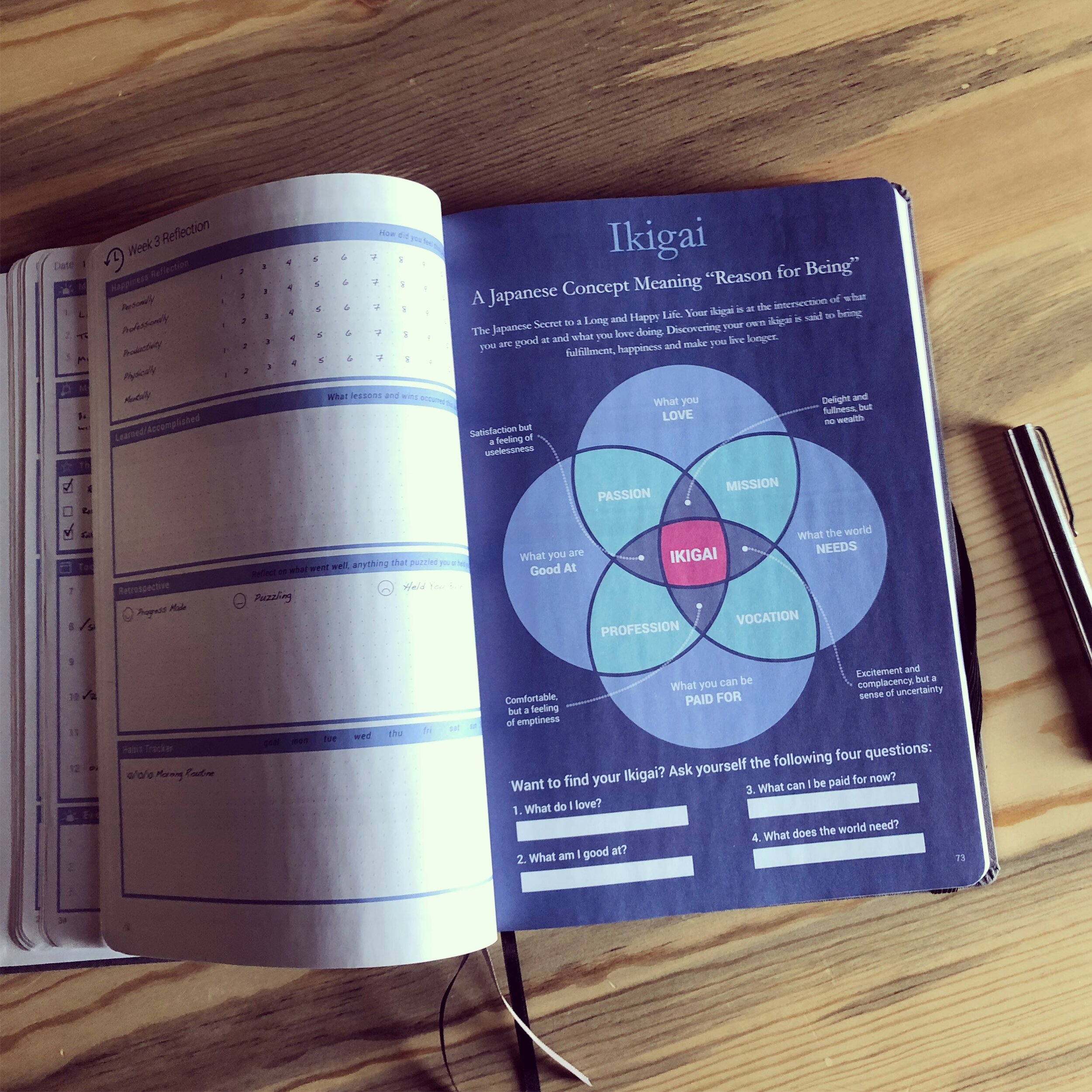
Along with writing down the long-term and short-term goals, the OAK Journal provides the method of how to achieve them. One of the things it encourages everyone to do is to follow Warren Rustand’s 10-10-10, wherein 10 minutes are spent on meditating, another 10 minutes on reading and another 10 minutes for journaling.
It is all about creating healthy habits from morning routines to evening activities. Keith stresses that it is an exercise in building willpower and discipline and motivating others to finish what they have begun. The journal additionally has sections where one can write down and track their daily and weekly progress.
“Be afraid, not of failing but of never trying.”
– Adam Beasley

As Keith recommended, more than just putting pen to paper, the best way to make sure that healthy habits are being developed and that the 90-day goals are being achieved is to have an accountability partner. Finding one in EO may not be too difficult as most members of this business community have similar experiences, qualities and aspirations.
Apart from gaining access to learning events like this, one of the advantages of joining EO is being surrounded by like-minded leaders, which provides life-enhancing connections and real conversations that can help one unlock their potentials and grow beyond their personal limits.
What is your goal in 2021? How do you plan to achieve it? Share your answers in the comment box below.