

BLOG
Building your team through a strong corporate culture
Having a strong and desirable corporate culture helps attract and retain good talents who perhaps share the same values with you and the people in your organisation. Every company has its own culture, and although not all corporate cultures are perfect, there’s something about it that draws the right individuals to your business.

Having a strong and desirable corporate culture helps attract and retain exceptional talent. Every company has its own values, and an inclusive and healthy culture can assist you to attract high-performing and engaged team members.
It’s time to look into your internal environment and assess what particular aspect of your culture keeps your team going and even brings in impressive recruits. To help you get started, some EO Melbourne members share their experiences and best practices when it comes to maintaining a culture that supports the growth of their business.
Nurturing relationships with key stakeholders
Having good relations with people you work with is a major factor for wanting to stay longer in an organisation. The same goes for third-party service providers, which prefer to conduct business with those they have amicable dealings with and those they can trust. This is why Austin Vaughan, Managing Director at Pacific Solar, emphasises strong relationships as part of their corporate culture. “Our core values are towards nurturing relationships with key stakeholders, such as contractors, suppliers, developers, and builders, so that they continue to think of Pacific Solar first when any new or forthcoming opportunities are presented. When something unexpected occurs (and it always does in construction), they have our back to pull us through and vice versa. A good cooperative approach is essential to our success.”
Open communication and encouragement of team members
Open communication helps build rapport with team members. It also enables business owners and HR managers to lessen misunderstanding and address concerns at the onset before things can blow up into serious issues.
Ben Stickland, Founder and CEO of Alliance Software, shared how they do it in his business. “The best corporate culture technique we have is a one-on-one interview with every staff member. We ask the staff member to reflect on challenges and coach them to consider and act on solutions. It's 30 minutes, that's all about them. We always ask the question ‘from a 1 to 10, how happy are you,’ and follow this up with ‘and what would it take to get to a 10’. People become unhappy for many different reasons and the key is to get to people early in their ‘unhappiness’ cycle and coach them to a good outcome rather than pretend there are no issues. Look for issues, don't avoid them.”
And for Dion Castle, CEO of Struber, it’s all about having “High-performance behaviours + high-performance habits”. A culture that fosters behaviours and habits that help increase productivity and create positive energy will encourage team members to always do their best and aim for the utmost results in all they do.
Building mutual respect and a sense of belongingness
Trust and respect are strong foundations of a good relationship and a positive corporate culture. But how do you achieve this? According to Steve Jackson, Director at PurpleMonky and Founder of Moon & Back Co., “People on the team respect each other, have fun with each other inside & outside of work, but most importantly, they support each other daily. No one is in it for themselves, and the ability to produce a shared vision where ‘when one person wins, the entire team wins’ is invaluable.”
Similarly, for Nyree Hibberd, CEO of Koh Living, it’s all about promoting a safe and healthy environment where those in the organisation feel they belong to the team. She explained, “We had a guest speaker in a recent EO forum, Fiona Robertson, who wrote ‘The Rules of Belonging’ and we applied it immediately in our business by asking each of the staff what they felt the rules of belonging and being accepted within Koh were. It was an amazing exercise to get clarity on the culture or rules of belonging, and we now use that not only in the interview process by selecting more carefully but also in the induction process by outlining those rules of belonging to help new staff slide in and feel more comfortable a lot faster.”
Culture is important in the longevity of a business and an organisation. Share with us below what particular culture you uphold within your company that strengthens your team and helps it go forward.
Paying it forward in the entrepreneurial journey
In the challenging entrepreneurial path, where sometimes the roads are unpaved, being on the receiving end of an act of kindness is a huge help. It can often go a long way, especially for those who are just starting on their journey. Even seasoned entrepreneurs have been recipients of a good deed at some point in their lives, and so they are paying this forward to others as well.
In the challenging entrepreneurial path, where sometimes the roads are unpaved, being on the receiving end of an act of kindness is a huge help. It can often go a long way, especially for those who are just starting on their journey. Even seasoned entrepreneurs have been recipients of a good deed at some point in their lives, and so they are paying this forward to others as well.
Also, to be part of a community of entrepreneurs for entrepreneurs, such as EO, is like having a haven where one can grow in a safe environment and have a strong support system when the going gets tough. EO Members reminisce the time when they received an act of kindness and how they’re doing the same to others.

The sense of gratitude is evident to Joanne Camilleri, General Manager of Telco Business Solutions Group, due to the help she has received from others. She stated, “I have so many to be grateful for but the support and kindness I receive from my business partner, fellow EO’er John Rovas, who has been the standout. He has constantly supported me, mentored me and continues to do so – thus far, we have clocked up 11 years in business and built 3 businesses together. I like to pay it forward through mentoring and coaching people by sharing my journey.”
Ben Stickland, Founder and CEO of Alliance Software, recalled, “I took a job fresh out of uni and 3 months in, I decided to leave and start my own business. My old boss had every right to be bad and kick me out. Instead, he gave me three months of free rent, phone and use of the laptop (which mattered back then) while I got started. I've always appreciated it, and now, I pay it forward by encouraging and helping my staff with their side hustle ideas.”
And for any other business, having great people within your team, and those you interact with play a great role in helping grow your enterprise. It’s a give-and-take relationship where both can be the giver and receiver of kindness. Dion Castle, CEO of Struber, echoed this when he said, “Our team and clients have supported or invested in our mission along the way. I am thankful to them every day.”
Entrepreneurs are particularly thankful to those who are ahead of them in the journey and never hesitated to mentor them and point them in the right direction. This is why Rahul Kale, Director at Sunpower Renewables, values the people who have helped him along the way. “I have had some great mentorship (and still do) and have made an effort to mentor some new up and converse as well. Something I want to do more of.”
It was also the same for Austin Vaughan, Managing Director at Pacific Solar and he is now extending the kindness not just within his team but also to businesses they work with. He shared, “I had some early-stage mentors that offered key directions for efficient systems that established a methodology that we still embrace today. In our day-to-day business, we engage many small to medium contractors. I like to think we have assisted many of them to grow their businesses on the back of operational assistance and advice presented to them. We feel a real sense of appreciation from our contractors as we try to treat them as part of our team. It's great to be a part of their success, too.”
In tough situations, such as the one we currently have, Nyree Hibberd, CEO of Koh Living, appreciates people who have been kind to them despite the challenges and hardships everyone is facing. “As we are in retail and tourism, we were particularly affected by the impact of COVID. I immediately started cancelling services, and my CFO and Bookkeeper both said that it wasn’t necessary. My bookkeeper would continue as normal no matter when she was paid, and the CFO said that all billing was suspended, not to be billed at a later date, but stopped until we got to a point of recovery that we could afford the services again. I almost cried because the help I needed the most was how to navigate financially through the mess that unfolded,” she shared.
Nyree continued, “We paid that forward by contacting all retailers that owed us money to make sure they understood payment was appreciated but not expected for the initial 2 months, and we set about providing value to our retail customer base by setting up webinars on various topics to help them with positive ways to enhance their business while compiling our book “Keeping Retail Alive” that was released in 2020 with all the key tips and tricks to help any retailer get through the crisis that COVID was and continues to be. When Victoria had its recent lockdown, all retailers that wanted it got a free copy of that book, anything we could do to have a positive impact on our retailers business drives us forward.”
Surely, a little help can go a long way, especially in the tumultuous path of entrepreneurship. Having people around you reach out and extend a hand can mean a lot. If you have an experience of kindness or if you have extended one, we’d love to hear them from you through your comments below.
How do you communicate bad news to your clients?
In every business, there are times when things take a different turn and projects can often head south, may it be due to human error, unforeseen circumstances, or uncontrollable situations. When things go awry, how do you break the bad news to your clients?
There are different approaches to it, depending on your client’s characteristics and your relationship with them. A few entrepreneurs share with us their experience and how they tackle the problem when the situation calls for it.

In every business, there are times when things take a different turn and projects can often head south, may it be due to human error, unforeseen circumstances, or uncontrollable situations. When things go awry, how do you break the bad news to your clients?
“Bad news is never good to deliver, but developing a process over time has made it easier to handle.”
- Steve Jackson
There are different approaches to it, depending on your client’s characteristics and your relationship with them. A few entrepreneurs share with us their experience and how they tackle the problem when the situation calls for it.
However, all of them have one common word – HONESTY.
Truly, there’s no better way than to be upfront about things, especially in business. It saves all parties time, resources, and effort when things are talked out promptly and issues are tackled head on.
Austin Vaughan, Managing Director at Pacific Solar, confirms this. “I would commonly take a direct approach as we feel honesty applies in all our communications,” he said.
Nyree Hibberd, CEO of Koh Living, expounds on this further. “Honestly, as it’s one of our 5 brand values: “We are honest, authentic, and down-to-earth; ‘keep it real’ is our number one mantra. We tell the truth and strive to always do what we say we’re going to do.” For us, bad news may be around stocks selling out or delays in arrivals of replenishment. So at every stage, we aim to keep the customer informed with accurate information to limit the interruption to their business. In most cases, we find it’s about the communication of the news rather than the news itself, so we aim to always be upfront and honest with any bad news,” she remarked.
While unfavourable news cannot be avoided, it often depends on how the information is delivered. But having a method or careful approach can help mitigate the negative impact it may bring to the client or business. However, it doesn’t stop with just telling the client about the problem. Coming up with alternatives at the onset can also help ease the worries of the client.
Steve Jackson, Director at PurpleMonky and Founder of Moon & Back Co., shared, “Bad news is never good to deliver, but developing a process over time has made it easier to handle. Firstly, an urgent team meeting internally to discuss what happened, and what solutions are available. Then, we make an immediate phone call with complete honesty to the client about what happened and how we want to work together to find the best solution. No matter the outcome, the client always respects the honesty & willingness to find the solution.”
In short, crisp words, Dion Castle, CEO of Struber, stated it simply but powerfully, “Communicate quickly, clearly, honestly with a solution ready.”
This is echoed by Joanne Camilleri, General Manager of Telco Business Solutions Group, “With complete honesty, authenticity and ensuring, if necessary, that we are taking ownership. Ideally, we communicate face to face. If appropriate, we would finish it off with the challenge or opportunity that is arising from the bad news.”
A more detailed explanation is provided by Ben Stickland, Founder and CEO of Alliance Software, “We do it with brutal honestly and as quickly as possible. The formula is simple: we tell clients this is what happened, this is how it'll affect you and this is what we're doing to fix it. We also always tell clients that right now, we're focused on the fix and when the dust settles, we'll do a review and work out how we avoid these problems in the future and make it right. In our space, clients are very understanding if you're upfront and drop everything to make things right.”
Have you experienced a similar situation where you have to break some bad news to your clients or customers? How do you do it? Share with us your approach and its effect on your business.
Budget-saving tips for more cost-efficient work operations
In business, it is important to note the resources coming in and the resources that are going out and being used – may it be in the form of cash, goods, time, and other things. Keeping up with your day-to-day operations may quite be a handful, but with a few tips, you may just be able to have a more cost-efficient day-to-day operation in your workplace.
We gathered some amazing ideas from entrepreneurs on how they budget their resources, lower their spending, and save money, time, and effort.

In business, it is important to track what’s being used, including cash, goods and, of course, time.
Keeping up with your day-to-day operations may quite be a handful, but with a few tips, you may just be able to have a more cost-efficient day-to-day operation in your workplace.
We gathered some amazing ideas from entrepreneurs on how they budget their resources, lower their spending, and save money, time, and effort.

Go paperless
The use of less or no paper at work is an earth-friendly initiative and also a great way of saving on costs. Besides, using paper a lot can take up so much space in your office. For Dion Castle, CEO of Struber, their way of doing this is to “make it really hard to print.” He added, “When your team stays digital, you save the planet and save on printing costs at the same time.”
Monitor expenditures

One way to stay on budget is to constantly keep your eye on your spending. Alliance Software Founder and CEO Ben Stickland shared how to do this. “Set a time (for us, it's every 6 months) to review all recurring expenditures and challenge whether you need them or perhaps need them at the level you use them. It only takes 10 mins and saves money on subscriptions that were good ideas but didn't get used,” he remarked.
Gather data and purchase correctly
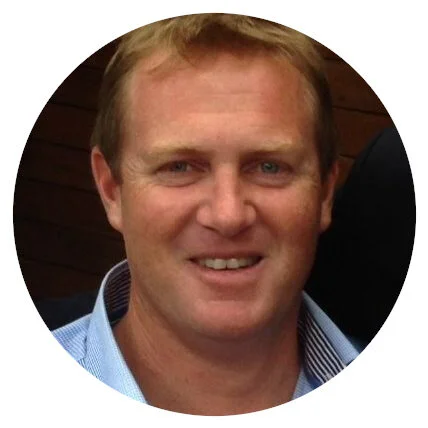
When purchases are done in bulk and large quantities, keeping track of spending might be challenging. However, with the current technology, it can be done fast, accurately and effectively. “With all our larger commercial solar projects, there are bulk materials to be procured, so purchasing correctly is the key to cost-efficient & profitable operation. Also, utilising streamlined operational systems and apps to efficiently capture details from all parties involved reduces admin hours considerably. This presents a very professional outcome that is appreciated by the end customers,” explained Austin Vaughan, Managing Director at Pacific Solar.
Put systems and have business rhythms

Being cost-efficient is about keeping track of money spent as well as the amount of time spent on the kind of work that has to be done. Putting a system in place and coming up with a regular business rhythm can save a lot of time, effort and resources. This is what Malcolm Bean, Director at Beanmkrgy, and his team have been doing in their organisation. "We come up with simple systems as much as possible and agree on daily or weekly rhythms for meetings and planning wherein we stick to start and finish times. The more we are aligned and adhere to business rhythms, the more we multiply productivity. So, most of our focus is productivity, which is getting more out of each hour as opposed to cost savings,” he stated.
Think of various strategies that may be applied to your business

Look closely at how you do things and get your team to brainstorm and come up with strategies that will help you manage your cost more effectively. Moreover, be sure that these strategies are executed in your business. Rahul Kale, Director at Sunpower Renewables, revealed what they’ve done within their business.
According to Rahul, “We went through an exercise to identify the top 2-3 operational cost drivers and implemented a proper strategy to manage these costs. We also ran an internal competition within the organization and the person with the best idea to save costs over a period was rewarded. This strategy was well communicated and shared within the organization. It is important to get everyone’s buy-in to make this a success. We try to do it as much in-house as possible to save costs, and as of late, the simpler things seem to be helping us save a lot:
Being more energy-efficient by turning off the computers and lights before we leave;
Calling our suppliers and asking for discounts if we buy in bulk (important to have good inventory control and line-of-sight on future orders to do this);
Replacing paper-printing marketing material with digital and online material;
Utilising technology and VC tools to reduce commuting and travelling costs;
Doing a barter system with businesses in the area. We specifically worked with a data & AI business that we have helped go energy-efficient, and they returned the benefits via reduced bills as their energy costs have plummeted.”
Automate

Taking advantage of technology and, at the same time, making less use of physical resources is one way of lowering costs. This is why Cameron Bell, CEO at Pyrochar, utilise available software to his business’ advantage.
“I think people really overpay and underuse software. Many businesses (including my own) still rely very heavily on human input for certain tasks and requirements that could become automated with the right level of skill. My secret weapon is Zapier, which is used to automate as many things as possible. While I do currently automate a fair amount, I know I could do it more with greater skill in that area which would allow for: a.) lower staff costs or b.) a reallocation of staff capital to revenue-generating processes that need human input,” he shared.
These are just a few things that you might be able to apply to your own business as well, but there are still more best practices and suggestions out there on how you can manage your resources well. Now, if you have an office budget-saving tip, we would be happy to hear them. Share your tips below in the comment section.
What quirky hobbies do entrepreneurs have?
Hobbies can help an individual learn new things, acquire additional knowledge, declutter the mind, bond with people who share the same interest, and warm the heart. Hobbies are beneficial to the physical, mental and emotional well-being of a person, especially to entrepreneurs and business leaders.
Intriguingly, some entrepreneurs have quirky hobbies that show us their fun side that we do not get to see most often. EO Melbourne members share their interests when they’re not on their laptops immersed in their business.
Hobbies can help an individual learn new things, acquire additional knowledge, declutter the mind, bond with people who share the same interest, and warm the heart. Hobbies are beneficial to the physical, mental and emotional well-being of a people, especially entrepreneurs and business leaders.
Intriguingly, some entrepreneurs have quirky hobbies, showing us their fun side that we do not get to see most often. Here are some of the interesting pursuits of EO Melbourne members that they do when they’re not on their laptops or immersed in their business.
Kitesurfing

Kitesurfing is the leisurely pursuit of Cesar Aldea, Founder and Managing Director of Aldea Consulting.
According to Cesar, “I started kitesurfing back in 2007 when I arrived in Australia. I love it because it keeps me fit and takes my mind away from any pressing problems, allowing me the time to reset and come back to it with a fresh mindset.”
Flying a helicopter

Getting into the air is also a penchant of Honeycomb Strategy Managing Director John Bevitt. “I started learning to fly a helicopter last year when I turned 30,” he declared.
“It was something I've always wanted to do. My wife bought me a trial flight for my birthday and I absolutely LOVED IT. In terms of what I love about it - it's the feeling of seeing something familiar from a new perspective, looking down over Melbourne and seeing so many familiar places. Just the freedom of flying in a 3d space and being able to move in any direction (compared to a plane for instance) is simply wonderful,” John shared.
Growing cacti

“I love cactus for some weird reason,” says Andrew Colliver, Executive Director and Co-founder of Banjo Loans. He explained, “My interest commenced on visiting our happy place in Sorrento and there was a massive cactus garden against a Mexican-looking wall. It was further reinforced on a trip to California 2 years ago. Each variety is so unique; they can be very tricky to plant and some sting like crazy – and they grow so slowly. Patience is required, a virtue I lack.”
“Some varieties have incredible flowers growing from a hostile-looking plant. They appear to be the adaptive masters of growing and surviving in a hostile environment – the poster child of a weird individual combined with resilience. And unrealistically, I somewhat expected a dinosaur to suddenly appear one day and start munching on them which would just cap off a great day,” Andrew said.
Stacking books

WeTeachMe Founder and EO Melbourne Past President Kym Huynh stacks books. “You would be amazed at how many options or variations are possible,” he remarked.
“I find the art of stacking books both meditative and cathartic. From the endless variations (all vertical, all horizontal, half up/half down, sort-by-alphabet, sort-by-colour, sort-by-size, sort-by-genre, sort-by-author and the endless combinations thereof, including but not limited to combining with art, photo frames filled with pictures of loved ones and cherished memories that instantly transport one to moments of pure unadulterated joy, and objects discovered in strange and foreign lands) to conscious choices in symmetry or asymmetry (perfect if one feels a sense of anarchy or looming irony), stacking books perfectly combines art in its creativity and expression and organisation in the structure of carefully-selected or curated books.”
“In this sense, I find that it mirrors life quite beautifully, and I'm sure there are theoretical links to leadership here in that it requires both creativity and structure for one to be effective and free. In actuality, I'm just practising leadership in each corner of the bookshelf or coffee table. That's what I'll just keep telling myself. Stacking books is practising life in a safe and contained environment where it is OK to fail or make mistakes,” he reflected.
Collecting and restoring Saab cars

“I collect Saab cars and restore the classic 900s,” shared James Murray, Founder & Managing Director of Work Healthy Australia. “I started doing it about a year ago,” he continued. “Once, I had a head-on collision in a Classic Saab 900 and walked away. If I had been driving my Ute I would have had a much worse outcome!”
“I drove Saabs for many years after that but stopped when they went under in 2011. Last year, I realized that SUVs were not for me as I missed my Saabs too much. Since then it’s all Saabs! I have two of the wagons that I use for work and they are both crazy fun to drive,” James revealed.
Paragliding

A sports enthusiast and Executive Director of Sports Tech World Series, Johann Odou is into paragliding since 2012/2013.
“There is something magical about flying. Learning to operate in a different world, one where you go up, down, left, right, forward and back. It's a pretty special feeling to be able to look down on birds flying,” Johann quipped.
Collecting chess sets from the USSR
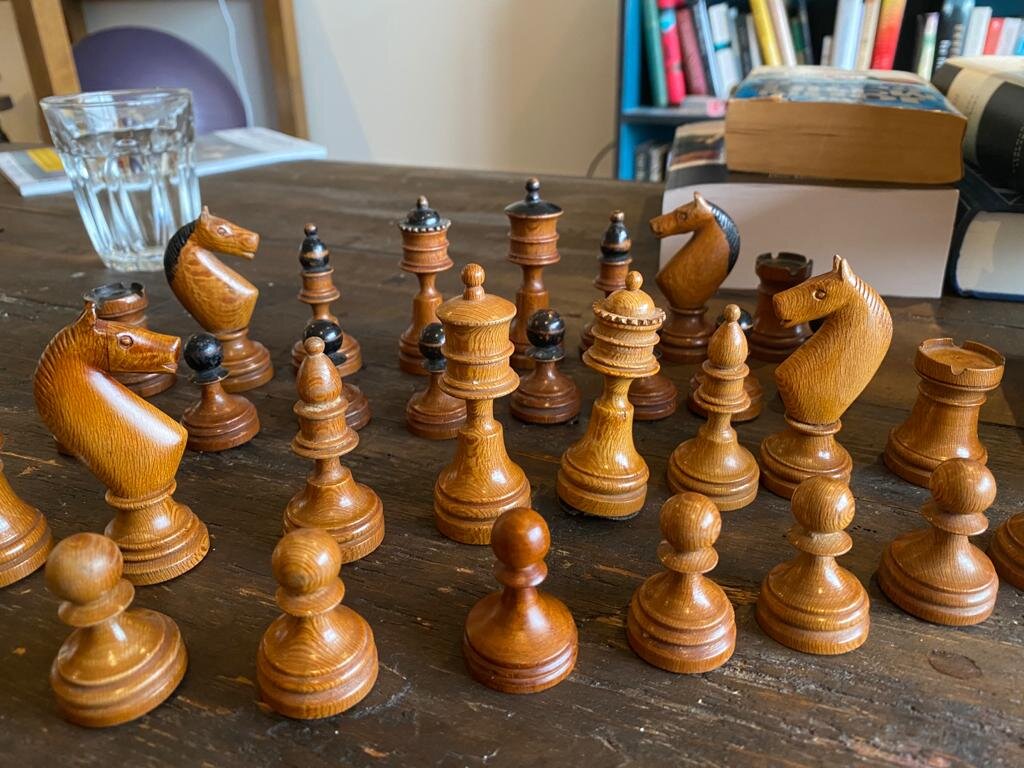
Rankin Business Lawyers Principal and Founder Rob Roy Rankin has a fascinating hobby. “I collect chess sets with a focus on sets from the USSR.”
Well, if one is a chess enthusiast, why not collect sets from the land of the chess champions? Chess and Russia have a long history together as it is believed that their rulers were partial to this game.
Rob recalled, “I started collecting chess sets back in 1991 when I made my first visit to the USSR. Chess was such an enormous part of Russian and soviet culture in the 20th century and the variety of chess sets produced in that period is incredible. So much of the nation’s culture and history can be gleaned form each set and every piece of each set is a small work of art.”
pinball machines

Dylan Smith, Founder and Managing Director of Rubix, found pinball machines cool. “I started only two years ago and now, I’ve got fifteen of the beautiful creations.”
What makes him take interest in pinball machines is that “I love every tiny little aspect of it. I strongly believe it is the ultimate example of lessons on how to run a global long term business using some of the most complicated and advanced skill sets, whilst keeping a diverse global customer base happy and screaming for innovations, but then complaining when the machines deviate from their definition of pinball.”
He added, “Disciplines include software engineering, mechanical engineering, game theory, manufacturing, pricing, global distribution, support, innovation, sound, lighting, theme licensing, cost of goods, fussy customers, theme integration, storage, business operations, artwork, tournament management and world ranking algorithms plus lots more!”
Cooking new and interesting food

Of course, there are also hobbies that we may find simple, yet relevant in the current situation. For Ben Stickland, Founder and CEO of Alliance Software, he found his interest in preparing food for his family. “I'm enjoying cooking as a hobby, works well in lockdown. Every weekend, I figure out at least one new meal and cook it. My goal is to transition our family to new & interesting food, and a few months in it is working well. It works for me because my wife and children all love food and so it's allowing us to explore new meals together,” he shared.
While most of his growth as an entrepreneur comes from the people he interacts with, many of which are from EO, he finds personal and professional growth through the readings that he does. Still, cooking provides a different kind of value. “Cooking is about an escape. It's a small, completable project. Often as entrepreneurs, we're working on big things that sometimes don't have clear finish lines. When I cook a meal, it's done. Delicious or disgusting, it's done,” he added.
There are many other hobbies out there that entrepreneurs can be involved in and benefit from. What rare or quirky hobby do you have that is not on the list above? Share with us why you enjoy it through the comments section below.
Ben Stickland adds value to people’s lives
“My philosophy is I want to find a way for everybody to win. There are some cultures where you only win if other people lose. I want to do business with people and want them to have a great experience. I want to be able to meet every client that I've worked within 20 years’ time and make them feel that they got good value. It's one of the core values I have that I add value to people's lives and not take away,” declares Alliance Software CEO and Owner, Ben Stickland.
“My philosophy is I want to find a way for everybody to win. There are some cultures where you only win if other people lose. I want to do business with people and want them to have a great experience. I want to be able to meet every client that I've worked within 20 years’ time and make them feel that they got good value. It's one of the core values I have that I add value to people's lives and not take away,” declares Alliance Software CEO and Owner, Ben Stickland.

Solving problems, family and his Christian faith are some of Ben’s great passions. He admits that he does not have any entrepreneurial background in his family, but he has always been into ventures since he was a kid. “I was born in a small country town and then moved to a regional city before I became a teenager. I had a very good family life to middle-income parents and a couple of older sisters. My dad was a teacher, and my mum was a nurse. They have no entrepreneurial background,” he began.
He even remembers his childhood wherein he was embarrassed that his father was a champion knitter who made jumpers and placed them in exhibitions. Ben grew up in a tough little town where everyone played football and fathers displayed masculine and macho prowess. Now that he perceives things differently, Ben believes that people should do what they want to do, as his father did in knitting and him in taking the entrepreneurial route.
“Even from a young age, I was always trying various entrepreneurial ventures. When I was little, I bought myself a saxophone and a windsurfer by selling pot plants on the side of the road, doing things like that. I was always trying to do weird things to make money as a kid, and lots of them failed spectacularly. But, it was a hobby of mine as a child,” Ben continued.
It goes to show that he has exhibited the entrepreneurial spirit at an early age. In fact, he started Alliance Software when he was still in university. Except for his service in the church, Ben never had a full-time job in any company. He immediately took the business journey when he had the opportunity. He narrated, “I worked with the church for two or three years and did that at the same time I've had some other part-time roles. I was passionate about the youth work that I was doing with the church where I was involved. I effectively started my business out of university. I've never had a real job.”
Alliance Software was the banner under which he did contract programming for other businesses while he was still studying. “The reason I started it was because it was convenient, and I could make better money than I could in doing student jobs. I think it's easier to start a business while still young because in my case, I didn't need much money since I was living with my parents. Then I got married quite young. My wife was on a good income, and I was running Alliance Software,” explained Ben.
At the end of his Master’s course in university, he got a job offer from a company called Accenture, a large multi-national consulting firm. The offer was great and tempting. At that time, Ben took a Master’s degree, as he thought he would get a real career, and it seemed Accenture was the answer. But he seriously pondered the kind of life he and his family would have if he accepts the offer. He recalled that fateful night, “My wife and I went out for dinner, and I remember we were looking over the sea and talking about it. We knew people who worked at Accenture and the lifestyle they had. That was the night when we decided to reject the offer and try to be a real business owner.”
While Alliance Software is his primary business, Ben has also dabbled in other enterprises as well. Another business he put up was Noble Samurai, which is a tech startup. He also built Web2TV, a business in the age care space, which he sold to a publicly listed company. He’s also looking at establishing another venture, although he’s still fiddling with the new business concept.
Since there are low barriers to entry in the industry where he is operating, it was not a difficult space for him to found an enterprise. It is true that Ben found it easy to start some businesses, but there were tougher times along his entrepreneurial path. Making a business flourish is a huge challenge in itself. His Noble Samurai business started very successfully and was popular in its category as an SEO tool. But the industry collapsed, tools in that trade became less popular, and competitors were fleeing. It was an exciting venture that made lots of money that fell into a crashing failure. Ben and his team had to endeavour to rebuild it from the ground up to keep it running.
Then he was embroiled in a legal battle with a customer, one of the lows he experienced as an entrepreneur. Still, he regards himself a person who tries to find amicable solutions to a whole range of problems. There are also misconceptions about businesses and business owners that others see differently. “People look at businesses and think they’re all well-run, orderly, organised, and efficient. As I've gotten to know more businesses, I've realised that a lot of businesses are not well-run. The other thing is that most business owners are dysfunctional in some way or another. They generally have significant weaknesses in certain areas of their life. They only succeed because they set up processes that don't need them to be strong in those areas. A lot of business owners are just holding on by the seat of their pants. I can only think of two or three people, who I would consider genuinely well-rounded and can excel across five or six different business functions where they are involved. I'm not one of them. Business people are not as clever or capable as I thought they would be when I started my business,” Ben declared.
On the flipside, one of the highs of his entrepreneurial adventure was when he launched one of his businesses fruitfully. He also felt euphoric when it brought in a huge income. The last few years, he has been happy that his ventures are doing well, especially when it continues to grow, earning solid revenues and good profits.
For Ben, the two key factors that provided him with continuous growth are the books he reads and the people who surround him. In fact, he regards the two books he read in EO, Scaling Up and Traction, as good tools that he was able to use for his businesses. “Both are business process books and are excellent, in my opinion. We’ve implemented a lot of the principles, such as deciding our target market, deciding how we’re going to run the business with people, and deciding how we’re going to execute the processes. At a pragmatic level, they’ve been very good, and I highly recommend them,” he stated.
With regards to EO, Ben shared an anecdote about his entry into the organisation. Two of his clients were both EO members and recommended him to be part of this group. “I joined, paid my dues and turned up without knowing what it was I was joining, which was in hindsight, a little bit silly. There are other obvious ways to assess it and get some input. But that was my experience. I got a couple of suggestions from people I trusted, and I paid up and came along,” he laughingly recounted.
Nevertheless, he has received great value from becoming a member of EO. For him, “It has been an opportunity to see how high-calibre business owners approach problems and work through situations. It is like having a sounding board to talk those through with them. Seeing how other people wrestle with challenges, and the kinds of actions they take, it gives you a whole different perspective on how you act. It allows you to upgrade your mental operating system to the way that different people would operate, rather than just seeing things the way they always seem.”
From books, people and experiences, Ben has established rhythms in their business that have become some of their best practices. They have daily, weekly, monthly, quarterly, annual rhythms of setting goals, strategy, and check-ins to identify where they are off and what are the problems present. Because Ben believes that people are not lazy and will want to work when given the proper motivation and environment, he leads his team towards their goals through right incentives and rewards, recognition, clear directions, celebrations during victories, and good corporate values.
Managing a business and the people in it may vary from one business owner to another. Ben has structured his business where he doesn’t have to work crazy hours so he can spend more time with his wife and two children. He’s normally home by 5:30 at night and takes dinner together with his family. His son, who is 12 years old, shows that he can be an adept computer programming by learning free stuff on the internet. He stressed how individuals, especially business owners, can learn from the internet without shelling out a lot of money. “I heard this crazy story about the guy who was the world record javelin thrower. He got to the position of being the best in the world, but he never had a coach, he never had a lesson. He had learned everything about javelin throwing from YouTube,” Ben shared.
Ben pointed out that training can be low-cost nowadays because of the various resources available online. In fact, they are training their staff on a particular technology at the moment, and they found a great training resource at a very low price. He hopes to grow his businesses to become a bigger version of what they’re doing now. He wants to increase the number of staff and do more startups, probably some joint ventures with his existing staff that he has good relations to be his business partner.
It was not so long ago when Ben found himself at the beginning of his entrepreneurial journey. Now, he has built a company that is almost two decades in operation and several other ventures along the way. To those who want to become entrepreneurs, his suggestion is this, “Keep your costs low. Take a job where you have to sell to make money. Don't beaver away building something in your garage for two years before you go and sell it. Take the idea and go and pitch it to people first. Then get your first customers to help pay for the product to be created or pay for the service to come into existence.”
Different strategies and management styles can be applied depending on the kind of business model one has. But the simple things new entrepreneurs should know, according to Ben, is to buy a thing or create a product or do some work and then sell that product or service for profit. It only gets complicated once the business grows due to higher demands of work. There’s no need to perfect everything. For him, even it’s half-baked, one should take the risk and test its viability in the market with the least possible cost. Then take the metrics to evaluate where one can improve and develop.
Most of all, he cited the need for a business owner to be curious and humble enough to accept that there are more things to be learned as one continues in the entrepreneurial journey. Ben expressed something about himself, “I like to surround myself with smart people. I want to be curious. I want to be learning new things. For me, that's a big passion. That is what drives me. I enjoy the learning process. I enjoy the discovery. I enjoy figuring stuff out. I like working with people who are thinking in different ways. There's no grand message in the realities of the journey. The journey is still pretty young in many ways. I feel very fortunate, and I think I'm very lucky to be able to have this business, which has given me something that I enjoy doing where I get to work with good people.”
Know more about Ben Stickland through his LinkedIn profile. More on Alliance Software at https://www.alliancesoftware.com.au/.