

BLOG
Taking mentorship to a different level the second time around
Mentorship is a significant factor in one’s entrepreneurial development. Having a guide along the challenging path of the entrepreneurial journey helps accelerate one’s growth, progress and momentum. The good thing about mentorship is that it can be done over a specific period or can be repeated at certain points of the journey or can be done continuously, depending on one’s need.
Mentorship is a significant factor in one’s entrepreneurial development. Having a guide along the challenging path of the entrepreneurial journey helps accelerate one’s growth, progress and momentum. The good thing about mentorship is that it can be done over a specific period or can be repeated at certain points of the journey or can be done continuously, depending on one’s need.

For Costa Vasili, CEO of Ethnolink, this is not the first time he is taking part as a mentee. “It’s my second time in the mentorship program. I had a really good experience in 2019 and learned a lot of helpful experiences, particularly around leadership and people management. This time, I was looking for a mentor who had skills in significant growth and also who had potentially exited a business at some point in their career as well. I was really looking for something different just for a different type of mentorship experience. They're both very different, but both are very, very helpful.”

This year, Costa’s mentor is Stuart Marburg, Director of TenPaces, who was once an EO member himself. Stuart accepted the invitation to become a mentor this year to support other entrepreneurs. “I’ve been doing it for a number of years. I used to be an EO member myself and I thought some of my experiences could be helpful to other EO members who are growing their business, that's why I got involved.”
Despite this being his second time in the mentorship program, Costa admits that he still has a lot to learn and that there’s always room for improvement and growth. He is thankful that through his mentorship sessions with Stuart, he is able to acquire additional knowledge. “My blind window of what I don't know is being further opened by Stuart because he knows so much and has experienced so much in his career, and I get to learn from his experiences in a considerable way. For me, that's been the most important part. It’s not just getting advice but actually learning about things to avoid and hearing stories about similar experiences that he's gone through or similar issues or challenges in his career.”
Stuart’s entrepreneurial story is something that Costa finds very inspiring. “Stuart sold his business to iinet - one of the largest telecommunications companies in Australia in 2010. He and his business partner were the shareholders and they sold Netspace for $40m. In order to do that, they were able to grow the business to a significant level in a relatively short amount of time and position the business in a way that was really desirable for a potential acquirer. In that case, they were able to have a really strong exit. So, they had a great business and they sold it for a really great price and I think that, in particular, has been really, really insightful for me,” Costa shared.
On the other hand, Stuart acknowledges that he also learned from Costa during the mentorship process. “I’ve enjoyed it and I hope he has as well. I’ve learned some different things about his business. Hopefully, some of my experiences have been helpful for him. I just find it interesting learning about different businesses and different ideas, different ways that different people market and run their business and the like, especially in this current era of everything being online and having to manage people remotely,” Stuart said.
It also helps that Costa and Stuart found a lot of commonalities when it comes to their values and goals. Costa expounded on this, “I can tell that Stuart's a very caring person. He cares about his family, he cares about his people, he cares about what he applies himself to as well. He's extremely considerate in the way in which he approaches issues. He fights for fairness and he's just a very, very ethical person. Working with someone in a mentorship capacity who is similar to me in that way has been really, really helpful because I don't feel as though the advice I’m being given is in direct conflict with my own values.”
Stuart added, “The common ground is that I was an EO member, he is an EO member and I’m pretty passionate about helping people who are truly on their way to having success in the business and growing their business.”
Costa is grateful for all the positive things that mentorship has contributed to his growth and the growth of his company. “Stuart's been instrumental in helping shape the strategic direction of Ethnolink for the next five to ten years. Without his push and without his mentorship, I probably wouldn't have been able to find the courage independently to make some big decisions about the future of our enterprise. Absolutely, I'd say it's been very life-changing,” Costa acknowledged.
He appreciates taking a break in between his mentorship programs to fully absorb all his learnings and being able to apply them to his journey. “Because I took a break between 2019 and 2020, I found that having that one year break just gave me a bit of time to absorb the year prior. So, it gave me time to reflect and review the notes from the mentorship. One thing I find about coaching or mentorship, in general, is that sometimes it's just so fast-paced, always doing and always executing, rather than having the opportunity just to settle and reflect. So, I think having a year off the mentorship program was really helpful for me to also find that renewed vigour to go in for this second year,” he explained.
Overall, it’s something that Costa and Stuart recommend for entrepreneurs to experience, whether as a mentee or a mentor. Stuart remarked, “I think that just for the same reason they've joined EO and for the same reason that they contribute and go to a forum that's why they should do it. At the same time, they need to be open about themselves and be open to their mentor and to them (Mentorship Committee), I think it's James who runs the mentorship, about what they're trying to get out of it so that the right mentors can be paired with the right mentees.”
What are your experiences having a mentor or being a mentor to someone? EO Melbourne will be having another run of its Mentorship Program for its members in March 2022. To learn more about the program, visit https://www.eomelbourne.org/mentorship.
We asked the question: As an entrepreneur, how do you practice diversity and inclusion in the workplace?
Having a diverse workforce and ensuring the inclusion of everyone within an organisation – regardless of race, gender or beliefs – help grow a company’s corporate culture, enhance one’s competitive edge and contribute to its bottom line. If you want to learn how to uphold diversity and inclusion in the workplace, read the stories and tips from Anou Khanijou, Director of IFOTA Group and Managing Director of anouconcept; Anthony Holdstock, Partner at Sharp & Carter; Nyree Hibberd, CEO of Koh Living; and Costa Vasili, CEO and Founder of EthnoLink.
Having a diverse workforce and ensuring the inclusion of everyone within an organisation – regardless of race, gender or beliefs – help grow a company’s corporate culture, enhance one’s competitive edge and contribute to its bottom line. Entrepreneurs share their experience and tips on how they uphold diversity and inclusion in the workplace.
“Throughout my journey as an entrepreneur and even as an individual, I have been very fortunate to meet people from diverse backgrounds who helped me get to where I am now. I believe diversity and inclusion occur when different people from different experiences come together with their shared stories and talents to work collaboratively.”
- Anou Khanijou, Director of IFOTA Group and Managing Director of anouconcept

Anou believes that practising diversity and inclusion in the workplace is essential for a thriving business. “It encourages innovation, creativity and a sense of belonging and purpose. In my companies – IFOTA, a uniform wholesaler, and anouconcept, a PR and marketing firm – we have team members from diverse backgrounds. We have a work culture that embraces diversity and promotes equality. Culture may seem amorphous and vague, but to us, it means concrete actions in the workplace. These include, for example, having both men and women in leadership or management roles, hiring people from a variety of backgrounds, asking team members to contribute ideas, and respecting those ideas by turning them into action. Even simple activities like shared lunches from different cultural backgrounds and joint birthday celebrations are ways in which we promote unity in diversity,” Anou cited.
“I work with a lot of creative minds and being inclusive means acknowledging their skills, giving them the freedom to be innovative and to make suggestions, and allowing them to be themselves at work. Promoting diversity and inclusion also involves having the right attitude towards challenges and mistakes. We need to recognise that not everybody has the same experience and lessons in life. I got to where I am today because I learned from my failures and I was given second and third chances. My team deserves the same, and I see mistakes as learning opportunities,” she continued.
Recognising the value in people’s diverse experiences and backgrounds, Anou mentioned three tips to effectively promote diversity and inclusion in the workplace:
Know your staff and know them well. Know what they have to offer and encourage them to participate based on their unique skills and needs.
Be open to learning. Listen and learn from and together with others.
Practice what you preach and set an example. By doing so, you create an empowering work environment where your team members trust you and want to collaborate with you.
“Diversity and inclusion have become - and rightfully so - one of the hottest topics across corporations in recent times. At Sharp & Carter, our guiding pillars are Trust, Generosity, Care and Humility.”
- Anthony Holdstock, Partner at Sharp & Carter

Sharp & Carter is more than just another recruitment agency. It is a team of individuals who aspire to change the way the recruitment industry is perceived and who believe that success can be achieved by putting people’s interests first.
“As such, we work with several blue-chip listed companies and many corporate responsible organisations to try and achieve better diversity and inclusion, not only in our workplace but also in theirs,” Anthony avowed.
“Guided by our pillars and values, our leadership group developed a set of non-negotiable behaviours that we, as leaders, must always uphold and remain constantly accountable to. This, in turn, has resulted in a culture of inclusion where employees feel safe to be themselves, and safe in the knowledge that if they come to us with any issue or concern, we will always respond from a place of these four values. Ensuring that we at ‘the top’ always act in this manner assists in growing a culture whereby every staff member follows the lead and checks themselves against these values in their interactions,” he professed.
Anthony also pointed out interesting aspects of promoting diversity in an organisation. “For example, language and communication in writing advertisements are important to attract a diverse range of candidates. Using phrases like ‘up and coming’ can promote ageism, while unconscious bias terms such as ‘strong foundation’ are found to attract more male candidates, whereas phrases like ‘multi-faceted’ will attract more interest from females.”
He has a few pointers for those who want to develop diversity and inclusion in their respective businesses:
Awareness is the first step. For those looking to become more aware, there is an excellent book called “The Art of Thinking Clearly”. This book explains about biases and talks about eliminating bias to make better decisions.
Culture eats strategy for breakfast. Having the right people on the bus, people who genuinely care about making the workplace the best it can be is key. It starts from the top and cascades to the rest of the team. If this is pushed through the organisation and all the people and all the leaders believe in it then it will be driven through. If this breaks down and only happens in pockets you have the wrong people on the bus.
Assess, review and challenge. The best leaders self-assess and are constantly striving for improvement. Better habits more consistently lead to better outcomes.
“For us, the key to inclusion is to ensure that we appreciate the differences in each other while bringing everyone back to our core values in the business so that we’re all on the same page, looking to achieve the same core goals within the business.”
- Nyree Hibberd, CEO of Koh Living

“In terms of diversity, at Koh Living, both myself and my business partner, Tui Cordemans, are out and proud gay! I remember 15 years ago when we were first hiring staff, we would routinely ask if they had an issue working with people that we're gay. Today, it’s absurd to think that we even asked those questions, and we’re grateful for our growth and changes in society to not see ourselves as different at all,” Nyree shared.
Having a joint purpose, no matter what their role in the business, has always kept Nyree and Tui on track. “We focus on the things we have in common, not the things we have that are different,” she stated.
Because human connections and relationships are at the heart of their business, ‘Making people feel important’ is one of their corporate values where they promote and practise respect and responsibility. Whether it’s a customer, supplier or service provider, everyone is important at Koh Living.
With that, Nyree shares a few tips to those who want to advance diversity and inclusion in their teams:
Be aware of the diversity within your teams, especially if there are any staff that are sensitive to particular things.
Ensure that there is no room for sarcasm and putting down. In my experience, Australians can be rather cruel with jokes without being directly nasty – so in our warehousing environment where there was a lot of casual staff, we make it clear what is and isn’t acceptable.
Ensure each team member understands the important role they play in the overall goal of the business. We do this quarterly, having a quarter goal, and weekly. We check with each person their high priority activities for the week to help the business achieve its quarter goal. We find that it makes everyone feel they are on the same team, and there is little room for not feeling included when you’re part of the big picture.
“I firmly believe that a culture of diversity and inclusion in the workplace starts with the leadership team. We have assembled a leadership team from unique and diverse backgrounds who have different experiences and views on the world.”
- Costa Vasili, CEO and Founder of EthnoLink

Highlighting leadership as a significant part in diversity and inclusion in an organisation, Costa elucidated that “By starting from the top down, this culture developed in the leadership permeates through the rest of the company, helping to foster the diverse and inclusive culture that we want for the entire company.”
As one of Australia’s leading providers of professional translation services to corporate and government organisations, EthnoLink Language Services caters to clients with diverse composition or those that reach out to multi-lingual stakeholders with different backgrounds. Thus, diversity and inclusion are prevailing in Ethnolink’s internal and surrounding environments.
Costa then shares his tips for those who want to be better in this area of their business:
Be real and honest with yourself about how your company is performing on diversity and inclusion. It's a typical response to be defensive and thinks that everything is fine in your company, but if you want to make meaningful change, you need to be completely real with where you're currently at.
Take on the mindset of "the standard you walk past is the standard you accept". If you see or hear something that doesn't align with your company's endeavours to foster a diverse and inclusive culture, call it out and seek to educate.
When advertising for positions with your company, let potential applicants know that you are a diverse and inclusive workplace and that you encourage people from unique and diverse backgrounds to apply. Each of our job ads has a statement to that effect which can help improve the talent pool that you source new talent from.
Now, you can take these pieces of advice to your business and see how you can apply them to ensure you have a diverse workforce and inclusive organisation. Share with us your experience by leaving a comment below or sending us your story at communications@eomelbourne.org.
The language of entrepreneurship for Costa Vasili
EthnoLink’s founder and CEO Costa Vasili is a son of migrant parents. His father, who was born in Cyprus, moved to Australia at 13 years of age. It is where he met Costa's mother, who is also of Cypriot descent, and where Costa was born. To ensure that Costa had the best chance of success in Australia, his parents spoke to him and his brother mostly in English rather than in Greek. While this decision had a positive impact on Costa's English language skills, it impacted Costa's ability to speak Greek.
EthnoLink’s founder and CEO Costa Vasili is a son of migrant parents. His father, who was born in Cyprus, moved to Australia at 13 years of age. It is where he met Costa's mother, who is also of Cypriot descent, and where Costa was born. To ensure that Costa had the best chance of success in Australia, his parents spoke to him and his brother mostly in English rather than in Greek. While this decision had a positive impact on Costa's English language skills, it impacted Costa's ability to speak Greek.
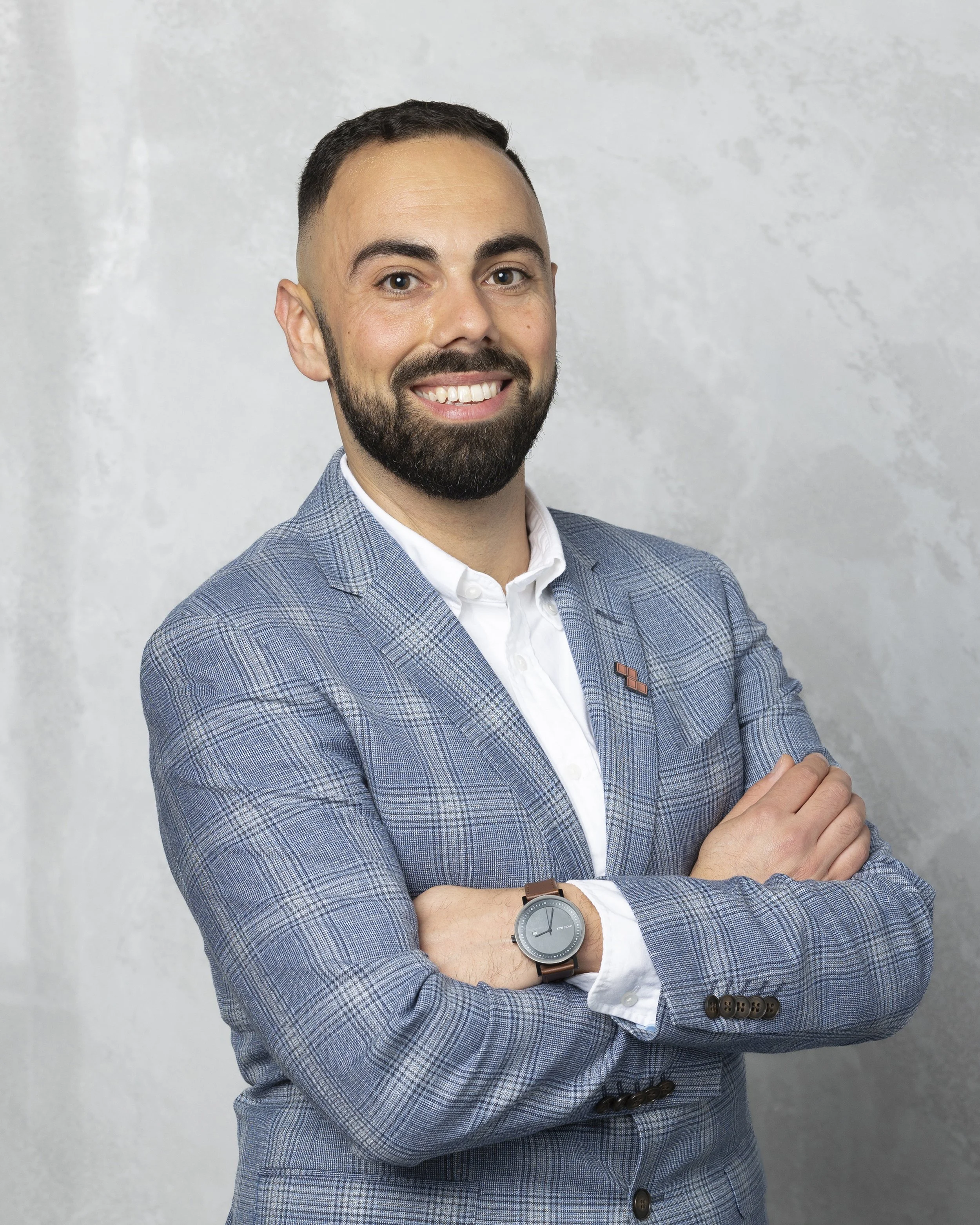
For example, Costa had great relations with his grandparents, who spoke almost exclusively in Greek, but he struggled to have in-depth conversations with them because of the language barrier. With that pain point in mind and with an opportunity to be introduced to the language services industry during his university years, Costa went off and started his translation company at the age of 20 years old, while still in university.
His company provides professional document translation services by certified translators to new migrants and travellers who want to apply for a visa, university admission or car rental services. They also serve Australian businesses and government agencies in translating legal contracts, manuals and marketing materials.
It was a blind leap of faith for Costa as he had no previous experience in owning and running a business. Although he had a few years of working in a corporate setting, he found that in shifting to the entrepreneurial space, there was no playbook or roadmap to becoming a business owner. He had no traditional business mentor when he was starting out, relying mostly on self-belief to get him going.
Costa found inspiration from his parents and the people he met in EO Melbourne. “From the EO community, I look up to so many people who are doing incredibly well. Because I can speak to them at a peer-to-peer level, I've been able to develop an appreciation for what they do. I have seen how remarkable these people in the EO community are, based on what they're doing with their lives and their businesses,” he said. Through those years, Costa has learned a few things that have helped him improve himself and his business.
4 business values of EthnoLink
According to Costa, “We have four values at EthnoLink. They are: better every day; real relationships; openness and honesty; and customer service excellence. The last one will always be part of our values. Even as our business and values may change over the years, that one will always be there because, without our customers, we don't have a business.”
He was able to develop a team that is values-driven, who have bought into the vision of helping to break down language barriers for individuals and businesses. As such, they are focused on their customers, ensuring that they are acting in the best interests of the people they serve.
3 things to note in translation and business
Understanding the meaning, having clarity, and giving attention to detail are three things that are essential in translating documents and in running a business. Costa explained, “First and foremost, we have to understand the meaning of the source text so that we can translate accurately into the target language. We apply this in the business context when we try to understand what our customers need to solve their problems. Secondly, clarity. One of the biggest reasons why translation projects fail is because the source text is not clear, which leads to ambiguity. In the business space, you need to be 100% clear in your communication with your team to ensure that they are acting on your advice or direction. The other part is attention to detail. In translation, it is a core skill because sometimes the slight nuance of a question or statement, if not translated accurately, can alter the entire meaning. In business, it is also a core skill because it can ensure excellence in the service you provide.”
2 qualities of an entrepreneur
Entrepreneurs can develop a myriad of qualities that can help them in successfully bringing their business towards its goal. However, Costa underscores two important ones. He cited perseverance for the non-technical quality, and then sales and marketing for the technical one.
“Entrepreneurs need to have the quality of perseverance. You cannot give up in business. If you don't build the mindset of perseverance before you start a business and while you're starting an early-stage business, then it's destined to fail. On a more actionable skill that business owners or entrepreneurs can build up, I would say marketing and sales because they are key at the start of most businesses. You need to focus on driving sales at the start, and that begins with having a strong understanding of what your customers want and need and help them understand that the solution you're providing is the right one for them. You also have to know where your customers are hanging out so that you can market to them,” he remarked.
1 major takeaway in his entrepreneurial journey
“Your life and the business journey are a matter of micro-choices or decisions,” declared Costa. He learned this from his philosophy class in university, which has become a pivotal moment in his life. The facilitator gave a difficult and uncomfortable scenario, to which Costa responded. As he was probed deeper, he ended up saying, 'I have no choice.' The facilitator corrected him and told him that he always has a choice.
“I realised very clearly how powerful I am as an individual because, in every moment in my life, I have a choice. Whatever the case, make the decision, own the decision, own the outcome, and own the consequence. I believe why I got into the business is because it gave me the strongest ability to make my own choices in my life,” he added.
Part of those choices is for him to take action and accountability, which he learned from the EO Accelerator Program. Surely, Costa has adopted the language of entrepreneurship. As he continues to learn, he shares this insight for others to pick up. “In my opinion, the number one thing that stops small businesses from growing quicker is their choice not to take action and not to execute. We all have strategies and ideas, but the difference between businesses that grow fast and those that grow slow is the ability to execute and put things into place. Within 12 months of entering the accelerator program, we doubled our revenue. For me, it shows that taking action has a huge impact on the success of your business,” he stated.
Know more about Costa Vasili through his LinkedIn profile. Read more on EthnoLink at https://www.ethnolink.com.au/.