

BLOG
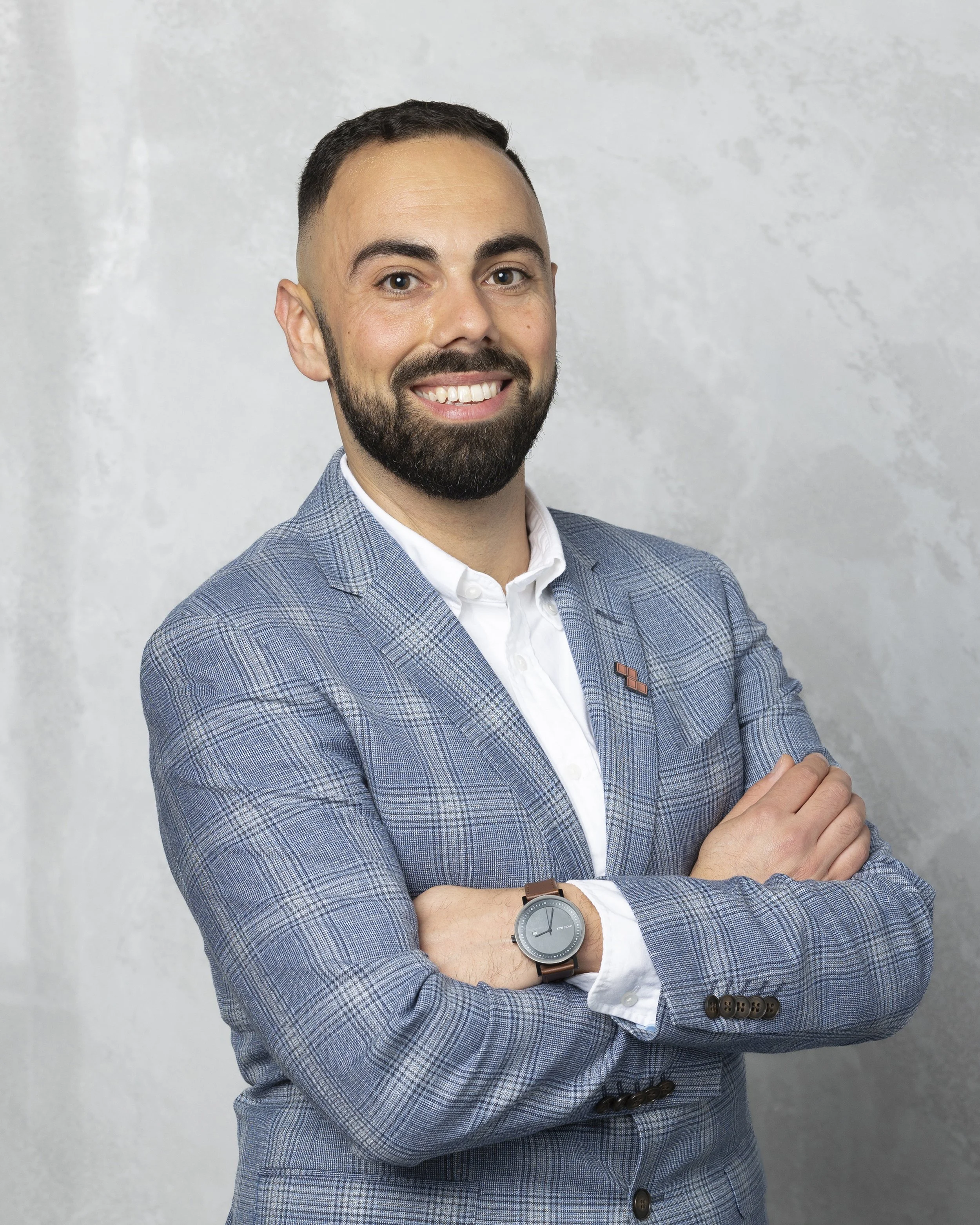
The language of entrepreneurship for Costa Vasili
EthnoLink’s founder and CEO Costa Vasili is a son of migrant parents. His father, who was born in Cyprus, moved to Australia at 13 years of age. It is where he met Costa's mother, who is also of Cypriot descent, and where Costa was born. To ensure that Costa had the best chance of success in Australia, his parents spoke to him and his brother mostly in English rather than in Greek. While this decision had a positive impact on Costa's English language skills, it impacted Costa's ability to speak Greek.
EthnoLink’s founder and CEO Costa Vasili is a son of migrant parents. His father, who was born in Cyprus, moved to Australia at 13 years of age. It is where he met Costa's mother, who is also of Cypriot descent, and where Costa was born. To ensure that Costa had the best chance of success in Australia, his parents spoke to him and his brother mostly in English rather than in Greek. While this decision had a positive impact on Costa's English language skills, it impacted Costa's ability to speak Greek.
For example, Costa had great relations with his grandparents, who spoke almost exclusively in Greek, but he struggled to have in-depth conversations with them because of the language barrier. With that pain point in mind and with an opportunity to be introduced to the language services industry during his university years, Costa went off and started his translation company at the age of 20 years old, while still in university.
His company provides professional document translation services by certified translators to new migrants and travellers who want to apply for a visa, university admission or car rental services. They also serve Australian businesses and government agencies in translating legal contracts, manuals and marketing materials.
It was a blind leap of faith for Costa as he had no previous experience in owning and running a business. Although he had a few years of working in a corporate setting, he found that in shifting to the entrepreneurial space, there was no playbook or roadmap to becoming a business owner. He had no traditional business mentor when he was starting out, relying mostly on self-belief to get him going.
Costa found inspiration from his parents and the people he met in EO Melbourne. “From the EO community, I look up to so many people who are doing incredibly well. Because I can speak to them at a peer-to-peer level, I've been able to develop an appreciation for what they do. I have seen how remarkable these people in the EO community are, based on what they're doing with their lives and their businesses,” he said. Through those years, Costa has learned a few things that have helped him improve himself and his business.
4 business values of EthnoLink
According to Costa, “We have four values at EthnoLink. They are: better every day; real relationships; openness and honesty; and customer service excellence. The last one will always be part of our values. Even as our business and values may change over the years, that one will always be there because, without our customers, we don't have a business.”
He was able to develop a team that is values-driven, who have bought into the vision of helping to break down language barriers for individuals and businesses. As such, they are focused on their customers, ensuring that they are acting in the best interests of the people they serve.
3 things to note in translation and business
Understanding the meaning, having clarity, and giving attention to detail are three things that are essential in translating documents and in running a business. Costa explained, “First and foremost, we have to understand the meaning of the source text so that we can translate accurately into the target language. We apply this in the business context when we try to understand what our customers need to solve their problems. Secondly, clarity. One of the biggest reasons why translation projects fail is because the source text is not clear, which leads to ambiguity. In the business space, you need to be 100% clear in your communication with your team to ensure that they are acting on your advice or direction. The other part is attention to detail. In translation, it is a core skill because sometimes the slight nuance of a question or statement, if not translated accurately, can alter the entire meaning. In business, it is also a core skill because it can ensure excellence in the service you provide.”
2 qualities of an entrepreneur
Entrepreneurs can develop a myriad of qualities that can help them in successfully bringing their business towards its goal. However, Costa underscores two important ones. He cited perseverance for the non-technical quality, and then sales and marketing for the technical one.
“Entrepreneurs need to have the quality of perseverance. You cannot give up in business. If you don't build the mindset of perseverance before you start a business and while you're starting an early-stage business, then it's destined to fail. On a more actionable skill that business owners or entrepreneurs can build up, I would say marketing and sales because they are key at the start of most businesses. You need to focus on driving sales at the start, and that begins with having a strong understanding of what your customers want and need and help them understand that the solution you're providing is the right one for them. You also have to know where your customers are hanging out so that you can market to them,” he remarked.
1 major takeaway in his entrepreneurial journey
“Your life and the business journey are a matter of micro-choices or decisions,” declared Costa. He learned this from his philosophy class in university, which has become a pivotal moment in his life. The facilitator gave a difficult and uncomfortable scenario, to which Costa responded. As he was probed deeper, he ended up saying, 'I have no choice.' The facilitator corrected him and told him that he always has a choice.
“I realised very clearly how powerful I am as an individual because, in every moment in my life, I have a choice. Whatever the case, make the decision, own the decision, own the outcome, and own the consequence. I believe why I got into the business is because it gave me the strongest ability to make my own choices in my life,” he added.
Part of those choices is for him to take action and accountability, which he learned from the EO Accelerator Program. Surely, Costa has adopted the language of entrepreneurship. As he continues to learn, he shares this insight for others to pick up. “In my opinion, the number one thing that stops small businesses from growing quicker is their choice not to take action and not to execute. We all have strategies and ideas, but the difference between businesses that grow fast and those that grow slow is the ability to execute and put things into place. Within 12 months of entering the accelerator program, we doubled our revenue. For me, it shows that taking action has a huge impact on the success of your business,” he stated.
Know more about Costa Vasili through his LinkedIn profile. Read more on EthnoLink at https://www.ethnolink.com.au/.
Ashley Woodcock’s message signs for entrepreneurs
RPM Hire owner and director Ashley Woodcock began his entrepreneurial journey while he was still at university, starting with only three signs for hire. He had low expectations for the business. Never has he imagined that he would grow his venture into a successful enterprise and enjoy the experience along the way.
RPM Hire owner and director Ashley Woodcock began his entrepreneurial journey while he was still at university, starting with only three signs for hire. He had low expectations for the business. Never has he imagined that he would grow his venture into a successful enterprise and enjoy the experience along the way.

Supplying variable message signs (VMS) is the core of Ashley’s business. For over seven years, he has expanded his company by doing other product lines and services and now has over 400 signs and other products for hire. It’s a niche industry, but Ashley found huge significance in what he is doing, serving not only their clients but the general public as well. “If we’re giving the public a warning, it allows them to change their habits, take a different route, or use another mode of transport for that day. During road closures, our signs are dotted along a detour route to help them navigate around the closures,” he explained.
Now, Ashely is sharing some message signs for upcoming entrepreneurs to help them navigate through the business journey, which may be full of potholes, mounds and twists and turns.
1.) "The best time is now"
Ashley was in university doing an entrepreneur class when someone came to him and said, “If you want to start a business, the best time to do it is now, when you don't have a mortgage and family pressures.” Starting a business requires one to put in a lot of time and often not take a lot of money out as initial profits are put back to finance the growth. While it is advisable to start the journey young, it doesn’t mean that it is not suitable for those who are beyond their youth. Regardless of age, it is always better to start sooner into the journey rather than to stall time until it’s too late.
2.) "Work smarter and harder"
He quoted a common saying that states, “work smarter, not harder”. Although Ashley somewhat agrees with it, he believes that it is better to be both working smart and working hard. With such a combination and with many opportunities available, he finds it as a winning recipe for success.
3.) "Stick to your values"
His values of honesty, operating with integrity and a level of openness, and putting their customers first meant that Ashley runs his business with good intentions. He pointed out, “We don't hide the fact that we're there to make money, but we're going to do it the right way and not rip people off or take advantage of them if they're in a desperate situation. I guess it starts with being a good person, leading right from the top and providing the best possible service.”
4.) "Be your customer’s partner"
“We look to partner with our customers as opposed to working for them. If we can take some of the heavy liftings off their shoulders, then we will do it. We've built ourselves as experts in the area. It goes right to even the small tasks. We are doing the hard work, understanding their pain points and making it easy for them,” he professed.
His business ethics of providing quality service to their clients and giving them value for their money have helped him to prosper in the industry. Ashley goes the extra mile, sometimes taking calls in the wee hours of the morning and answering them with a smile. To be the biggest or the cheapest business on their playing field is not his goal. For him, it is to be the best partner for his clients.
5.) "Find a solution to every challenge"
Getting and retaining good staff members and maintaining a positive cash flow are some of the major challenges for his business. RPM Hire is service-driven and needs high capital investment, so Ashley has to make sure that he has the best resources to deliver good service to their customers.
“Challenges are opportunities, opportunities to build a solution that highlights our values and strengthens relationships, and often lead to opening up further opportunities in the future,” he quipped. According to Ashley, you can come up with a solution if you are not afraid to think outside the square and do not regard the status quo as the best way to do things. He also stressed the need to match your business model with your strategy. He learned to resolve issues by sticking to his values, staying firm and moving past the negatives.
6.) "Enjoy the journey"
Despite the detours and road closures, what kept Ashley still on the track after all these years is that he enjoys whatever he is doing. There were a lot of long nights and after-hours phone calls, but he found all these exciting and gratifying. He added, “The highs have been watching the business grow and develop and turn into something so much bigger than myself. Watching the staff grow and take on the values of the business, and our customers giving great feedback about that as well, I find it fulfilling. So, yes, it's been a wonderful journey.”
7.) "Continue to grow"
What he enjoyed most in his being an entrepreneur is the journey of growth. With more than seven years on the journey, he still finds a lot of things to absorb and learn, which has brought him beyond the startup stage. “If you're willing to keep on learning and developing and pushing through, then that five-year mark is exciting, as it was for me,” he said.
Part of his continued growth is joining EO Melbourne in November last year. “I've enjoyed the experience. The events have been amazing, especially with the quality speakers and presenters. The forum experience is awesome because of its encouraging and motivating environment. There’s a diverse range of people, all with similar goals and parallel challenges in business, even though our businesses are very different.”
Moving forward, he wants to continue with that growth, focusing on his personal development and staff development. He wants to provide them with opportunities to grow and have a rewarding career. For his business, he plans to open up interstate later this year, with hopes to transition towards a national footprint five years from now. Because he knows his clients well, he is familiar with their pain points and the systems and processes that they need. “It's going to be a challenge for sure, but an exciting one,” the passionate entrepreneur said.
Know more about Ashley Woodcock through his LinkedIn profile. Read more on RPM Hire at http://www.rpmhire.com.au.
Alex Louey’s lessons on entrepreneurship through smartphone apps
With millions of apps available online that are increasing each year, an average smartphone user has a wide array of options on which ones to use that correspond to his needs. For Appscore co-founder and Managing Director Alex Louey, whose company has been developing apps, websites, cloud solutions, Internet of Things (IoT), and other technology-based products, it’s more than just building a software. Its mission is to create great customer experiences for their clients and make their lives easier every day.
With millions of apps available online that are increasing each year, an average smartphone user has a wide array of options on which ones to use that correspond to his needs. For Appscore co-founder and Managing Director Alex Louey, whose company has been developing apps, websites, cloud solutions, Internet of Things (IoT), and other technology-based products, it’s more than just building a software. Its mission is to create great customer experiences for their clients and make their lives easier every day.
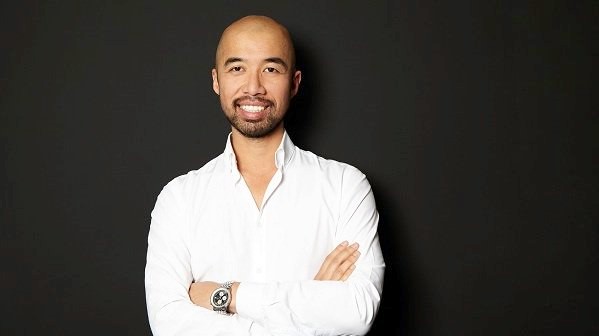
“We started off as a mobile app company. But now, we've progressed from being very focused on apps to focusing on making our customers’ lives easier and better for them to do things,” Alex quipped. “It means that we don’t look into a particular technology. Rather, we look at the problem to be solved and the appropriate technology to do it. We look at the entire life cycle. We look at the customer experience and the problem that they're facing. Then, we build the software and look at what we can do to help clients engage customers and get the customers to use their business software,” he added.
Although Appscore is a technology company, Alex admitted to not having any IT background. He built his career on project management, working in various banks. It was not until he and his mate, Nick Bell, one of the co-founders of AppsCore, decided to start a business that he got into this industry. His parents, who were Chinese immigrants that ran restaurants, had advised him to get an education, work for somebody, and not get into the restaurant business. “It’s true. I'm not in the restaurant business, but I am working for myself,” he countered.
With the challenges that come with owning and running a business, Alex shares his insights and some entrepreneurial lessons derived from smartphone apps.
1.) Facebook Messenger or WhatsApp: Communication is key
“I use this a lot because it's a way that I communicate and talk to a lot of people. The idea is when you start a business you've got to talk to a lot of people. Even with existing clients, you've got to go out, talk to them, take them out to lunches, find out their future objectives. And it's all about communication. It's all about building relationships,” Alex explained.
He emphasised that the key is having the right networks and the right relationships. By engaging various stakeholders in the business, it allows him to understand the values that are important to their customers and staff. “As the company grows, I continue to learn how to communicate with a broad range of people. You need to speak to them in their language. Different people process communication in different ways. Some are very visual, while others are very auditory. As I’ve learned recently, some challenges that I’ve had was not about others being difficult, but it’s the way I communicate with them. They don’t understand because they don’t process information the way I do. So, I’ve had to change the way I communicate to get my message across.”
In communicating with different kinds of people, Alex underscored the need to be genuine about it to show care. He receives and exhibits care through his engagement with EO Melbourne, where he found value in talking to people who share similar experiences with him and can empathise with his concerns.
2.) Angry Birds: An exercise on frustration
Alex believes that there is no entrepreneur or business person, whether successful or unsuccessful, that can say their journey has been smooth sailing, without problems or stressful situations. But he learns to deal with those circumstances and move forward with the lessons. “When you start a business, you're going to be frustrated and have setbacks. There are going to be hurdles that you can't initially work out. But if you persist with it, even how hard they come, you'll eventually find a way through. Out of all the five stages of Angry Bird, I think I got up to stage three, and I spent about three hours playing on the plane,” he laughingly shared.
3.) YouTube: Continuous learning
“YouTube is quite entertaining and also very educational. TED talks are one of my favourites. Sometimes it tells me stuff that I already know, but it reinforces the things that I need to focus on or the skills I have to learn. As an entrepreneur, you can't stop learning. I don't think there is anybody who is good at everything. You'll always learn because there is no playbook to be an entrepreneur. For every step you take and every way you advance, you create new ground,” imparted Alex.
To learn continuously, they send their key executives on training courses to learn about the newest and greatest stuff. Since Alex didn’t have any sales background, he had to learn that skill by reading books and talking to other people. He also found various learning opportunities from EO Melbourne.
4.) Instagram: Know the trends and tell your story
According to Alex, “It is important to look at how other people are doing things. Instagram is great at that. I follow people on a whole range of topics, whether business or personal. If you're interested in a particular topic, you can see how other people are doing it. It’s the same with business. There are always people that do worse than you, and those that do better than you. As an entrepreneur, always look at what other people are doing better than you and learn it.”
He stated, “Businesses, especially in the technology field, need to be on the lookout for new trends. With technology, you can easily be superseded the next year, even if you are the best last year. When processes change, customer expectations also change.” He also stressed the importance of marketing and being able to tell your stories to your customers. Culture and corporate values also play a major part in attracting people to the business.
5.) ANZ Bank app: Tight control over money
“Cash flow is king” is a line commonly heard from business people that Alex echoed. He expounded, “You are responsible not only for the company’s success but also for everyone that relies on you for their livelihood. It's important to keep an eye on what your business is doing financially. It is good to spend money to grow, but you have to make sure that you get a return on the money before you start to splurge, thinking you can hire fifty people if there's no sales pipeline to refill.”
For the next two years, Alex aims to double the size of the company, create more services, and grow the consulting space and resource sector. He wants to continue to push at the forefront of the various technologies that are coming out in the market while strengthening their core business of building software for their customers.
To Alex, the entrepreneurial journey has highs and lows. But what he found helpful is having a good team around him that can help him refocus when he’s down. “I don't think an entire company can rely solely on a single person to drive it forward. The important thing is you have a good team to make up for your shortfalls. If you have a good team, and you are honest with your team and transparent with your leadership team, you can make anything happen,” he conveyed.
Know more about Alex Louey through his LinkedIn profile. More on AppsCore at https://www.appscore.com.au.
Hannah Vasicek and her meaning of success
“Success means nothing unless you're giving back.” Hannah Vasicek, Founder and Director of Francesca Collections, lives by this philosophy, which has also become the tagline of her business. More than just making jewellery, Hannah subscribes to the belief that her business is also meant to create an impact on people’s lives.
“Success means nothing unless you're giving back.” Hannah Vasicek, Founder and Director of Francesca Collections, lives by this philosophy, which has also become the tagline of her business. More than just making jewellery, Hannah subscribes to the belief that her business is also meant to create an impact on people’s lives.

Hannah’s entrepreneurial adventure began when she was still a child. Imagine this young lady, who at 12 years old, already started her first little business selling lollies, where she earned around one or two hundred dollars a week. A year after, she ventured into making jewellery, which became one of her greatest passions that later paved the way to her Francesca Collections. “I started making jewellery when I was about 13 years of age. I lived in a rural town in New South Wales, and I had nothing to do. So, my mum took me to a beading store, and that's when I started making jewellery,” Hannah narrated.
She then began selling the jewellery she made. Her first little market store was when she was 13, selling $5 earrings and whatever her hands could create. When they moved to Tasmania at 16 years old, she supplied a merchant with her jewellery. However, because of the huge markup on her items, she decided to cut them out of the supply chain and switched to selling directly to her customers in Salamanca Market, a famous market in Tasmania. At that time, her business was called Handmade by Hannah.
Her family is one of the influences on the cultivation of her entrepreneurial spirit. Her dad worked in the music business and was quite entrepreneurial because he was good at selling. Similarly, her brother runs a business, while some of her uncles and aunties are business owners.
Upon finishing school, Hannah proceeded to university studying two degrees – science and law, retaining her jewellery business on the side and selling at the markets one day a week. At that point, she was still learning the ropes of discerning the pulse of her customers and the effective means of selling to them. Halfway through her five-year university degree, she re-branded her venture to Francesca to capture the younger market segment.
At the final year of university, Hannah made a breakthrough. “I applied for the Global Student Entrepreneur Award, which is run by EO. I got in the finals a week before my final year of law and had to fly over to Melbourne to present the business. I ended up winning, which was awesome. That was my first introduction to EO. Part of that award was to fly to New York and present the business at the world finals. I didn't win, but I met many EOers in New York. A lot of them said that I should pursue my business,” she said.
But when she graduated in 2012, she received an offer for an amazing law job. She was given a month to choose between her business and the job. “I decided that I wanted to do the business and give it a crack,” Hannah quipped. However, she received comments from other people telling her, ‘You're giving up five years of study to do your business,’ or ‘You're wasting your brains’ and things along those lines. Despite those discouraging feedback, she stood by her decision and took her father’s advice at heart. She called her dad on the day she got the job offer, who then told her, ‘Do what makes you time-rich.’ That was one of the reasons why Hannah chose to do the business over her law job. She knew that only business would allow her to have the flexibility of time to work on things she loves to do.
Even though she was zealous about what she was doing, it wasn’t entirely a bed of roses for her. At the beginning of her venture, she was multi-tasking and doing everything her hands and brain could do. “I was making the jewellery, selling it, marketing it, and making social media,” she described. It was only later when her sister joined Francesca and took the lead on the creative side of the venture.
Since she had no prior experience in running a business, Hannah had no clue on the other aspects of managing it like hiring staff and handling finances, for instance. She learned most of these things as she went along the journey. Hannah recounted, “I had to teach myself how to hire someone because I didn't know how to do it. Then the biggest thing has been the access to capital. I wanted to grow the business, but then I had to pay the bills. While starting out, banks won't look at our business because we were new. And I was a sole trader. So, every single bit of cash was going back into the business. And I think one of the biggest challenges was learning things early on.”
When it comes to finances, revenue has not been consistent. “As we've grown, cash flow is such a challenge. Not only are we growing and needing more resources, but our revenue spikes and decreases seasonally. So, we would do 20% of our revenue in the month before Christmas, and then we'll go down during our slowest month by having about 4%,” explained Hannah.
In the early days, she also had to survive through the various challenges to keep her venture afloat. But experience has taught her how to surpass those hindrances. According to Hannah, “I solely relied on the markets since I was 18, living out of the home. Sometimes there were problems, such as markets were cancelled due to bad weather, and I was without income for a week. I had to be always thrifty and ready for unexpected things. There has been that risk involved in losing it all. I think that's what has driven me to succeed. If things were easy, I might have become complacent. I once heard this great woman speak, and she said, ‘Always run your business as if it's going to have a massive problem tomorrow because then it makes you plan for those things.’”
One of those unexpected incidents was a burglary in her first store, which Hannah considers as her biggest heartbreak as a business owner. About six months into the opening of their first store, they got robbed. Hannah could still remember the day when she went to her store on a Sunday to get something out. “When I opened the door, I found all the jewellery gone. I thought someone was playing a prank on me. It was a huge challenge because I was very trusting. I didn't think through the risks of such things. We were under-insured, and it took us ages to recoup all of the jewellery lost.”
Another major challenge for Hannah is the location of her business. Being based in Tasmania was not easy for her to find a group of people where she could bounce off ideas related to business. She is grateful for EO Melbourne because being part of a forum helped her overcome challenges. In her determination to accumulate more knowledge, she flies to Melbourne every month to go to EO.
She credits EO for its positive effect on her venture and entire entrepreneurial journey. Hannah professed, “I honestly could say that I wouldn't be in business without EO. My ultimate goal was to join EO. I think that having a support network is so important, especially that I’m quite isolated because I am in Tasmania. I would have given up because there's a lot of things that come up and challenge me. Unless there is someone there to say they've been through it and they've gotten through it, it's disheartening. EO Melbourne has been fundamental in supporting me during my business growth. Just having people to bounce ideas off and support me through cash flow struggles and other concerns have been amazing.”
Because of her passion for work, learning, and growing the business, Hannah has harvested impressive wins from the early stages of her venture up to the present. “When we opened our first little store, I worked a 2-day a week law job to fund the rent for the store. After six months, I didn't need to work the law job anymore because we were making enough money. Then about 18 months after opening the little store, we opened a big store in Hobart. The revenue quadrupled as soon as we opened its doors. In 2014, we got invited to the Golden Globes to do the gifting suite. I went over to Hollywood and gave jewellery to celebrities. A year after, we won the Telstra Business Awards Business of the Year for Tasmania, which was awesome. In 2016, we opened our Melbourne store,” she enumerated.
Hannah discussed a few points that helped her achieve successes, big or small, in her business journey. “Now that we are successful in some people's eyes, I get a lot of people asking me how they can start a business. They think that they're going to make heaps of money as soon as they start a business. I have three things that people need to be able to run a successful business. My number one is passion. My philosophy is never to do something unless you love it and would do it for free because most of the time, it’s hard. You're just going to give up unless you're passionate about it. My second one is perseverance. You have to want to work hard and not have any reward back until you push through. The other one is the conviction to do it because that's another thing that I struggled when I had to choose between the law job and the business. If I didn't believe in my work, there's no way that other people would. If you have the conviction to do what you love to do, that's going to resonate through the whole company,” the young jeweller-entrepreneur stated.
Most of all, Hannah has the conviction to put purpose in her venture. For many years, her company, Francesca Collections, has been helping various charities. Their company tagline speaks volumes of what is in Hannah’s heart. “Our tagline ‘Success means nothing unless you're giving back’ can mean anything. It can mean empowering our staff, creating social change, or generating a lot of awareness or funds for charities. I think that a lot of people are so focused on success, and they think they're going to feel good when they get there. But it means nothing to have just nice things and not feel like you've made an impact on the world. My biggest legacy would be to show you that you can have a sustainable and profitable business as well as give back to the community.”
Her passion for her business and her causes makes Hannah look forward to the future full of excitement and positivity. She aims to expand the business in a slow, steady and sustainable growth, where she can maximise time and profit and enable her staff to have some flexibility at work. Apart from that, she has a long-term goal to have a better work-life balance and work outside of the business. Right now, she and her husband have another venture, called Apostl, which sells luxury leather goods.
For Hannah, business is not just about earning a profit. Her venture, Francesca, is not only about making and selling jewellery. There’s a lot more to it than just the goods. Her pieces represent the love she has for what she is doing and their emotional significance to the customers. “You only get one chance to do what you love. Make sure that you're living the life that you love. You shouldn't just go to work because you have to. You should go to work because you love everything that you do. I think success is when your actions are in line with your values. For me, I value giving back and making a difference,” Hannah remarked.
Know more of Hannah Vasicek through her LinkedIn profile. Read about Francesca Collections at https://www.francesca.com.au/.
An entrepreneur spelled out
What is an entrepreneur? Dictionaries describe an entrepreneur as someone who starts and runs a business venture. However, every entrepreneur may vary from one to another, depending on their capability, preferences and work style. Still, business owners need certain qualities to help them through the stumbling blocks and challenges that the entrepreneurial journey poses to them.
What is an entrepreneur? Dictionaries describe an entrepreneur as someone who starts and runs a business venture. However, every entrepreneur may vary from one to another, depending on their capability, preferences and work style. Still, business owners need certain qualities to help them through the stumbling blocks and challenges that the entrepreneurial journey poses to them.
Let’s spell out the makings of an entrepreneur and see how each quality can help a business owner grow and develop. These are characteristics that you can learn to cultivate in yourself or your team members. Other entrepreneurs who have been on the journey for quite some time have exhibited these qualities or have cited them as among the important tools for the survival and longevity of one’s career in business.
E – Energy. The journey can be quite exhausting with all its ups and downs. Business owners are human beings, too, and they also feel tired and burnt out at times. All the responsibilities can sometimes put you under so much stress and pressure. There may be days when you have to work for very long hours. That is why a good dose of energy is constantly needed to fuel the drive. Where can you draw energy to keep your vigour and strength going? Look at your source of joy – it may be your family, loved ones, friends, interests, hobbies, places or achievements – and take time to be with people and things that you love the most. That can bring inspiration and motivation to move ahead in your journey.
N – Newness. There are times when you feel you’re stuck in a rut, and things have become a routine. You neither advance nor regress, and you end up experiencing a plateau. It’s good to introduce something novel and fresh, whether as a personal experience or as a business concept. It could be a new product or service, some addition to your workspace, a different strategy, or another passion that can make your mind more creative. Travel to new places, talk to more people and expose yourself to new things that can add value to yourself and your venture. Who knows? You might come up with fresh ideas that can rejuvenate your soul and rekindle the passion for your work.
T – Tenacity. Persistence and determination are key ingredients in the business journey. There are moments when nothing seems to happen, and the end of the tunnel looks too far. When things turn south and frustrations set in, the tenacity to move forward is often helpful for that needed boost. The resolution to not give up despite the lack of positive signs can enable one to reach the goal and produce good results. Sometimes it takes time for things to bear fruit, which is why the drive and steadfastness to move forward is important in the entrepreneurial path.
R – Risk-taking. They say, “no guts, no glory” and “no pain, no gain”. One cannot dive into entrepreneurial waters and wade through the terrifying waves without the courage to take the risk. It may look scary at the onset because you can either win big or lose big. Business owners invest their money, time, effort and resources even when they run the danger of not succeeding. Ideas may not fly as expected or there may be circumstances beyond one’s control that can adversely affect the business. But failure only happens when an entrepreneur does not bounce back from missteps and attempt to do things right. He braves the unknown and sets up a plan to turn things to his favour.
E – Excitement. The entrepreneurial journey has highs and lows, peaks and valleys, and incline and decline. But most of the time, it is one fun adventure. For some, it is like a roller-coaster ride. Challenges, sacrifices and problems are never absent. But whatever experience it brings, the important thing is for a business owner to have the positive outlook to enjoy the journey. He exudes with so much enthusiasm and excitement that he infects people around him – his partners, staff, suppliers, clients and stakeholders – with such delight and enjoyment that work is no longer work but more of a pleasurable thing to do. He loves the thrill of creating and solving problems, knowing there’s a wonderful scenario waiting at the end of the journey.
P – Productiveness. You feel exhausted working long hours, mulling over an idea or problem. But things are not in order, and your mind is wandering. Despite all your efforts, you still feel you haven’t accomplished anything. There’s no point in working too hard and spending too much time doing various things when the outcome is not productive. The key is to be strategic in utilising time and keeping the cost low to produce the needed results. What is important is to be efficient in propelling the business to greater heights. An entrepreneur works with the end goal in mind, and he plots his direction and set up systems to get to that goal faster and with efficiency.
R – Resourcefulness. What would you do when you don’t have the raw materials or when things you expect go wrong? That’s when resourcefulness comes in. A business owner is inventive enough to find solutions to various problems. When a wall keeps one from going ahead, an entrepreneur makes a way to get to his end goal through positive means. He can’t take no for an answer. He uses whatever is available to turn things to his favour. There are no dead ends, only detours to another route that will lead him to success.
E – Enhancement. A business owner never settles with what is the usual and strives for continuous progress. He spots opportunities for improvement to better himself, his business and his people. Sometimes, entrepreneurs also experience a slump in their venture, whether they are internal or external challenges. But they learn from their mistakes, recover from their fall, and strengthen themselves. On the other hand, even though things look bright and steady, entrepreneurs take steps to upgrade their capabilities, increase their yield and enrich themselves.
N – Nosiness. Curiosity may kill a cat, but it can save an entrepreneur. He always wonders, showing interest in people around him and in things that can affect his business directly and indirectly. Socrates once said, “The only true wisdom is in knowing you know nothing.” A wise business owner acknowledges that he doesn’t hold the answer to everything. Because of that, he constantly questions and learns from the people around him. He looks at the bigger picture and gets into the details to fully understand any situation.
E – Encouraging. Leadership is a quality that entrepreneurs possess. They lead their staff, set the vision and goals, and make decisions and strategies that are advantageous to the business. Entrepreneurs, with all their mistakes, learnings and wins, inspire others when they endeavour to overcome any obstacle thrown in front of them. They encourage their team, provide hope to their clients, and support others who are also along the entrepreneurial track.
U – Unpretentiousness. Humility is a significant quality that can help entrepreneurs build relations with other people. Despite all the achievements and recognition, an entrepreneur stays humble and unassuming, recognising that there are always other people better and smarter than him. He acknowledges the efforts of his team and treats his staff and clients as partners in the journey. He surrounds himself with individuals who can add value to his character and his business. An example of this is by joining professional groups like EO Melbourne, where he can learn from others.
R – Revolution. Along with innovation and risk-taking, an entrepreneur is brave enough to disrupt the status quo by creating alterations in the industry. He is not afraid to modernise and reform society through his business. He welcomes change and utilises it to build opportunities. Thus, he revolutionises ideas and turns things around. In areas where there are still no clear paths to take, he creates a road for others to trudge after him.
These are what make up an entrepreneur. He may not acquire all these qualities in one go. However, because the business journey is an ongoing process, he can develop many, if not all, of these over time. He is like a precious stone that gets polished through the years. Still, there are countless facets of an entrepreneur that we need to uncover. How about you? How do you spell out ENTREPRENEUR? Share your thoughts below.
Getting fit with Aaron Smith
All these years, Founder and CEO of KX Pilates, Aaron Smith, has been advocating for physical fitness. As he went about his entrepreneurial journey, he found that he can also help people become financially fit through his business. “Empowering people to make positive changes in their lives is fantastic. That's why I got into franchising as well. I always have a general nature of helping people. Whether it be in fitness or business, it's satisfying to me, that's for sure,” he stated.
All these years, Founder and CEO of KX Pilates, Aaron Smith, has been advocating for physical fitness. As he went about his entrepreneurial journey, he found that he can also help people become financially fit through his business. “Empowering people to make positive changes in their lives is fantastic. That's why I got into franchising as well. I always have a general nature of helping people. Whether it be in fitness or business, it's satisfying to me, that's for sure,” he stated.

Aaron was in his late teens when he got into fitness and personal training. In fact, he majored in exercise physiology during his university years. His passion for travelling, personal training and snowboarding led him to America where he stayed on and off for two years until he moved to London. While in London, he learned of Dynamic Pilates and immediately fell in love with it. “I always had the dream to bring the style back to Australia and create my brand. So, I left London in 2009 and started KX Pilates in February 2010,” Aaron narrated.
At a young age, he already has the entrepreneurial spirit within him. He affirmed, “I knew in my teenage years that I wanted to start my own business. I was pushed by my father, who had been in business for forty-five years, that business was the best way to get ahead in life, financially. So, I set that goal that I always wanted to have my own business.”
But when he got back from overseas, he incurred $20,000 of debt from his father, who had been paying off his travel credit card without Aaron knowing it. He went back working in bars and gaming to pay his father back. “After about 3 or 4 weeks, I was sick of it. I sat my father down, asked him and told him my dream of starting KX. He was like, 'Right, not a problem.' So, he was the guarantor on my first business loan. Six months later, we opened up KX Pilates in Malvern, Victoria. It was a really interesting time because boutique fitness was still non-existent then. It was hard in the beginning,” he explained.
His family, friends and now-wife lent their support when he was laying the foundation for his business. He recalled those times on how they helped him face the ordeals of starting an enterprise. “Looking back, it wasn't very fun. To an extent, I hated it. I was waking up at 4:30 every morning and wouldn't get home until 10:00 at night. I was working seven days, teaching 40 classes per week, on top of doing everything else the business required of me, paying myself only $200/week for the first 18 months. My parents supported me by allowing me to live back at home rent-free. My Father loaned me his car, and Mum would cook and prepare my meals. Even my now-wife Andi used to open the door to her apartment only to see me standing there with a bag of the whole day's dirty sweat towels that she would help me wash and fold, ready for the next day. So, everyone was helping me out.”
Aaron cited some of the stumbling blocks he had to face at the initial stage of his business. His studio was offering a new style of fitness, while people were still used to box gyms, not to mention the rise of 24/7 industry. He also had no idea on several aspects of running a business, namely accounting, finance, and marketing. “When I opened the doors, I didn't know pre-marketing campaign! So very few even came through the doors on the first day,” expressed Aaron.
While Aaron had to learn from the ground up how to get the word out, what he knew was that people would come back after they would experience his classes. He was confident in his ability as a trainer and could provide an amazing personalised experience. Still, he did the best he could to bring people to his studio. “I did everything possible: letter drops, flyers, network with local businesses, ads in local papers. Then digital marketing was on the rise so Google ads SEO were standard. I also joined a few entrepreneur and business groups to learn as much as I could,” he recounted.
One of the groups he joined was Entrepreneurs Organization (EO) Melbourne. He was first a member of EO in Sydney, where he joined in 2014. He moved back to Melbourne when he and his wife had their first child, so he also transferred to the EO Melbourne chapter. He found great value in EO. “Just being around entrepreneurs and business owners is a great feeling, especially the positivity and the encouragement they give because they’ve been in the same position.”
Another thing he learned from EO was to focus on his strengths more than his weaknesses. As such, he devoted the majority of his time making his strengths stronger. As to his weaknesses, he hired those who are experts in those fields to do those things for him.
He admitted that finding the right people and managing those within the team was one of the hardest parts of running an enterprise. However, Aaron attributes positive attitude and vibrant personality over anything else in choosing those who join his company. Moreover, he allowed the trainers to put their personality into their classes.
It was also from people where he learned the most. Aaron imparted, “Protect and stay close to your first followers, especially the people who believe in your vision. Without them, nothing would ever have happened.” He learned the hard way that he needed to align his employee's goals with the company goals. One time, his training manager for about four years decided to have a studio of her own (outside of the KX network). While it was heartbreaking for Aaron, he acknowledged that it was important for her to go off on her own. Twelve months later, he let the past go and got her back as National Training Manager, as well as a franchisee by transforming her independent studio into a KX.
Aaron has come to adapt to the changing landscape around him, as they continue to innovate. But the compass that keeps them in accord with their goals and direction is the vision and values of the business. “I created this company with four value pillars. ‘Respectful relationships’ speaks for itself. ‘Vibrant positivity’ is about always being happy and upbeat. ‘Going above and beyond’ extends to clients, franchisees and staff. The last one is ‘evolution through innovation’ because the learning never stops.”
With a vision of becoming the most well-known boutique fitness brand in Australia for customer experience and profitability for his franchisees, Aaron and his team work together on a mission of achieving goals and reaching full potential. Still, they continue to better themselves every day.
As they are heavy on service, they provide a personalised experience for their clients to re-engage them to the brand. They keep up with the trends in the fitness industry and adapt those trends in their business. On the other hand, Aaron is now more careful with his decisions as he moves KX Pilates forward. “I was probably overly ambitious in the beginning. When I first sold my first three franchises, I had a bit of money,” he recalled. Instead of investing it back into KX Pilates, he tried opening fitness studios specialising in other things. He added, “I had all these grand plans, but I made the mistake of changing my focus even when I haven’t yet laid the foundation of KX Pilates properly. Those businesses have now dissolved or re-branded because I needed to focus on KX Pilates.”
To take this a step farther, Aaron hired his COO last year to take charge of all operations. It allowed Aaron to focus more on his new priorities. “I'm happy to take a pay cut to put the important things first, being my family. My wife and I have worked extremely hard over the past eight years on KX. It’s now time to enjoy life as a family. Previously, I wanted nothing more but only to grow KX and work in the company. Now, although I am still passionate to grow the business, I only want to be an amazing dad,” the father of two shared.
Since their first studio in 2010, KX Pilates has 47 studios in almost all states of Australia at present. Aaron has wonderful plans for his brand. He gives us a preview of what’s to come. “We're looking at international expansion. We’re all set to open in Jakarta, Indonesia in the next couple of months. We’re also looking at an education arm of the business as well as product development. It’s an exciting time!”
Through those years and experiences, Aaron has absorbed valuable lessons that made him even better as a business owner. He realised the importance of tenacity, being able to get up each day and face the challenges ahead. The first 12 to 24 months of his business was far from easy, but he kept his eyes on the prize, while he shut off voices that were telling him he was going to fail. Financial stress was also a huge burden he carried, but he kept pushing himself and never gave up because he subscribed to the adage that only people who fail are the ones that give up.
Applying the principles of fitness training to entrepreneurship, Aaron highlights the need for discipline and consistency to be able to reach one’s goals. Similarly, as he helps people to be physically healthy through exercise, his method of franchising has also provided a means of livelihood for trainers and clients.
“I'm still passionate about fitness. But when I became passionate about business, it turned into an avenue not only to grow my brand but also to get others reach their goal of owning their own business. With our brand, systems, expertise and advice, we can help people achieve their financial freedom. It’s an amazing feeling helping people grow, develop and reach their full potential, especially when even they didn’t think it possible.”
Aaron’s energy was overflowing as he shared his story with us. Indeed, he is truly passionate about helping others.
To know more about Aaron Smith, check his LinkedIn profile. Read more on KX Pilates at https://kxpilates.com.au/.
Timo Karnath’s positive energy
“Everything is possible. I'm not taking 'no' for an answer. I stay positive, and I look for solutions until I succeed. I truly believe that many people who have a clear vision of something, if they stay true, it can be achieved.” Such is the unwavering faith, optimism and energy of Timo Karnath, TCK Solar’s Director and Founder, when it comes to getting things done.
“Everything is possible. I'm not taking 'no' for an answer. I stay positive, and I look for solutions until I succeed. I truly believe that many people who have a clear vision of something, if they stay true, it can be achieved.” Such is the unwavering faith, optimism and energy of Timo Karnath, TCK Solar’s Director and Founder, when it comes to getting things done.

Raised in Germany, Timo started his career as an industrial engineer and worked for a solar panel manufacturer, Solon. That provided him with a thorough knowledge of solar energy and its benefits to our planet. While implementing a new Enterprise Resource Management (ERM) software for the whole corporate, he worked with external consultants that somewhat ushered him to the world of entrepreneurship.
“It sparked my interest in people running their show and working at other ones. There was particularly one who shared his story of starting his own business when he was 30 years old. I somehow thought, at that point, that I would like that. Then, of course, I always have lots of ideas I wanted to do, but they remain ideas. When this idea came up, and the opportunity arose, I just took it,” he expounded.
Through that exposure, he found he had the entrepreneurial spirit within him, although it was not something he imbibed from his family since his parents were never business owners. He had a grandfather who was an entrepreneur, but Timo never met him because he passed away before Timo was born.
However, before he crossed over from being an employee to becoming a businessman, Timo had to experience a lot of transitions in his life and learn things by experience as they came along. First, he and his then-girlfriend got married while they were in Germany. Then, five days after their wedding, they made the big move to Australia. When they settled in this new country, they both first worked in an environmental company before Timo decided to start his venture.
Those life changes were never a walk in the park. As immigrants, Timo and his wife had to deal with all the documents and visa requirements. When they arrived in Australia, the first thing they did was buy a camper van and travelled around the country. After three months of doing that, they realised they needed to settle someplace and earn fixed income. With a new environment, new people and new systems, there were hurdles to surpass in trying to make a living.
Good thing that Australia is a country that has helped them through the changes. “I think, overall, Australia made it fairly easy to transition, such as opening bank accounts, and all the other things, which might become an issue. Australia is helping people to make that easy,” Timo declared. Also, his optimism helped them through the adjustments. “Some people find it annoying that everything is different, and you have to learn everything new and find your way. I always found it very exciting to find new ways and see people do it,” he added.
After two years of working for an environmental consultancy, a big break came for Timo to trudge his path in the entrepreneurial space. “Suddenly, there was a whole group of people interested in doing something in the solar industry. That's, of course, my business, doing high-end solar solutions,” he began. But out of the five people who were interested in this endeavour, it came down to only two of them who started the business. At first, they were doing it part-time as they both continued with their respective jobs. Eventually, they went full-time and focused their energies on their enterprise.
Along the way, the business also underwent a few changes. From importing products from Germany to Australia and installing them, they later moved towards wholesaling. Like in any other business landscape, the balance tilted to their advantage and their disadvantage. “We had good years with that, and we had bad years with that. After a few years, our main supplier from overseas allowed too many competitors into the market. It destroyed the margins, the risk got way too big, and the return wasn't enough. We then decided to close down the wholesale side, with a large amount of stock – about over two million dollars’ worth in stock – sitting there at that time. It took us nearly two years to sell off that remaining stock,” Timo revealed.
The time also came for him and his business partner to split paths. “The good news is that we didn't have a single fight over this. We just decided to go our respective ways. So, I took over his half of the business at that time. Since we had closed down successfully the wholesale side, we focused back on the installation side and the energy concepts for our customers. From there, it was all on me to rebuild the business with one focus, and that's what I've been working on very hard for the last two years,” the young engineer cum industrialist explained.
As he walked the entrepreneurial journey, he discerned things others perceived about business owners that were not entirely true. People thought that entrepreneurs like him have total freedom and are rich. “You know what, I have less freedom than being employed. I can't just clock off and go on holiday, then come back and say, ‘whether it worked or not, that's not my problem.’ It is my problem. If I go on holiday and things start falling apart, I pay for it. And I have to tidy up afterwards for weeks and months to bring it back on track,” he iterated.
“You're exposed because you invest your own money. You put your house down as security and whatever else there is to make this happen,” Timo added. Despite having to work round the clock, since he has to deal with suppliers from overseas, he is still passionate about what he does. For him, whether he is working as an employee or running his business, he puts his 100% in all his efforts. But doing things on his own gives him a different kind of energy and excitement because he can carry out his ideas the way he wants it to be.
“What excites me is to push boundaries and find new ways to arrive at new solutions. With that, I create things others haven't done before. I go to customers and share my ideas with them. Most of them take these ideas on board and say, 'That sounds great. Let's give it a go.' Then, I source all the components – I design it, I install it, I commission it, I make it happen. Afterwards, the way my systems work, I've got full control of them. Even years after, I can verify that what I've designed and come up with is working. So, for me, that’s the rewarding bit,” Timo excitedly shared.
Apart from the opportunity to create things and find solutions to problems, another area where Timo gets his energy is the Entrepreneurs Organization, where he is a member of the EO Melbourne chapter for about five years already. “The key ones for me, in general, are the speakers and the events that EO is organising. They fill me with energy every time I go,” he disclosed. Although there could also be less exciting activities at times, he still makes sure that he stays after the event to get some value from that gathering and take home something that he can apply to his business or personal life.
“The first thing that hit me from day one was the discussion on my values, vision, and goals. I never thought about that before. Working on that for years and drilling down on my 'whys' and ‘whats’ – why I do things, what is motivating me, what are the beliefs of the business, what do we stand for -- that helped me a lot,” Timo said. As such, his guiding philosophy in his business is the core values of his venture, which is aiming for nothing but the best, selling only ethical and environmentally beneficial products and services, and providing a hundred percent customer satisfaction.
“Customers being happy is number one for me. If I get a text message from them months later or years later or two days later, saying, 'Your team is fantastic, and your product looks amazing,' that is important and rewarding. I look at those houses, often classified as modern castles, and they can have all the luxury they want. As long as they are carbon neutral, they take the other key part that is driving me, which is helping save this planet,” the man with a mission quipped. Saving the planet is one of his aims, and he wants to make sure that he and his team are all working towards the right direction.
When it comes to the future of the business, Timo has a different path from those that are preoccupied with expansion. His tack is to focus only on one state, which is Victoria, and ensure that he is the best supplier and installer of renewable energy solutions in the area.
“I have more to do. I still need to double the business to create a more stable environment, financially. The solar industry is fluctuating a lot. There are busy times and quiet times. It's very hard to predict when what is happening. We are also involved in lots of building projects. They take years to become a reality. We need to feed the funnel with leads and nurture the leads very heavily. So, yeah, we still need to grow,” he elucidated.
Apart from the industry challenges, there is still a need to educate people about renewable energy. There are those that sell solar panel systems without thorough training or knowledge. Since TCK Solar only provide high-quality products, Timo understands that their price points are not for everyone. Despite these limitations, he already has a map planned out for his business on where he wants to take it in the next few years. He wants to reduce the company’s dependency on him as he prefers to focus more on business development rather than on the day-to-day operations.
When it comes to the personal side of things, Timo and his wife have a 20-year plan laid out, as triggered by EO. “We want to travel around Australia with our kids. We realised that it should happen probably in about two years because school-wise, that's where it fits best. So, that means, in two years’ time, I need to be in a position to be away for three months without having things fall into pieces.”
As to his children, he wants only the best for them. “Growing up, they, of course, saw me how I was working and how demanding the job was. If they want to walk after me, I would tell my kids to find their passion, stay focused and don’t forget to enjoy living. Like EO is promoting, find the right balance between work, family and personal. Only with all of them in sync, we can be truly happy,” he advised.
All these things that he strives to do are for his children, their future, and that of our planet. Even with the realities happening in our environment today, Timo stays positive that we can still do something to find a solution to our ecological problems. “I think there's no alternative but renewable energy. Those who still haven't realised what trouble we are in, as a world, with climate change and everything, will eventually see that there is no plan B. There is no planet B. It's only one. We need to save this one. And renewable energy is the only way we can do that. Now, it will be a very large, strong growing industry, and the products available in that industry will keep developing rapidly to make this happen. There will be a long future in that field,” Timo imparts.
Read more about TCK Solar at http://tcksolar.com.au/.
Jamie Lingham braves the entrepreneurial waves
Jamie Lingham, CEO of Absolute Immigration, has a deep affiliation with the ocean. His love of the seas makes him enjoy swimming, surfing and paddleboarding. That affinity with everything related to the waters also brought him close to environmental causes. Braving the crashing waves and coming out after being struck by its force bring a different kind of thrill that Jamie can liken to the entrepreneurial journey.
Jamie Lingham, CEO of Absolute Immigration, has a deep affiliation with the ocean. His love of the seas makes him enjoy swimming, surfing and paddleboarding. That affinity with everything related to the waters also brought him close to environmental causes. Braving the crashing waves and coming out after being struck by its force bring a different kind of thrill that Jamie can liken to the entrepreneurial journey.

“When you’re surfing and paddling out the big waves, sometimes they smash you back a bit. But then, once you get through the back end, you can surf the wave. It's amazing. That's like life. Life keeps hammering, and you're trying to get to the prize at the end. It's tough and hard. Sometimes, you want to give up, but you've just got to keep going. And then, eventually, you'll get out, bounce back, and enjoy the ride,” the highly passionate global immigration strategist stated.
That brings him to his teenage years when he would sell mangoes at Bondi Beach. “I used to get my mum's car when I was about 17. I would go to the fruit market and buy three boxes of mangoes. I would chop up the mangoes into halves, and I'd go and sell them on Bondi Beach. I buy them for 60 cents, and I'd sell them for a dollar and a half. Then, I’d go surfing for the rest of the day. So, there's always been little things that I did. I always had ideas for making money and doing little ventures,” he recalled.
It may seem that the entrepreneurial spirit has exhibited in him since he was young. When he was just five years old, he would go with his brother on paper rounds to help sell newspapers. Many years later, he also worked in the marketing and public relations field and spent some time in the hospitality industry as a waiter in fine dining restaurants.
How he got into the immigration sector is no big mystery as he was familiar with the ins and outs of this trade, especially that his father had been doing it for almost two decades. “I'm on immigration, and my dad was doing it for about 20 years. But he dealt with a lot of people in detention. He kept saying to me that I should get involved in the business. I was always reluctant to do it because I didn't want to deal with this type of people. But he would have been the influence of me getting into it. However, I didn't go into business with him. I started my own business,” Jamie explained. Sadly, his dad later passed away.
During the time Jamie began with his venture, he found a mentor in a Jesuit priest, named Fr Michael Kelly. According to Jamie, Fr Michael is “unbelievably ethical and fantastic in business. He's an entrepreneur himself. He started a business that now turns over about over hundred seventy million dollars a year. He's from nothing. He's fantastic, and he’s got a wonderful moral compass.”
Although Jamie has been running his business for 17 years already, he admits that the challenges never stop. The early hurdles were trying to carve a name for himself as he was building the foundations of his venture, striving to get a client and wondering how to do the work. “When you start a business, you're like a puppy chasing everything. You chase people. You chase kids on scooters. You chase bicycles. You chase cars. Whatever you can, you jump at it. But as you get older and more experienced, you chase things like a double-decker bus full of tourists. You don't get off the porch for anything less. You learn not to run so much and be a bit smarter on what you're targeting,” he said, reflecting on his beginnings.
Not having enough money and failing in his business were the scary bits of running a business. One time, he had an executive assistant who stole a lot of money and committed fraud. At the same time, the global financial crisis occurred. He was close to going bankrupt. “I think you sail close to the wind a lot of the time as an entrepreneur, especially when you're investing in your business and people to grow,” he uttered.
To recoup his loss, he had to work 12 hours a day, seven days a week until he got his business back on track. “I did that for six months. I just worked like crazy,” Jamie narrated. It was a difficult time for him because he lost some staff members that he was left to do all their work as well.
While being an entrepreneur is a lot of responsibility, others look at it through rose-coloured glasses. Behind those glasses, however, is an entirely different picture. “Everyone thinks the boss is making all the money. Sometimes, that's not true. I've gone through times where I've paid all my staff and not myself. I know lots of entrepreneurs who've done the same thing. It's a misconception that they think we turn out loaded and make a lot of money. We work for that. Even 17 years later, I still go through my periods, my ups and downs. It's the roller coaster of entrepreneurship. It's a great ride. It's fun. But it is a roller coaster,” he clarified.
Being a business owner is no easy position. As a leader, he needs to brave the hardships and be strong for his people. On top of that, he has to make sure that he brings them towards the finish line. “We're going through a whole process change at the moment. We’re making sure that everyone's on the same page. You have to keep reinforcing and leading by example, making sure that everyone understands how you operate. You need to be available and have proper conversations with people to let them understand what the goal looks like, and what's needed to get to that goal,” the passionate entrepreneur remarked.
With all the weight he carries on his shoulder, the journey can often be lonely. Reassuringly, he found solace in EO Melbourne. Jamie realised that with EO, “there are so many different learnings. The life of an entrepreneur can be quite isolated. To have a support network of peers who understand what I'm going through and have been through it themselves, just having that level of connection and support is important.”
The pertinent ideas and lessons he took from EO have helped him swim through high waters. Their industry is hard-hitting, and competition is stiff, especially with over 7,000 migration agents offering immigration assistance. The players are too many, and the tide can abruptly change against his favour. “The biggest thing that affects our industry is government regulation. With regards to migration, they can turn the tap on or off. We can have a significant law change that can affect our business. And so, it's finding new ways to continue to be in business, not only to survive but also to thrive,” opined Jamie.
He had to reinvent and innovate in his business to rise above the flow and get ahead of other swimmers in the ocean. A strong relationship with his clients is another key component that keeps his business going. Absolute Immigration’s tagline is ‘People, Not Paper,’ and there’s a good reason for it. For Jamie, “I've always gone by the rule of making sure I give the best possible advice to clients. If I stay true to that, my advice is going to be the best. I don't hold anything back.” According to him, it comes down to the level of strategic thinking they offer, which is going beyond the transaction. He always pushes himself and his team to give more effort each time, to exceed expectations, and to get the right results.
In the 17 years of his business, as much as there were many disappointments, Jamie also had lots of victories and big wins. He may have been on the brink of bankruptcy, but the highs still keep coming. “What a victory looks like changes the longer you go in business. Winning a client that is a medium-sized company at the start might be a fantastic feature for you. Then winning a big company down the track might be the next victory. And things like buying a building and a warehouse for our office are great victories to celebrate,” Jamie described.
To get to those highs, it’s an arduous ascent. Jamie likens it to scaling Mt. Everest. “You think your high is Basecamp. But it's not really. There's still a journey to go. Once you get to the top of the mountain, there's another mountain to go behind,” he illustrated. Despite how rough and daunting the entrepreneurial rollercoaster cycle is, he sticks to it because he found it satisfying.
“An important thing to do is to understand that each day is a brand new day and then reset yourself for that day. It is not taking where the problems have been from your defeats the day before. You don't take them to a new day. You may get knocked over yesterday, but tomorrow is another day, and you're still pumping the same vision,” the determined entrepreneur imparted.
Looking towards the future, Jamie is keen to know how they can change the nature of work for immigration professionals. It all comes down to technology. “You could be doing my job and then working on the beach in Byron Bay, Mexico or Boracay. I think that the days of working in big firms until late at night are about to end. And so, I see us pioneering in our space in changing the way people work,” he thought deeply.
Apart from business, Jamie also has personal aspirations on how his future will look like several years down the road. Paramount to that is his family. Talking about his children brought a twinkle in his eyes. His joy was evident as he mentioned his two sons and two-year-old daughter. “We call her boss baby because she runs the house,” Jamie fondly said, referring to their youngest child. “Yes, she runs the house, the boss baby. She's hilarious.”
Hence, he hopes to be able to devote more time to his family in the years to come. “I want to make sure that I continue to have lots of time with my kids. I don't think they would want to hang around with me all their life. I think that period is only going to be very short. Making sure that I can always be available to them and spend time with them is important to me. But also, I want to look further and see how I can get more involved with environmental causes and help look at sustainability and things like that.”
With his past, present and future laid down before him, Jamie learned one particular thing that could have changed his entrepreneurial path. He believes that saving 10% of his income would have made a huge difference in his life if he had done that from the start. He may not be able to turn back time and redo things, but it’s a lesson that budding entrepreneurs can also learn early in their journey. Still, he believes that money always comes, just like the oxygen in the air. “You don't have to breathe in all the oxygen in the room. It'll come, and it'll go. But I think if you put ten percent away from that, it'll be amazing what can happen.”
As an ocean lover, Jamie knows the dangers of the raging waves and the strong currents. But they enable him to stretch his muscles and taste the fun of being in the water. His entrepreneurial journey is like surfing in the ocean. Armed with a vision, and the commitment and resilience to accomplish it, he was able to handle thousands of doors slammed on his face. That is why he keeps pushing, no matter what. He never gives up in the face of difficulties and bounces back stronger than ever. Such determination and tenacity allow him to get on his board, stand tall, and feel the thrill of the ride. “There are lots of people that will tell you that you can't do it or it will feel hard. Some days, you'll feel beaten up and defeated. But come back and do it again the next day. Don't stop until you've got to your goal,” he counselled.
More about Jamie Lingham on his LinkedIn profile. Read on Absolute Immigration at http://www.absoluteimmigration.com/.
Michael Clark wants to make the world better
Michael Clark, Crisp Solutions Founder and Lemon Wedge owner, is guided by these business philosophies: make the world better, don’t take no for an answer and never give up. His deep awareness of both the good and the bad forces in life drive him every day. The positive is a never-ending inspiration and the negative elements are a powerful teacher where strength and experience can be found. Thus, out of the opportunities and the challenges his environment and life posed before him, Michael has emerged as a formidable businessman.
Michael Clark, Crisp Solutions Founder and Lemon Wedge owner, is guided by these business philosophies: make the world better, don’t take no for an answer and never give up. His deep awareness of both the good and the bad forces in life drive him every day. The positive is a never-ending inspiration and the negative elements are a powerful teacher where strength and experience can be found. Thus, out of the opportunities and the challenges his environment and life posed before him, Michael has emerged as a formidable businessman.
The Younger Years

Born and raised in the suburbs of Melbourne, Michael was a happy, determined and capable kid. He loved all sports and was particularly obsessed with basketball. “I loved people, making friends and doing fun things with them. I was always hardworking on weekends, doing jobs for family and friends to earn some pocket money, such as washing cars, gardening, mowing lawns, or working at our family business, filling bags with mulch or rocks for sale to customers,” Michael described. Alongside these affirmative attributes in his early years, he was also battling some undesirable surroundings.
In the space of about two years in the early 90’s recession, the family business failed and the family went bankrupt, with the bank taking the family home as a result. His Dad then left, placing his mother in a very difficult financial situation with two young children, no home, a low-income job and no financial support. “We were literally left with nothing financially – zero. There was a lot of intense emotional, sad and scary times. Mum did everything she could to keep a roof over our heads and single-handedly got us through this tough time.” Living every day in an environment where money was scarce and was seemingly the cause of all the world’s problems burnt many lessons into Michael’s mind. As a 12-year-old, he made a lifelong commitment to himself to do everything in his power to make the world better for himself and everyone he cared about.
In addition to the family complications, there were also rough times in school which were not ideal. Fortunately, again his mother was there to guide him through this uncertain scenario. “She was instrumental in keeping me at school and not going completely down the wrong path - as much as I tried,” Michael intimated. The school environment was not helping, with kids that were doing the worst things deemed as the cool ones. “It was a pretty rough school environment and I was getting in a lot of trouble. There was zero incentive to do the right thing or study hard. Anyone with ambition or academic success was brutally cut down and bullied,” as Michael puts it.
“Amongst all the craziness, I did still manage to stay focused on working hard and earning money. I had jobs every weekend and after school. I worked as much as I could to earn money and save up for things. I was always living by my own high moral and ethical code, but in reality, I was in a lot of high-risk situations. Without realising it, I was in a huge struggle not to become a product of my environment,” he related.
The Turning Point
The major turning point in his life was when he took a TAFE course in Business Marketing. “I met with a guidance counsellor who presented a TAFE course that was called an Advanced Diploma in Business Marketing, and I had just enough marks to get into it. Like many 18-year-olds, I had no idea what I wanted to do for the rest of my life. I also had no idea what Business Marketing was, but when the counsellor told me it could be applied to any industry, a light bulb went off. If I took this course, I could defer a big part of the decision about what I wanted to do, which sounded perfect. That conversation with the counsellor had put me on the path to where I am today,” he narrated.
Attending the course each day presented a whole new environment for him. Michael recalled, “I met people that were loving life. They were a different kind of cool for completely different reasons than what I had been exposed in my earlier school. They were getting good marks in the course. They were ambitious, positive, outgoing, and hardworking. These kids had different family units and were into sports, things I had never tried before, like wakeboarding and snowboarding. It was truly a foreign concept to me. I loved it and immersed myself in all of it. I started to get good marks and enjoyed learning everything about marketing.”
At the TAFE course, Michael met some role models that ushered him to a positive journey in his life. He became close mates with his classmate Richie, who welcomed him into his family. Richie’s dad, Robyn Bray, became his inspiration and one of his mentors. “He was a successful entrepreneur, and his lifestyle engaged me completely. He was killing it in business, and he still had time to hang out with us and go wakeboarding or snowboarding a few times a week. Lucky for me he shared his experiences with me, with nothing being off-limits. I remember sitting in his office at his home for hours on end and asking thousands of questions to which he sat there and gave me time and energy in answering every single one of them.” That got Michael inspired with all the lessons that he found invaluable.
After some success in the TAFE course and some difficult negotiation with the University, Michael managed to get himself into a Business Marketing Degree course at Swinburne University, Hawthorn. In his 3rd year of study, they had an assignment on product management, which could have been just another random assignment. But, in fact, it turned out to be a pivotal moment. At that time, he was doing the standard part-time job in retail on days off and weekends. In the hope of landing a marketing position in the company’s head office, he started studying the business model and the customers’ behaviours and came up with different product ideas. The 3rd year university assignment was the perfect opportunity to put his ideas to the test. The research from the assignment reinforced Michael’s thoughts on how well the product ideas would work if he could get the product developed and ready for market.
The Deal of a Lifetime
From here, the real entrepreneurial journey began. Michael recalls hitting so many seemingly game-ending brick walls. But after two years of not taking no for an answer and applying many creative tactics, he had a product that was ready for market. The product was great for the stores, great for the customers and, with the right business model behind it, had an upside for Michael, too. After presenting the idea to the owners and directors of the national retailer, the long and tough negotiations began. Imagine the 22-year-old University student at the table with three experienced successful businessmen. The odds were not in his favour. When Michael walked out of the retailer’s national head office with a signed contract in his hand, he had achieved an awesome win-win deal for the retailer and his brand-new business. So long as he kept his end of the deal, he had secured a revenue stream for his business for a time period longer than he had been alive. “Can you imagine how I felt when I left that meeting? I sat down in my very average car, in a suit that I borrowed from my sister’s boyfriend, coming from a challenging upbringing, looking at a contract in my hand with signatures on it and a deal to last longer than the years I had lived on this earth. It’s safe to say there were a few tears. I will never forget this moment.”
Start Up Problems
With a contract in hand, Michael had to execute the operations to bring the business to life. Often, starting a business has some difficulties. Michael had to contend with those who were dissuading him to pursue his plans, telling him it was a crazy notion. Another major consideration was the capital. In the beginning, with no money, no access to finance and no knowledge of where to get it, he had to work things out creatively to get his ideas off the ground. It was a huge risk, and so much hard work was already put into his ideas. He could have given up, but he realised the potential of his business far outweighed the risks involved.
“My whole life, I dealt with being told ‘no’ and being around negative people. So, I pushed through it and did not give up. Financially, I attempted to borrow money from banks, my family and family friends. The majority said no, and the options on the table were not favourable, as I did not think it fair to give up a large portion of the business. In the end, I made it happen by bootstrapping everything and structuring the initial deal so that I could effectively make it happen with no money down,” Michael revealed.
His first business transaction was still vivid in his mind. To make both ends meet, Michael worked out a deal with the retailer and the supplier to get him through the financial challenges. He settled with the retailer to have a suitable minimum order per store that would give him enough gross profit to cover the cost of his expenses. “I negotiated shorter payment terms on this initial order of 14 days from delivery,” he said. With regards to the supplier, he bargained for a smaller minimum order quantity for the first order and a 90-day payment term from the date of delivery. “Effectively, this made the business cash flow positive from two weeks after delivering the first order,” he added.
The Entrepreneur
From these beginnings, Michael then pushed forward, determined to make the most of the opportunities now in front of him. He has been involved in many exciting businesses, ideas and partnerships. At present, he has two enterprises where he is active in the operations and management of the business – Crisp Solutions and Lemon Wedge. These are in addition to property businesses in the UK and Australia where he doesn’t involve himself on a daily basis.
As he grew his businesses, he has had to hurdle more stumbling blocks. Cash flow was a constant challenge, particularly with some unproductive transactions and unforeseen circumstances. Plus, of course, he had to build a solid team to make his ideas happen. Moreover, he needed access to knowledge and systems to execute his ideas.
Good thing that he got a little help from certain areas. One of these is EO Melbourne. “I am a believer that you are the average of the five people you hang out with most. EO gives unlimited access to improve that average. I love learning from experts and others that are successful. EO gives me great opportunity to learn in this way. To me, experiences are among the most important parts of life. Mexico and India University have provided life-changing experiences that I will keep forever,” he quipped.
He also honed his skills of running a business effectively through audiobooks, books, podcasts, thought leaders, mentors, and experts. “Richards Branson’s book Losing My Virginity was a massive influence. And his attitude of making anything happen, regardless of the circumstances, was a big player in my early career,” according to Michael.
When he had people already working for him, Michael learned the importance of open communication. He imparts to his team his big visions and goals, along with clear expectations. They have Daily and Weekly Huddles, Weekly Wassups and Monthly Mirrors. He listens to his people and provides a platform where everyone is heard equally and recognised.
With their company vision of “Make the world better”, Michael offers his team an environment that can make their world better, both in their personal lives and careers. “Everyone knows what it is: Make the world better. It’s a simple and fun motto. It applies to all suppliers, partners, team members, and customers. It is ingrained in our daily routines and habits. We make it a huge part of our recruitment. We do what we can to make sure that anyone who wants to be part of the team has the right mindset and knows what they are getting themselves into. We then keep it a big part of the day-to-day culture through daily processes, reminders and things like gratitude journals.”
From his experiences and the knowledge taught to him by those who were ahead of him in the game, Michael formulated pertinent qualities of an entrepreneur that others may also find helpful. For him, it is important to “Find out what people or businesses want. Give them more of this than anyone else does, and you win. Learn how to learn. Get as many skills as you can, as they will all come in handy one way or another, often when you least expect it. Learn about marketing, finance, mindfulness, focus, communication, and life balance.”
Life
When it comes to life balance, Michael loves being a dad to his two kids and “the best partner in the world” to their mum. He also finds time for his other interests, such as sports, training, snowboarding, socialising, travelling, and learning. “It never stops. I will be learning until my last breath,” he uttered.
Michael looks back and relishes the things he has done as an entrepreneur. He happily named his achievements as, “Living every day, creating products, building businesses that run without me, and changing people’s lives.” Then, with eyes set on the future, he has grand plans for the rest of his entrepreneurial journey. “I am aiming for five businesses to run with the little requirement on my time. I would expect to be turning over anywhere from 20 to 100 million dollars across those businesses.”
To those who intend to take the entrepreneurial road, he has this to say, “Spend time improving who you are as a person, as well as your knowledge base so that you can continually improve your levels of happiness, and the same for those around you and your businesses.” And if he could go back in time and convey some words of wisdom to his younger self, this is what he would tell the novice Michael, “You can do it, bro. Don’t lose too much of your energy to the stress about it not working out. Keep learning, and surround yourself with others that are winning and achieving more than what you are, to make your world even better.”
Learn more about Michael Clark on his LinkedIn profile. Read more about Crisp Solutions at http://crispsolutions.com.au/.
The strength of time for Graeme Goldman
The adage "time is gold” may be a bit of a cliché, but not to Graeme Goldman, who is in the business of selling timepieces. Graeme is the founder and owner of Lion Brands, a multi-brand distributor of Swiss-made watches, and the love for this item grew in him since childhood.
The adage "time is gold” may be a bit of a cliché, but not to Graeme Goldman, who is in the business of selling timepieces. Graeme is the founder and owner of Lion Brands, a multi-brand distributor of Swiss-made watches, and the love for this item grew in him since childhood.

“Ever since I was about seven or eight years old, I always had watches around and was always enthralled by watches,” Graeme began. He remembered his grandfather who had several of those timepieces. Back then, the young Graeme wondered why older people were so fixated on time.
Growing up in Rhodesia, now Zimbabwe, they didn’t have television at that time because it didn’t arrive early in Africa. “For us, we would finish school at midday, and then we would have hours after hours where we couldn't sit in front of a computer or a TV set. We just played outdoors. So, we had six or seven hours to mark. I was always fascinated as to why adults were always worried about time. They needed to have this thing on their wrist, telling them that I had less time left. Whereas as a kid, time was irrelevant,” he pondered.
From an early beguilement of that object, it evolved into a hobby where Graeme was buying and selling second-hand Swiss watches during his teens. “I was always wheeling and dealing, swapping things, buying things, trading stuff, swapping a goldfish for a bicycle, all that sort of stuff for the friends of mine. So, to me, it was just an extension of my hobby,” narrated Graeme. Instinctively, because he wanted to make more as well as not lose on a deal, he continued trading until he became good at it.
After university, Graeme first worked in companies as a chartered accountant before he trudged on the entrepreneurial road. But because he was dissatisfied with the politics and unhealthy dealings in large corporations, he left the corporate world in 2004 and went on his own. “I decided to leave (the corporate) and not die wondering how it is to run my own business. I thought, ‘let's see whether it's worth it or not, whether I have the ability to do something or not.’ And it all started there,” was how he described his early beginnings.
The shift from corporate to entrepreneurship was an adjustment for Graeme. For one, he had to do everything by himself, from packing boxes in the warehouse to heavy lifting. Another adjustment is the lack of companionship, from having over a hundred staff members in the corporate, down to only about three of them in his venture, which meant not having enough people to bounce ideas off. “It's like travelling at 400 kilometres an hour, and then suddenly stopping and starting to walk. You feel the inertia pushing behind you, but there was just no momentum. So, it was the lack of having a sounding board, the lack of interaction with people, and the lack of advisors or people that you could lean on just for a different opinion,” Graeme expressed.
Not having any mentor when he started his business was one of the struggles he experienced in the early part of his journey. “That's why I joined EO Melbourne because I found it exceptionally lonely. There were a lot of other issues an entrepreneur faces that I never anticipated I would face, being shielded to a certain degree by big corporates,” he explained. Graeme found great company in his EO Forum. “To quote one of our forum members, 'we're like a band of brothers and sisters that no matter what, we are here to watch your back in a safe non-judgmental environment.' And to me, I've been lucky enough to experience that,” he said.
The main issue that Graeme realised business owners face is cash flow. “I wasn't well-funded,” he disclosed. The second issue, according to him, is staffing. And then, third is partnership issue.
“Staffing is hard,” according to Graeme. “Although I shouldn't complain. I've got a phenomenal core team around me that that have been here for a long time. So, overall, that core is fantastic. But as you get further out, it gets more and more difficult as to their understanding of how the business works. They have expectations of what they want to do, how little they want to work, and how much they want to get paid,” he added.
How Graeme approaches his role as a business owner is like being a captain of a rugby or football team. “It's not a matter of me sitting in some ivory tower dictating to people what to do. I still go score goals myself. I still have to be part of that team.” He doesn’t think of himself as a good leader or a bad leader. Rather, he learns from his previous bosses, retaining the good and refusing to pass on to those reporting to him the bad habits that he was a recipient before.
But the lowest of lows for Graeme is the betrayal by a business partner. He started his business with partners from overseas. But three years into the partnership, they had to part ways. “Their values were not quite the same as mine. Values are very important,” he quipped. Plus, he brought in a concept that was not as well accepted in Australia as it was back in South Africa. With his divorce from his previous partners, Graeme brought on board one of his colleagues whom he met through business. They became friends over time and set up three businesses: a retail store design venture; a wholesale import distribution Swiss watch business; and multi-brand Swiss watch stores.
It is also tough that the retail industry is a fast-paced world. One of the biggest challenges is marrying the retail experience of brick-and-mortar to the convenience of the digital technology. Graeme finds it frustrating to have old-school retailers that don’t want to change and are holding back the business. At the same time, it is an opportunity for him and his team to lead in the industry through innovation.
Since being a business owner takes so much time and effort from Graeme, he admits that he has not been a poster boy for work-life balance. He has missed out on several things with his children because he was working in the corporate and travelling during their formative years.
They are now grown up, and Graeme talked about them with a father’s pride. His youngest son has shown signs of interest towards the business world, with a lot of promise of becoming a successful salesperson. But Graeme still wants to give him the freedom to explore the world outside of their business, gather as much experience as he can, and choose what he wants to do in the future. “He needs to go out to the big wide world first. If he does come back, he was meant to come back. If he doesn't come back, that's life,” the father and business owner shared. For now, his son works part-time in their retail business. Graeme applauds his son’s interaction with the team because the staff don’t regard him as the owner’s son. “It’s a testament to his character,” Graeme said.
Even with the possibility of having a new generation taking over the business, Graeme still sees himself very much involved in his ventures. “You know, growing up, it was always, 'Oh, I'm going to get into a business. I'm going to get a job. I'm going to make money. And then, I'm going to retire.’ There was always this romantic notion of retirement. I don't see myself sitting on a beach one day, stopping from work. I see myself as always being involved in something to do with business, whether it's this current business with my son's involved in it or we sell it. Who knows what happens?” Graeme thought.
He knows that getting old will eventually slow him down. He might reduce his work days from something like seven down to four, and spend more time with his wife and family. While he still pictures himself working in the future, he will no longer be working like a madman as when he started his businesses.
Graeme also acknowledges the risk of the business falling apart without him there. So, he needs to put up a structure wherein they can still sustain itself even when he’s no longer around. “I'm not saying this because I'm very important. But, because it's me who runs a business, I sometimes forget that I need to separate the business from myself. I need to build the business in a way that it can operate without me there, which is possibly the biggest challenge. It's one of the biggest things that we were looking on for the next three years, which is to build the business around the team as around me,” he professed.
While he likes to do big-picture dreaming and plan long-term, Graeme believes that many things can still happen in ten years’ time, given the changing economic landscape, particularly in the segment where their businesses belong. But within five years, he wants to strengthen the brand experience of their customers in the actual physical setting and the online sphere. He hopes to have a dominant position in both online and offline platforms.
For those who also want to enter the entrepreneurial space, these are his words of advice, “It always takes longer than you think. It always costs more than your budget. You're going to have bigger and greater problems then you can ever believe possible. But if you don't give up and continue to believe in yourself even during the dark times, when you come out the other side and taste the sweet nectar of success, it's a truly pleasing time. You forget about the darkness you've gone through in the past. So, stick with it.”
Along with it, he cites the qualities of honesty, integrity and fairness as important tools in running a business. In the same way, he counsels others to be discerning in choosing and surrounding themselves with good people that have positive values. These qualities are some of the ingredients that brought Graeme to the road of success.
The victories, big or small, are what Graeme gets going. Whether it’s selling and exiting a business or assembling a great team, he sees them all as a reward for all the hard work he has put into his ventures. So, he takes time to relish on those wins. “With the passage of life and lack of time, we tend to let the successes go by unnoticed. As it's always human nature, we look at the negatives, the troubles, and the problems. We don't always look at the successes. Sometimes, it's just the small things that are right in front of you that are the most successful. When you sit back and reflect on those, it makes your work more than just a number. When they happen, they're sweet,” he remarked.
As every second is vital to complete a minute, Graeme takes on every success, challenge and learning event that helped mould him to be the entrepreneur he now is. He began his entrepreneurial walk early on, trudging a long, arduous path, which continues to this day, not knowing when it will end. With all his experiences, Graeme has been tested and strengthened by time. And he is set to spend the rest of his entrepreneurial journey doing what he is most passionate about, which revolves around time.
Read more about Graeme Goldman on his LinkedIn profile. More on Lion Brands at http://www.lionbrandsaustralia.com.au/.
Anou Khanijou’s concept of self-belief and endless possibilities
“Believe and act as if it were impossible to fail.” This quote from inventor Charles Kettering is the life and business motto of Anouconcept Founder and Owner, Anou Khanijou.
“Believe and act as if it were impossible to fail.” This quote from inventor Charles Kettering is the life and business motto of Anouconcept Founder and Owner, Anou Khanijou.

“I believe that nothing is impossible. The word in itself says, 'I'm possible',” the “powerhouse” business owner said. Her entrepreneurial story is one of courage and determination that helped her shape her space in the business world as she started her ventures on her own, regardless of the odds.
Anou’s business journey exhibited a boldness that propelled her forward. It also showed the entrepreneurial spirit she inherited from her parents, who made their living through tailor-making garments. Her father used to sell newspapers on the streets and worked hard to build his empire. Coming from an Indian-Thai ancestry, the family arranged her for marriage at the age of fifteen, something which Anou opposed. Wanting to escape such predicament, Anou ran away from home, came to work in Club Med Cherating Beach when she was only 16 years old and continued working at Club Med across the world.
Despite being a minor, as it was prohibited to hire one, she was still provided with work because she easily proved her impressive value to the company, given her ability to speak fluent English as a great advantage. Among her tasks was to teach people how to do basic computer programming, which was one of her strong suits. Coding was something she enjoyed when she was young, something she learned from the courses she attended in her spare time. Anou quickly learned the ropes of the trade and exhibited her sharp understanding of people and how the fabric of society is put together through her constant interaction and engagement with them.
“In another bold move, I met some wonderful families holidaying from Australia who offered me some great opportunities in their country,” she revealed. She grabbed the chance and decided to go to Australia. As a young girl travelling on her own, without any parents, she went through an intensive interview with the Immigration Department. “I was very lucky that I encountered these great people during my Club Med experience. They vouched for me to the Immigration Department. Through their generosity, I was able to come to Australia,” she added.
Because of her proficiency in various languages – English, Thai, Japanese, French, Hindi – she got a job at the duty-free shops as she could communicate well with various international tourists. “At that time, tourism was booming. And this was going back to 1987. So, I did very well out of that and saved money with the aspiration to start my own business one day,” explained the resolute business owner.
With the help of a close friend who she later married, Anou got the opportunity to start a business of her own. Not knowing what business that would be, he suggested a Thai restaurant so she could share her talent for cooking delicious Thai food. Nearing the age of 18, she opened her business, amidst many feelings of nervousness and fear. “I had no money the day I opened the doors. I had only $49 in my bank account when I opened the restaurant,” Anou shared.
As it turned out, the restaurant was a big hit. On top of that, the stock market crashed in the 1980’s that kept people from travelling, adding a boost to the restaurant’s performance. From what she accumulated from that venture, she opened another business with a group of people that she had met through owning the restaurant. “It was part of Melbourne's very exciting nightclub called The Carousel in Albert Park. I met a lot of people through that again, people in the music and the entertainment industry, and established myself in that space,” Anou recalled.
This venture introduced Anou into the world of entertainment. It led her to her next business, an advertising agency, which she opened when she was about 25 years old. Through that agency, she handled large clients, including energy companies that helped her carve a niche in that sector. One day, while at the advertising agency, a close friend she had made in the nightclub industry approached her, asking her help for a film opening. This opportunity paved the way for the birth of Anouconcept, which is her experiential PR and events agency.
Alongside her creative agency, she also went into the manufacturing trade, providing uniforms for schools and corporations. Anou knew that segment very well from growing up with her family’s business in the garments industry.
While Anou found the entrepreneurial world a comfortable space for her, her journey, however, was not a trouble-free start. When she began her first venture, not having enough capital was a huge risk that got on her nerves. “I was very scared when I was young. But now, I think that with the creative work that I do, money follows. It is not the biggest motivating factor in my life because I love creating businesses and building them well. I work very hard to ensure that we're always innovative and different and ahead of the game,” she disclosed.
The business environment was full of challenges, but Anou felt there were no hurdles too high for her to overcome. “I've never found any difficulty starting a business. I just wanted to do it. I jumped with my two feet in, put the best foot forward, and was able to convert them. So, my difficulty was being scared. It is being scared of not being successful. The fear of not achieving. The fear of not having money. The fear of not getting there. If you believe in what you're doing and have extreme self-belief, it overrides everything. That's the case for me. I truly believe in what I do and am very focused on it. That's been the reason why I’ve always been able to drive myself and whatever business I carry forward,” admitted the serial entrepreneur.
Running several businesses and starting a family was also not easy for Anou. Still, she was able to find a solution to her situation. “When I had children, my biggest thing was that I felt I was disconnected. To overcome this, I made sure I worked very, very close to home. Currently, my large offices are less than a hundred meters walk from my house, so I can be connected to my two beautiful daughters as well as keep my businesses going,” she quipped.
Nonetheless, her entrepreneurial journey also had heartbreaks. “I went through a very scary patch when I had the advertising agency, and I broke away to do the fabrics,” she intimated. She thought it was a fantastic idea to be doing children’s clothing. However, she lost a lot of money, which scared Anou, yet made her even more determined to change the business into something meaningful. “Business is about passion and understanding the market, then connecting your client’s vision with their customer to create a lasting memory,” Anou imparted.
She also had to contend with the changing landscape of the industries where her businesses belong. Even in the manufacturing sector, she has to be innovative and dynamic because of market shifts. To be ahead of the changes, Anou continues to be responsive when the market is changing or when there are disruptors. For example, they have not only converted their plastics into biodegradable plastics, they have also set up a virtual fitting room for customers and clients.
Anou believes that the learnings never stop and that she will always be a student of life. One of the avenues that helped nurture her capabilities is EO Melbourne. Apart from the interesting people she met in the organisation, the learning events also opened her eyes to different directions. Listening to the inspiring stories of other business owners helped expand her thoughts. From what she has picked from the experiences of others, she then brought them to her businesses and applied the lessons accordingly.
Those lessons also moulded her to become an effective leader. Now, with a large number of people in her employ, Anou has been motivating her team based on their varying needs. For her staff in Asia, she provides language sessions, often inviting celebrity teachers to teach them English. Even her team in Australia, she grows them through continuous learning. There are spaces in their office for children and pets, who are always welcome. She cares for her people and, in turn, for their families, being a wife and mother herself. Anou shared, “Whether it’s a film, an event, a product or a garment, the same care and love since we established Anou Thai still live within our team. We love what we do, and our culture truly embraces our family values.”
When it comes to the drive, the passion, the vision, and the ability to see something and create it, Anou is a role model for the younger entrepreneurs. “If you believe in yourself, the courage comes. If you do the right thing in your business, money comes. It's all a byproduct of your doing. And it all starts with you, as an individual. Always,” she conveyed.
Continuing with her entrepreneurial journey, Anou looks ahead to the future full of positivism, determination and benevolence. “I want my businesses to be meaningful. In the growth sector that we're doing, we'll dominate the space. It's not always about how many millions each business may make. It's about leaving a legacy,” the dynamic businesswoman imparted.
Learn more about Anou Khanijou on her LinkedIn profile. Read http://anouconcept.com/ for more on Anouconcept.
Donna Guest on preparing for life challenges
An accidental entrepreneur. That is how Co-founder of retail company Blue Illusion, Donna Guest, describes herself. It was not something that she envisioned when she married her late husband and then business partner, Danny Guest. Moreover, becoming a CEO of a company was not something she contemplated when they started the business 20 years ago. She came into the position when Danny passed away suddenly last year.
An accidental entrepreneur. That is how Co-founder of retail company Blue Illusion, Donna Guest, describes herself. It was not something that she envisioned when she married her late husband and then business partner, Danny Guest. Moreover, becoming a CEO of a company was not something she contemplated when they started the business 20 years ago. She came into the position when Danny passed away suddenly last year.

Losing a business partner is one thing. The demise of a spouse is another matter. It was like a double tragedy for Donna. Someone who’s been a huge part of her life has departed. Business-wise, the difficulty was that she was more responsible for the creative side of the venture. Negotiating contracts, overseeing leases, and transacting with banks were Danny’s responsibilities. With the turn of events, Donna has to be comfortable with various aspects of the business.

This uneventful circumstance left Donna to rely on her executive team. This strong team quickly picked up the pieces and helped her run the company. Donna found it fortunate that her People and Culture manager that is handling HR is also a personal friend for the last 30 years. “She was mourning as well because she was very close to Danny. But she could nurture the rest of the team because I couldn't. So, it was an interesting time. I look back now, nearly eleven months, we're just starting to get out our pace and energy back, and celebrating the wins again,” Donna quipped.
The Guests started their business 30 years ago and grew it into a brand that has a presence in Australia, New Zealand and the US. Donna and Danny were already husband and wife when they started Blue Illusion, which marks its 20th year as a retail business. However, they were ten years into wholesaling before they shifted to retail. “My husband had a little business with his mom. Then she wanted to retire. I was pregnant with our second child. I came into the business, and we just we just hit it off. We knew what we wanted,” she narrated.
The independence and lifestyle of running a fashion business drew Donna on the entrepreneurial journey. But more than that, the obligation to provide for the family also brought her and her husband towards this career. “We wanted to send our children to private schools, and the only way we knew how was to work hard and be successful. It was our driver. But it was more of that we just loved what we did. Then we learned more about running a business as the years went along. We did every course I think known to man. We just had that spirit that there were no limits. We'd set our goals every year, and we'd achieved them. Then we would set another larger goal. It just grew and grew and grew. Before we knew it, we had 120 stores and a lot of employees,” shared Donna.
Donna and Danny were not born into wealth. Their humble beginnings and similarities in their upbringing bonded them together. They both had a huge drive. “We worked from very young, both of us. We were working from the age of 14 or younger, whether it was newspaper rounds or working at the supermarket or Danny working for his mom sewing. In our day, it was either you were educated and became a lawyer, or you left school young and followed your passion,” she stated.
That passion blurred any boundary there was when it comes to chasing their dreams. The possibilities became unlimited. “When you're passionate about something and super focused on it, it gains momentum,” Donna pronounced. That same passion kept them driven towards achieving their goals, regardless of the challenges and stumbling blocks.
The early stages were tough as they had to do everything. They also lacked organisation and focus on the things they were doing. “When we first started the business, my husband and I used to crossover roles. When we got bored of an area, we would swap. One minute he was the salesman or the sales manager, the next minute I was the sales manager. One minute he was doing designs, the next minute I was doing the design. It was until someone sat us down and told us to focus on our respective strengths,” she recalled. Donna then oversaw product and marketing, while Danny supervised the sales and all other aspects of the company, such as finance and operations.
Having this single-minded focus was one of the key learnings for Donna throughout her business experience. “Find something that you're seriously great at, and just focus on that,” Donna imparted. Thus, in aspects of the business which are not her strength, she employs people who are good in those areas.
As in most startups, difficulties were always present. Insufficient funds were among their major considerations. Also, there were so many things that they wanted to do straight away. Being new in the business at that time, they haven’t protected their business enough. One of the heartbreaks that Donna remembered they went through was having well-trusted employees stealing their intellectual property. “You put in all this work to learn and grow the ideas. I think it’s heartbreaking when that happens. It’s very disappointing, and it shakes your world a little bit,” she expressed. To address this concern, they had to put in systems and agreements in place.
Through the years, they had contractors who have helped them grow and develop their business. One of their role models, who is also their mentor, is Craig Kimberley, Just Jeans founder. “Craig Kimberley was the chairman of my advisory board. He was a great role model, a success story with the Just group. He was in our lives for a good ten years, mentoring us,” Donna said.
“Being part of EO Melbourne also enabled us to learn how to organise and lead our team efficiently. We recently did a learning activity with my executive team after attending the Verne Harnish’s strategy for the year. That was great because it pulled the team together, and we had great ideas. The executive team constantly communicates and congratulates their people when they achieve something and provides them with opportunities to grow,” she stated. However, Donna realised that while they were able to encourage the team, motivating a team through disaster was a lot tougher.
Continuous learning is one of the tools that Donna has found helpful throughout their entrepreneurial journey. She finds the EO international events and universities fantastic. “You’ve always got to look at what’s going on and learn,” Donna commented. She admits that she wasn’t good at networking, while her husband was a natural networker. He would communicate with various people to get ideas and stay on top of what’s happening in the marketplace. “I think that’s something that I’ve had to go outside my comfort zone to do. I'm quite happy with the fact that it's so worthwhile. It’s always great to hear other people’s experiences. So, networking is always a good thing, as well as studying and going to courses.”
With the company’s three pillars of fashion, lifestyle and community, Donna and her team are heavily involved with charities. They support six charities and hold day events for them. Similarly, their managers and staff also fundraise for charities that are of importance to them. “Normally, a lot of our ladies don't have the opportunity or the finances to donate a lot. But when they want to hold an event in store and raise money for charity, it's something special to them. They get a lot of joy from it,” Donna revealed.
Now that Donna is suddenly thrust to the helm, she rallies her people behind her. “We launched the vision of the company back in September because we felt that everyone wanted to understand where I would take the business.” She may have big shoes to fill, but she is stepping up to the challenge.
Her advice to business owners on facing unexpected predicaments like hers is this, “In my experience, for anyone in business, especially if they are a partnership, they should talk the ‘what ifs’ and work out what they would do in case a sudden crisis happens. I think if Danny and I had discussed this earlier when we were healthy and thought of a plan if there was some emergency or crisis, it would have been helpful.”
Their husband-and-wife business partnership worked perfectly well for them. Donna credits her other half for the success they have both achieved. “I know that there's a lot of entrepreneurial women out there that started their businesses and had huge success. But I can't say that I did all these on my own. I relied on my husband to support me and encourage me to take on the role that was not my natural ability. And now, in memory of him, he's challenging me to do it, and I'm learning to enjoy it.”
For Donna, her story is not complete without Danny. His legacy still lives in the heart of Donna, their family and the many people he touched. By sharing their entrepreneurial journey, Donna hopes to honour Danny and give him the acclaim of being such a wonderful entrepreneur.
Read about Donna Guest on her LinkedIn profile. More on Blue Illusion at http://www.blueillusion.com.au/.
15 things that illustrate the entrepreneurial journey
One’s entrepreneurial journey may differ from others. However, there are patterns, challenges or wins that may resemble other people's business experiences. These similarities are key learnings that can prepare upcoming entrepreneurs for the impediments ahead. It is to convey to those on the starting line that there are mavens who can relate to their trials and are willing to help them out.
One’s entrepreneurial journey may differ from others. However, there are patterns, challenges or wins that may resemble other people's business experiences. These similarities are key learnings that can prepare upcoming entrepreneurs for the impediments ahead. It is to convey to those on the starting line that there are mavens who can relate to their trials and are willing to help them out.
That is the essence of EO. If you have browsed through the stories shared on this site, you will find inspiration from the people who braved tough times to make their businesses grow. They have mentioned certain elements or pieces to help us grasp their entrepreneurial passage better. Some of these experiences you can relate to a particular item that can provide a visual illustration of how a business journey unfolds. It will help you to fully comprehend what is to come and how you can approach your entrepreneurial voyage with the right attitude and mindset.
Take as much stuff as you can on your journey. There’s no weight limit when it comes to bringing some best practices and learnings from your entrepreneurial adventure. We got some ideas from the stories of EO Melbourne members. So, pack up the best insights that can help you get to your destination.
1. Canvas
Entrepreneurship is about creativity. Whether you are in an artistic field or a rigid discipline, you create something. Every stroke you do, every colour you put, every line you draw helps form a creative picture of what you want to achieve in the long term. Not every part of the portrait may be lovely. There may be some blots here and there – mistakes you’ve made, circumstances beyond your control, or a sudden turn of events that may lead you south – but you can always do something to add a touch of beauty. Your experiences, good or bad, make up for a magnificent masterpiece that others can admire.
2. Lens and magnifying glass
As an entrepreneur, you get to see what others don’t see. You see an opportunity, you spot a promising talent, or you visualise your end goals. Vision is an important aspect of running a business. And while you look at things at a macro level, you also need to pay attention to the details. It’s not just about checking your financial books or processes. You also need to take a look at relationships, connections, and people. Perspective is another thing. Your entrepreneurial lens can help you make your sights clearer if you consider various facets of your industry, positive or negative. Even when things may not work out well for you, you can take a look at things from an optimistic, yet realistic standpoint.
3. Sports team
You win some. You lose some. You learn from both winning and losing. Being in a sports team is like traversing through stumbling blocks and obstacles. It’s a matter of endurance and discipline. You have to go through rigorous tests, trails, and training sessions to strengthen your entrepreneurial muscles. To put them to good use, you need to get into the arena, inside the playing field. Running a business is also comparable to coaching a sports team. You lead a group of players that can help you earn a score. Teamwork is essential to winning a game. Having a strategy is key to unlocking potentials to success. When victory comes, you celebrate and move on to prepare for the next game.
4. Blueprint
Careful planning is needed to build a good structure. And it goes the same for business. Albeit there may be instances where a business is born out of unexpected circumstances, a good plan is still needed to allow that business to expand and grow. A well-thought-of blueprint will ensure all the significant features of an enterprise are in place to be able to construct an impressive edifice.
5. Building tools
If the entrepreneurial journey is comparable to a blueprint, it is also relatable to building tools. These construction devices will put together the different parts of a building. As small as the nuts and bolts can hold all the pieces in place. Proper implementation is necessary to carry out an effective plan. The tools will help you execute your strategies to build up to your goal. Eventually, if you want to have a strong enterprise that can last beyond its startup stage and longer, proper facilities have to be in place – systems, processes, products, services, people, branding – that will serve as your foundation, posts, walls, doors, flooring, ceiling and façade.
6. Rollercoaster
Founding a business and making it grow is not a steady climb. Even the most successful of businesspeople also falters at times. They are not immune to hardships and difficulties. There will always be highs and lows, ascent and descent, peaks and troughs. Certain parts may make you nauseous, but just be patient because you’ll eventually get to the end line. All you have to do is buckle up, prepare yourself and enjoy the ride.
7. Train or bus
How are you going to drive your bus? Who are the people aboard your train? Being a business owner is a leadership role. You are the captain, and you decide on the speed and direction of your vehicle. Decision-making is something that entrepreneurs do day in and day out. Part of that decision is choosing the people that should be on your bus – your team, your partners, your clients or customers, your suppliers - and which way you should take. There are twists and turns, so you have to be alert at all times.
8. Bamboo tree
Nurturing and managing a business is also likened to cultivating a bamboo tree, specifically a moso tree. It doesn’t show growth in the first few years. But when it does, it grows at an accelerated rate. Success does not happen overnight. That is why patience and endurance are needed to reap the harvest that you have painstakingly planted. Moreover, a bamboo tree exhibits resilience. The entrepreneurial journey is often unpredictable. Ergo, an entrepreneur must be pliable enough to steer his business to the proper course. His flexibility is a strength that allows him to adapt to changes in the wind’s direction.
9. Timepiece
Like a timepiece, being in the entrepreneurial tracks means you have to be constantly in motion. Every second, every minute, every hour is significant. Entrepreneurs value the sense of urgency as they put a premium on time. There may be different kinds of timepieces, as there are various types of businesses. There are sports watches, collector’s items, or funky clocks. Regardless of its design or price, each timepiece tells time. There may be huge companies, startups or medium-scale enterprises. Then again, all of them go through ups and downs in delivering the product or service they provide to consumers.
10. Jungle
It’s the survival of the fittest. There are harsh environs as well as unfriendly inhabitants. Getting into the business space is not easy at all. Competition, turbulent industries, internal struggles and unpredictable market changes make up for the tough terrain. The learning experiences may vary, but most of it, you learn by doing. Thus, getting a mentor to guide you through the trail is advantageous in outlasting the entrepreneurial jungle. You have to be strong in facing risks and threats to your business. Resourcefulness and adaptability will help you subsist in ferocious surroundings.
11. Ocean
Apart from the wild, the business journey is also comparable to the ocean. You have to brave rough waters and tumultuous waves to get your entrepreneurial ship to port. There are instances wherein you have to either sink or swim. Business owners battle out the dangerous waters to get to safe harbour. Not many endure their entrepreneurial voyage. Some collapse, while others go bust. Some are consumed by competition. But the unrelenting ones make it big, and they make it to shore.
12. Waves and boulders
Rocks are hard materials. But with the non-stop hitting of the waves at sea, it is often deformed. Over time, those waves can drive a hole through a stone. The same with running a business, it requires tenacity and determination to achieve one’s goals. There may be hiccups and missteps, but they are not barriers to triumphs. The way to success is to rise each time you fall and to keep going. There may be some hits and misses when it comes to achieving feats. But as long as you continue to strike and never give up, you’ll eventually hit the mark.
13. Mining
Conquest in business is like mining for precious minerals. You cannot fully discern the business landscape unless you get into the tunnel. Victory does not present itself in the onset. You have to dig deep and work hard to find it. You can only find what you are looking for if you keep digging. With that, you have to continue even when you seem to be facing a blank wall. Who knows? Maybe your next blow on the earth will uncover mounds of gems.
14. Heart rate monitor
Trudging the business path may often be lonely because those who are not in your position cannot totally comprehend what you go through. But a business owner is not totally isolated from others. Having a business entails dealing with people – partners, teammates, suppliers, clients, and prospective customers. As an entrepreneur, you have to be sensitive to the people around you. It’s not true of what others think that a business owner has no boss. The customers are the boss, and there are plenty of them. That is why you need to feel the pulse of your market to adjust to their modifications. Even if you may reach a certain point of success, you still have to be constantly cognizant of their needs and wants. Monitoring them will warn you of possible dangers.
15. Puzzle
Getting into business is like solving a puzzle. There are various pieces that you have to put together. Most enterprises spring out from a pain point or need. Your business should provide the answer or solution to such necessity. Not all pieces may arrive at the same time. They come in bits, and you sometimes need to look for them. Once you get all the pieces right, you can put it together and achieve your goal.
What item represents your business journey? What lessons can others get from your experience? How about the learnings you get from other business owners? Read their stories and be inspired by their entrepreneurial adventures. Embark on your own voyage with this knowledge in mind.
Matt Butterworth makes wedding planning easy
Staying close to the customers and understanding their needs is how Easy Weddings CEO Matt Butterworth keeps himself abreast of the trends and the demands of the market. While he makes wedding planning a breeze for couples, his journey to building his business was not without challenges and obstacles.
Staying close to the customers and understanding their needs is how Easy Weddings CEO Matt Butterworth keeps himself abreast of the trends and the demands of the market. While he makes wedding planning a breeze for couples, his journey to building his business was not without challenges and obstacles.

When the internet gained popularity among the public, Matt became so interested in it that he bought a book called “Learn HTML in 24 Hours” to see if he could build a website. He started playing around the HTML codes and eventually cracked it after three weeks. “But the book was lying to me. It wasn’t 24 hours,” Matt jokingly said as he narrated the early beginnings of his business. Serious on his pursuit of learning to build a website, Matt went back to university to study computer programming.
One of the things Matt wanted to do was to build a website but he needed a topic to base it on. Matt and his then-fiancée, now wife, Katrina were also looking for resources online that would make planning their wedding easy but found none. That inspired him to build a cool website that people would love to use to plan their wedding. Similarly, it was a familiar area for Matt because of the family business. “Since I already know a little bit about weddings, doing a lot of marquee weddings in the past, I based my site on it. We went from there. I built the website over the next few months and thought of making it into a business,” explains Matt.
Growing up in family businesses all his life, Matt was exposed to this kind of work early on. From the age of 4 to 14 years old, they ran a paddle boat business on the holidays. Afterwards, they went into the catering and party hire venture, which started with only his father, a chef, and his mother and him in the business before they grew it to 60 staff members. That time until he was 22 years old, he was so involved in the family business, doing party hire and marquees during the week and then functions and catering during the weekend.
Those experiences laid the foundation for his own enterprise when he eventually went on his own. Despite his exposure to entrepreneurship, Matt found that there were still challenges he had to surpass when he became a business owner. Doing it all on his own entailed more effort and sacrifices, especially that his business concept was not yet mainstream at that time.
When he put up his website, people were still used to the traditional way of advertising their businesses. “Back in 2000 to 2005, people wouldn’t want to advertise online. They’ll just advertise in the yellow pages.” In fact, businesses during those days didn’t even have an email address or a website, yet. Matt had to convince them to advertise with them by offering to build their website and set up their email addresses. It took a bit of education for these companies to catch on with what Matt was offering, while it also presented a huge opportunity to tap since the terrain was still uncharted. Unfazed, Matt kept pushing on and went about showing the value of their business to wedding suppliers. He and his team kept in constant contact with wedding suppliers as they travelled around the country doing education nights and similar activities, which they still do until this day.
Their persistence paid off. “It was just one client after another. It was more of moving them away from the yellow pages onto Easy Weddings. Before we knew it, we had about 1,200 suppliers advertising with us around the country. We ended up to be the number one wedding site in the country in about 2008.” And as Easy Weddings progressed, they had also deepened their relationship with their suppliers by not just providing them with advertising opportunities but by also supporting them in growing their businesses.
However, Easy Weddings was not the first when it comes to offering online advertisement spots. Based on Matt’s account, “There were a lot of other players in the market. We just managed to scale up our business quicker than the others. The market in Australia wasn't really big enough to sustain many big players. For us, our main challenge was battling Instagram, Google, Pinterest and other billion-dollar companies. To compete for the user's time online, we needed to create a good product, one that was sticky and can justify them leaving Facebook and Pinterest and so on.”
The way Matt’s business operates, brides or couples use the site for the 18 months that takes to plan a wedding in Australia. After that, the customers move on to their next life stage. That is why they had to continually engage with their customers to find new ones and get referrals. “We participate a lot and sponsor the main wedding expos around the country. Our team goes to those expos a few times a year. So, they are meeting the end user quite a lot. We talk to those girls and guys during the expo. We're also surveying those brides constantly and finding out what they like, what they don't like, and what we can improve,” Matt shared.
For Matt, he regards staying close to customers as the most important ingredient to his business success. It’s customer first, then his team second. Having the right people on his team made it easy for him to stir his business in the right direction.
He admits that when it comes to the second factor, there were hits and misses along the way. One of those was getting the wrong people to be part of his team. “As we employed more and more people, I think one of the biggest heartbreaks was just going through a phase with the team when we were hiring more on skills rather than on culture. So, we learned the hard way that it's not the best way to go about hiring people.”
Learning from that experience, Matt regards getting the best team early on as one of the first things he would do if he has to walk back on his journey and do it all over again. “I'll start with better people. I think there was a bit of a trap of just hiring what you can afford, like hiring people that are just of the same level as where you are in the business. But in a growing business, you need someone who is going to be suited to where it is going in two or three years’ time. I would probably spend more to get the best people earlier. I think that would be the number one thing I would change.”
So when he was able to gather the best people that fit his company’s culture, he was on his way towards growing his business and his team. Matt finds it rewarding to see his staff members evolve from how they were five years ago with the skills they came with and how much they have grown with the skills they have now.
Apart from his team, Matt is grateful to people who came along the way that contributed to his entrepreneurial journey. He has a lot to thank his father for in not only providing for their family but also in showing him what hard work is all about. When there’s an amount of work that stresses Matt out, he looks to his father, who is his main role model, to give him guidance and mentorship. But if there’s one businessman that he would consider as his role model, it would be Elon Musk because of what he has done with Tesla and SpaceX and with the way he gets his consumers and employees defined to his mission.
There were other people throughout his journey that Matt is thankful for because of the lessons they have given him. At one point early on in the business, Matt received the best advice he ever had from one of his coaches. “He told me that, ‘Matt, you only have a hundred units of energy. You need to make sure you know where you are spending all those hundred because once the hundred are gone, you cannot just pull energy from anywhere else.’ He was talking about sticking to your core business and knowing what your core business is since entrepreneurs often get distracted by bright, shiny diamonds constantly. It's just about staying true to your core, knowing what that core is and then spending all your energy just doing that rather than trying to branch out to all these other lucrative, interesting things.”
Matt sees his business to be fortunate that they have their niche and they are very specific with what they produce for that niche. They have successfully bridged the market that is planning their weddings and the suppliers that are constantly on the lookout for clients. Their uniqueness and their direction of sticking it to their core have become their competitive advantage.
He also regards organisations like EO Melbourne as a big help in his entrepreneurial journey. Although Matt only joined EO Melbourne in October 2016, he has already picked out a lot of learnings from the organisation that aid him in his continued path. Having a preset time every month in the Forum to take a step back and look at his business from a different perspective has contributed a lot to making improvements in the way he runs things. “In the Forum, that’s where we are looking at eight businesses and the challenges each one has and then coming up with solutions for those eight different businesses. There are a lot of similarities in the problems. So, we can apply the same learnings to each. It’s just good to get the perspectives of different people on things and the learnings about how people are going about solving their problems,” Matt reflected.
It was also a great help that Matt is managing the business alongside his wife. As CEO, Matt does all the jobs that no one else wants to do, apart from leading the pack to the direction where he wants to bring the business. He is more focused on innovating their products and services and in employing the right people in his business. His wife, Katrina, has the COO role. Her job is predominantly around the systems and processes to ensure that the business is running like a well-oiled machine. Being into the details, she makes sure that the team dots the i’s and crosses the t's, not leaving out anything that may affect the business adversely.
Having that personal relationship with a business partner can be a challenge to others. But Matt and Katrina have proven to be a formidable tandem. Matt points out clear and open communication as the key to their successful partnership. It also helps that they have a clear boundary on tasks, roles and responsibilities. “We work well together. We don't have any problems. I think we set down the rules very early on in our relationship. We agreed that I would be the boss at work, while she would be the boss at home. And that's worked out well,” he laughingly said.
The couple sees to it that they also spend a lot of time with their three children. Matt prefers to do things and go to places where there’s the least amount of technology possible. “I like to go fishing, four-wheel driving, camping, or anything that gets me away from the computer. But really, spending a lot of time with my three kids is the most fun at the moment. They're 8, 11 and 12. So, they're really at a fun impressionable age.”
Nevertheless, there are sacrifices in becoming a business owner. But there are rewards as well. “The best advantage of being an employer is turning up to work every day and seeing the people I chose to be on my team. That's important. I also get to travel quite a lot for work and join in things like EO. Just being able to do my own thing is very important to me. I think the sacrifice is that you can never give up and you can never take it easy. You're always thinking of work. No matter what you are doing, there's always a part of your brain thinking about work, how you can make things better, how you can grow faster and all other problems. But through the years, you just get used to that as you integrate that with your life. And for me, it's part of who I am,” declares Matt.
Truly, it’s not easy to be an entrepreneur, but it’s what Matt does to make it easy for their customers. And that’s at the core of their venture’s existence.
More of Matt Butterworth in his LinkedIn profile. Read about Easy Weddings at http://www.easyweddings.com.au.
Mark Calabro’s Double D: Determination and Discipline
Determined to take control of his destiny and to create something meaningful to the world, Mark Calabro went into business straight out of university, taught himself the ropes of running it, learned from the real world and helped establish one of the biggest Point of Sale providers in the food and beverage industry.
Determined to take control of his destiny and to create something meaningful to the world, Mark Calabro went into business straight out of university, taught himself the ropes of running it, learned from the real world and helped establish one of the biggest Point of Sale providers in the food and beverage industry.

Ordermate Co-founder and Director of Sales Mark Calabro has the best job in the world. He gets to enjoy two of the things he loves: technology and food. As an engineer, he has a knack for technology and innovation. His affinity for food, on the other hand, can be traced way back from his childhood with his family. Surrounded by his grandpa and adults in the family, Mark loved watching them cook and share a meal as he was always very curious as a kid.
“I love how food brings back emotions. These are warm, loving and caring emotions from childhood. And I love to share experiences. I love to share things that I make. I love to share learnings with other people. As for me, food is about sharing, and sharing is a part of me,” he expresses warmly. On top of that, he loves to cook as he finds it very calming. As a matter of fact, cooking is a form of meditation for him.
Thus, Mark’s authentic zeal for food eventually extended to his business, Ordermate, which develops technology that helps improve the way restaurants, cafes and bars run their businesses and grow their profits. “We all have a genuine passion for the food and beverage industry. It translates to the quality of our product. It shows how we recognise and celebrate working with the very best in the industry: the best chefs, the best operators, and the best barmen,” the food-loving engineer articulates.
Ordermate’s early beginning was not as opulent as the industry it now caters. It simply started at a garage in 2002. “We were straight out of university, myself and my then business partners. We were at the university together taking up a double degree in engineering and multimedia. We started up our business as more of fun. It was just a project,” he describes.
Young and fresh out of university, they didn’t have much money to put into the business. “We lived on just water for the first few years,” Mark laughingly puts it as they weren’t taking any wage during the initial years of their business. It was all self-funded and its growth was purely organic. Since they had to take in a software developer and hire more people, their team had to expand. In effect, the ability to pay wages for their staff kept them up at night as cash flow was a real problem.
Add to that was the fact that Mark and his partners had no idea about sales and marketing. That part was just self-taught. They learned on their own feet as they went about running the business. What they did, however, was link up with friends who had some background in marketing to help them go about it.
The challenging part, however, was that marketing was crucial to their business during the early stages as they had to convince those in the food and beverage industry why they need a software to run their operations. When Mark and his partners were starting out, the industry wasn't used to the modern way of doing business, such as paying for a subscription service.
“The perception of the industry was just to buy a cash register that comes out of a box, have someone unbox and program it, then pay them the money. For us, we went better in a different way as we took a consulting approach rather than a box product. Back then, 90% of the market would buy the box product. A cash register was cheaper than our software,” Mark shares his sentiments.
Mark and his partners spent the first 5 to 8 years presenting to businesses the value of their product and the wisdom why they had to spend 5 to 10 times more on this technology. “It was then very much about showing our value proposition whereas today, everyone knows you have to buy a Point of Sale system. It's now just a matter of which brand to trust and which one has great service or good after sales or great tools.”
As competition is growing, the challenge for Mark and his team is to set their business apart from the rest. Their approach is to provide genuine care, interest and passion for the industry that will contribute to the betterment of the industry. On the other hand, they try not to be everything to everyone. Instead, they carved their niche by focusing more on bigger, larger and more professional, aspirational hospitality venues. While they deal with anyone in the food and beverage industry, channelling and focusing their initiatives towards businesses that give value to everything they do was a more efficient method. With that, they cater more towards serious business establishments where there's a marketing function or stock inventory.
With the constant ordeal of maintaining a positive cash flow, acquiring new skills, getting new clients and facing competition, Mark realises that running a business entails a lot of hard work. He loves what he does, that’s for sure. But people regard owning a business as something like a walk in the park. In reality, nothing can prepare a business owner with the challenges ahead when it comes to growing and building a business until he becomes one. “You have to live being a business owner. I think you don't know it unless you've done it. Thousands of people may think it is glamorous and it is a nice thought. What they don’t see is that there is a lot of sacrifices, like in relationships and personal life,” he shares. “For me personally, I never switch off,” he remarks.
The biggest heartache in his entrepreneurial journey was a business relationship that turned sour. There were some people in the organisation that they had to let go. Mark acknowledges that his mistake has been knowing that they have a big problem but not facing it head-on. So, apart from honing the various job functions that he has to learn and then excelling at them, managing people and building better relationships were also key learnings that he found on his journey. He finds that relationship-building and people skills are necessary for sales, marketing, recruitment and leadership. Part of that learning includes getting the right people on the team.
“As they say, ‘you’re as good as your weakest link.’ I learned that we have to get the right people to keep going. When it comes to systems and processes, we’re good on that stuff because we're engineers. I didn't value marketing and HR before, but as the business was growing and evolving, those are probably two of the most important things in any business. So, it’s about people, which is HR, and marketing, which is creating value for the market segments that you want,” Mark answers thoughtfully.
Recognising the significance of the different aspects of the business that they have not given much attention before, Mark learned to surround himself with business coaches and mentors that cared about the business and guided him through his entrepreneurial journey, particularly in areas where he didn’t have previous skills.
Earlier this year, Mark also joined EO Melbourne, where he has picked additional knowledge that he has applied in his business. “I learned the importance of execution and strategy. I also understood that having the absolute clarity and unity at the top of the business can penetrate all the way down to the staff.”
Putting all those tools together and applying them in his entrepreneurial voyage, Mark has seen the fruits of their labours. Their biggest win is getting customers in the Middle East. “We are in the UAE since 2 years ago. It's nice to see people from various walks of life in other parts of the world smile and enjoy using what we developed way back in 2002 out of a garage. We're on that path of growth now, which is about getting the team right and consolidating our brand and our position in the Australian market. Next year is about extending that and also growing internationally. We have 3 countries earmarked in 2018,” Mark eagerly shares.
In fact, Mark is ready to take on the world. They plan to have offices in each of the major continents. The expansion, however, is not only geographic. It also extends to having more services and products in the pipeline. Mark takes their plans further as he sees more changes to occur in the market and, in effect, in their business within the next few years. “It is going to be totally different from what it is now. The market will be different. Technology is open to disruption, so we have to be the one that must disrupt so as not to be disrupted.”
Mark remains hopeful despite the constant changes happening around him. “As the business is growing and as we are getting more resources and people to do the operational stuff, I see myself spending more time on the innovation flow. I really enjoy that. I think there is a lot of exciting change that is already starting to happen. I think it excites more people to come on board and have a career with us as well,” he retorts.
As he looks at the 15 or more years of his entrepreneurial journey at a macro level, Mark cites the important ingredients for a successful business cuisine. “I think that perseverance, hard work and continuous learning are the key things that I attribute to what I have, where I am, and what I achieve. Also, it’s people and passion first before anything else. It's the passion you have for the right people.”
While he continues to cook up more ideas that will help develop the food and beverage industry and take it to a higher level, he imparts an important message to other aspiring entrepreneurs. “You need to be determined to get through every day. You must be determined to keep learning. Determination and discipline. These are the key behaviours that you need to keep you going to the next stage and the next stage and the next stage.”
These are the same qualities that enabled him to take control of his destiny and led him to create something meaningful to the world. And with determination and discipline, he is ready for the next stage of his journey.
More of Mark Calabro in his LinkedIn profile. Read about Ordermate at http://www.ordermate.com.au.
The creator and problem-solver in Damian Blumenkranc
How do you solve a problem like Damian Blumenkranc? The CEO of Creativa Videos loves solving problems and enjoys creating new concepts. Having a solution mind comes naturally to him.
How do you solve a problem like Damian Blumenkranc? The CEO of Creativa Videos loves solving problems and enjoys creating new concepts. Having a solution mind comes naturally to him.
Since the age of 15 years old, he has built various businesses, from IT to several other industries, which he grew and then eventually sold. So, why did he retain a creative business out of all the ventures he has put up? “I'm a creator. I always need to do new things,” he simply quips.
Damian’s entrepreneurial journey started early on. In his teens, he has already put up a business venture that could be considered as a genuine business. That was in 1993 when he launched the first online shop in Argentina, selling computer parts to computer nets through an application called BBS, or bulletin board system, something that was prevalent before the explosion of the internet.
“That was probably my first really serious venture as an entrepreneur. From then on, I have always been looking for opportunities; building small businesses, running them and selling them,” he reminisces.
Although he has formal training on business, having a double degree on business and information technology (IT), he believes that his family background has a lot to do with his savvy when it comes to entrepreneurship. “I think most my acumen comes from the family. My father, being an entrepreneur, was always sharing, always getting us involved in the business, letting us know what happened, and letting us participate. He would tell us about the wins and the losses, as well as the problems and the good things that happened, and so on. And I learned. I learned that way,” recounts Damian.
Those learnings were the tools he brought with him when he came to Australia to study. As a student, his visa didn’t allow him to be employed by corporations, but he needed to survive. The only way for him to earn money in order to support himself was to create a business. “When I came to Australia, I started my own business and IT support which I ran for seven years during that time. I also started a pilates importing business, the first voice over IP integrator in Melbourne, and then later, a hair removal business as well. In time, we grew them, including a couple of online shops. We grew them, we made them profitable, and we sold them one by one,” he narrates. Damian now oversees Creativa Videos, which he co-founded with Miguel Donnenfeld, also his partner in his other businesses.
For someone who had the confidence to build a business at an early age, it was expected that he would survive in a foreign country. Which he eventually did, but it wasn’t an easy one, given that he had to plant those businesses in a land unknown to him. “Imagine parachuting into a new place where you know no one, where you have no connections. It is a place where everyone knows everyone because it's a smaller city than what you are used to. It's not your language, it's not your origin, it’s not the same culture as yours. So, it's always been a challenge – trying to network, trying to understand. What I did, I read a lot of books, like everything, because everything was new from tax legislation to mannerisms to language to pricing to negotiation methods. Everything was different,” he notes, describing those early days of starting his first venture in Australia.
The challenges didn’t stop there. The unusual business terrain of an unfamiliar soil was not the only stumbling block Damian had to confront as he went on building his own enterprises. Whilst nothing might have scared a 15-year old boy because he had nothing to lose for taking risks, it was no longer the same as Damian matured in age and experience. He recognised his vulnerability as he found further in his entrepreneurial journey that revenue and cash flow, which are significant components in sustaining a venture, always worried him. Since he bootstrapped all his businesses, which were typically self-funded, finances for capital were never in abundance. For him, generating not enough revenue is equivalent to failure, and that scared him.
Navigating through an unknown landscape with limited resources, it was inevitable for Damian to commit some gaffes along the way. One particular miscalculation he did was hiring the wrong people. “We were hiring too fast and firing too slow,” he interjects. Nonetheless, he has coped and managed to correct that mistake as he needed to, especially that his company is people-intensive; thus, having the right persons in the team is crucial to the success of their projects. Otherwise, they just have to make that important decision of letting go of the wrong people when things don’t work out fine. “When it happens, we have conversations with them. If we don't believe it is going to work, then we end it.”
Others may think that being a business owner gives one all the power and freedom in the world. “But that's not particularly true,” he corrects. Damian explains that being a business leader, there are a lot of responsibilities to attend to, whether to the staff or to clients or to partners. “The result is generally attached to what you do. Because you're attached to the business, you cannot do whatever you want. When it comes to the freedom as a business owner, you still have a lot of concerns that you have to work around with. You're also the one who sets examples and creates a culture because whatever you are doing, you can expect people to follow it as well. So, if you don't want them to do (something) that is not good for the business, then you shouldn't do it either.”
What others don’t see are the impediments a business owner has to deal with in order to keep the business going and make it grow. Some of these drawbacks that Damian has encountered he enumerates, “A big deal didn't come through, an investor said no, a letter of offer got rejected, staff that has not been committed as we like to… There were always setbacks. But I can't recall any massive disappointments.”
That’s because he chooses not to dwell on the undesirable things. His actions are guided by his business philosophies and work ethics of doing the right things, doing what he says he’s going to do, and honouring his mistakes by admitting when he makes one. “I always try to do the right thing. I find win-win scenarios for everyone and I make an effort to understand everyone else's point of view. Then, I come up with a solution that is great for everyone,” the creative problem-solver explains. “Sometimes, even if they take advantage of you. It's not worth it, it's not for me. It is better to focus on the future and not on the past,” he asserts.
The setbacks, the disappointments, and the challenges. They are obstacles along Damian’s path. Yet, he doesn’t allow these hindrances to put extra weight on his shoulder. He prefers to look at what’s ahead of him and focuses on it. He shares this piece of wisdom that aspiring entrepreneurs can apply in their respective experiences, “You must have a very clear vision of where are you going because that guides everyone else on the journey.”
Not only that. While having a goal is vital at the very beginning of everyone’s entrepreneurial track, it takes more than that to be able to carry on with the entrepreneurial voyage. “Start by listening. That's the one thing everyone should do. Start listening to clients, to markets and to people; that's how you can align yourself with them to understand them,” Damian advises.
As he went along, he picked more lessons that equipped him to be a better entrepreneur. These lessons also enabled him to evaluate his actions and mistakes and see where he could still improve on. If he could do things all over again, Damian thoughtfully thinks, “I will only consider businesses with a high leverage on my time. Businesses that can be propelled without having to take much of my time.”
Time is something that Damian puts a premium on and he ensures he manages his time efficiently. “Well, I have a very strict, very specific way of managing my calendar. It’s a method that I use that I created for myself, where I'm constantly reassigning priorities and putting absolutely everything I need to do in that calendar with the right times so that nothing slips and nothing falls through the cracks. That is important on an ongoing basis.”
There are a lot of other things he sees in himself that he admits he can still work on. One example is motivating a team. When asked how he manages his people, "With difficulty," he jokes. “That's still something I need to master, I guess. I'm still learning.” And another skill he needs to hone is celebrating his wins. “That's the thing, I don't. That's one of the things I have to learn more,” he laughs.
One particular element he came across that was most helpful to his professional and personal development as a startup founder was a support group. This he found in the form of EO Melbourne. “Last year I joined EO. Over the years, a lot of people have suggested that I join, so I made the call and last year I did. Through EO, I have picked a lot of knowledge, a lot of nuggets, and some really good fun as well. It’s mostly about inspiration to me. Going to these events, you get that one little thing that inspires you, that re-ignites you; that 1% you can change and make everything better.”
With all the businesses he has put up all those years, Damian has probably done so much that has changed the business landscape and made things a whole lot better. “We built one of the biggest production companies in Australia, in an industry that is extremely customized, extremely competitive, where most production companies failed in a short period of time. This is in an industry where I knew nothing about. So if I managed to build from scratch and run and create a brand – a recognised and successful brand – in a profitable way from day one, it is a massive success in itself,” he discloses.
So, how do you become an entrepreneur like Damian Blumenkranc? “Find something that you are most passionate about because it makes a lot of things easier. It's a cliché, but it's very real,” he imparts. And nothing more can drive Damian to even bigger successes than what he is most passionate about – solving problems. Now, Damian rushes on to something that needs his attention. This problem-solver is always on the move, and he is fueled by his desire to create new things and fix broken ones.
More of Damian Blumenkranc in his LinkedIn profile. Read about Creativa at http://www.creativa.com.au.
Zooming through Socrates Capouleas’ entrepreneurial lane
Socrates Capouleas loves three things: he reads business books that give him continuous learning; he bikes 4 to 6 times a week that pushes him through challenges and keeps him focused on his goals; and he collects timepieces that remind him of his wins, as well as inculcate a sense of urgency. Continuous learning, focus on goals, and sense of urgency are also some of the key takeaways he picked along his entrepreneurial path.
Socrates Capouleas loves three things: he reads business books that give him continuous learning; he bikes 4 to 6 times a week that pushes him through challenges and keeps him focused on his goals; and he collects timepieces that remind him of his wins, as well as inculcate a sense of urgency. Continuous learning, focus on goals, and sense of urgency are also some of the key takeaways he picked along his entrepreneurial path.

Anthony Iannarino’s book, “The Only Sales Guide You'll Ever Need”, was sitting on Socrates Capouleas’ desk, Director of PLP Building Surveyors and Consultants, at the time of the interview. It’s a book he has been reading recently, and he found in it some wonderful techniques that his sales team can use for the business.
“I only started reading business books about, I would say, 10 years ago, and that's been a gamechanger for me,” Socrates shares. But he doesn’t just flip through the pages of these tomes and park them afterwards. What he does is that he reads one book at a time and he doesn’t move on to his next book until he summarises the key issues in there and then organises a learning session with his team to talk them through everything that he learns from that book.
Reading books has also opened his mind to many ideas and discoveries, opening floodgates of potentials in him. For the longest time, he didn’t think of himself as the most innovative or creative person, something which held him back in the past. But when he uncovered that he could develop himself to be both creative and innovative through learning from these volumes, it presented a whole bunch of opportunities to him that helped him through his entrepreneurial journey.
This particular journey started in 1993, with Socrates merely straight out of university. At that time, he had a cadetship in a local government organisation, which he found uninspiring, as people were starting the day and leaving work looking grumpy. Thinking that it wasn’t for him, he looked for an opportunity to get into the private world.
That opportunity presented itself to him as he met an individual who later became his business partner. “He was working on a landmark Melbourne project, called the Southgate Complex, near the Yarra River. He needed some help and he was on his own. I said, ‘that sounds like the top of a landmark project and I want to be working on it,’ so I ended up quitting my job and effectively doing a startup with my business partner then just out of his garage,” he recounts.
Socrates had a building degree that could help them through their project, but he didn’t have any business or sales background with him that could support him in other aspects of the business. Not having run a business before and suddenly being exposed to the responsibility of running a profitable business, managing the numbers became the scariest thing for him. As he had to tend to tax office requirements, payroll, and all sorts of accounting issues without any previous training on the financial side, this unfamiliar territory became both a challenge and a scary thought for him. But that didn't stop him. To address that lack, he talked constantly with their accountant in order for him to absorb new learnings on that side of the business.
But he has his parents to thank for when it comes to his business savvy. They were extremely disciplined and had a high level of work ethic that had rubbed off on Socrates. By observing them, he had imbibed the habit of getting things done efficiently. Not only that, his dad ran his own business, and Socrates saw the rewards it extended to his father, particularly the flexibility to take the days off when he wanted to as well as the security that it provided him. But what looked like a wonderful prospect turned out to be an uphill battle when he finally found himself in the shoes of his dad as an entrepreneur.
“I certainly didn't think it was going to be as tough as what it was in those early years. There are so many learnings along the way that you have to pick up, and typically you learn from all the mistakes you made. I didn't realise that all of these are continuous challenges and mistakes you make along the way. I thought you will make a mistake in the first 6 to 12 months and then it will be like learning to ride a bike, that once you learn to ride, it will be all smooth sailing from there. While in the 20 years, it's never been smooth sailing. There are always bumps along the way,” the biking enthusiast professes.
The first bump was when they were starting out and there weren’t enough opportunities available. The marketplace was highly competitive and they didn’t have an established client base yet. They were not getting prospects to put forth proposals, and when they did, given the competitive nature and the lack of relationships, their strike rate was really low, at less than 20% only. It was frustrating for him not being able to convert any crucial win right.
Socrates also regards the whole people management thing as an extremely challenging part of running a business. According to him, “the challenge includes: managing people, first and foremost; learning to be a true leader rather than being a micromanager; and learning to recognise and understand the staff – who they are, what type of personality they are.” The latter has given him greater awareness as to how to adapt his management style to them. It has taken him years and years to do this as he continuously adapts the way he goes about it in order to keep up with the challenge.
He also counts not focusing on revenue growth as an oversight for them during the initial stages of the business. It was nearly a bit of a challenge for them in making sure that their cash flow and profit decisions were strong. In the early days, they were already content having a two-million-dollar business, then making it into a three-million-dollar business, and later becoming a four-million-dollar business. Now, they recognise that it’s not just about revenue, but it is also about having the profit position and the cash flow to support their growth.
Funds were definitely a big issue in running the business as they needed to reinvest some of it to generate more income, especially that their overhead also started to increase and their staff base was growing. At one point, they needed to relocate office which entailed a bigger expense on their part. The toughest part though was when they started a new business unit that caused an immense ordeal for them financially.
So much was invested in that business that it posed a huge risk to them. They recruited three senior consultants from a large global consulting firm to get on board, and significant wages had to be paid for these consultants. Plus, they had to build some brand-new software. Their investment ran to, more or less, around AUD 750,000 in total. They forecasted that within two years, they would be hitting certain targets. But as they were getting into the middle of year 2 and looking at their KPIs, things weren’t happening as they originally projected.
“We were four months coming into this mark of 24 months and we had to make a call whether this becomes a viable business moving forward or whether we had to cut it. It was really painful because we have already spent all of this money and we're thinking, how on earth can we just cut this business unit off,” Socrates expresses. If they would keep going, year 3 would even become more painful for them, so they had to terminate the contract before the 2-year mark.
As a biker who hits the trail regularly, he has learned to become more resilient as he pushes himself higher up his entrepreneurial path. He went ahead on his learning track by seeking out mentors, receiving an enormous amount of knowledge from them. And then, 7 years ago, a new opportunity to expand his horizons came upon him.
“I had lunch one day with a friend of mine who was in the tech industry and he was, at that stage, a member of EO Melbourne for 5 years. He explained it to me and what I liked about it was the idea of a more structured approach to the learning journey, because certainly, I’ve always been an advocate of trying to continuously upscale and learn new things,” Socrates enthusiastically remarks. He appreciates what EO offers to its members: the different avenues for causes; the ad hoc speaker events with an open forum; and the networking opportunities to speak with other business owners. This includes the occasions to chat with people who have similar issues – be it business, personal or family concerns – and be able to talk to them in confidence, which he regards as a fantastic support structure. One major thing he learned from the EO activities was on scaling up his business, particularly on parts and departments of the company that he wasn’t previously focusing on. Eventually, it became another profit stream for them.
Throughout his journey, finds great importance in establishing a solid relationship with clients. As a matter of fact, to this day, many of these clients have been with them for already 20 or more years. The key to this is that Socrates understands his own philosophies and he stays true to them: to act with integrity and honesty at all times; and to keep one’s promises. These philosophies have gone a long way in helping Socrates keep his clients. He found them as a proven recipe for continued loyalty and repeat business, as happy clients were open to refer them to more prospects.
His hard work, perseverance and values eventually bore fruit as one of his businesses landed some significant government contracts, muscling up some large competitors. Amidst all these wins, Socrates regards another success that is closer to his heart – his people. “The other great win is seeing a couple of our people really step up and run one of our business units. We have two team leaders that run that business unit, and it's been great watching their journey and seeing them able to grow the business unit, train all of our staff and keep an engaged group. It's been fantastic,” Socrates beams.
He and his team celebrate these wins by sharing plates and breaking bread or doing other activities that they all enjoy. In addition, Socrates, being a watch fanatic, rewards himself with a new watch every time they complete a project, as a token and reminder of their success. It is a very apt gift for his own self, given that he values time and puts a priority on executing strategies with a sense of urgency.
When he sums up his biggest learnings, he has this to say. “Executing fast has been a gamechanger for me. It’s just getting things done quickly, that’s been a real lesson. Then, the continuous learning through reading and mentoring. In my own perspective, I hope I’m still on this learning journey in my 80’s and 90’s. And then having precise goals and sharing them with the staff. I think they are powerful tools because when you share them and it’s out there, we all row to the same direction and we hit some of the precise goals that I have articulated to the team.”
For now, Socrates gets up early from bed almost every day to train for the Holden Giro Della Donna cycling event that is happening in two weeks from the time of interview. As he translates biking into his journey in the business world, he gets an indescribable feeling after a bike ride up the hills, beating his all-time high, driving him to continuously challenge himself.
More of Socrates Capouleas in his LinkedIn profile. Read about PLP Building Surveyors and Consultants at http://www.plpaust.com.