

BLOG
Leading with Hope
One’s success in business or organisation can be attributed to various factors, the primary of which includes leadership, particularly when it faces several challenges, such as a global pandemic that is affecting lives and economies.
Which is why this year’s theme of EO Melbourne – “Lead with Hope” – is very relevant and timely to the present situation. As business owners, the chapter members are also leaders in their respective fields and companies that need to bring their teams towards their goals despite stormy weather.
EO Melbourne President (2020-2021) and League of Extraordinary Women CEO and Co-Founder Sheryl Thai and Absolute Immigration Global Immigration Leader Jamie Lingham share their insights on leadership, their experiences and style of leading, and how they become a guiding light to the people they lead.
One’s success in business or organisation can be attributed to various factors, the primary of which includes leadership, particularly when it faces several challenges, such as a global pandemic that is affecting lives and economies.
Which is why this year’s theme of EO Melbourne – “Lead with Hope” – is very relevant and timely to the present situation. As business owners, the chapter members are also leaders in their respective fields and companies that need to bring their teams towards their goals despite stormy weather.
EO Melbourne President (2020-2021) and League of Extraordinary Women CEO and Co-Founder Sheryl Thai and Absolute Immigration Global Immigration Leader Jamie Lingham share their insights on leadership, their experiences and style of leading, and how they become a guiding light to the people they lead.
Steering the company towards a brighter future through hope

“Over my decade of leading teams in my business or being involved in Boards, my leadership style has evolved as I’ve gained more insight and experience working with people,” said Sheryl Thai who, apart from her leadership roles in League of Extraordinary Women and EO Melbourne, is also a Board Member of Project Gen Z and the founder of Cupcake Central, her first business that she has successfully exited. “In this point in time, I relish in a collaborative and coaching leadership style where I’m able to guide my team to assist them to unlock their potential.”
Empowering her team is what Sheryl applies in her business and organisations where she is involved. “I seek their input and collaboration to keep our company innovative and relevant. Whilst we still operate the business on systems and processes, I provide them with the autonomy and freedom to carry out their role how, when and wherever they see fit.”
Leading her team efficiently also helps her in serving well the communities they cater to. For her, effective leadership shapes the right culture for the company that is fit to their purpose and mission. “As a company that seeks to connect and inspire women globally, we have to constantly move with our community to keep them engaged. For us to achieve that, we must have a culture that is inspiring and engaging. This style of leadership provides the autonomy for the team to follow their intuition to allow for creative and innovative content delivered to our audience,” Sheryl explained.
And how does Sheryl give hope to people around her, especially when they are met with difficulties? “During times of uncertainty and doubt, it has been imperative for me to continually return to hope to steer the company towards a brighter future. For us, this means focusing on how we’re able to make a difference to those that need inspiration and connection more than ever in a world that has been forced to stay apart and connect virtually instead.”
Leadership that encourages openness, teamwork and innovation
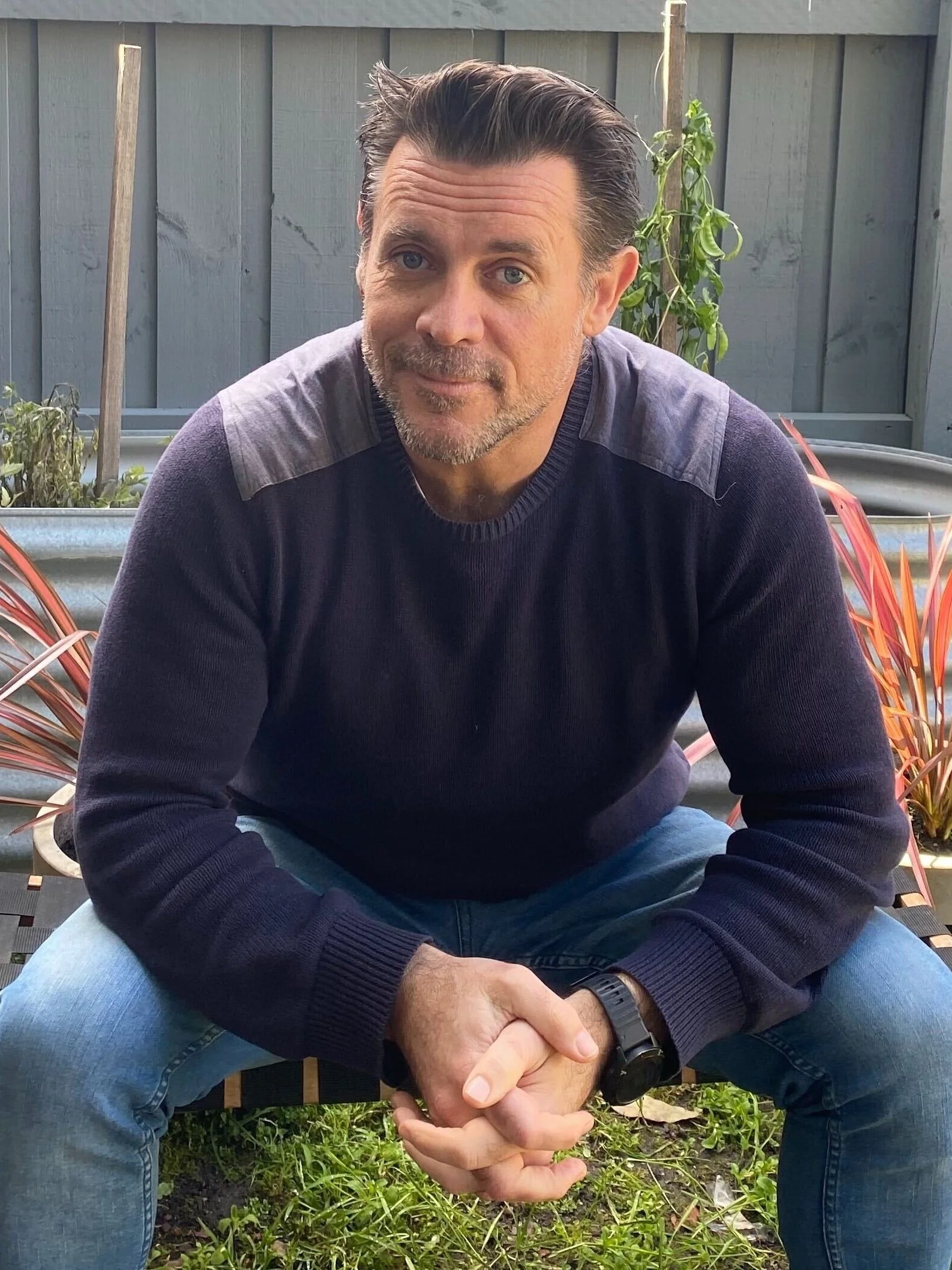
Jamie Lingham describes his leadership style as one that promotes teamwork and openness and encourages ownership and innovation. “Sometimes I feel like I ‘over-share’, but this has always served me well, especially during the difficult times when we need to brace as a team and get through the challenge that has presented itself. Our team is very close. We support one another, and everyone is willing to jump on to any project that needs to be completed, no matter what the task or time it takes or the deadline.”
As a leader, he sees to it that the atmosphere is healthy for growth for him and his team. “I am a huge fan of ‘delegate to grow’ for both my benefit and also the benefit of my team members. When giving them work, we prefer the ‘sink-or-swim’ approach, but ensure that it is in a safe environment, with senior staff guidance and systems and processes in place to protect them from any ‘live fire’ issues. If a mistake is made, we work to pick this up before it gets to the client, but the learnings are still relevant,” he stated.
His approach is to constantly push his level of comfort and ‘give until it hurts’ when it comes to passing on his responsibilities, “which I believe is the only way that I can truly grow and be available to new opportunities,” he remarked. “I also support promoting innovation throughout the team and encourage everyone to take opportunities as they come up and run projects on their own.”
Other than that, Jamie also describes himself as a leader who looks after the quality of their work. “While I love to delegate, I also lead by example through being involved with reviewing work before it goes out. I provide feedback on the quality of work when measured against the level of service expected to deliver to meet our service promise and client expectations. This ensures that I keep connected to the day-to-day output, which demonstrates to the team that they can confidently follow my lead.”
By taking advantage of his strength in helping and motivating others, his leadership has facilitated a cooperative culture at Absolute Immigration. “Our cooperative culture is strengthened by the fact we are in constant communication with each other, especially in turbulent times such as COVID. Our team catches up daily over Zoom meetings so we have the opportunity to engage with one another through sharing ideas, helping each other solve any issues that arise, and have a fun element which includes games, quizzes, and mindfulness exercises.”
COVID-19 has affected their industry and, as a result, their company. Jamie had to make adjustments within his organisation for them to survive. But he also has to step up to carry the torch of hope for his people. “I continuously encourage our team to promote positive mental health measures and to keep the humour going. Yes, it is a serious time, but we need the release and positivity that humour provides,” he said.
“When I reflect on this topic, it made me realise how important good leadership is in the time of a crisis. COVID-19 has been a great time for us to come together and grow as a team, as well as for me as a leader,” the Global Immigration Leader declared.
---------
What is your experience in leading your team during this challenging time? We want to hear from you. Share your story through the comments section below or email us at communications@eomelbourne.org.
What are the 3 most important items on an entrepreneurs’ desk
by: Bernie Fernandez
With considerable surprise, I receive the email from EO Melbourne. I am being invited to write a blog as a subject matter expert. Painful anxiety mixed with disdain rises as I read the subject “What are the 3 most important items on an entrepreneurs’ desk”. I hate it.
This idea, however, stumbles into my head days later as I hear the quote below from the book, You Can’t Hurt Me by David Goggins.
“In a society where mediocrity is too often the standard and too often rewarded, there is intense fascination with those who detest mediocrity, who refuse to define themselves in conventional terms, and who seek to transcend traditionally recognised human capabilities.” – Navy Seal Commander
by: Bernie Fernandez
With considerable surprise, I receive the email from EO Melbourne. I am being invited to write a blog as a subject matter expert. Painful anxiety mixed with disdain rises as I read the subject “What are the 3 most important items on an entrepreneurs’ desk”. I hate it.
This idea, however, stumbles into my head days later as I hear the quote below from the book, You Can’t Hurt Me by David Goggins.
“In a society where mediocrity is too often the standard and too often rewarded, there is intense fascination with those who detest mediocrity, who refuse to define themselves in conventional terms, and who seek to transcend traditionally recognised human capabilities.” – Navy Seal Commander

I do not believe I am the subject matter expert on the topic handed to me. So taking a cue from the seminal business book, Tools of Titan by Tim Ferris, I asked 3 of my ex-clients, each who demonstrated elite leadership and standards throughout their careers, to identify the single most important item on their desks.
CHAPTER 1: GRAEME STRANGE – WHITE SPACE
I hear a lot of people calling 2020 a write-off. With absolute respect to the many people of unfortunate circumstance, I belong to the ‘other’ many that do not see 2020 that way.

In late February, I received the news that two of my Spanish family contracted COVID-19. With the impending situation being broadcast to the world, I naturally made sure I kept constant contact. It seems like a blessing now as my cousin shared advice on how to deal with the inevitable lockdown here. “Go find something you’ve always wanted to do, something you’ve put off because you never had the time and do it. You now have time and space.”
Graeme may not know this, but early on in one of many workplace project meetings, without Graeme in attendance, the term “repressed hunter” was coined to describe the cultural leadership and design direction of the business leader. One morning, I approached Graeme sitting at his desk. Embodying Indiana Jones, the adventurer had swapped the worn leather and fedora for neat business attire. As he sat in plain sight in an open plan with 60+ staff, I had to ask:
“How do you manage to get any work done sitting here?”
The ever calm and compassionate man, with all the time in the world for anyone, replied, “When I’m at work, the door is always open. When I truly need something done, I go home”. That was 2015.
The ensuing conversation stayed with me and now will be expanded upon from a recent conversation to answer the question: What is the most important item on your desk?
The answer – space.
An empty desk reflects an empty mind. Space is required to focus on and solve problems. A leader’s role is to work on solving problems. Space must be allowed to work on Challenges, Staff, Business and Customer Needs. After all, staff are looking after your customers. Your desk is simply a place to work. What is required for productivity is a state of mind and technology.
CHAPTER 2: ANOU KHANIJOU – THE POWER OF THE PENCIL
Passing through Indonesian customs, our group was greeted by an attaché and luggage hands. They led us towards a nice bus just a short walk from the front doors of the airport. In what might have been a humid Kuta minute and two quick words, the “nice” bus disappeared. A shiny new leather-lined, stereo-amplified Mercedes instantly turned the corner. “Now, this is a little more to my standards,” revealed Anou.

Over the following five days, my understanding of a business retreat became redefined forever. What was increasingly obvious was that in her “spare time”, Anou had meticulously hand-curated royalty-level experiences for us, one after the other. Spectacular private adjoining villas. As I come to understand, they were practically impossible to book. Yoga instructors and masseuses were scheduled to arrive every morning. Onsite chefs were to serve us breakfast and lunch by the pool.
I knew enough of Anou’s life to know that as the PR representative to Hollywood in Australia, this afforded her a well-connected network. National theatre level “opera” was simply one of the many performances conducted by Anou at any given time around the world.
About a year later, I visited Anouconcept’s soon-to-be new office space. I admired the décor and the hum of the productive office in full swing and found myself reflecting on this amazing person. So humbly inspiring, so unfathomably busy, yet with so much time for others.
With curiosity, I asked the trailing query and key point to this blog - “What is the single most important item on your desk?” To which, Anou replied, “A pencil.”
I will not lie, during COVID-19, I have struggled for focus and to stay on top. Capturing the many important details and concepts of the creative and delivery process has been tough. Here is someone I look up to, orchestrating similarly complex projects for the likes of Universal Studios, Chris Hemsworth and Justin Bieber!
What I have learnt was that Anou has created and orchestrated these multiple once-in-a-lifetime experiences, crafted incredible stories, and built multiple businesses by learning the simple, yet the very important habit of taking time in writing things down.
She explained, “I always write my ideas and plans – big or small – with a pencil. It’s the most essential tool on my desk juxtaposed with all this technology.”
Artists ensure there is a direct and physical connection between brain, hand, medium and paper. There is pure artistry in Anou’s inquisitive mind. Gentle and empathic, yet also critically honest and transparent. Anou makes time and space for scribing and reflection, later sharing with others and directing these learnings into her daily life.
CHAPTER 3: MINA SHEHATA - TRUE GRIT
True Grit. The movie instantly flashed delicious, memorable images of amazing characters and a wonderful story spun together by the genius of the Coen Brothers. We, the viewers, are swept away by the stellar performances, story, action and incredible scenery. At the end of the film and in that unique twist we all enjoy so well, we realise the protagonist deserving of label “True Grit” is the often sidelined fourteen-year-old girl Mattie Ross. This female lead is astounding, uncompromising and determined to achieve her mission at all costs.
True Grit, as defined, is passion and perseverance for long-term and meaningful goals. It is the ability to persist in something you feel passionate about and persevere when you face obstacles.
Enter this story - Mina Shehata.
“There are 3 types of engineers. One - the technician: socially inept, but detailed and brilliant. Two - the social butterfly: great at sales and people, but hopeless engineers, and three - a bit of both. Mina is a lot of both.” Wes Malek of ECM Building Services Engineers shared this with me over a lockdown telephone interview. “What separates Mina from the typical engineer – it’s his intellect!” Wes Malek leads a team of 30 and has run his business for about 17 years. “ECM practically recommends Mina and Mina’s business, RMS Manufacturing, exclusively on every project.” ECM is not alone.
Wes also told a great story of first meeting Mina on a cruise trip up the Nile over 20 years ago. As the night closed in over the cruise through this magical desert scene, Wes recalled, “this massive guy being dressed in Bedouin headgear, passionately dancing with Sheesha pipe in hand all night long! Mina simply squeezes out every single last drop of life he can.”
Ten years ago, RMS began from absolutely nothing. Led by someone like Mattie Ross, Mina uncompromisingly brought it to become the premier switchboard manufacturer of Victoria. Mina sits on the board as President of NESMA (National Electrical Switchboard Manufacturing Association), while RMS switchboards sit in the basements protecting the biggest and most important government and commercial buildings in Australia.
Recently, I had the pleasure of working with Mina and his growing business to assist in accommodating RMS into a new custom-built 2400-sqm Manufacturing and Office facility in Derrimut. Knowing Mina for his relentless drive — True Grit — and as living evidence of the Law of Attraction, I simply had to ask, “What is the single most important item on your desk?”
“My two screens,” flatly replied Mina. “I’m set up to work from anywhere – this week Queensland, next Dubai.” Knowing that Mina vibrates at this high frequency, his response did not surprise me at all. “Two screens allow me to work as efficiently as I can, anywhere.”
As we all face a return to a “normal” work-life now finally integrated into our sacred homes, any semblance of “work-life balance” should irrefutably be as dead Josh Brolin’s Tom Chaney. Mina’s relentless pursuit of efficiency provides the space to be the best he can be at work, which results in having a clear mind and choices to live a life of freedom which he deserves.
---------

About the author:
Bernie Fernandez is the Founder of Agero Group and Sustainable Stripout. He is also a member of EO Melbourne.
The importance of mentorship in the entrepreneurial journey
The entrepreneurial path can be quite daunting for those who are contemplating to take it. But even when you’re already in the journey, there are times when the ride can be tough and you seem to be lost midway due to the pressures coming from various directions. Having a guide, someone that has been through this before, to point the way can help ease the anxiety of not knowing what lies ahead and can even be instrumental in accelerating things. This is where mentors come beneficial to one’s entrepreneurial journey.
Entrepreneurs Damian Blumenkranc, Co-Founder of Creativa, Attento, and Just Click Videos, among others, and Benjamin Trinh, Founder and Managing Director of Life Ready Health Group share that having mentors have helped them in the success of their endeavours. Apart from being on the receiving end as mentees, both have also become mentors to other entrepreneurs, helping others in their businesses as well.
The entrepreneurial path can be quite daunting for those who are contemplating to take it. But even when you’re already in the journey, there are times when the ride can be tough and you seem to be lost midway due to the pressures coming from various directions. Having a guide, someone that has been through this before, to point the way can help ease the anxiety of not knowing what lies ahead and can even be instrumental in accelerating things. This is where mentors come beneficial to one’s entrepreneurial journey.
Entrepreneurs Damian Blumenkranc, Co-Founder of Creativa, Attento, and Just Click Videos, among others, and Benjamin Trinh, Founder and Managing Director of Life Ready Health Group share that having mentors have helped them in the success of their endeavours. Apart from being on the receiving end as mentees, both have also become mentors to other entrepreneurs, helping others in their businesses as well.
“I have experience at both ends, been a mentee and a mentor many times, and planning to continue getting mentors and helping others.”
- Damian Blumenkranc, Co-Founder of Just Click Videos

From his experience being a mentee and later on as a mentor, Damian recognises the value of mentors in one’s entrepreneurial journey. “Having mentors has been critical to my success in business. It can take years to go through the experiences and the mistakes you need to make to know what to do best in each situation. As entrepreneurs, we face new challenges daily and having someone that can guide you through those hard or strategic challenges based on their success & failure experiences can mean a life-changing difference,” he stated.
Yet, to be able to give back by guiding others has become a fulfilling experience for Damian as well, providing him with a different perspective and understanding as a business owner. “As a mentor, it is extremely rewarding to not only see your mentees’ businesses flourish, double and triple, but also to know that all those hard-earned experiences are useful beyond your realm and gives you the energy to tackle any new challenges to come, hopefully with the help of a mentor to guide you through it as well.”
Choosing a good mentor to guide you may not be easy. But there’s no need to look too far, according to Damian. “For those that haven't had a mentor before, I think the best mentors are not necessarily those that are 100 steps ahead of you (they are great for contacts and inspiration), but those that are just 2-3 steps or maybe 3-5 years ahead of you because they will not only be able to relate better to your situation but also have fresher memories similar to what you are facing and a contemporary approach to solving your current hurdles.”
“Ensuring people have access to mentorship ensures they learn and grow within your organisation.”
- Ben Trinh, Founder & Managing Director of Life Ready Health Group

Ben has experienced the benefits of having a mentor in shaping his growth as an entrepreneur. “When I joined EO at 23 years old, my business had barely scraped over the $1 million and Accelerator hadn't existed. Thankfully, some mentors helped guide and shape my business into what it is today,” he said.
Acknowledging the value of mentors to startup owners like him, he later went on to guide other entrepreneurs who are in the same situation he once had. As a result, Ben shared, “I participated in the EO mentorship program as a mentor for 2 years. Apart from that, I also sit on numerous advisory boards and provide help to other founders.”
Moreover, he found that mentorship done internally is also significant when running a business because it develops the people within that organisation. “Succession planning is critical in any business. Without it, businesses get stuck with young people leaving for other opportunities elsewhere. Ensuring people have access to mentorship allows them to learn and grow within your organisation. It also ensures you are replicating the strong aspects of your key people for each of your managers. In our corporate culture, we must ask, ‘who will replace you?’ This culture, combined with forum-style governance, has allowed us to scale from 3 people to now over 400 across 3 states,” he shared.
EO Melbourne Mentorship Program
EO Melbourne Mentorship Chair Dr James L Murray revealed how the chapter is working on this program to help entrepreneurs learn from others who have the experience to guide them in their journey. “This year, we have gone above and beyond to recruit some amazing Mentors from outside the chapter. Some are absolute rock stars in the Melbourne entrepreneurial community. There are also many YPO members and lots who have exited multiple times successfully.”
According to James, “Mentorship ranks as the #2 member experience after their forum. The program ranks higher than learning events, retreats and universities. For a small-time investment of only 20 hours for the year, they may meet and get to know someone who can change their life and their business forever. Also, training in how to be both a Mentor and a Mentee will serve them in all aspects of their life.”
If you are interested to know more about this program, visit our Mentorship page for more details.
EO Melbourne's online catch-up events: Chat Roulette and Needs & Leads
In a time when physical interaction is limited and most people are at home due to restrictions, reaching out to one another is of great importance. Having a community where members can seek help or extend assistance can make a huge difference in people’s lives. This is how EO Melbourne has become a flourishing environment for entrepreneurs where continuous growth and constant support takes place.
Recently, the chapter held virtual catch-up events that allowed members to get to know each other at a deeper level and lend a hand to those in need. Members were more than enthusiastic to participate in such endeavours that provided them with an avenue to strengthen their bond as they navigate the challenges of the current crisis together.

In a time when physical interaction is limited and most people are at home due to restrictions, reaching out to one another is of great importance. Having a community where members can seek help or extend assistance can make a huge difference in people’s lives. This is how EO Melbourne has become a flourishing environment for entrepreneurs where continuous growth and constant support takes place.
Recently, the chapter held virtual catch-up events that allowed members to get to know each other at a deeper level and lend a hand to those in need. Members were more than enthusiastic to participate in such endeavours that provided them with an avenue to strengthen their bond as they navigate the challenges of the current crisis together.
Needs and Leads
The EO Melbourne community is always thriving due to the rich exchanges of ideas among members. Taking this a step further, the chapter created an exclusive virtual event with structured networking and business matching.
It was an opportunity for members to connect, express their needs, and provide leads for each other. Participants of this online session had the chance to share their three core areas where help was required, and at the same time, offer introductions or solutions for the other participants.
Based on the positive feedback received, the chapter offered a second round of this online event. Needs & Leads 2 included Board Members from EO Brisbane and EO Sydney to assist participants who had needs in those states, a great benefit for members with national businesses.
Chat Roulette
Ever heard of Chatroulette? It's a site that took the internet by storm in 2010 that pairs random users for webcam-based conversations. EO Melbourne introduced its version of it, but on Zoom. Instead of random users, EO automatically paired members with each other.
EO Melbourne's "Chat Roulette" Social Hour was an enjoyable event for those who love to network, wherein speed dating and Forum One2One was combined into a single, fun, and cool activity.
This event allowed members to have four one-on-one conversations with other members for ten minutes each. Conversation starters were provided to help move the chats along. It was an opportunity to catch up with other participants and an amazing way for them to get to know someone new.
So, who says one can’t have fun and enjoy other people’s company despite the restrictions of the lockdown? It’s often nice to spend some time with friends and surround yourself with like-minded individuals, even though it’s in the virtual realm. Moreover, having a group like EO Melbourne can help and support you through the challenges that the present situation may bring.
Interested to be part of EO Melbourne? Click here to join.
How do successful entrepreneurs get continuous professional growth?
No matter how good one is or even if they are an expert on a particular thing, there will always be room for improvement and growth. It applies to everyone, including entrepreneurs. Each one of us has strengths that we can capitalise for our chosen fields of endeavours, as well as weaknesses which we can still work on to expand our knowledge and hone our skills set.
And when you reach the peak of success in your career, how do you ensure that you continue to grow professionally? Entrepreneurs Rick Nieuwenhoven of Nieuvision, Rob Roy Rankin of Rankin Business Lawyers, and Adam Stewart of Debt Recoveries Australia, ADC Legal and Nova Team Solutions share their experiences and learnings when it comes to pursuing their professional growth.
No matter how good one is or even if they are an expert on a particular thing, there will always be room for improvement and growth. It applies to everyone, including entrepreneurs. Each one of us has strengths that we can capitalise for our chosen fields of endeavours, as well as weaknesses which we can still work on to expand our knowledge and hone our skills set.
And when you reach the peak of success in your career, how do you ensure that you continue to grow professionally? Entrepreneurs Rick Nieuwenhoven of Nieuvision, Rob Roy Rankin of Rankin Business Lawyers, and Adam Stewart of Debt Recoveries Australia, ADC Legal and Nova Team Solutions share their experiences and learnings when it comes to pursuing their professional growth.
“There are times I realise the sponge is full and I have to squeeze it dry and start again.”
- Rick Nieuwenhoven, Founder and CEO of Nieuvision

When it comes to learning, Rick finds that it is different for everyone. “As a lecturer for 10 years, I’ve seen this first hand. Firstly, to constantly grow, I remind myself of the best way for me to learn and grow. I learn most from others and by talking to others,” he declared.
Acknowledging that he thrives in an environment where he gets to interact with other people, Rick saw the significance of joining groups like EO. He continued, “With that, the forum is fundamentally important to my learning experience. I also find MyEO events a practical environment to learn from others because the conditions are more relaxed and I can spend more time with people.”
Yet, there are times when he often faces a wall in his growth and development as an entrepreneur and as a person. “I don’t stress if I hit a plateau. There are times when I realise that the sponge is full and I have to squeeze it dry and start again. Otherwise, I can get bogged down in my learning mode and lose balance with execution. However, what I do is that I set goals based on my learning desire to assists me in keeping focused,” he shared.
“As an entrepreneur, there is a constant need to improve, adapt and grow as a person.”
- Rob Roy Rankin, Principal and Founder, of Rankin Business Lawyers

Rob recognises the reality that entrepreneurs like him need to constantly grow, improve and adapt. “To do so, I regularly challenge myself and try to have a mindset of always learning. Some simple and readily available tools I use include podcasts and books. The more I read and listen, the more references and recommendations I pick up, which leads to more reading and listening,” he explained.
Beyond the books and podcasts, Rob also grows through his interaction with his surroundings. For him, “Another way to ensure you’re constantly challenged is to meet new people, look at new industries, and visit new places – all of these things challenge the perspectives and prejudices we accumulate when we stagnate.”
However, it is not at all times that the journey is an uphill climb. According to Rob, “Feeling like you’ve hit a plateau in your professional life is often the result of success and usually by doing the same thing, over and over again, very well. To reinvigorate ourselves we need to recalibrate or adjust our perspective. Two ways of doing this are:
Go back and examine our purpose. Why do we do what we do? The answer will be different for everyone, but getting back in touch with this reason will inspire new thinking;
Look at what’s happening in other industries, other cultures, other places. There is always something to learn from others, and by examining what’s strange or new to us and contrasting with our own lives, we come up with new ideas about how to improve.”
“Steady growth over the years was achieved with careful planning and goal-setting.”
- Adam Stewart, Founder and owner of Debt Recoveries Australia, ADC Legal and Nova Team Solutions

“My first business, Debt Recoveries Australia, was born in 2002. I was living in a one-bedroom flat in Balaclava and ran the business from that flat with a P.O. Box in Balaclava. Right from the start, I made all my plans with the big picture in mind. Everything – from the name, website, office space and debt collection software – was chosen with the end-goal in mind: to be the most successful and profitable debt collection agency in Australia,” Adam narrated.
Starting small, his business grew big. “Constant demand and new clients coming on board meant I very quickly moved the office from that one-bedroom flat into an office in the city. We now have offices all over Australia. Demand for legal services led to the addition of a legal arm in 2012, called ADC Legal Litigation Lawyers.”
By 2013, Debt Recoveries Australia, along with ADC Legal, was well on the way to becoming one of the most successful debt collections agencies and litigation firms in Australia. To accommodate the increasing demand for their services and to provide the best possible service for their clients, they had to have the manpower to back this up. “Again, I wanted control over this part of my company. So in 2010, I set up my BPO (Business Processing Outsourcing) centre in the Philippines, called Nova Team Solutions,” Adam remarked.
As Adam grew his businesses and expanded his reach, he found that he was also growing as a person and an entrepreneur. “Today, I am still as excited about the future of my companies as I was in 2002. I could not do it without the amazing staff I have today, whom I owe much of my success to. I also like to invest in myself, especially when I have hit a plateau in personal growth.”
To do this, Adam sought for groups and individuals that can help him continue his professional growth. “I like to reach out to business networking groups, apart from EO. Recently, I joined the Victorian Chamber of Commerce. I always have at least one mentor who helps me one-on-one. I love getting the personal experiences of someone who’s been in the same boat as me before. I also mentor others. This helps me to give back what I have learnt.”
--------
If you have tips and learnings to share on continued professional growth, share them with us through the comment section below.
EO Melbourne's virtual Wine-Tasting Nights
A week loaded with various tasks and business concerns to attend to deserves a relaxing Friday evening. A glass or two of wine is a wonderful way to cap the work week and welcome the weekend. EO Melbourne recognises this as the chapter recently held virtual wine-tasting events for its members.
A week loaded with various tasks and business concerns to attend to deserves a relaxing Friday evening. A glass or two of wine is a wonderful way to cap the work week and welcome the weekend. EO Melbourne recognises this as the chapter recently held virtual wine-tasting events for its members.

To start our virtual wine tasting journey, EO Melbourne Member Hugh Jones and his wife Raquel, the couple that established Weathercraft Wines, hosted a wine-tasting night where participants enjoyed three of their wines: 2018 Limited Chardonnay, 2019 Rosé, and 2017 Shiraz.
Hugh and Raquel shared the story behind each wine, its characteristics and how they are processed. Produced from the Weathercraft Wines vineyard in Beechworth, their wines are a result of fruits handpicked from painstakingly managed vines.
But there’s more to just the bottles of wine that the group enjoyed. They were also inspired by the journey that the Jones couple took in turning Weathercraft Wines into a reality. “In 2016, my wife Raquel and I fulfilled a long-held dream and purchased an established, premium vineyard, at Beechworth in North East Victoria. We immediately started producing our wines from the site. Raquel focuses on the winemaking, whilst I focus on the business side,” Hugh revealed.
“Vintage dependent, we produce around 1,800 cases of wine per year from our little winery, and we are very fortunate to be located within spitting distance of some of Australia’s most iconic producers, such as Giaconda, Savaterre and Castagna, to name but a few. Although our focus is on Chardonnay and Shiraz, Raquel’s European heritage has inspired us to grow alternate Spanish varieties best suited to the climate, rainfall and soil composition of our site,” he added.

The following wine-tasting event was a Wine Masterclass brought by Willow Creek Vineyard & Jackalope Hotel and Brad Hampel, EO Melbourne Member and Director of Solution Entertainment. Attendees learned more about the art of winemaking and food pairing during this virtual event.
Glass-in-hand, winemaker Geraldine McFaul walked guests through the winemaking process and shared her viticultural secrets. Participants were also led to a guided wine tasting experience with Jackalope Hotel’s Food & Beverage Director (and Sommelier), Ollie Tucker.
McFaul’s understanding of the terroir and its subtleties is instinctive. When working with exemplary fruit, McFaul says the biggest challenge is “doing less rather than more”. For the wines from the Willow Creek Vineyard, it’s all about letting the vineyard shine through.
With a fastidious focus on cool-climate chardonnay and pinot noir, McFaul makes some of the most elegant single-vineyard wines on the Mornington Peninsula. Under the expert hands of original viticulturists Robbie O’Leary and, more recently, Ant Davenport, Willow Creek Vineyard’s fruit is hand-tended, block by block, which includes pruning, canopy management, yield control, and harvest. The vineyard consistently produces the fruit of excellent quality, lending itself to minimal intervention and manipulation in the winery.

Members additionally experienced a wine and cheese night with Austin’s Wines, who delivered a virtual pairing of 2018 Austin’s Chardonnay and 2018 Austin’s Pinot Noir as well as L’Artisan Cheeses & crackers in the comforts of their homes.
Austin’s is a family-owned vineyard in Victoria’s beautiful Moorabool Valley. They have been producing wine since 1982 and is now owned by the second generation of Austins.
————
These virtual wine-tasting events have been popular among members of the EO Melbourne chapter where they were able to connect online and enjoy the experience amid restrictions imposed due to the pandemic.
How about you, what activities do you engage in to relax your mind and body after a hard day’s work? We’d love you to share your story with us.
Experimentation in business: the risks and rewards
Taking risks is a huge part of the entrepreneurial journey. You need to invest resources, time and effort to bring your venture to greater heights, and it is guaranteed that there will be many forks on the road and lots of trial and error before you can get there.
We’ll take a look at two circumstances where entrepreneurs had to experiment in their business and take the risks to reap the rewards.
Taking risks is a huge part of the entrepreneurial journey. You need to invest resources, time and effort to bring your venture to greater heights, and it is guaranteed that there will be many forks on the road and lots of trial and error before you can get there.
We’ll take a look at two circumstances where entrepreneurs had to experiment in their business and take the risks to reap the rewards.
An exciting, yet unfamiliar, endeavour that becomes a success
Barnbougle Polo was only an afterthought due to an available area in the Barnbougle Resort property. Despite the unfamiliarity with the sport, Barnbougle Golf Managing Director and Barnbougle Polo Co-Founder Penelope Sattler and her team took the plunge, not knowing that Barnbougle Polo would become a sought-after event in Tasmania.

“The Barnbougle Resort comprises of two golf courses – Barnbougle Dunes and Barnbougle Lost Farm – which are separated by the Great Forester River. Between the courses, there is a piece of land that is part of Barnbougle Farm, which wasn’t utilised for the courses as it was too flat – terrible for golf, perfect for polo fields! We had very little knowledge of the sport. However, we felt that polo and golf were a match made in lush green grassy heaven and therefore decided to delve into the ‘Sport of Kings’,” she explained.
While the idea was interesting enough, it was not without challenges as it involved a costly investment. “The biggest risk was the substantial financial outlay and the possibility of a lack of return in this investment. Secondly, running a major event and doing so poorly could be extremely detrimental to the brand we had created,” Penelope disclosed.
Yet, they went ahead with their plans, and the result was an overwhelming success. Penelope revealed, “The event has become a staple on the summer social calendar in Tasmania which has widened our brand exposure and strengthened our appeal to the younger demographic and non-golfers. The North-East of Tasmania hosts very few large scale events so the polo has been a great opportunity for Tasmanians to experience the ‘Sport of Kings’ in their state and enjoy a fun day out. It has also given us a great outlet to showcase our amazing Tasmanian producers and give back to the local community.”
Managing risks and making them a springboard to the next level
“Like most entrepreneurs, I have always had big dreams and goals I have set myself to achieve,” Crisp Solutions Founder and CEO Michael Clark declared. “To make these things happen, I have had to make big moves and take what could be considered as large risks.”

As he started his entrepreneurial journey at a young age, Michael is grateful to find guidance from entrepreneurs who have made their journey ahead of him. “Fortunately, one of the first books that I read cover to cover was Losing My Virginity by Richard Branson. I was about 19 at the time, and one of my biggest takeaways from that book was that you really can do anything if you set your mind into it. You can approach deals and so-called high-risk situations, such as starting an airline with creativity and a plan to protect the downside, in such a way that what appears on the surface as very risky offers very little risk at all.”
He recalled the time he ventured into entrepreneurship with no experience and limited resources. “In the very first business I founded while still at university, I locked myself into a long-term supply contract with a national retailer. Problem was I had under $3000 in the bank, no access to investment and had zero business experience. My minimum commitment to the large manufacturer was to buy 10,000 units of one product which cost tens of thousands of dollars. Plus, I needed to find the money for additional business startup costs. My family and friends either said it was too risky and thought it was a bad idea or simply couldn’t help.”
After feeling completely stuck for a long time and ready to give up, Michael luckily came up with a plan. “I arranged terms with the retailer to agree to an initial order that would cover all my expenses. I then got a commitment from them for very short payment terms of 14 days from in-store delivery. Lastly, I negotiated with the manufacturer to allow me 60-day payment terms on the first delivery. And there it was – an almost zero-risk scenario where I was profitable and cashflow-positive a little over 2 weeks after the business started,” he narrated.
That was 18 years ago and Michael’s business is going stronger than ever today. He has since gone on to apply this approach to risk in many other businesses and opportunities.
Out of the courage to take the risk and jump into the water, Michael has reaped the rewards of his hard work, persistence and determination to keep going forward. “I have built houses and a real estate portfolio in different corners of Australia, as well as in England, with a small amount of capital, even when I have never visited those parts of the world prior. I invested in a unique trading opportunity, which on the surface was high-risk and had a direct negative impact of more than a million dollars when it fell apart, but turned out that the real fall out was minor. I walked away from a good-paying job at a leading global consumer goods company to take a chance on a new idea. I’ve started several business partnerships where capital and energy were required and at risk. But through smart preparation and agreements covering, if they didn’t work out, the downside was minimised.”
Looking back, Michael has learned a lot out of the decisions he has made, not only for business but also in life. The lessons are nuggets of wisdom that he has taken with him as he continues with his entrepreneurial journey. “From my experience for any growth at all in life, there are tradeoffs. You constantly need to take big risks to take your life and business to the next level. I strongly believe that if you manage that risk the right way you will be able to stay in the game much longer and give yourself more chance of making it big,” he imparted.
We’d like to hear from you. Share with us if you have experienced taking risks by experimenting in your business and how it brought you huge rewards.
President's Update - September
From the President
Dear EO Melbourne,
How are you doing? Are you okay?
As a fellow Melburnian & Victorian, I know better to bring up yet another reminder of the unique situation we’re finding ourselves in.
What I do want to remind you about is that, as the leaders in our companies, the amount of responsibility and pressure we have on our shoulders is incredibly unique. We have to deal with making tough decisions on a daily basis. We have to constantly think about the future and how we can survive & thrive. We have to come up with a plan C, D, E and F.
From the President
Dear EO Melbourne,
How are you doing? Are you okay?
As a fellow Melburnian & Victorian, I know better to bring up yet another reminder of the unique situation we’re finding ourselves in.
What I do want to remind you about is that, as the leaders in our companies, the amount of responsibility and pressure we have on our shoulders is incredibly unique. We have to deal with making tough decisions on a daily basis. We have to constantly think about the future and how we can survive & thrive. We have to come up with a plan C, D, E and F.
Our businesses are very much like ships at sea. We are the captains that have to navigate the rough stormy seas and ensure our vessels reach its destination, whilst keeping our crew safe.
After almost 6 months on choppy waters, it’s been our responsibility to solve problems, restore productivity within our teams, keep the team morale up and keep this ship afloat.
This is no small feat.
As captains, we’ve also had to display strength and instil confidence in our crew. It is not often that we get asked if we are okay, ourselves.
Over the last few weeks, I’ve had several fellow EOers reach out to see how I’m going. I love that in this community; we’re able to be completely honest and dive deep instantly. There’s no need to sugar coat it. There is no judgement. Just understanding.
Last Thursday was R U OK? Day, and with the lack of social interaction, it’s more important now than previous years to open up a conversation and to seek support or give support.
I want to take this opportunity to ask you, R U OK? Email me, let me know.
Book in a session with our Resident Psychologist, Katerina, for a chat. (Her contact details are found below at the Resources Section.)
Check-in on your forum buddies individually. Reach out, open up, lend an ear.
Warmest regards,


Sheryl Thai
President 2020/2021
Hiring the right person is not enough, then it comes the induction process…
Hiring new staff members is crucial because it takes a lot of time and effort in introducing them to the team and your corporate culture as well as briefing them on how things are done in our organisation. It’s one thing to have a strong recruitment process where you ensure you select the right candidate and it’s another to bring that person on board to be part of the team. the Induction training puts structure and system in making sure that nothing is missed in the process of onboarding.
Lauren Staley, Managing Director of Infolio Property Advisors, an experienced collective of buyer advocates, vendor advocates & property managers, and Miguel Donnenfield, Co-Founder of Creativa Videos, an animation and video production studio, share how they train new members of the team to make sure that the new hires acquire the necessary knowledge and skills needed for the job.
Hiring new staff members is crucial because it takes a lot of time and effort in introducing them to the team and your corporate culture, as well as briefing them on how things are done in our organisation. It’s one thing to have a strong recruitment process where you ensure you select the right candidate and it’s another to successfully bring that person on board to be part of the team. The Induction training puts structure and system in making sure that nothing is missed in the process of onboarding.
Lauren Staley, Managing Director of Infolio Property Advisors, an experienced collective of buyer advocates, vendor advocates & property managers, and Miguel Donnenfield, Co-Founder of Creativa Videos, an animation and video production studio, share how they train new members of the team to make sure that the new hires acquire the necessary knowledge and skills needed for the job.
1. Have an induction plan or process in place
According to Lauren, the induction training they do in Infolio comes in two parts. “The first one is an overview of the administrative details, while the second part dwells more on the practical side of the business,” she explained.
On the other hand, Creativa has been through different stages when it comes to inducting its new personnel, “which we learned along the way and kept improving,” as Miguel would describe it.
He elaborated, “We ended up with a solid induction process, which never stayed still and was refined every single time. Our tool for the induction process included:
A plan with the usual steps depending on the role
An internal comprehensive tasks sheet
A Learning Management System (LMS) with a series of videos and documents
Reviewing the "Prism" Behavioural tool and showing them the one from their peers
The LMS had a series of videos that allow the new person to be familiar with the various aspects of the company, such as the company’s purpose, why the company exists, the company’s Values, Vision and Mission, and its corporate culture. It also covered the tools that the company uses, which included emails, internal phone, Slack, and how they are utilised in the organisation. Their LMS also had specific videos depending on the role the new person is taking with options for freelancers and interns.”

“We make sure we follow a process and a checklist for their induction.”
- Lauren Staley, Managing Director of Infolio Property Advisors
2. Create a task list and training manual
One of the important things that Lauren cited is having a task list for the new hire. “We make sure we follow a process and a checklist for their induction. We spend a whole day completing the induction, which has a task list that requires signing off before they can be handed over for practical on-the-job training. Both the inductee and the inductor have to sign off on each task to say they have adequately explained and understood the learnings.”
Similarly, Miguel stated that the tasks sheet is within their project’s process. “These tasks were grouped depending on the topic. The technical details included were creating a new email account, the signature, giving access to different platforms and accounts and other people's calendars, creating the alarm code, the access code, buying licences, etc. We even had a list of what needs to be done when an employee leaves the company.”
Apart from the checklists, Lauren also finds training manuals as an invaluable tool in the induction training. “Training manuals and checklists for staff are important to ensure they have accountability. But apart from that, they will also feel they have something to lean on when they need assistance before coming to you,” she said.
3. Spend time with the new member and connect them with other members
“The most import thing I have learnt is to spend ample time with the new staff, ensure they understand the business, ensure they know what resources they have and give them the time to learn properly,” Lauren noted. “We now have our staff spend a morning or afternoon with any of the other teams within the office so that they understand the connection and importance of each role and division within the organisation,” she added.
Meanwhile, Miguel described how the first two weeks of the induction process goes. “We would usually plan a series of internal meetings with different people, going over the content of the LMS videos and explaining them in-depth. Other meetings would include people from the role's team, where we go over more specifically into the role, the position description (PD) and what is expected from the person.”
And it doesn’t end there. “The initial month or so would be in close contact with the person to ensure it is clear what needs to be done. It is also to check how the person feels and how they are adapting to the company culture and the team. Then we will spread out the meetings to a monthly schedule for the initial probation period, which is usually 6 months,” described Miguel.

“From the moment the decision to bring a new person on board is there, you have to start planning.”
- Miguel Donnenfield, Co-Founder of Creativa Videos
4. Other tips and key learnings
For those without an induction training yet in their organisation, Lauren suggests getting outside help from experts. “If you don’t have a process in your company, find someone who does. Find someone who does it well and get their advice.”
For Miguel, the key is having a concrete plan. “From the moment the decision to bring a new person on board is there, you have to start planning. Ensure that the PD is correct, succinct and doesn't have hundreds of tasks and responsibilities. Sometimes, we divide them into the Main/Most Important Tasks and regular tasks. Start planning right from the beginning where the person will seat, what computer will use, etc. Who will be assigned as the buddy to be there when needed? How much time does this person have? Maybe we need multiple people? Start blocking time on their calendars, even though you might end up moving it once you know when the person will start.”
Let us know some of your best practices when it comes to training your new personnel. Share your tips, too, through the comment section below.
An ounce of fun in your workplace to make work enjoyable for you and your team
How do you make your workplace fun for your staff? Or do you have enjoyable days at work with your team? StudioHawk Founder Harry Sanders, Etto Street Pasta Bars and Truly Deeply Founder David Ansett and Blackhearts & Sparrows Co-founder Paul Ghaie share what they do in their respective businesses to inject fun into their work environment, as well as how they care for their teams.
“All work and no play makes Jack a dull boy.”
That’s a famous saying that we’ve heard time and time and again. Good thing that many companies and organisations inject fun into their work culture to make the environment more encouraging and energetic. Others even cap their workweek with an enjoyable Friday pursuit where the staff can unwind and bond together. Moreover, some are not deterred by the current crisis and even find it helpful to have a fun Friday activity to motivate their team.
Take inspiration on how these entrepreneurs create a delightful business culture for their people and get some ideas on how you can also enliven your work atmosphere.
Organise team activities and social events with your team

Fun! That is one of the core values of StudioHawk, which Harry Sanders founded in 2015. As a specialised SEO agency, they take their work seriously, but not themselves. Which is why they were named SEMRush’s 2019 agency of the year, as well as 2019 Optus Media Marketing and Advertising Business of the Year.
With restrictions in place, they try to still make working as enjoyable as possible. According to Harry, “We do 3 things every Friday during isolation to keep things fun and the team as connected as possible while working from home. Every Friday, our office manager will send around a random fact for a thing she likes to call 'Fun Fact Friday'. We also have a 'StudioHawk Friday Feels playlist' wherein every week, each team member picks a song to add to the playlist and 20 different songs are included each week on the playlist. Then at 5:00 pm every Friday, we have a team Zoom catch-up and end-of-week drinks.”
In addition to all these, “once or twice a month on a Friday, we host a team social event. So far, we have had a couple of games and pizza nights. Last week, we did Cork ‘n Canvas, then next Friday we will be doing pottery! We set aside a 'culture' budget each quarter that we use for activities to bring the team together,” Harry shared.
And if these are not enough, they are planning more activities these coming days. Harry revealed, “We are about to kick off our fitness and health month in September called 'SWEAT-TEMBER'. As a team, we will be doing a PT session run by one of our clients once a week, meditation a few mornings a week and a fitness challenge that includes a step challenge! This will help us all keep connected, active and, hopefully, help unwind.”
Because of these efforts, it strengthens their corporate culture while continues to build relationships among their team members. “We have a really strong team culture at StudioHawk, ask anyone here and they will tell you their favourite thing about working here is the people and culture. This is one thing that we did not want to lose while working in isolation. Bringing people together is made even more important. These initiatives and small tokens of appreciations help drive people forward in a time when things may seem a little lonely and allow us to continue excelling with our values. In David Ogilvy's words, agencies that don't enjoy what they do don't put out good work - so make a culture that people love working for,” stated Harry.
Build sustainable ways for work to be enjoyable

It is a different case for those in the food industry, such as Etto Street Pasta Bars. As explained by its Founder, David Ansett, who is also the Founder of the marketing tech company Brandvas and branding agency Truly Deeply, “We’re a 7 day-a-week business with different staff working different shifts so there’s never a sense of ‘end of the week’. Our end-of-shift each night is our ‘Friday’. Once the last customer has gone, the doors are closed and the volume of the music goes up. Clean-up and pack down is a pretty casual affair.”
So how do they inject fun into the work environment? “Our 7 day-a-week trade means we have to try to build sustainable ways for work to be enjoyable. For us, this is all about a relaxed but hard-working place to come to work. For instance, we encourage social chat throughout a shift,” David remarked. Not only that, but they also provide certain benefits for their people. “All the staff get a free meal of their choice for any shift they work. Managers have the authority to open a bottle of wine after a tough shift or to celebrate a birthday, for example,” he added.
While they try to make their work environment an enjoyable place for their team members, they also make sure that quality is observed at all times. “We have a pretty strict framework for performance, but from there, it’s up to each manager to make a workplace that fits with them as a leader and their staff as a culture. It means each restaurant has its own culture. South Melbourne has a cheeky, Italian culture, while Kirkdale has more of a South American love-for-life feel.”
“As we encourage each manager to see their restaurant as their own business, they create their versions of the Etto culture. Having run a branding agency for 30 years, keeping a positive culture in restaurants is easy by comparison. Although the role of a hospitality worker is tougher than working in a creative agency, the type of people the industry attracts, the form of work, their expectations and the camaraderie formed between teams lead to a relatively positive staff culture that requires less management. It helps that we pay award wages, which for many of our staff is a relatively positive experience in our industry,” David shared.
Create a culture of caring

It’s almost the same case for wine store brand Blackhearts & Sparrows. Co-founder Paul Ghaie described the scenario they have in their stores, “Due to the flexibility of our working hours and the fact that we are a 7-days-a-week, 362-days-a-year type of business, we don't so much do ‘Fridays’.”
But it doesn’t mean that they don’t do something for their team members. Fun things don’t need to have a lot of fanfare and can be done at any given time that is convenient for everyone. As long as your people enjoy what you do for them, that is what matters most. “We keep things pretty simple, such as regular dinners and drinks with the staff,” he clarified.
Caring for their people is important in their organisation, recognising the long-term effect of this on their members and their business, as well. “We tend to focus on ensuring our staff group is looked after really well over the year. We think this creates a culture of caring with the staff feeling their welfare is a priority,” Paul added.
Do regular catch-ups with some rewards and surprises
Since most staff meetings are now done virtually, add a bit of fun to your weekly catch-ups by doing online socials. Add a dash of surprise or some rewards that they can look forward to each week by having fun talks over their choice of drinks or playing games with prizes that you can do over Zoom.
If you have other ideas for fun activities with your team members, especially during these interesting times, please share them with us through the comments section below.
Overcoming self-doubt in the entrepreneurial journey
It is not at all times when business leaders are confident of themselves or of the decisions they make. The reality is that there are moments of self-doubt, which can often freeze you on your tracks. We wonder when such instances occur along the business journey, how do entrepreneurs overcome their weaknesses and move ahead towards their goals?
KHQ Lawyers Founder and Managing Director David Kelly and Lights Lights Lights Director Danielle Mastro reveal how they embraced the experience and used it to strengthen themselves.
It is not at all times when business leaders are confident of themselves or of the decisions they make. The reality is that there are moments of self-doubt, which can often freeze you on your tracks. We wonder, when such instances occur along the business journey, how do entrepreneurs overcome their weaknesses and move ahead towards their goals?
KHQ Lawyers Founder and Managing Director David Kelly and Lights Lights Lights Director Danielle Mastro reveal how they embraced the experience and used it to strengthen themselves.
“Over the years I have learnt the hard way that my self-doubt is one of my greatest strengths.”
- David Kelly
Founder and Managing Director of KHQ Lawyers

For David, self-doubt is not always a bad thing. “It keeps me sharp. It helps me see the other person’s perspective. It saves me from hubris, arrogance and blind faith in my correctness,” he stated. But it was not an easy thing for him to do.
“It took me a long time to get to this point – a lot of reading and even some counselling. Now, I cherish my self-doubt as one of the keys to whatever success I have achieved in my life. If I didn’t have self-doubt, I think I would much more frequently blunder into mistakes by making assumptions and that I would not be at all self-aware or prepared (not that I’m saying I am very self-aware or prepared) for anything,” he reasoned.
Because of that, David has come to accept that part of him and uses it to be more conscious of himself and others. “I have come to love my self-doubt. Whenever I interact with another person who seems to have no self-doubt, who is sure they are right, who just knows they are right, I see a risk. I see a gamble. If that person is truly right, then great. They can congratulate themselves on their self-belief and their unshakeable confidence. However, if they are wrong and their lack of self-doubt leads them to blunder again and again into the same mistakes, I see a fool and I remind myself that my self-doubt is not my Achilles heel but a great asset.”
“The moments of uncertainty give birth to my most abundant personal growth.”
- Danielle Mastro
Director of Lights Lights Lights

Self-doubt can happen in different points of one’s entrepreneurial journey. It can occur even to someone who has tons of experience and successes on their backs. Especially at present with a pandemic and economic crisis to face, many people, including business owners, start to rethink of many things, including their views of themselves.
“Let’s face it, amidst the madness of 2020 and the madness of life in general, there are moments when I sit in uncertainty and chaos. In these moments, there is a pervasive and natural tendency to question my skill, my ability, and my belief in myself,” Danielle shared.
She continued, “I will start by saying that I am still a work in progress. But when I face self-doubt, I journal it while doing it beside a soft light and with the scent of Palo Santo to cleanse my space as I write. I write for pages and pages. I dump my often nonsensical thoughts onto paper and as I furiously try to keep up with the pace of my mind, I expose my thoughts and begin to make sense of the stories. This plants a seed that maybe, just maybe, the story I originally told myself has another ending. As the day progresses, the words and memories and moments of journaling surface in my mind and my narrative changes. This process of a mind-shift only works when I create space and time to find and collect my thoughts. Fresh air, breathwork, and some tunes as I walk in the moonlight of the early and late hours of the day help me to find the answers I needed to the questions I didn’t know I had.”
For Danielle, those moments of uncertainty enabled her to grow. “Each time I go to an EO event I take with me the words of Carlos Santoro: ‘What was the ONE BIG THING, the single greatest moment of learning that will stay with you from this EO event?’ Well, some time ago I sat with my EO family under the Leonard French stained glass ceiling of the NGV in the evening (I still have to pinch myself whenever I remember the moment) and I listened to Janine Ellis say, and I loosely quoted, ‘Facing self-doubt and challenge was like taking a subject at University on how to survive a challenge, how to learn about yourself and how to sit in acceptance of the now.’ That was the ONE BIG THING I learned from that night. I have taken that with me in my quest to overcome the moments when I have uncertainty on myself.”
It is a moment of great realisation for Danielle. “Once I make it past the initial reaction of catastrophe, fear and guilt (the list goes on), I write, I breathe, I listen to my thoughts and I study the moments, the feelings and the beliefs. I pass the subject with honours and learn at the very least ONE BIG THING in the university of my life.”
From such realisations blossom swift actions that lead to great successes. “I have introduced the ONE BIG GOAL (OBG) into our business. We collectively set an OBG for each member that stems from a growth point that each of us has encountered in our life. We make it our focus for 3 months and we openly discuss it with the team. It has nurtured personal and professional growth in a way that connects us to our life’s journey in that the OBG is something that we find ourselves, not something that is imposed upon us. It is natural and effortless and the LLL family love it,” she remarked.
What do you do when you experience self-doubt?
If you have experienced it ourself and want to share your story, email us at communications@eomelbourne.org or leave your comment below.
Online training: how to conduct it effectively
To adapt to the present challenges, events like meetings, seminars, conferences and training sessions move from the physical space to online platforms with the use of technology. There are pros and cons to this scenario -- it allows everyone the opportunity to take part of these virtual sessions regardless of location, but poses some limitations on what can be done and cannot be done.
Anthony Lam, Managing Director of Punchy Digital Media, and Jeni Clift, Professional EOS Implementer and the Director/General Manager of DWM Solutions provide some tips and pointers on how you can conduct your online training sessions more effectively.
To adapt to the present challenges, events like meetings, seminars, conferences and training sessions move from the physical space to online platforms with the use of technology. There are pros and cons to this scenario -- it allows everyone the opportunity to take part of these virtual sessions regardless of location, but poses some limitations on what can be done and cannot be done.
“We conduct our online training by first having our systems and processes documented.”
Anthony Lam
Managing Director, Punchy Digital Media

As one of Australia's leading animated explainer video production agency, Punchy Digital Media has been serving several big names in various industries through their teams across major cities in the country. Training their people is essential in getting the work done successfully.
Documentation and proper systems and processes are essential. Other than that, Anthony cites other points that make online training done effectively in their organization. “We have someone on our team create a flow chart which is colour coordinated and outline a certain workflow. We use a tool called Lucidchart which is very easy to create and edit flow charts and share online. We then create an additional flow chart which outlines every single task this particular person has to do.”
“Finally, we use screen recording tools, such as Loom.com, to talk through a certain process and explain how and why we are doing certain tasks. We record and store these videos for ongoing training.
I've found this approach to be very visual and easy to follow and gives team members a reference to go back to. As the business owner, I find I am the worst person at documenting anything! Luckily, we have team members who are great at this so I delegate the task out. This is ideally someone who is very process-driven and has great attention to details,” said Anthony.
But how do they keep their training engaging and effective? “We always start with a communication starters/ice breakers,” Anthony shared. He also mentioned these following pointers:
Use Lots of screen sharing
Make it visual and fun by using lots of videos
Communication is mostly non-verbal so we turn our camera on for that sense of connection
Ask for permission to record your training sessions, so you can send them a copy of the video
Keep the sessions short
“What I have learned is to set the guidelines and expectations upfront very clearly.”
Jeni Clift
Professional EOS Implementer and Director/General Manager, DWM Solutions

Jeni is a Professional EOS Implementer and a transformational coach specialising in business, leadership and personal development who give other entrepreneurs the skills and systems for ongoing success. As such, training is part of her routine.
“I normally run full-day sessions of face-to-face training. Of course, in recent months, I have had to learn how to deliver these sessions virtually. As the training is focused on business strategy, planning and review, it can be quite difficult to keep people engaged whilst in the room. The thought of having to do this virtually was daunting, to say the least,” Jeni remarked.
Moreover, shifting towards the online space is not only the only concern Jeni has to deal with when it comes to training people. “I work with leadership teams, so I have everything from highly visionary people, some of whom are very busy and may have very short attention spans, to those wanting to go into all the details and analyse all the data, such as engineers and accountants, to name a few, as well as everything in between. Thus, keeping the sessions interesting for so many different personalities keeps me on my toes.”
Training different kinds of people in various settings have brought so many learnings to Jeni. “What I have learned is to set the guidelines and expectations upfront very clearly. The camera should be on. Let everyone know that they can stand up if they need to, but to keep the camera on. All distractions off, such as notifications of emails or messages on Teams or Slack. Phones must be silent, turned off or on flight mode and face down. Watch for distractions and call them out. Ask if we need to take a break so people can take a 5 to 10-minute walk around the house or outside for some fresh air and then get everyone back on track.”
Jeni also cited a few tips to keep the online training sessions more engaging:
Do some short activities. “I watch closely when people start to flag, then we take a break or have some exercises or activities to get people up and active for a few minutes. Sometimes I let them run around their house on a ‘treasure hunt’. The great thing about entrepreneurs is that they are very competitive? You’d be surprised at what you can get people to bring back to their desk.”
Ensure attendees have plenty of water. “I always have insulated water bottles to make sure I have a supply of cold water. I advise my participants to have water ready as well.”
Allow everyone to participate. “I have found with online sessions, it is easy for the noisier people to dominate the sessions, and the quiet ones to either not speak up or they just don’t get heard. Make sure you set an ‘order’ for the participants in the session and as you go through the day, follow the same order and constantly check in with everyone.”
Ask for feedback from everyone at the end of the session. “I always ask ‘what worked well and what didn’t work’. I am constantly learning from this feedback on how to do things better. You start to understand the different personalities and how to manage the sessions to suit as many people as possible.”
Make the most of online/virtual training. “I also tend to not make such a big deal of online/virtual training. I believe it will be our only way of doing things for a while and we are now used to working and training this way. The more of an issue I make it, the more it is an issue -- it is what we have and we will make the most of it.”
Put the fun in learning. “Make it as fun and interesting as you can. My cat often jumps up on to my desk, so I just introduce him. I was hosting a fireside chat session for our clients and my two dogs came and sat with me. I have met so many animals and babies, sung happy birthday to people’s kids. None of this would have happened without our current online sessions!”
Share your tips
What new insights have you learned from the tips and experiences mentioned above? If you have additional tips to share, feel free to leave your comments below.
The biggest hurdle in the first 3 years of my entrepreneurial journey
The entrepreneurial path is always filled with risks and challenges. It is not a smooth ride but the journey can be rewarding. The most difficult phase is the early stage where birth pains mixed with the lack of experience can make the trials seem insurmountable. But it is also at this point where entrepreneurs can learn a lot and use those lessons as tools towards achieving their goals.
Laiken Kerr Clarke, Director at MediSound, and Cesar Aldea, Founder and Director of Aldea Consulting, share the biggest hurdle they had to surpass in the first three years of their business. Read through their stories and learn from their experiences.
The entrepreneurial path is always filled with risks and challenges. It is not a smooth ride but the journey can be rewarding. The most difficult phase is the early stage where birth pains mixed with the lack of experience can make the trials seem insurmountable. But it is also at this point where entrepreneurs can learn a lot and use those lessons as tools towards achieving their goals.
Treating challenges as sources of motivation

“What was the biggest challenge I encountered in the first three years of my business? This has been an interesting question to grapple as I struggled to articulate exactly what a challenge meant to me over this journey of starting the business,” quipped Laiken Kerr Clarke, Director at MediSound, a distributor of medical devices to the Australia and New Zealand market.
“Without sounding cliché, from the outset, every ‘challenge’ almost seemed fun, like a puzzle to solve, which I was confident, if I put into motion a set of moves or combinations, would eventually lead us on the right track. Don’t get me wrong, there were, of course, many obstacles that we had to overcome as all start-ups would have experienced,” she clarified.
As a small player, Laiken cited many hurdles when she was starting her business, “From competitors, which are large multi-nationals with resources we could only dream of at the time, to the difficult task of changing customer’s opinions and beliefs in a slow-moving and conservative medical community. There’s also the challenge of navigating personal financial instability in the early phase of the business, as it was my primary source of income with little profit in the first 12 months.”
But she believes that the internal struggles were the most difficult ones. “Looking back now, I would have to say, with many parts of my life, the biggest challenge lay with me and my mindset of what I believed about myself and, in turn, the business. It was that space between who I believed I was and who I needed to be for the next step that this business demanded from me. I clearly remember the different mental and emotional layers that unfolded along the way.”
“For the longest time, I seemed to resist owning the experience, almost as if I was playing ‘business’ like one would play ‘house’ when I was a child. Friends, colleagues and associates would often ask me what I did for work and without thinking, I would respond with some job title and space I had previously held, not yet integrating the transition from employee to the business owner who makes the decisions. This is one example of the challenges I continue to come up against my mindset, which has also been the biggest catalyst for my growth as well as the growth of the businesses. It is that trust muscle you build within yourself by being able to step into a space of expansion, without fully knowing how just yet,” Laiken shared.
Turning a challenge into an opportunity

It’s an interesting experience for Cesar Aldea, Founder and Director of Aldea Consulting. “Within the first 12 months from launching my business, I received a legal threat from a large corporate that forced me to kill all the momentum gained, where I had to consider shutting down the business. Fighting them back was certainly not an option.”
Acknowledging his limitations, Cesar decided to change course rather than challenging them head on. “Against all legal advice, I decided to follow my gut and approach them personally. Not with a legal letter but with a business proposal. I knew that having them as a client would be a gamechanger,” he stated. And while there was also a risk of getting rejected, Cesar’s boldness, persistence and positivity paid off. “It’s now been over three years since I can call them my best client,” he declared.
Challenges may come with hardships and sufferings, but no obstacle may be too difficult for entrepreneurs who have the determination and relentlessness to move forward to achieve their goals.
What’s the biggest hurdle you had to surpass during the early stage of your business? Share with us your experience by commenting below.
Music Makes Better Entrepreneurs
How has music played in your personal and entrepreneurial journey? For some, it helps relieve them of stress while others use it to pump some energy into their day.
Entrepreneurs live busy lives as it is, which are often filled with stress and pressure from various angles. With the challenges that the current crisis brings and the uncertainty that the future beholds, they need more than ever to turn to methods and solutions that can contribute to their mental health. Music is one tool that brings energy to a lethargic mind and respite to a weary soul.
Let’s get a closer look at WeTeachMe Founder Kym Huynh, Koh Living Director Tui Cordemans, Liston Newton Advisory Director John Liston, and Marketing Melodies CEO and Founder Dean Cherny on the role music has played in their lives.
Entrepreneurs live busy lives as it is, which are often filled with stress and pressure from various angles. With the challenges that the current crisis brings and the uncertainty that the future beholds, they need more than ever to turn to methods and solutions that can contribute to their mental health. Music is one tool that brings energy to a lethargic mind and respite to a weary soul.
Let’s see how busy entrepreneurs use music as they go through the rigours of their journeys.
“Music has a significant effect on my mood and my emotions.”
– Kym Huynh

WeTeachMe Founder Kym Huynh finds music as an integral part of the human experience. “I use it to lift my mood and comfort, boost general happiness, and reduce anxiety. For me, music is an easy – and powerful – way to transform how I feel and, consequently, how I think.”
Kym, former President at EO Melbourne, also talked about how music has piqued his interest in the human mind. “I'm particularly curious about how music can influence cognitive function. A tool I use for concentration – https://brain.fm/ -- creates functional music that is optimised for focus. I find that the frequency of this music shifts me into one of focus and concentration, and the cerebral shift starts from minute 2 onwards.”
“I also listen to 432 Hz frequency music as part of my morning routine that was taught to me by Warren Rustand, called the 10.10.10. Without fail, this frequency of music, combined with the 10.10.10. in my morning routine, prepares me for an exceptional day. As a side benefit, music tuned to 432 Hz is softer and brighter. It is said to provide greater clarity and is easy on the ears,” Kym added.
“Music is good to start your day and end your night.”
– Tui Cordemans

For Tui Cordemans, Director at Koh Living, there is nothing like a hard trance to move your stress levels and get the energy flowing. “As COVID hit, I went back to my 20’s and started running and listening to hardcore trance which stopped any thought patterns and got me ready and pumped for the day.”
She described how she starts her mornings with energy-boosting music. “I have been listening to albums such as trance essential and hard trance anthems. I highly recommend this strategy if you are experiencing any negative thought patterns because the music is so intense and loud that you just have no place for any other thoughts. During stressful times, having an empty mind is potentially the best place to go to have a mental break. In the mornings, it is very easy to start with this music because your mind is not exhausted from the day.”
This is in stark contrast as to how Tui ends her nights, as well as the kind of music she listens to when she caps her day. “On the flip side, when I want to relax at the end of a night, I often enjoy pure silence. I find this extremely relaxing. I became accustomed to this after spending years doing meditation. If I do listen to music at the end of a day, it has to be classical as I find it dissolves my day into pure bliss. Pretty extreme change from my morning music, I know. My brain is fairly exhausted from the day, so silence or listening to classical music works for me. Something like Swan Lake from Tchaikovsky, The Four Seasons, Vivaldi or even Rigoletto by Pavarotti – all great stress busters!”
“Music has a huge effect on my wellbeing.”
– John Liston

“I would go as far as to say it’s the single most important thing in my day-to-day life,” said John Liston, Director at Liston Newton Advisory. “I have Spotify on throughout the entire day. I use it for energy and momentum when doing work. I use a good song to celebrate a win during the day or to get my energy back up if it’s been a hard day. I use it when cooking dinner and spending time with the kids to make things more upbeat and fun.”
Apart from having it at home, music is also part of his work environment. “In the pre-COVID days, we would have a UE Boom in our open-plan office and play music throughout the day. It’s hard to always get everyone to agree on taste, but it’s a great way to generate mood and energy in the office,” John shared.
John’s top three chill songs include: “Give Me Tonight” by Dustin Tebbutt; “Old Pine” by Ben Howard; and “Fading” by Valis Alps.
“Music is core to me as an individual.”
– Dean Cherny

Dean Cherny has been in the music industry for so many years. He is the CEO and Founder of Marketing Melodies and storePlay, as well as Managing Director of DJ Dimension – all of which are related to music. “As you might expect, music plays a massive part in my well-being. It is core to me as an individual and something that compliments almost every part of my life. From training in the morning to hanging out with the kids, I love having a soundtrack to everything I do,” Dean remarked.
He shared an experience he recently had with his family. “Only last weekend, I watched my two daughters grooving and singing along to Donna Summer’s Hot Stuff as we built Lego, and it bought such a smile to my face. These soundtracks also allow me to build a bridge with my kids as I share stories about the artists and my time in the music industry.”
Outside of the home, music still plays an integral part in his entrepreneurial life. “While my company Marketing Melodies primarily focuses on using music to help create ambience in retail spaces, we also realise the importance of using music to stimulate, boost, and motivate the workforce in these environments.”
Dean stated the significance of music in a work environment. “The correct playlists can indeed help boost productivity in shops and offices. More laidback, relaxing music works best for periods of concentration, whilst more upbeat music helps to boost energy levels towards the end of the day.”
And if you’re curious as to what are Dean’s must-listen music, here are his top five ‘chill’ artists and albums:
David Gray - White Ladder
Massive Attack - Blue Lines
Maxwell - Maxwell’s Urban Hand Suite
Morcheeba - Big Calm
George Benson - Give Me The Night
What is music to you?
Let us know how music has played in your personal and professional journey. Comment below your thoughts or share your favourite songs that have become a significant part of your life.
President's Update - August
From the President
Dear EO Melbourne,
Are you a hedgehog or a fox?
The fox, a cunning creature, is able to devise multiple complex strategies for sneak attacks on the hedgehog. The fox eagerly waits for the hedgehog to wander on its path each day to be able to pounce and say, “Ahah, I’ve got you!”
The hedgehog rolls its eyes and says, “Here we go again, will the fox ever learn?” and rolls into a ball with its sharp spikes flaring out. The fox, midway through pouncing, sees the hedgehogs defence and calls off the attack.
Each day, this game of fox and hedgehog continues, but despite every calculated attack, the hedgehog always wins.
From the President
Dear EO Melbourne,
Are you a hedgehog or a fox?
The fox, a cunning creature, is able to devise multiple complex strategies for sneak attacks on the hedgehog. The fox eagerly waits for the hedgehog to wander on its path each day to be able to pounce and say, “Ahah, I’ve got you!”
The hedgehog rolls its eyes and says, “Here we go again, will the fox ever learn?” and rolls into a ball with its sharp spikes flaring out. The fox, midway through pouncing, sees the hedgehogs defence and calls off the attack.
Each day, this game of fox and hedgehog continues, but despite every calculated attack, the hedgehog always wins.
Last month, we saw 75 of us from EO Melbourne join in a stellar exclusive event with Jim Collins. As I trawled through my list of learnings, one key learning rolled out at me... the hedgehog concept.
“The fox knows many things, but the hedgehog knows one big thing.”
Understanding what you can be the best at is incredibly powerful. As Jim mentions, this requires piercing insight and egoless clarity. And to dive deep into the core of what you believe your company is the best at -- takes effort, honesty and awareness.
I’ve read the book Good To Great before. I understood the concepts, but it wasn’t until I leaned on EO was I able to really put this into practice. This goes with much of the ongoing leadership learning, I find ways to intentionally integrate it into my life through EO.
Forum - being my first and foremost go-to for accountability and experience share.
Secondly, being active in the wider EO community, whether it be our private WhatsApp group, Facebook group or finding new members to connect with on our Member’s Directory.
We all know by now that knowledge is not enough. We really must “do” to reap the benefits. Otherwise, we just continue to consume and become knowledge chubby.
What you’re part of here is much more than just a bunch of interesting events where people come together.
EO is a whole entire ecosystem of valuable connections, a support network to help you stay on course, a gateway to a life without limits. Use it.
Warmest regards,
Sheryl Thai
President 2020/2021
10 tips in looking after your mental health: Holding on to hope through COVID -19
Since the outbreak of COVID-19 early this year, many of us have experienced a roller coaster of emotions including fear, anxiety, anger, frustration and feelings of sadness and grief. EO Melbourne Resident Psychologist Katerina Papamarkou shares 10 tips on how to look after your mental health.
by Katerina Papamarkou, MAPS
EO Melbourne Resident Psychologist

Since the outbreak of COVID-19 early this year, many of us have experienced a roller coaster of emotions including fear, anxiety, anger, frustration and feelings of sadness and grief. We have watched the constant media coverage and followed the case numbers in Australia and across the globe. For the first few months, we were buoyed as it appeared that Australia had successfully clamped down on COVID-19, and our spirits were lifted as the restrictions began to be relaxed. Unfortunately, this hope was short-lived for Melbournians as a serious outbreak in June quickly spread and we found ourselves back under Stage 3 restrictions. To further control the spread of the virus, tighter Stage 4 restrictions were introduced on the 2nd of August, including a curfew. Victoria’s state-of-emergency declaration has now been extended to Sunday, September 13, in line with the end of the six-week lockdown.
The COVID-19 pandemic has greatly changed the way we live, and the ongoing lockdown has certainly tested the resilience of many of us. As those early days turned into weeks, and weeks turned into months, many people have reported feeling tired and exhausted; ‘lockdown fatigue’ appears to be setting in. As a consultant psychologist, I am hearing common challenges from people across different workplaces. These challenges include loss of motivation, reduced tolerance, difficulty focusing, lack of work/life balance, loneliness, missing friends and family, ongoing struggles with homeschooling, sleeping difficulties and feelings of grief and sadness at the loss of our ‘old life’.
As individuals, whilst we have no control over the virus and the emergency laws applied, it is critical for our mental health that we exercise choice as to how we respond and remain proactive. Being aware of how we are feeling and knowing how to look after our physical and mental wellbeing is an important part of staying healthy during this challenging time.
Ten helpful tips:
1. Acknowledgment of Emotions (e.g. Anxiety). Our feelings are often a natural response to our circumstances. For example, anxiety is your body’s natural response to stress. It is a feeling of fear, frustration or apprehension. Given the world is amid a global pandemic, anxiety is a natural and common response; one that is being experienced by many other people around the world. If you see anxiety in itself as being ‘bad’, try to deny it, avoid it, ‘get rid’ of it or overreact to it, your anxiety is likely to get worse. It is important to ‘acknowledge’ and ‘accept’ our feelings. By accepting our reality and our feelings, resisting any impulse to act on those feelings and instead focussing our attention on taking action according to a valued direction, we allow ourselves to move forward and live a meaningful life even during a pandemic.
2. Mind your Thoughts. When we feel stressed, our thoughts can be negative and unhelpful. Thoughts such as “I cannot deal with this” whilst often triggered by stressful situations are not usually helpful. Remember, your thoughts are not always true. It is important to challenge negative thoughts (e.g. ask ‘what evidence do I have that I can’t cope’?) or simply recognise when thoughts are negative and unhelpful and bring our attention back to the present moment or our goals.
3. Remember What’s Important & Take Positive Action. Focus your attention on what you value and care about. We will not get this time back in our lives – it can be helpful to ask ourselves how we would like to spend this time in our life (within the restrictions we have)? Set goals and take action according to your values and goals. Practice being mindful of where your attention is and practice bringing your attention back to the present moment, to your goals and what you can do at the moment. For example, whenever you recognise you are getting stressed, ask yourself, ‘What do I need to do to help manage this situation?’.
4. Maintain Physical Health. There is a direct relationship between lifestyle factors of exercise, diet/nutrition and sleeping patterns with our overall health and wellbeing. Whilst the restrictions can make it challenging to maintain a physically active lifestyle, it is critical to make time to look after your physical health and routinely exercise (e.g. taking a daily walk or run). It is also very important to maintain healthy eating habits and to prioritise our sleep.
5. Get Organised and Maintain Routine. Our emotional health is strongly affected by regular routines, which not only help to get us organised but give us a sense of achievement and accomplishment. A good antidote to stress is to get organised and make plans. Set goals with structure and routine for each day.
6. Stay Connected. A key strategy for maintaining mental wellbeing is to stay connected and engaged with people. Use technology such as Zoom and FaceTime to connect socially with others.
7. Do Things you Enjoy. Engaging in activities and hobbies which we enjoy is another key strategy for staying mentally healthy. Making a plan to do fun things regularly gives us something to look forward to. For example, many have taken online lessons to learn to play a musical instrument or to learn a new language; others have taken up woodwork or a home building or gardening project; whilst others have regular online social gatherings or they might enjoy watching a television series or have a regular movie night.
8. Limit Media. Stay informed but limit or avoid unhelpful media or misinformation. The more we hear about it, the more stressed and anxious we can become. Set a daily limit on the time and frequency of consuming information. Give yourself regular breaks and focus on other things.
9. Maintain Perspective and Hope. When we are stressed it is easy to catastrophise and see things worse than they are. This time can be an opportunity for reflection and to focus on the positives in our lives. Have confidence that things will improve and hope that things will get back to normal. It is important to reflect on past outbreaks of infectious diseases in history and remember that ‘this too shall pass’.
10. Know When to Seek Help. Given we are in a pandemic, it is common for us all to experience a range of emotions (e.g. frustration, anxiety, sadness, stress). It is important to seek professional assistance if our reactions/symptoms are: (i) severe (ii) present for an extended period or happen too often and/or (iii) impacting our lives.
EO has engaged Ariston Consulting Solutions to provide counselling support to its members during this difficult time. Please do not hesitate to contact me if you wish to make an appointment or have any questions.

Katerina Papamarkou MAPS Psychologist Ariston Consulting Solutions E: katerina@ariston.net.au M: 0438 117 137
Celebrating small successes to motivate your team - our members share their experiences
There are great advantages and satisfaction when your team are motivated and inspired by what they do as this contribute to the overall culture of your organisation. One way to fuel their zeal and keep them satisfied at work is to celebrate small wins with them, as some of these entrepreneurs have come to recognise its importance.
How do entrepreneurs Gary Lorden, Director at Monitor Consulting; Jason Bertalli, BNR Partners Director – Franchise & Business Services; Mark Calabro, HungryHungry Co-founder; and Tristan White, Founder and CEO of The Physio Co support their team members during these challenging times? They share their experiences and learnings in this article.
It often takes a lot of hard work to get your staff and team members to be passionate and driven in their jobs. There are great advantages and satisfaction when your team are motivated and inspired by what they do as this contribute to the overall culture of your organisation. One way to fuel their zeal and keep them happy at work is to celebrate small wins with them, as some of these entrepreneurs have come to recognise its importance.
Recognising individual works and team efforts

“In our current COVID situation, celebrating small successes in business is high on the agenda of our business leaders. Business is tough at present, and what we determined as success previously has probably changed somewhat now. The little wins that we glossed over before have now taken on greater importance and acknowledgement amongst our teams to boost morale and build up momentum again to achieve the bigger targets,” shared Gary Lorden, Director at Monitor Consulting.
With a team of around 50 internal staff members, Gary noted that “we have people that are coping better than others to our change in workplace and ability to fulfil roles and duties, particularly in Sales positions. Communicating the ‘wins’ and acknowledging the work of individuals amongst the team has been a big focus.”
They have three team Zoom meetings a week for each state and division where they have a presence. At the start of the day, everyone has a couple of minutes to talk about their commitments for the coming days and their achievements since the last catch-up. “By completing key business activities that the individual highlights, we have found this to be a good way to celebrate the small wins, and build business momentum,” he stated.
On Friday afternoons, there is a final catch-up for the week on Zoom for each State, where everyone brings their drink of choice and a roundup on individual successes are acknowledged. “Everyone takes a turn to highlight their wins no matter how big or small. The final Friday of the month is a ‘monthly wrap’ where everyone gets a turn on the virtual spin-the-wheel competition for prizes. Staff will get awarded with points throughout the month for key activities completed. And with more points, the more spins they get.”
They also have Quarterly Awards, nominated by the staff themselves, which align with their company values. “We believe peer acknowledgement is probably our most powerful form of positive feedback amongst our team,” he added.
However, Gary admits, “we have had our ups and down with team culture and it never stays constant, particularly in these times. How we acknowledge the small wins will no doubt need to be refined even further as we get into stage 4 lockdowns in the coming weeks.”
Learning from good results as well as not-so-good jobs

BNR Partners Director – Franchise & Business Services Jason Bertalli conceded that up until about a year ago, they had not celebrated much of their wins. “During that time, I neglected the team in this regard. We would get caught up in the doing, and once completing a job or project, we simply barged headlong into the next. After a discussion at a forum one day, I decided to change it up a gear.”
With offices in several cities in Australia and several teams handling many clients and specialising in estate taxation, business accounting and financial services, there is a need to keep everyone on the same pace and direction, which is no easy feat.
To achieve this, Jason shared the changes they have to institute in their internal environment. “We implemented a daily stand-up to both keep up to date on what jobs were happening and also recognise what we had done well recently.”
It kept everyone on the loop of what’s going on throughout the organisation as well as made them feel good with their achievements. Moreover, the interaction made them learn from one another, both the best practices and the missteps that happened. “This leads to a monthly team lunch where we similarly acknowledge the good results and the potential lessons from not-so-good jobs. The change in camaraderie and bonding of the team since this implementation has been hugely positive. Buy them lunch, it's worth it!” Jason avowed.
Leading your team through difficulties

There is no doubt that the current pandemic has affected many business and lives, putting a huge dent on the economy worldwide. “For us, to keep fighting our way through, we have to be very agile, we need to always be listening to the market. We've got to be thinking long-term whilst also watching what's happening in the short-term, always keeping our eyes at the horizon whilst still keeping a very, very close range of what's happening in the here and now. I think that's also important for our teams as well because, as a leader, it's our responsibility to lead our people and our teams through that,” HungryHungry Co-founder Mark Calabro remarked.
The pandemic has brought many realisations to Mark. “Firstly, I used to think I was busy. It now has a whole new definition, especially in a startup which has doubled the team size in three months and just secured funding. I have learnt more about what being a leader means and also new skills to manage people in a time where things are not stable. Team members over-worked and overwhelmed whilst isolated at home has been a real struggle to navigate through.”
But what the current challenges have taught him is one thing – resilience. “I think you keep reaching that ‘next level’ in your life or journey, and I have certainly hit more of these in the last few months than I have in many years leading up to the present. I am fortunate to have a business which is in real need right now. We have gone from losing 6-figures a month to break even, before going on a hiring spree for growth,” he said.
Surviving the crisis is already a win for him. But more than that, what keeps him and his team motivated is the sense of purpose in what they do. “We've had to pivot on some instances through COVID, and we're in another lockdown here in Melbourne. But what's next for us is that we see a broader opportunity in the marketplace to create something for business owners as well as consumers by leveraging the data and technology that we have. So, how do we pair up consumers and fit them into places that they’re going to love and vice versa for business owners to be able to engage and communicate and attract more people to come to their stores? It’s around search and discovery and about personalisation and relevancy of food. We firmly believe that every meal should be an amazing meal. We have the vision to create a world where people live to eat. We just think that every meal should be a memorable meal for a good reason.”
Reaching out to communicate and serve your people better

Tristan White, Founder and CEO of The Physio Co, believes that the best way to celebrate small successes is to celebrate them when “in” the moment. He cites one example that happened recently.
“We're all working from home at the moment like many people are, so it’s very difficult to see people and to celebrate things because we're in different places. Because of that, I've got a regular rhythm of calling one or two of our clients every Monday and asking them what's working, what's not working and how we can keep serving them better and improving our services. This morning, I did that and spoke to a client,” he narrated.
The client was very happy with the physiotherapy that a member of Tristan’s team, his name is Daniel, is doing. “She scored the service that we're providing to her mum with a 9 or 10 out of 10, which I was excited about,” Tristan disclosed.
Right after that call, Tristan shared the good news to Daniel to celebrate it with him and celebrate it as quickly as he possibly could. In return, Daniel replied, “Tristan, thanks so much for taking the time to call me. I feel much more connected to the team and also to the work we're doing. I feel supported by having these regular calls and regular check-ins.”
Tristan found great value in that scenario. “I think it’s important, especially when things are changing. For example, in Melbourne, we've gone from stage two to stage three of lockdown, and then now we're in stage four. It's very easy for us leaders to be very reactive around what do we, which usually have to do from a legal and a health perspective. If we're not careful, we won’t be able to prioritise the checking in on a personal and human level with our team members. We can become very reactive and only call people when there's a problem as opposed to calling them to support them and to find out how we can help serve them better,” he pointed out.
“We work hard for the leaders of our teams to make sure that we're checking in with our team members not only about what's working or going on professionally but also how they're coping, how they're surviving, and how they're dealing with a challenging time personally. We encourage our leaders to be vulnerable and to share how they are feeling, as well as to ask, support and get involved respectfully with our team members. Also, if we notice something that's not quite right and we know there's a challenge in that person's life, we do our best to support them by allowing them to have a bit more personal time or sending something or a little gift to recognise their tough time and help them make their job easier,” Tristan recounted.
Establish your support system
Supporting your team members is crucial at this stage when everyone is affected by the global crisis. Take note of every positive thing and celebrate the wins in your organisation, big or small. Acknowledge the significance of each person in your team and show you care for them.
If you have a similar experience or if you have other insights on this topic, please feel free to leave us a comment below.
We asked the question: As an entrepreneur, how do you practice diversity and inclusion in the workplace?
Having a diverse workforce and ensuring the inclusion of everyone within an organisation – regardless of race, gender or beliefs – help grow a company’s corporate culture, enhance one’s competitive edge and contribute to its bottom line. If you want to learn how to uphold diversity and inclusion in the workplace, read the stories and tips from Anou Khanijou, Director of IFOTA Group and Managing Director of anouconcept; Anthony Holdstock, Partner at Sharp & Carter; Nyree Hibberd, CEO of Koh Living; and Costa Vasili, CEO and Founder of EthnoLink.
Having a diverse workforce and ensuring the inclusion of everyone within an organisation – regardless of race, gender or beliefs – help grow a company’s corporate culture, enhance one’s competitive edge and contribute to its bottom line. Entrepreneurs share their experience and tips on how they uphold diversity and inclusion in the workplace.
“Throughout my journey as an entrepreneur and even as an individual, I have been very fortunate to meet people from diverse backgrounds who helped me get to where I am now. I believe diversity and inclusion occur when different people from different experiences come together with their shared stories and talents to work collaboratively.”
- Anou Khanijou, Director of IFOTA Group and Managing Director of anouconcept
Anou believes that practising diversity and inclusion in the workplace is essential for a thriving business. “It encourages innovation, creativity and a sense of belonging and purpose. In my companies – IFOTA, a uniform wholesaler, and anouconcept, a PR and marketing firm – we have team members from diverse backgrounds. We have a work culture that embraces diversity and promotes equality. Culture may seem amorphous and vague, but to us, it means concrete actions in the workplace. These include, for example, having both men and women in leadership or management roles, hiring people from a variety of backgrounds, asking team members to contribute ideas, and respecting those ideas by turning them into action. Even simple activities like shared lunches from different cultural backgrounds and joint birthday celebrations are ways in which we promote unity in diversity,” Anou cited.
“I work with a lot of creative minds and being inclusive means acknowledging their skills, giving them the freedom to be innovative and to make suggestions, and allowing them to be themselves at work. Promoting diversity and inclusion also involves having the right attitude towards challenges and mistakes. We need to recognise that not everybody has the same experience and lessons in life. I got to where I am today because I learned from my failures and I was given second and third chances. My team deserves the same, and I see mistakes as learning opportunities,” she continued.
Recognising the value in people’s diverse experiences and backgrounds, Anou mentioned three tips to effectively promote diversity and inclusion in the workplace:
Know your staff and know them well. Know what they have to offer and encourage them to participate based on their unique skills and needs.
Be open to learning. Listen and learn from and together with others.
Practice what you preach and set an example. By doing so, you create an empowering work environment where your team members trust you and want to collaborate with you.
“Diversity and inclusion have become - and rightfully so - one of the hottest topics across corporations in recent times. At Sharp & Carter, our guiding pillars are Trust, Generosity, Care and Humility.”
- Anthony Holdstock, Partner at Sharp & Carter

Sharp & Carter is more than just another recruitment agency. It is a team of individuals who aspire to change the way the recruitment industry is perceived and who believe that success can be achieved by putting people’s interests first.
“As such, we work with several blue-chip listed companies and many corporate responsible organisations to try and achieve better diversity and inclusion, not only in our workplace but also in theirs,” Anthony avowed.
“Guided by our pillars and values, our leadership group developed a set of non-negotiable behaviours that we, as leaders, must always uphold and remain constantly accountable to. This, in turn, has resulted in a culture of inclusion where employees feel safe to be themselves, and safe in the knowledge that if they come to us with any issue or concern, we will always respond from a place of these four values. Ensuring that we at ‘the top’ always act in this manner assists in growing a culture whereby every staff member follows the lead and checks themselves against these values in their interactions,” he professed.
Anthony also pointed out interesting aspects of promoting diversity in an organisation. “For example, language and communication in writing advertisements are important to attract a diverse range of candidates. Using phrases like ‘up and coming’ can promote ageism, while unconscious bias terms such as ‘strong foundation’ are found to attract more male candidates, whereas phrases like ‘multi-faceted’ will attract more interest from females.”
He has a few pointers for those who want to develop diversity and inclusion in their respective businesses:
Awareness is the first step. For those looking to become more aware, there is an excellent book called “The Art of Thinking Clearly”. This book explains about biases and talks about eliminating bias to make better decisions.
Culture eats strategy for breakfast. Having the right people on the bus, people who genuinely care about making the workplace the best it can be is key. It starts from the top and cascades to the rest of the team. If this is pushed through the organisation and all the people and all the leaders believe in it then it will be driven through. If this breaks down and only happens in pockets you have the wrong people on the bus.
Assess, review and challenge. The best leaders self-assess and are constantly striving for improvement. Better habits more consistently lead to better outcomes.
“For us, the key to inclusion is to ensure that we appreciate the differences in each other while bringing everyone back to our core values in the business so that we’re all on the same page, looking to achieve the same core goals within the business.”
- Nyree Hibberd, CEO of Koh Living

“In terms of diversity, at Koh Living, both myself and my business partner, Tui Cordemans, are out and proud gay! I remember 15 years ago when we were first hiring staff, we would routinely ask if they had an issue working with people that we're gay. Today, it’s absurd to think that we even asked those questions, and we’re grateful for our growth and changes in society to not see ourselves as different at all,” Nyree shared.
Having a joint purpose, no matter what their role in the business, has always kept Nyree and Tui on track. “We focus on the things we have in common, not the things we have that are different,” she stated.
Because human connections and relationships are at the heart of their business, ‘Making people feel important’ is one of their corporate values where they promote and practise respect and responsibility. Whether it’s a customer, supplier or service provider, everyone is important at Koh Living.
With that, Nyree shares a few tips to those who want to advance diversity and inclusion in their teams:
Be aware of the diversity within your teams, especially if there are any staff that are sensitive to particular things.
Ensure that there is no room for sarcasm and putting down. In my experience, Australians can be rather cruel with jokes without being directly nasty – so in our warehousing environment where there was a lot of casual staff, we make it clear what is and isn’t acceptable.
Ensure each team member understands the important role they play in the overall goal of the business. We do this quarterly, having a quarter goal, and weekly. We check with each person their high priority activities for the week to help the business achieve its quarter goal. We find that it makes everyone feel they are on the same team, and there is little room for not feeling included when you’re part of the big picture.
“I firmly believe that a culture of diversity and inclusion in the workplace starts with the leadership team. We have assembled a leadership team from unique and diverse backgrounds who have different experiences and views on the world.”
- Costa Vasili, CEO and Founder of EthnoLink

Highlighting leadership as a significant part in diversity and inclusion in an organisation, Costa elucidated that “By starting from the top down, this culture developed in the leadership permeates through the rest of the company, helping to foster the diverse and inclusive culture that we want for the entire company.”
As one of Australia’s leading providers of professional translation services to corporate and government organisations, EthnoLink Language Services caters to clients with diverse composition or those that reach out to multi-lingual stakeholders with different backgrounds. Thus, diversity and inclusion are prevailing in Ethnolink’s internal and surrounding environments.
Costa then shares his tips for those who want to be better in this area of their business:
Be real and honest with yourself about how your company is performing on diversity and inclusion. It's a typical response to be defensive and thinks that everything is fine in your company, but if you want to make meaningful change, you need to be completely real with where you're currently at.
Take on the mindset of "the standard you walk past is the standard you accept". If you see or hear something that doesn't align with your company's endeavours to foster a diverse and inclusive culture, call it out and seek to educate.
When advertising for positions with your company, let potential applicants know that you are a diverse and inclusive workplace and that you encourage people from unique and diverse backgrounds to apply. Each of our job ads has a statement to that effect which can help improve the talent pool that you source new talent from.
Now, you can take these pieces of advice to your business and see how you can apply them to ensure you have a diverse workforce and inclusive organisation. Share with us your experience by leaving a comment below or sending us your story at communications@eomelbourne.org.
EO Melbourne members share their secret recipes for Social Media Success
EO Melbourne Members Robert Tadros, CEO of Impressive Digital; Hannah Vasicek, Founder and Director of Francesca Collections, Nathan Chan, CEO and Publisher of Foundr Magazine; and Tom Caw, Founder and Director of Untitled Group Australia cite Facebook, Instagram, YouTube, Pinterest and LinkedIn as among the top social media platforms they use in their respective businesses.
With billions of people worldwide using the internet and social media for their day-to-day activities, it is no question as to why many companies and brands turn to social networks to engage their customers and target market. The big question is how to do it successfully?

Robert Tadros, CEO of Impressive Digital:
LinkedIn, Facebook and Instagram

“Our approach is multi-faceted,” Robert stated. “Generally, we’ll pick a content vertical that we’re focusing on for the month. Then we ensure that our website content, such as pillar pages, subcategory pages and blogs, is up-to-date before we map out the various posts across our channels to support this vertical. This provides social signals for SEO performance.”
The key thing that Robert points out is to have different posts for different social networks. He explains, “We tailor our content in each platform. LinkedIn has previously been geared towards recruitment for us, but we’re now experimenting with curating a marketing industry newsfeed, while Facebook will be geared towards knowledge and results, and Instagram for recruitment and in-the-moment content.”
He also acknowledged that for the majority of platforms, exposure is difficult to achieve without amplification. “We do this if it’s beneficial to our campaigns. Otherwise, we don’t underestimate the value of our team’s personal and professional networks. You’ll frequently see posts shared by Impressive staff, which highlights that our true value as a company is collaboration.”
Hannah Vasicek, Founder and Director of Francesca Collections:
Facebook, Pinterest and Instagram

As a retail brand with mortar-and-brick stores and an online shop, Francesca Collections has to constantly reach out to their current and prospective customers to let them know of latest and available designs as well as updates and other offers. Hannah and her team use social media as one of the tools to communicate and build relationships with their clientele and keep the public informed of their products and services.
She finds that engagement is key to get the audience interested in the brand. “Currently, we plan our posts based on engaging educational content leading onto a 'sell'. We have found that by communicating to our audience by asking them a question like 'which product do you like better' really gets engagement up! Our audience loves being involved and it also provides social proof.,” she expressed.
Hannah cites planning well as an important factor in social media success. It includes coming up with creative content and implementing it with the right timing. “We plan a week ahead of time and schedule all of our posts,” she said.
While they generate content on various social media platforms and grow their audience organically, they also place advertisements on Facebook to boost their reach and visibility, which often help convert readers into buyers. “Facebook ads remain our highest return on investment,” she declared.
Nathan Chan, CEO and Publisher of Foundr:
Facebook, Instagram and YouTube

Creating and generating regular content for its magazine, podcast and website, Foundr has developed and continues to develop a wide audience and astonishing reach through social media. With over 2.4 million followers on Instagram, more than 840,000 followers on Facebook, and 101,000 plus subscribers on YouTube, it seems that Foundr has found the key on how to reach out to more users.
“We plan our social posts by having a social schedule working 4-6 weeks in advance. The method we use is providing quality content on a consistent basis at scale. We promote articles, videos and quotes or infographics. Our method is very effective,” Nathan declared.
For Facebook, they invest in it by putting out ads on this platform. “We spend millions of dollars every year to build the reach of our brand and acquire new customers profitability,” he substantiated.
On the other hand, it is organic audience-building for their Instagram account. “We have one of the largest Instagram accounts in our niche. This allows us to build top of funnel awareness for our brand, as well as provide value, educate our audience with engaging content and sell Foundr products.”
Similarly, their YouTube reach is organic. “What we do is we produce many videos for community to build trust, develop top of funnel awareness and sell Foundr products. We’ve found that video is a very powerful tool to build a relationship with our audience versus other mediums,” Nathan shared.
Tom Caw, Founder and Director of Untitled Group Australia:
Facebook, Instagram, YouTube
Untitled Group is a Melbourne-based collective that produces a variety of unique festivals, tours and events within Australia and abroad. Taking an innovative approach on how they do things, they also make the most of social media in reaching out to their audiences in promoting their events, artists and music.
According to Tom, “Our social media posts are planned around previous posts by reviewing how effective they were. For example, we look out for posts that performed well and then try and replicate that style of content or copy in future posts. If you try a new style of post or content or copy and you notice it is not performing well, it is important to recognise this immediately and adjust your strategy.”
Tom finds this method effective but recognises that other factors can affect the reach and engagement. “These factors can be the time of the day it is posted, day of the week it is posted or something happening in the community that day like a major announcement that will overshadow your post. Also, do you usually put money on your posts or do you let them go organically? There are a lot of factors that need to be considered when strategising, planning and reviewing your social media posts,” he quipped.
How about you? What social media platforms do you use for your business? Comment below your experience.
Looking to expand and take your business to new territories?
KX Pilates Founder Aaron Smith, Struber CEO Dion Castle and Honeycomb Managing Director John Bevitt share a few tips and learnings on their experience of expanding to a new market or geographic location.
EO Melbourne members share their business expansion experiences and tips.

When treading on unfamiliar environments, you will need all the guides and pointers you can find to steer your business in the right direction. Entrepreneurs from EO Melbourne share their respective journeys along with a few tips on how to expand one’s business to new territories.
AARON SMITH, KX PILATES
Now with his brand present in Australia and Asia, Aaron Smith, Founder of KX Pilates, had to surpass the hardships of starting and growing a business. “I opened KX Pilates in Melbourne in February 2010. With 10 studios under our belt and a team in place to continue the growth in Melbourne, my wife Andi and I decided we would move to Sydney for two years to open and run the first flagship studio in Surry Hills,” Aaron recounted.
They researched on their competitors, studied the demographics of their market, and assessed their studio accessibility. Along with that, they matched as much as they could their Melbourne business. “It was an incredibly hard slog, but after 6-12 months, we saw huge success,” Aaron professed. It also helped that two of their best owners/trainers moved to Sydney with them to take on the other best locations available.
Aaron attributes the success of their expansion to PEOPLE. “The culture of the business also came with us. The brand has seen success in all other major Australian cities with the assistance of our Melbourne or Sydney-based trainers, moving to those places long-term.” On the international front, the same happened as they opened in Jakarta, Indonesia in 2018 with an incredible business partner, which they hope to replicate in China at the end of the year.
Aaron’s tips to those expanding to a new environtment are:
Do your research and grow in one place properly first. So many businesses just 'assume' that because their business has worked in one city/state or even country, it will work everywhere. This couldn't be further from the truth. Test out the market first, do you research on similar competitors in your space and start lean and build from there.
Drop the ego. Yes, it's great to say you are now in multiple cities, states or countries. But if you can continue to focus and grow your business in one place first, then do it. Fewer businesses in more locations is a recipe for disaster if you are not prepared. Higher expenses with travel and being farther away to manage your team will make running your day-to-day business tougher. Business is hard enough, so why make it harder if you don't have to?
Find the right people with the right brand fit and local cultural experience. You need to be able to trust them that they will do right by you and the brand. Our strategy is not just about putting dots on the map. It's about opening in a new country with the right person who will grow your brand in that place the way you want it to be done.

DION CASTLE, STRUBER
Expanding in various states of Australia is doable, although it’s not a walk in the park as Struber CEO Dion Castle explains how they enter new territories. “We've gone into three states and then doing the fourth and the fifth state at the moment. Each state is on a different level of a journey.”
Working primarily with governments and large enterprises, Dion admits that there’s a lot of high barriers to entry. Recognising this reality, they use data to understand the market and time their entry effectively. Once they have looked into the data, they conduct in-depth stakeholder analysis and assess what is required of them, particularly in terms of skills and talent. At the same time, they think of the branding and marketing elements needed in their work, as well as do lead generation and build their databases. Also, they focus on providing value to the industry, looking after the long-term interests of their clients.
“That's the early stages,” Dion remarked. “Once you're able to move through that, the next phase is about maintaining relevancy to your customers in the new markets. It’s continuing the same level of energy when you entered the market and sustaining that over time, showing that you are an active participant in the geographic region and finding ways to continue to support the agenda of the enterprise or the government and the community at large. Also, you continue to expand the talent locally step-by-step, ensuring that you've got the right team members to be custodians of what your company stands for. These are people who can continue the founder-led philosophies that made your company great in the first instance and continue on that legacy further afield.”
Going through all these activities in expanding his business, Dion shares some of the key learnings that he gathered from his journey. These are his guiding thoughts on expansion or entering into new markets, which requires people to do their homework, do their research upfront and make sure that they have the right pieces to support that:
‘Go slow to go fast’ and ‘ measure twice to cut once’. Doing data analysis and looking at your timing and your activity, try not to make rash decisions, particularly around talent that join your organization. Talent needs to join for the right reasons and at the right time and any rash decisions on talent will inevitably lead to churn and turnover. In our game, we need to make sure that the talent matches or is above and beyond the expectations of our customer base. Finding the right talent can take time, and you have to be okay with the fact that it takes time.
Note that investing in your geography will cost you two to three times more than what you planned or anticipated for it to cost. Even with your best projections, it will cost two to three times more and will take two to three times longer to do it right. If you think you can get away with it at a cheap budgetary expenditure level, it will still cost you a lot more because you'll have to pay for the learnings through the journey. And there's a lot of learnings that you will undergo during an expansion.
Make sure that you have an incredible supportive leadership and start to build that early. You need to try and identify as early as you can who will be the custodians in your new location to be able to carry the legacy forward. Leadership is something that takes the longest amount to build. However, you can purchase leadership but you can't purchase loyalty. You have to work to build loyalty over some time.
While you're going through this journey, you need to measure to get better. You need to constantly measure your performance against your objectives of entering the new state or region. It includes tracking your performance in the short intervals using reports and data that you collect to be able to show patterns and behaviours on how you're performing in your expansion efforts.
Don't be afraid to turn on and invest more or wind down a region based on the information that you get. Such information can be gathered not only from internal sources but also external sources in the economy, such as changes within the macroeconomic context. From there, you can adjust your strategy accordingly. At the very worst, have an exit plan. But in the markets that we operate in, it's a calculated investment, so an exit is only a very last resort, but would likely come back with a return mission in the future.

JOHN BEVITT, HONEYCOMB
Honeycomb, an innovative market research and customer insights agency, have consultants in Melbourne & Sydney, servicing clients Australia-wide. John Bevitt, Managing Director of Honeycomb, has a few tips for businesses that are considering to add a new product in their offer or to expand to new territory, whether it’s a geographical market or another industry:
Get to know your potential customer and make sure you’re solving genuine problems. Many times, a client has come to us with a product or service they are developing on the hunt for a potential customer or market to buy it. The most innovative products and services are those solving genuine problems. A lot of the research that we do helps businesses identify and develop these solutions by understanding the customer journey and their mindset, attitudes and pain points experienced throughout it. Start by talking to a few of your potential customers and identify patterns. From there, do a short survey with a larger group of prospects to validate these patterns and ensure they’re representative of the broader market.
Communicate clearly and stop trying to sound fancier than you are. We have found that we get the strongest response and greatest uptake when we demystify what we do for clients. By focusing on the outcomes and benefits of the service we provide, clients are given certainty around what needs to be done and why, as well as confidence in their ability to explain this to stakeholders. The temptation that commonly occurs is to package up a solution and put a fancy name on it with limited context behind how it works or what value it provides. While this can generate intrigue, it also creates a lot of resistance as clients find it difficult to understand or explain to their stakeholders.
For B2B Businesses, make sure you’re also delivering value to the human aspect, not just to the ‘client’ or business. When asked who my clients are, I usually respond, ‘Brand X’ and ‘Brand Y’, not Joe from Marketing or Monica from Product. As such, it can become a bad habit instead of adding value to the businesses you work with and the people in them. During COVID-19, a lot of our clients were fearful or uncertain. To help them, we brought them together and hosted virtual forums to share their experiences, strengthen their networks in the industry and validate what they were doing against each other. The sole agenda was to give the people we work with an ounce of certainty and confidence about the future and how to plan for it.
Taking into account these entrepreneurs’ experience and learnings in their expansion journey, they can be your compass and guidebook for business growth as you embark on what you may consider as your uncharted territories. It is better to equip yourself as you take your first step on unfamiliar environments rather than take the plunge without much preparation.
If you have an expansion experience or story to share, send us a message at communications@eomelbourne.org or drop us a note at the comments section below.