

BLOG
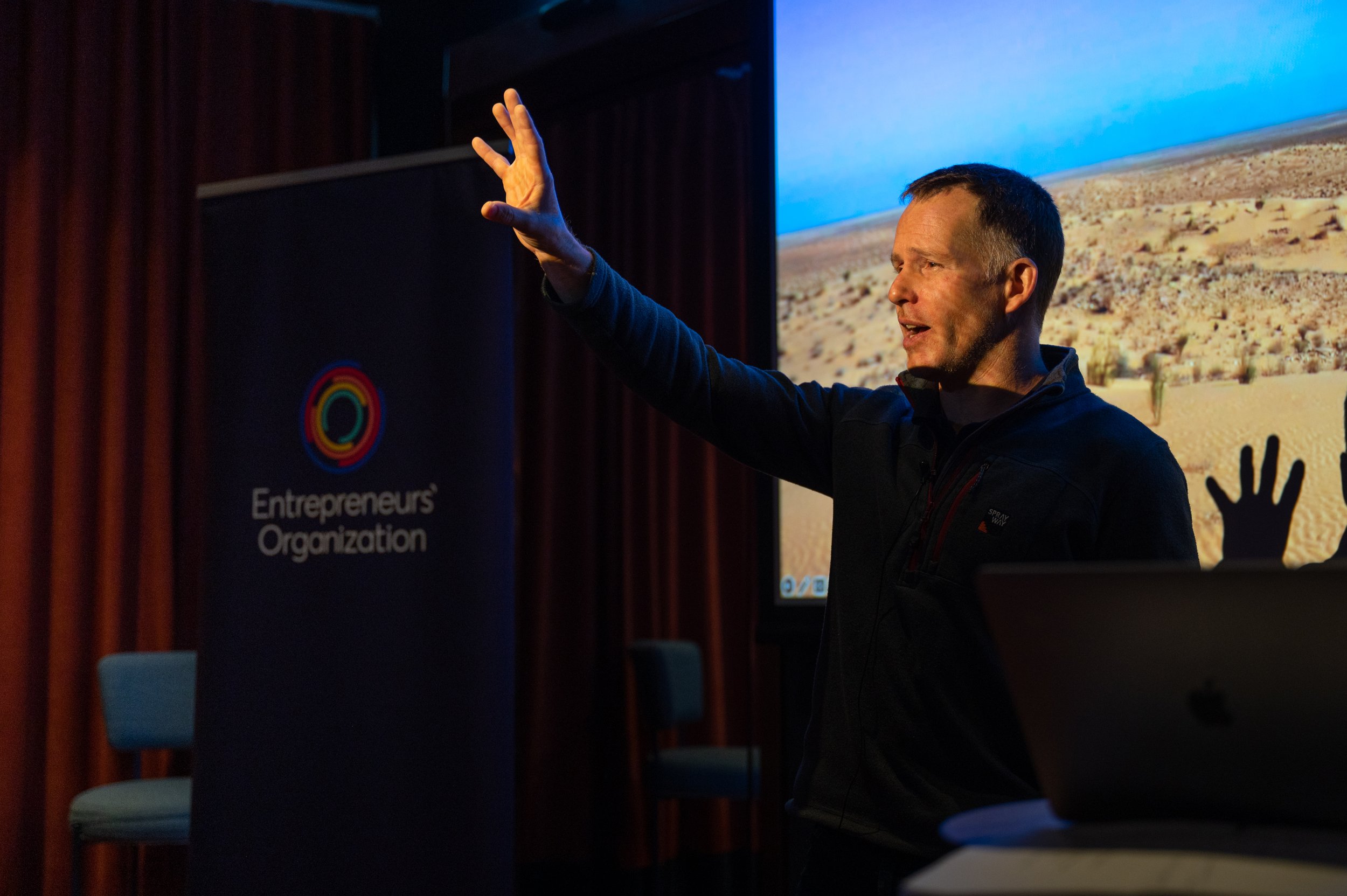
Steve McGown talks on “Freedom is an Attitude” at the EO Melbourne learning event
"5 years & 8 months is a long time. I believe that I'm like any other person. I’m no different. We all have problems, and we shouldn’t judge one another, as we have different coping mechanisms and breaking points. I do, however, believe that our attitude separates us and determines how we cope. Some people give up too easily."
"If they are not going to kill me then I might as well use this time to go home a better person."
- Stephen "Steve" McGown
"5 years & 8 months is a long time. I believe that I'm like any other person. I’m no different. We all have problems, and we shouldn’t judge one another, as we have different coping mechanisms and breaking points. I do, however, believe that our attitude separates us and determines how we cope. Some people give up too easily."
"If they are not going to kill me then I might as well use this time to go home a better person."
- Stephen "Steve" McGown
EO Melbourne recently had Stephen McGown, Al Qaeda's longest-held prisoner and now International Speaker and Best Selling Author, as its speaker where he shared his survival story and how it can be applied to one’s entrepreneurial journey.
In 2011, Steve, then a tourist on a motorcycle, was abducted by Al Qaeda up in North Africa, Mali. He was taken beyond his will far into the Saharan desert for the following six years to be either negotiated out of captivity or executed. In 2017, he was released to return home to his family.
In this EO learning event, Steve talked about resilience and overcoming adversity amidst harsh weather conditions, a different culture, language and religion. He also discussed the value of making important decisions, the importance of acceptance and communication, and the concept that Freedom is an Attitude.

As a normal guy whose life was thrown into disarray, he has become a much sought-after speaker with his self-taught methods of adjusting, being resilient, and making the most of what life throws at us. In this session, he will inspire you and leave you questioning your own attitude and dilemmas.
His survival story can be directed to many specific areas of interest, including one's entrepreneurial journey. Living outdoors in harsh conditions meant that he had to acquire a variety of new skills including how to protect himself from the elements as well as how to communicate across language and cultural boundaries. But most of all, he learned how to stay alive; remain positive and be present when everything was stacked against him. Uncertain as to whether he would ever be released or die in the expanse of the Sahara, he made a decision to not let his situation get the better of him. He decided to rather hold onto hope and take control of his attitude.
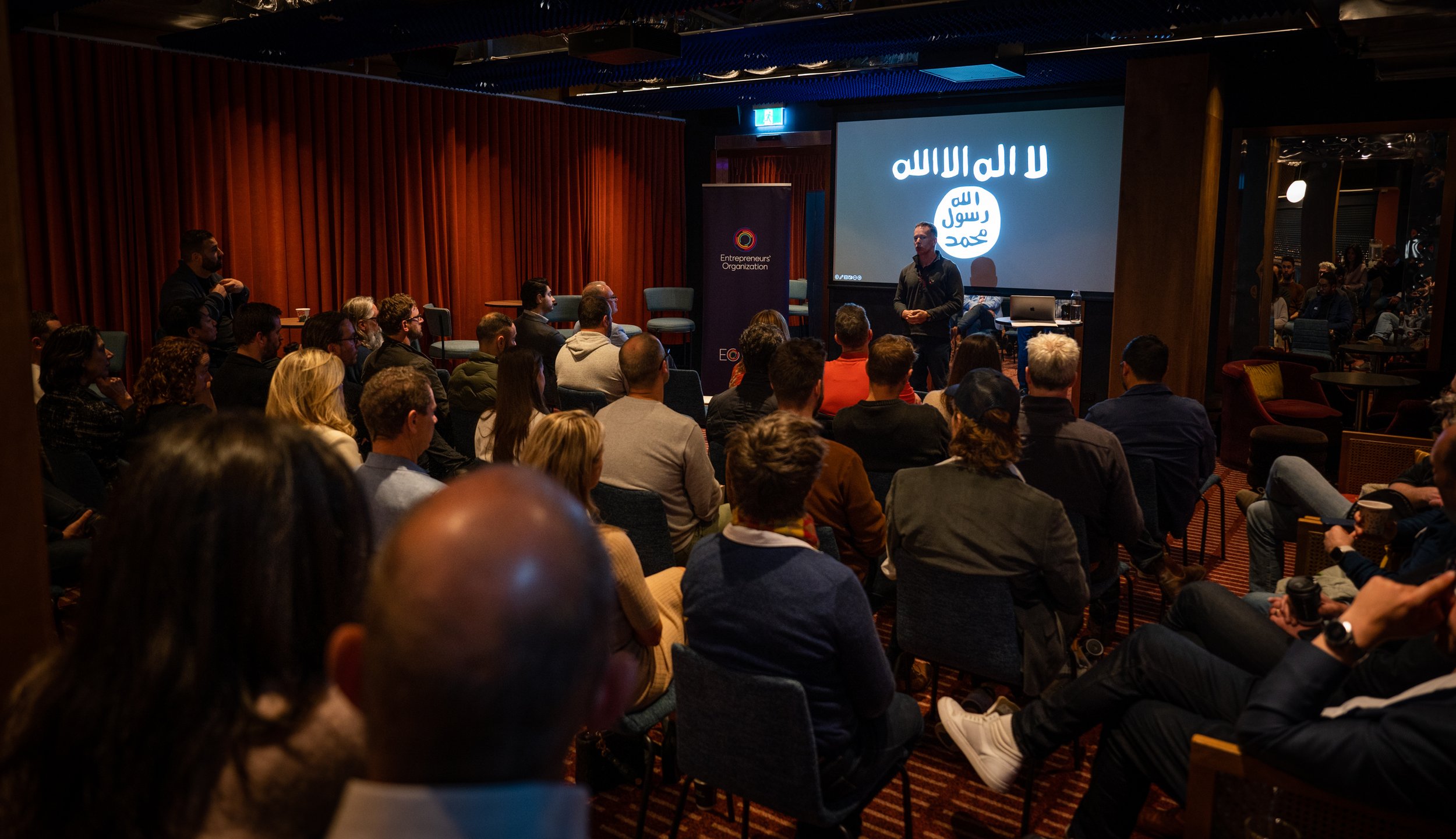
Hearing his story, participants found inspiration from the “amazing story shared by the speaker.” There key takeaways from Steve’s talk are the importance of the power of the mind, a positive attitude is everything, that you can control your attitude and approach in life, and resilience and a positive mindset are key and relationships can save lives.
Steve is the best-selling author of 6 years a hostage (Captured by Islamist Militants in the desert) which was nominated for Book of the Year in South Africa. He is involved in running workshops about resilience and was voted best speaker of the year at a number of EO chapter events internationally.*
*According to ICMI (https://www.icmi.com.au/stephen-mcgown/).
The Power of Gratitude in Business
“Thank you” are two powerful words that can uplift someone, build bridges and strengthen relationships. It is a significant aspect of life, even in business and in the workplace.
Gratitude and appreciation are types of affirmation that something is good, magnifying positivity and encouraging people to perform better. With this, entrepreneurs and business owners see the value of thanking their staff members, partners, and clients and putting effort into expressing it in various ways.

“Thank you” are two powerful words that can uplift someone, build bridges and strengthen relationships. It is a significant aspect of life, even in business and in the workplace.
Gratitude and appreciation are types of affirmation of something that is good, magnifying positivity and encouraging people to perform better. With this, entrepreneurs and business owners see the value of thanking their staff members, partners, and clients and putting effort into expressing it in various ways.
For Hayden Brass, Founder and Managing Director of Zea, “This is an aspect that we find so important, particularly for our staff and customers. With our staff, we are a fully remote team even before COVID, so it is vital for us to continue to connect with them and remind them they are part of a team with a great purpose.”
There are so many ways to show gratitude towards others. David Fastuca, CMO and Co-Founder of Locomote, shared his personal take on this. “I take a really simplistic approach to this and just think, how do I want to be thanked?”
David cited some examples. “I do a role reversal. If I'm a customer of someone else's, how do I want to be thanked? There are a couple of ways. I just try to be really genuine and thank them, where I send a little video message thanking them for working with us. I don't do any of the gifts or sorts of stuff because they probably get 100 different gifts. If I gift them, it's based on me really knowing them. They might love arts and crafts, so I may send them something that's relatable to that. Otherwise, I try and help them in their role. If I know that they're in sales I try and refer customers to them. If they're a founder of a business and we've done some work together or they're a customer of mine, I'll try and reciprocate and then recommend someone to them. If they're looking for a particular type of service, I really think about it and put myself in their shoes – what would I like and how would I like to be treated, and then I try and do more of that to my customers and try and help them succeed in their roles even if it's got nothing to do with what we provide,” he said.
Studies have shown that gratitude evokes a feeling of positivity, happiness and satisfaction. It also helps in improving health and decreasing stress levels. This is why gratitude, when expressed sincerely, can be a significant factor in strengthening relationships in business and in the workplace.
Hayden also shared how they extend gratitude to their team members, partners and customers. Within their organisation, “We conduct 1-2 retreats per year, try and have a team-building exercise of some kind at least once a quarter, and regularly celebrate birthdays and other occasions in their personal life. It’s to remind them that we are human and to show that we care about them in both their work and personal lives.”
With regards to their clientele, Hayden noted, “For our customers, we are always trying to go above and beyond with their experience so that it will be memorable and will hopefully see them come back to us in the future. This is why we place such a key focus on customer service and making sure we not only answer their questions but try and give them an experience that is beyond the norm.”
When it comes to those they do business with, this is what they do as a sign of gratitude. “And finally, with our partners, such as manufacturers and suppliers, we try and treat them with respect and loyalty. We understand how difficult it can be to run a business, particularly an SME, so we are always trying to be professional but also respectful of the challenges we are both facing and coming to a solution together. When we are establishing a relationship with a key partner for the first time, it has been important for me to build trust in the relationship from the outset. Some of our longest and strongest relationships in business have been with us for the whole journey, and it all started from making a bit of extra effort and understanding from the beginning,” Hayden revealed.
There are so many ways to express how thankful we are to people who have helped us along our entrepreneurial journey. No special occasion is needed to say “thank you” to someone because every day you’ll find a reason to be thankful for something good done to you. People will remember your good gesture of thanking them and appreciating their work, help or loyalty. It will create a positive ripple effect that will later come back to you a thousandfold.
How do you express gratitude to your stakeholders? How does it help you in your business? We’d like to hear your stories through our comment section below.
Mentorship is having someone walk with you on your entrepreneurial journey
Much has been said about the entrepreneurial journey being a lonesome path, but not when you’re surrounded by like-minded individuals, such as being part of a group like EO and having someone to walk with you, such as a mentor, for instance.
This is how EO Melbourne Member and mentee Nyree Hibberd, CEO at Koh Living, and mentor Conor O’Malley, a known Executive Coach who calls himself “The CEO’s caddy”, described their mentorship experience.
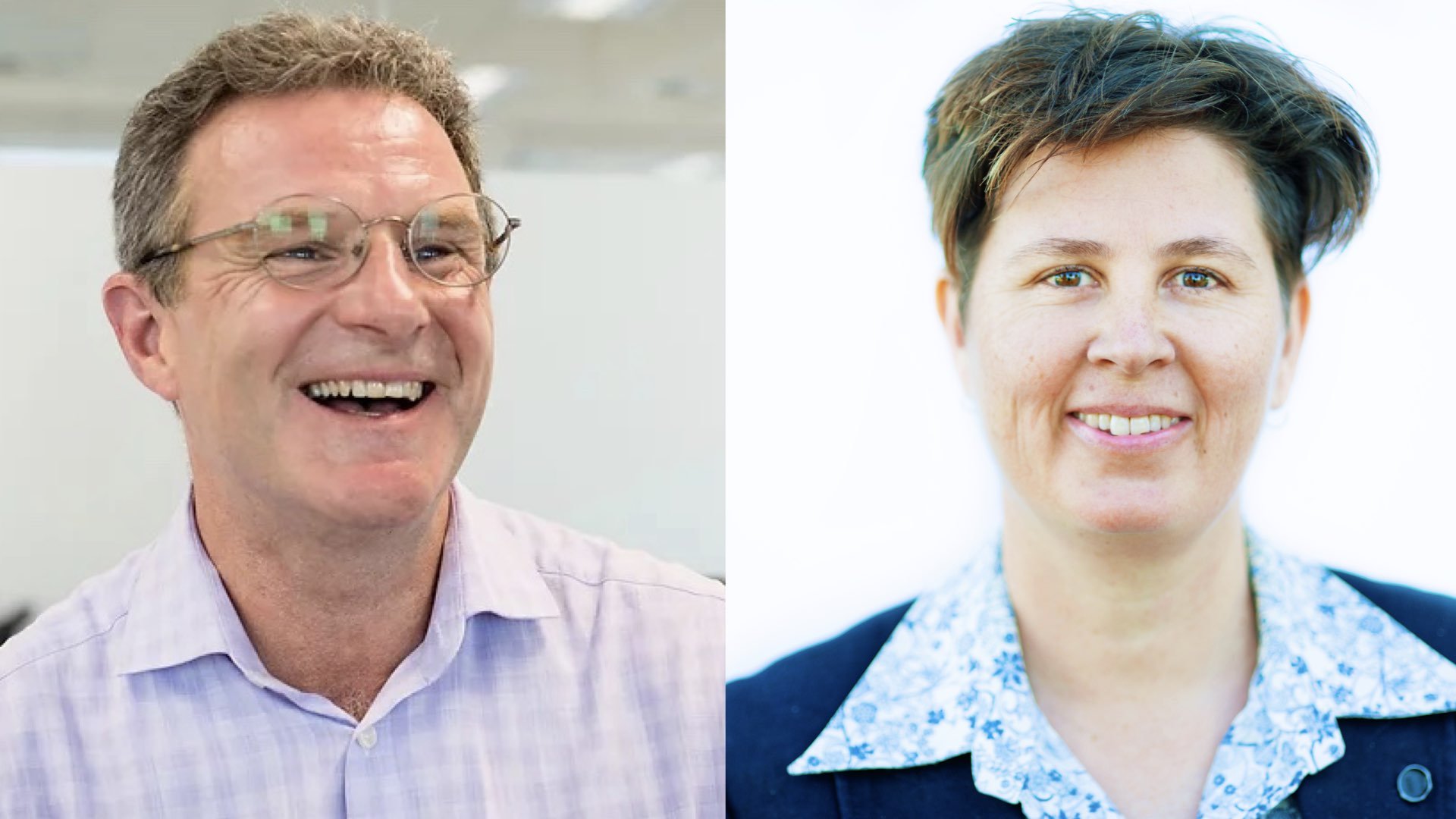
Mentorship pair Conor O’Malley and Nyree Hibberd.
Much has been said about the entrepreneurial journey being a lonesome path, but not when you’re surrounded by like-minded individuals, such as being part of a group like EO and having someone to walk with you, such as a mentor, for instance.
This is how EO Melbourne Member and mentee Nyree Hibberd, CEO at Koh Living, and mentor Conor O’Malley, a known Executive Coach who calls himself “The CEO’s caddy”, described their mentorship experience.
Conor still remembers the first time he and Nyree met, which was at the induction day of mentors and mentees at last year’s intake. He recalled, “I met with Nyree, and we had a great conversation, however, I had to leave early. Nyree very kindly offered to continue our discussion and offered to leave that space by walking with me to the train station. From there, I thought, this sounds like something I'd really like to do, which is to work through the EO channel and support Nyree.”
Nyree, on the other hand, is thankful to have someone who can be with her during this part of her entrepreneurial journey. “I'm a big believer in the motto or saying that ‘you don't know what you don't know.’ As a business owner, it seems like I don't know a lot. So, it was all about connecting with the right person to help me progress in my path, personally and in the business,” she stated.
One of the things that Nyree learned throughout their sessions was finding answers to things she wanted to know. She described how she was learning new things along the way, “Conor's approach was really to question – asking, probing – almost, ‘you know the answer but you've got to find it in there and then let me know.’ This really worked for me, so using questions more is what I actually do now with the staff as well, which is quite good because before, I’d also tell people the answer, ‘just go and do this and this,’ and they wouldn't learn the same way as I would. I wasn't learning by just being told, so that was quite good in comparison for me.”
She further expounded on the learnings she picked from her conversations and interactions with Conor. “I think I went into it with a ‘what next, what now’ and ‘how do I get it from here to where I know it can go.’ So, the key learnings were really about pushing back on me and seeing myself as the leader rather than the doer because there's no scaling if I was going to be still 5% in everybody's role. That was the big thing.”
“The second thing was about holding the space,” Nyree continued. “I've got a couple of challenging relationships at times within the business, and it’s just this kind of concept of allowing them to hold their space, that I didn't need to jump in and do anything. I just respected that they had that opinion and felt the way they did, and it allowed me not to jump into their story and not enflame situations as well. It kind of worked quite well.
Then the third one is with my son, personally holding the personal state not just with my son but with my partner as well. I would often get home, I'd have dinner, put my son to bed, and I'd sit on the couch with my computer and keep going when my partner was around, but there was no real quality time. I don't know if it naturally just stopped or I made a decision to, I can't remember. But when I’m with them, it is to literally be present and not try to do two things at the same time. So, yeah, these are the three really big things for me.”
But it was not just Nyree who was learning from their mentorship. Conor also has picked new ideas and lessons from Nyree’s experiences. “From a commercial perspective, Nyree and her business partner are in a really interesting stage of growth in their business and, in my words here, ‘taking it to the next level and then looking at what the next horizon is.’ There's no doubt for me that there was a really good learning opportunity of working with an entrepreneur who's taking a business, with a business partner, from scratch to an amazingly successful business to where it is now, and going, ‘Okay, what next? Where next?’” he remarked.
Conor added, “It’s the opportunity to co-learn, co-create and, in some cases, introduce people in my network to Nyree, some of whom resonated and some didn't. That was real learning for me in terms of who in my network resonated and who didn't. And there's no right or wrong there. For me, that was commercial learning, walking – and we literally did – as we had many walking sessions and conversations around an entrepreneur taking a business to another level and looking at what the next three-year vision really is and how to get there.”
He also stated that the whole experience did not only contribute to his professional growth but also to his personal development. “On a personal level, COVID was part of our journey, and I was learning from Nyree in terms of her perspective and how she and her family and I were managing through COVID. It was a challenging time, and there's no doubt that I certainly learned through that time as well,” Conor enthusiastically shared.
For Nyree, their sessions also had her thinking about how she deals with her business and personal areas of her life. “I read this book called, What Got You Here Won't Get You There, and I realised that one of my bad habits or difficult challenges is trying to over-add value rather than allowing other people to take initiative and responsibility. That's one of the main things that seemed to keep coming up as a theme that had a big effect on me and how I run the business because I was constantly in people's roles, feeling like I had to help them do their roles rather than give them the tools they needed to do the role themselves. I enjoyed actually being able to be challenged on that and step back and watch what happened.”
“The other area was in my personal life where I've got a four-year-old son, and just that balance of spending time with him, I really found it quite challenging because the business is so busy that even when I was with him I wasn't present. So, Conor had this saying, ‘for the sake of what,’ but we changed it to ‘for the sake of who.’ When I started doing activities with my son, even if I was walking down the street with his pram, I would ask myself, ‘for the sake of who am I doing this?’ And it'll be for him and it's to spend time and to talk about cars or whatever he wants to talk about rather than me thinking what am I supposed to be doing right now. So, it was a nice tool that I used personally to just bring myself back to where I was, at the time,” Nyree explained.
Both Nyree and Conor were glad to have walked together along the business path, sharing their stories and exchanging insights with each other. Although they have already finished their Mentorship Program, they were grateful to have formed a connection as a mentor and as a mentee, which has blossomed into a friendship.
In Conor’s words, “The metaphor I have in my coaching practice is to be a caddy. I'm a golfer, and I see myself as the person's caddy who walks alongside that person, and Nyree knows that she's got a caddy walking alongside her and she can reach out. Let's say, in this case now that the programme is over, the caddy's walking outside of the ropes, but anytime she wants to, she can pull this caddy in. I'll be on the bag and I'll walk inside the ropes with her.”
The beauty in diversity: a mentorship experience
Learning comes from various things and in many ways, and oftentimes, how we differ from each other helps us widen our knowledge and understanding of the space we live in and move around. Such can be said for mentor Emma Duffy, Learning Director at ProActive Training, and mentee Hayden Brass, Founder and Managing Director of Zea.
Learning comes from various things and in many ways, and oftentimes, how we differ from each other helps us widen our knowledge and understanding of the space we live in and move around. Such can be said for mentor Emma Duffy, Learning Director at ProActive Training, and mentee Hayden Brass, Founder and Managing Director of Zea.

Mentor Emma Duffy and mentee Hayden Brass share their mentorship experience and learnings from it.
Other than running a business and being business owners, they haven’t necessarily spotted their similarities or commonalities. But despite having different businesses, they found themselves at a very good start when they met for the first time at the Mentorship training.
“Working together in the training session that Carlo ran, I thought that was a really strong start to the whole program for us as I feel that we got to know each other pretty well and understand what we both wanted out of the program and that we at least got a framework to build on from that,” said Emma.
Hayden concurred, “We have very different businesses, which are, in some ways, what you’d want. Although we had no common ground for this, I think we've learned a lot from each other in that way as well because we've had different experiences and different industries, which has been really great. So, it's been a great element of the mentorship.”
He continued, “We started off really strong catching up almost the same time every month and being able to come away with different viewpoints that I have not necessarily thought of.
We have quite different businesses, quite different lives, and quite different ages as well. A lot of different elements allowed for really valuable insights and learnings from that perspective. I think that just having those differences made it really valuable in making me think outside the box and think about things differently.”
The whole journey has also provided them with more insightful experiences and new learnings. For Emma, it has encouraged her to think in an unusual way. She narrated a time when she was frustrated with not being able to give training ideas to Hayden because what her business did could not necessarily fit his needs or his team’s needs.
“After our last catch-up when it came up again, I thought, ‘Well, I'm not going to walk away and stay frustrated or feel like I don’t have an answer in my area of expertise.’ In fact, it has prompted me to come back to my desk and actually do a whole lot of research into various apps and system processes that are available in the marketplace and find ways so that when we catch up next, I could go back to Hayden and say, ‘Well, these are some ideas that you could take into your business and use in your business.’ So, it's really stretched me to think a little bit differently about what businesses need in terms of training. It's then pushed me and my business partner to really reconsider how we set up some of our own compliance requirements in the business and how we could potentially develop them into a type of software that we could take to the marketplace. It's a huge gift that that sort of thinking pushed me to do something really different for me, my day-to-day work, and our business. I would never have done research on apps and processes otherwise,” Emma explained.
On Hayden’s part, he has gained a lot of ideas and perspectives from their mentoring sessions throughout the year. “What happened was with the first six months, and they're very well aligned, we had these three sets of goals which we set around leadership, etc. I think for me it was a lot about being able to come to the table with a little leadership challenge or a hiring challenge and then hearing a perspective that's quite different and new. That's been really valuable. It's also been good in that we've been able to bounce different ideas off each other within a meeting. I'd come either pre-planned, and we've done it before, and mentioned a few key things that we wanted to cover. It's given us a chance to reflect on it and review it, whether it's a staff leaving or a staff deciding to ask for a big wage increase or whatever challenge it might be that I’m having. It's just that back and forwards and getting that new perspective on whatever it might be.”
For the duration of their mentorship journey, both Emma and Hayden enjoyed their interactions and the key takeaways they get from their conversations.
Emma shared, “I really enjoyed the consistent and regular catch-ups. Hayden's business has gone through amazing growth in the last 12 months in the time that we've been working together. It was really interesting to see and learn about that. That was I guess one of the main things, from my point of view. It was just great. I've really enjoyed those conversations and I walked away each time hoping I might have added a little bit of value.”
As for Hayden, “It was a very broad goal that I've set in becoming a better leader. I think it doesn't come down to one or two things. It comes down to a multitude of things that have happened in the mentorship program and also in the growing of the business and coinciding with one another to get that. It's a long way to go, but definitely, I think I've achieved that in that 12-month period. A lot of it comes down to little bits and pieces that have come together to make a big difference in mindset or ways that we are reacting to different scenarios. It's all been really valuable from that perspective.”
And what’s the secret behind a successful mentorship experience that others may consider when getting into mentorship?
“Commitment is definitely one of the biggest ones,” Hayden remarked. “You need to go in there with the commitment that you're going to do this on top of your normal workload and normal forum and whatever else you've got going on. The other aspect would be to be really clear on what you want to get out of it when you're applying for it, who the type of mentor that you're looking for, and what is the specific area that you want to get the most value from because if you're very specific on that, that helps the team to assign a good mentor to you. I think it’s being very specific on those and differentiating it to what you want to get out of your forum or other learnings or whatever that might be and have a really specific goal for your mentor-mentee relationship because that can make a big difference as well.”
Emma was in agreement on the importance of commitment to make one’s mentorship journey a valuable one. “I completely agree. With preparation, just to do a bit of thinking beforehand to maximize the one hour, Hayden was really disciplined about contacting, setting the meeting time up, and turning up. We were there for one hour and then we were gone. It didn't linger on. There was really a focused time commitment.”
EO Melbourne’s Mentorship Program is one of the significant programs of the organisation that members can take advantage of and benefit from. Each experience is different and unique, and the value it can provide to both the mentor and the mentee can be priceless.
Dealing with rejection in business
Rejection is an experience that happens anytime and anywhere, even more so in the business and entrepreneurial space. It is a part of the journey that new and long-time entrepreneurs alike have to deal with every now and then.

Rejection is an experience that happens anytime and anywhere, even more so in the business and entrepreneurial space. It is a part of the journey that new and long-time entrepreneurs alike have to deal with every now and then.
A transaction that never prospered, a possible partnership that didn’t come through, a loan that failed, a proposal that was not accepted, and so on and so forth. These are just some of the many scenarios where rejection happens in one’s entrepreneurial journey.
Getting a “no” may often be hurtful, but it doesn’t mean that it’s the end of the road. It is just a bump or a hurdle that one has to overcome to move forward and come out better and stronger. So, how do you move past rejection and make it work for you and your business?
Never take it personally
There are various reasons when one rejects your idea or proposal, but don’t deem it as something against you as a person. It could be that they are not amenable to your price points, they don’t see a fit with their business needs, or there’s just a different opportunity or option that they prefer to take.
“Rejection is a reality in every business and it needs to be used to fine-tune aspects of your business or product offering without taking it personally,” Nitasha Badhwar, Co-founder and Chief Strategy Officer of Sunpower Renewables, remarked.
Similarly, David Fastuca, CMO and Co-Founder of Locomote, shared this insight. He said, “Being in marketing and sales for a good part of my career, I'll probably take the line of sales, such as being able to cold call and reach out to people. As a business owner and founder, for your first hundred customers, you're doing whatever you can to get them on board and you get rejected a lot. You're interrupting people's day and you don't know the right time to reach out to them, so the biggest sort of rejection is to have these people telling you to piss off, go away, and them being rude on the call. You really need to have a thick skin and understand that you should not take it personally.”
Be resilient
Take every rejection as a lesson that will only further improve yourself and your business. Many leaders would say that a failure only becomes a failure when one stops trying. And for every success, there are countless trial-and-error and rejections that happen along the way.
“The way I've dealt with it is in light of those ways of being really resilient,” David professed. “It's not about how many times you get knocked down, but it's how many times you get up. I try to instil this ethos into my children as well, wherein to expect failure and that it's going to happen, so anticipate it and agree with it with a smile and know that every ‘no’ gets you closer to a ‘yes’. If you don't hear back from someone, it's always a ‘yes’ until it's a ‘no’,” he explained.
So, keep trying. Keep approaching people. Keep on refining and upgrading your products and services. Never allow rejection to weigh you down.
Stay positive and find an opportunity from the experience
A rejection is oftentimes a detour into something even better and bigger. Find an opportunity in a rejection. Will it lead you to a new client? Will it give you more time to do other projects? Does it give you a new idea to work on?
For David, “it's just having that approach where even if someone gives me a ‘no’ on a call, I'll smile, I thank them and I even try and turn it into something like ‘hey, it may be not right for you, but can you recommend me to someone else you think this might be a right suit for them?’ So, even if I'm taking a negative sort of conversation, I try to flip that into a positive one.”
Use it as a way to improve and progress
When rejection happens, find out the “why” behind it. Knowing the reasons can help you develop yourself and your business by fixing things that are within your control and letting go of things you can’t.
Nitasha gave an example of how rejection has enabled them to refine and enhance their products. “In our organisation, we have tried to use it to deviate from the status quo and redefine the norm. After all, Einstein once said that insanity is doing the same thing over and over and expecting a different result. An example of this would be in the early years of the business where we started with a home power system with a PAYG business model.”
She continued, “We kept reorienting the model expecting better results. That didn’t do as well as we expected due to various reasons: lack of telecom infrastructure in remote places, affordability, and issues with collecting payments to name a few. However, in listening to the market, we evolved our product offering and our business model to redefine our product, thus, creating our independent solar power station. It functions independently, allowing a customer to choose what features to add. It is not restricted by telecom infrastructure and can scale up as much as the prosumer needs. Getting rejected helped us in developing a better product.”
Next time you get rejected, go back to the drawing board and rethink the best approach forward. Have you experienced rejection in your business? How did you handle it? Share with us your thoughts and learnings through the comments section below.
How Melbourne Business Owners find opportunities in difficult situations
“You may encounter many defeats, but you must not be defeated. In fact, it may be necessary to encounter the defeats so you can know who you are, what you can rise from, how you can still come out of it.” — Maya Angelou
Successful entrepreneurs get to where they are now because of their determination to reach their goals, which includes braving the odds and overcoming hurdles. The recent global scenarios in the past two to three years have been very challenging. Many business leaders have looked into finding opportunities under tough situations. But how do you do it?

“You may encounter many defeats, but you must not be defeated. In fact, it may be necessary to encounter the defeats so you can know who you are, what you can rise from, how you can still come out of it.” — Maya Angelou
Successful entrepreneurs get to where they are now because of their determination to reach their goals, which includes braving the odds and overcoming hurdles. The recent global scenarios in the past two to three years have been very challenging. Many business leaders have looked into finding opportunities under tough situations. But how do you do it?
Look at the present needs where you can provide a solution
Entrepreneurs have shared how their businesses fill a gap. Dion Castle, CEO of Struber, said, “With the fast-changing environment in society and the world, in general, it is easy to see that the culture, technology and customer experience in our industry were due for an upgrade.”
But when the conditions of a society change, the needs of society also change. If there are difficult circumstances, how can your business help in this time of need? Are your products and services relevant in such circumstances? It is good to look into new problems that arise and find the areas where your business can offer a solution.
Be open to new creative ideas, innovate and pivot
Unexpected things happen, so when a crisis arises and you hit a wall, take advantage of this hiccup to go back to the drawing board and revisit your plans and current offerings. This is where innovation comes in. Brainstorm for new ideas that can help boost your enterprise and make it thrive when the going gets tough.
Nitasha Badhwar, Co-founder and Chief Strategy Officer of Sunpower Renewables, shared that “Innovation for us is more than just implementing new technology, solution, or process. It is our culture and one of our cornerstones – something that we come back to in good and bad times.”
Also, opportunities open up when you pivot. Arosh Fernando, Creative Director of WooHah Productions, once shared the changes they had to do within their business to keep them going during the lockdowns. “All these changes helped us, as we would have no income if it wasn’t for these pivot ideas. We have managed to claw up to 20-30% of our monthly revenue,” Arosh said.
Keep an eye on new markets
It is often said that “when one door closes, a window opens.” A crisis or a setback can be a turning point where new opportunities are formed. Look where the resources go. Observe the trends and be ready for new markets that will emerge.
According to Clayton Cross, Head of Strategy at Expia, “The pandemic has opened hundreds of opportunities. Most golden. Essentially new markets have been created, especially in the environmental, social, and governance (ESG) space, which we are targetting.”
Offer help and strengthen relationships
When problems and adversities arise, that is the best time for everyone to help each other and work together to overcome the challenges ahead. The pandemic has shown how important relationships are – within the family, among friends and even with people you meet through your business.
Ben Beattie, Managing Director of True Blue Plumbing Australia, talked about his experience. “When they shut down construction in Victoria, we had 10 plumbers a day off work with only enough emergency work for 12 guys. This was the week the earthquake hit and thousands of insurance claims were lodged. We contacted our major clients and offered to assist them with virtually assessing all the damage from the site back to their head offices as they were swamped with work. We were able to keep 3 additional guys busy for the final week of lockdown reducing to major financial losses we were incurring.”
We never run out of opportunities. The important thing is to look out for it at all times or even create those opportunities when you can.
How to deliver engaging and impactful presentations
Presentations are essential in a business. People present their ideas or topics during speaking engagements, proposal meetings, and various events across different industries and sectors. But how do you make killer presentations that are impactful enough to draw your audience to your message?

Presentations are essential in a business. People present their ideas or topics during speaking engagements, proposal meetings, and various events across different industries and sectors. But how do you make killer presentations that are impactful enough to draw your audience to your message?
Entrepreneurs and business executives nowadays are being tapped to talk about their experiences, expertise, insights and entrepreneurial journey stories to inspire others. Members of EO Melbourne share with us some tips on how to hook and attract your audience when presenting as well as keep them engaged and interested in your presentation.
1. Connect with your audience
“Be real.” This is what Jeremy Chen, Managing Director & Co-Founder of Good Things and Co-Founder of Hustleboard, imparts to those who want to learn how to deliver an effective presentation. The best way to make a connection with the audience is to be sincere and authentic in one’s words and disposition, and not try too hard to impress your audience.
This is backed by David Fastuca, CMO and Co-Founder of Locomote, when he said, “Just like how we do in EO, we're sharing experiences all the time. It is by making these presentations based on your experience or the experiences that you've delivered for your customers and bringing those results through because then they can say, ‘Well, I'm like this customer. I can get results like this based on how they did that.’”
True enough, the best presentations are those that can capture the attention of the audience, sustain their interest, and get them to retain the message you have conveyed. “The most effective ones I have done for the business are those where it is clear that I have been able to establish an emotional connection with the audience and they feel like they are part of the journey and the challenges that we have had along the way. Getting buy-in and interest from the audience from the beginning is so important,” shared Hayden Brass, Founder and Managing Director of Zea.
2. Make your slides visually pleasing
Renata Freund, Founder & Director of Honeycomb Strategy, shares valuable insights based on the work they do. “As a research agency, our success is centred on our ability to clearly communicate insights that are easy to understand and compelling. Here is one of our go-to tips and tricks to wow your audience with your presentation: Visual design is never optional.”
“When information, insights or data is presented in a format that is visually appealing, your audience will naturally be more open and receptive to what is being communicated. The visual design needs to come first, not be an after-thought in your presentation,” Renata remarked.
The visual design includes the template you use, the background of your slide, the colours, the layout of the presentation, the illustrations, photos and graphs that are included in the slides, as well as the font and size of the text. All these must be cohesive and well-thought-of to ensure that they are appealing to your audience.
3. Use fewer words and text
Renata adds another tip to wow your audience: Let imagery do the talking. “As a general rule, we try to keep the text on the slide to no more than a short heading plus 3 bullet points. We use photography and iconography as visual cues to support the story, without having to spell out every insight with words,” she said.
David concurs based on his experience as well. “The best ones have always been if you've got slides up on the screen or doing a zoom, know your basic things. It's common sense now these days, but a lot of people still get it wrong, which is not to have too many words on a page. Try to have more pictures that convey what you're saying on screen so that they're not reading something word by word, but they're getting the gist of what you're saying by the imagery that's on there.”
Jeremy summarises it in two words – “Be concise.”
4. Let your personality shine through
The third tip Renata has in making an impactful presentation is to “Let your personality shine through.”
She expounds, “The one thing that all great communicators have in common is the ability to let their personality shine through. Your presentation should be no different. Bringing fun, humour and your own personal touch to your presentation will build credibility and warmth with your audience.”
5. Put some fun in your presentation
Speaking of fun, David shares that it can make a presentation more memorable to the audience. He reveals, “I try to make all my presentations a bit fun, such as having a meme or a gif that people can relate to or that could get a bit of a smile from the audience. It can be risky if it doesn't come off, but when it does, it has a real impact.”
He further added, “People will remember you as the one that made them smile and the one that made them feel good about the topic that you're talking about. Depending on what you're talking about, it could be a relatively boring or stale topic, so you want to lighten it up and have a bit of fun with it.”
6. Give good key takeaways
Lastly, adding a summary at the end of the presentation will make it easier for your audience to recall and digest everything that you’ve said. According to David, “Give people some really good key takeaways. It doesn't matter what you're presenting or what you're explaining, there's always something that people can learn. I found that doing a summary makes it easy for people to get key takeaways. I put them on one slide and allow myself to put a little bit of text there so that people can know what I'm talking about and they can write it down or screenshot it. I think that helps create a presentation that is impactful and engaging.”
Moreover, take time to practice and hone your skills. Take the opportunity to present when it comes knocking at your door. Better if you record your presentations and review them later on so that you can see how you can further improve your presentation skills.
Futurist Sarah Owen talked about “Future Forecast 2024” to EO Melbourne
Trend forecaster and futurist Sarah Owen, Co-founder & Global Futures Director at SOON Future Studies, recently shared how SOON Future Studies has uncovered “the global drivers of change as well as 30 emerging trends that will help drive business decisions over the next few years.”
SOON is a futures think tank focused on human insights.Hosted at The Taboo Group, office of EO Melbourne Member Andrew Mackinnon, the "Future Forecast 2024" EO x SOON Event with Sarah Owen was attended by EO Melbourne Members, Strategic Alliance Partners and members of the SLP Forum.

How will young people think and behave in 2024?
Trend forecaster and futurist Sarah Owen, Co-founder & Global Futures Director at SOON Future Studies, recently shared how SOON Future Studies has uncovered “the global drivers of change as well as 30 emerging trends that will help drive business decisions over the next few years.”
SOON is a futures think tank focused on human insights. Hosted at The Taboo Group, office of EO Melbourne Member Andrew Mackinnon, the "Future Forecast 2024" EO x SOON Event with Sarah Owen was attended by EO Melbourne Members, Strategic Alliance Partners and members of the SLP Forum.
At this event, Sarah, also a social scientist with a background in studying youth culture and social media, revealed that “In 2024, a social, political, and environmental tipping point will drive people to drastically reform and rewire their world. From reinventing the notion of work and challenging the current growth narrative to reshape societal norms and developing entirely new digital realities, this report outlines the emerging mindsets and movements unfolding in the next few years.”
She pointed out that “We live in a liquid society; a period in time where the concepts of identity and individuality are becoming more and more elastic.”
Sarah then gave an overview of the different Drivers of Change and possible News Headlines in 2024. She also talked in detail about the various Key Trends, such as Life Wellbeing, Meta-worlds, Age of Awareness, Reworking Work, Revenge Travel, Retail Revival and the Post-Growth Paradigm, illustrating the emerging trends for each.
The insights shared and discussed allowed the participants to better understand how Gen Z and Millennials would approach work, travel, food, gaming and shopping in the future. It then gave the members ideas on how they can align their businesses with the emerging trends taking into consideration the various drivers of change.
Participants say that “the content was great” and “it is so diverse and eye-opening” that they hope for “more future events because this was incredibly inspiring.” An EO Melbourne member who came to the event shared that he got at least eight good take-outs from the session.
Leadership teams from various sectors now look at futures studies with interest as these studies provide them with tools for dealing with uncertainties, building resilience among their teams, and mapping out the future of their businesses or organisations.
How to keep your team inspired at work
The lockdowns imposed during the pandemic have pushed many businesses to manage their teams remotely. Now that restrictions are easing up and things are having a semblance of normalcy, some have embraced the “new normal” with people going back to face-to-face activities but with certain safety protocols imposed. Others still work from home, while there are others that adapt hybrid work arrangements.
The lockdowns imposed during the pandemic have pushed many businesses to manage their teams remotely. Now that restrictions are easing, and the world is starting to return to some form of normality, some have embraced the “new normal” with people going back to face-to-face activities but with certain safety protocols imposed. Others still work from home, while there are others that have adopted hybrid working arrangements.
Regardless of the work set up in your organisation, it is undeniable that your employees’ happiness and mental health are important in keeping your team together. It also helps them to be motivated and engaged in your business and immersed in their jobs. Apart from your regular catch-ups and meetings, it is helpful to come up with some activities and initiatives that also cater to their other needs.

Reach out to them individually
Letting your staff members know that you value them as part of your organisation will also enable them to put importance on their relationship with you. Since every staff member may be going through different situations and may have varying concerns, it is helpful to reach out to them one by one and check on their circumstances.
When the pandemic happened, Ben Beattie, Managing Director of True Blue Plumbing Australia, dedicated time to check on his team. “I took the time to call every staff member individually, asked them how they are coping and if there was anything True Blue Plumbing Australia could do for them and what their thoughts were on how the company has handled the pandemic,” he stated.
Clayton Cross, Head of Strategy at Expia, shared a similar sentiment. “We reach out to them to know where they are at, individually,” Clayton remarked. This simple gesture matters to every member of your team, so it’s beneficial to do this every now and then,
Gather feedback and address issues
Whether during individual calls or at regular group huddles, make sure to gather feedback from your team members and address immediate concerns. “Taking on their feedback and addressing any issues was a great way to make all staff feel heard,” Ben iterated.
Such feedback will provide you with insights on how you can further strengthen your team, improve your systems and services, and grow your business. When team members feel that their input and ideas are being considered by the company, the more they become engaged and involved in the business.
Host a dinner or socials and do activities that build the team
The pandemic was challenging to most individuals and businesses. However, people have become more creative in keeping their teams together. Many have come up with virtual get-togethers and other fun and enjoyable activities, big or small.
During lockdowns, Ben and his team at True Blue Plumbing Australia gathered online for some lighthearted moments. “We held an online social and paid for dinner and drinks for everyone. This really helped morale and eliminate the feeling of disconnect,” Ben shared.
Team lunches or dinners, fun games and team-building activities are initiatives that will get your people to strengthen their bond as a group and reinforce their teamwork.
Jeremy Chen, Managing Director and co-founder at Good Things, has tapped experts for their team-building activities. “BeChallenged runs a great course that is fun and the enchanted adventure garden in Mornington peninsula has some fun scavenger hunt/ropes courses, but nothing beats a good internal dinner and drinks.”
Give them some pampering
Allow your staff members to enjoy something that can help them relax and de-stress. Clayton has come up with some initiatives that could bring delight to the team. “We offer them something that meets their immediate needs, such as a massage or a quality home-cooked food delivered,” he said.
These are things that will make your team appreciate being part of your organisation and inspire and motivate them to be engaged in your business.
Encourage continuous growth
People always yearn for growth, such as skills upgrade, advancement in their career path or bigger roles in the organisation. Provide them with an opportunity to thrive and learn more, wherein they can apply such learnings to their personal and professional development as well as to the growth of your business. Training, seminars, workshops, conferences or additional education would be beneficial to them and your organisation.
When it comes to continuous learning for your key executives, EO has a Key Executive Program, a program that permits an EO member to have a key executive from their business to participate in EO learning events and EO Accelerator learning events and become a member of a Key Executive Forum. Learn more about it at https://www.eomelbourne.org/key-executive-program.
Data vs gut-feel in decision-making
When do you use data and when do you rely on instincts in making business decisions?
Decision-making is important in every business and organisation. It is crucial in finding short-term, medium-term and long-term solutions to problems or plans that need to materialise.
When do you use data and when do you rely on instincts in making business decisions?
Decision-making is important in every business and organisation. It is crucial in finding short-term, medium-term and long-term solutions to problems or plans that need to materialise.
There are different ways and factors in arriving at a certain decision. Some have to be done at a snap of a finger due to the need for urgency. Others have to be deliberated carefully by a team. Then, there’s this age-old question, “Should you use data or should you rely on your instincts or experience when making business decisions?”
Many entrepreneurs recognise the value of both in decision-making. One must be able to know how to weigh when one is more necessary than the other in a given situation. Relying only on one may put decision-makers at a disadvantage. It is helpful to look at data and listen to gut-feel and learn from experience when coming up with a plan or strategy to navigate through one’s decision-making process and arrive at a sound resolution.

Data and gut feel go together
There are circumstances when data weigh heavier than gut and vice versa. But one has to consider both when arriving at a resolution. According to Renata Freund, Founder and Director at Honeycomb Strategy, “Data and intuition go hand-in-hand, both playing a role in business decision-making. Together they are the secret sauce that underpins great entrepreneurs. Data is your confidence. It is what allows you to make decisions with conviction, knowing they are grounded in truth. Instinct is your creativity. It is what allows you to experiment, to create the new and reimagine the old. When you pair that confidence and creativity together, that’s when the magic happens.”
This was echoed by Hayden Brass, Founder and Managing Director at Zea. He remarked, “They are both critical and both play an important part in my business. For marketing, a lot of instincts have played a part in coming up with unique concepts and ideas for campaigns, but often, this has to be backed up by relevant data. When it comes to reviewing the return on investment for a marketing campaign, it is crucial to look at the data and statistics to determine whether one’s gut instincts are accurate or not.”
He also added, “And when it comes to hiring staff, this is probably the most critical of them all. It is important to go through the relevant standard hiring processes to see if they are “on paper’ a good fit for the organisation. This is one of the most crucial steps in vetting candidates. But as it approaches the pointy end of the hiring process, the more I like to pay attention to my gut instincts as to whether I believe they are the right person for the role or not. By no means is this always accurate, but it is complementary to the data collected on the candidates and both play important roles in finding people that are a good fit for our organisation.”
Nitasha Badhwar, Co-founder and Chief Strategy Officer of Sunpower Renewables agreed that both go together. “I think both data and gut-feel go hand-in-hand, and you can’t necessarily isolate one from the other. Data prepares you (like a weather app) but your gut-feel defines your direction.”
She cited an example from her experience, “When we started working with lithium-ion batteries, the prices were exceptionally high. It was difficult to develop a commercially viable product without stripping features to a bare minimum. If we had just relied purely on data, we would have started many years down the line which wouldn’t have afforded us the time to experiment, develop and evolve a truly comprehensive product. At that time, it was just gut-feel to jump into product development, given the data we had in hand. Today, our product line has a range of products catering to customers’ every need including an Intelligent energy flow optimizer which turned the product from a regular generator to a smart generator. On the other hand, our gut-feel was to stick to b2b and not develop the online sales channels, but the pandemic and data proved us wrong, and we are now embarking upon developing this sales channel.”
A balanced approach can help
David Fastuca, CMO and Co-founder of Locomote, maintains a balanced approach when it comes to making decisions. “I relate this back to marketing because within the marketing world, there's often this fight between data-driven marketing in which you spend a dollar, you get X dollars back, and then there's the marketing that you can't attribute, which is like a brand.”
David further illustrated this by providing an example, “When someone sees a link to a post on LinkedIn, just because you might be getting low engagement or five likes and two comments, it doesn't mean that few people are viewing it. The ideal customer you're trying to get might have read it but just hasn't interacted with it. Then all of a sudden they come to your site and then they inquire about a demo. Where does that attribution go to? It's easy to say, ‘Okay, they clicked an ad and then they signed up, so let's throw more money on ads.’ But the truth could be is that they saw your post, they read your blog, they interacted with some other content on your website, or they heard you on the radio. Maybe, all of a sudden, they saw an ad as they were scrolling through Instagram and then decide to click it.”
“But what happens is that the CEO of the business or the CFO says, ‘That lead is attributed to this ad spend so let's put more money into that,’ when really you need to attribute that to beyond other channels. So, that's where the instincts and gap come into play. I try and have a balanced approach where 50% of my decisions are using data and 50% is based on my instincts and what I'm learning in the space. If things are improving, such as more conversions are happening on my website, then I will attribute a good percentage across both channels, the ones that you can really track because it's really analytical. But then, it's always important to be working on your brand and your awareness through channels that you don't spend on. So, while I do 50-50 decisions, I also split my budget differently across those channels. So, I do 70% of my budget on what I can track really tightly and closely, such as outbound meetings being booked and calling. Then, I reserve the remaining percentage to the brand, which is content and things that you can't track because as a business, you always need to be investing in your brand over the long term,” he explained.
Decision-making in business is crucial because it affects a lot of people, both in the internal and external environments, including the peripheries. It is important to take into consideration all the factors that may be necessary for arriving at a particular resolution. It’s always good to check the numbers and it also pays to listen to your instincts.
Mentorship: it’s a two-way learning
It was a first-time for both mentee Laiken Kerr Clarke, Director at Medisound, and mentor Catherine Duncan, COO at Matthews Steer Accountants & Advisers, to take part in EO Melbourne’s Mentorship Program and both found it enjoyable. Plus, they found the program nicely structured, which allowed them to go through their objectives for this mentorship journey.

It was a first-time for both mentee Laiken Kerr Clarke, Director at Medisound, and mentor Catherine Duncan, COO at Matthews Steer Accountants & Advisers, to take part in EO Melbourne’s Mentorship Program and both found it enjoyable. Plus, they found the program nicely structured, which allowed them to go through their objectives for this mentorship journey.
“We did have that prior time where you thought about your goals and what you wanted to achieve through the mentorship. I think it just set a nice foundation that you could work off from, as you continued on along the journey with the mentor,” Laiken remarked.
Recognising common ground
Catherine recalls how they began with their journey, “Laiken and I met at that session where we were paired up. How they set that up that morning of us getting to know each other, I found it really good fun. I think we got to know each other pretty quickly in a short space of time.”
To which Laiken concurred, “We just had the same outlook on a lot of things – the same values and the way we saw the world and our kind of place and role in it. It was definitely something that I picked up immediately. Also, we have similar interests like yoga and the spiritual side of things, which clicked us quite quickly. It was a nice surprise, I guess. It wasn't something that I thought would happen to go into it, but it was a very good addition. We had lots of interests outside of business that was aligned.”
And there’s an interesting story to their similarities, which Catherine explained. “Apart from the fact that we've both got an accent as well, which is another similarity, the really quirky, funny thing was Laiken’s name and the background to that. It’s a place in Scotland where I actually lived 20 minutes from, and it's a very remote part of Scotland where she was referring to. So, I thought that was quite spooky, actually. We were very well matched in a lot of similar interests, which were fantastic.”

Finding direction through their conversations
As they found many parallelisms and similarities in their background, Laiken and Catherine also learned a lot from each other. “There were so many that came out of it, so it's hard to just go down on one,” Laiken pondered.
She continued, “I heard a great quote a little while ago and it was something like ‘good mentors give useful answers but, great mentors ask great questions.’ I think that's what Catherine did really well and just effortlessly. Coming from that side of it, it helped me to solidify what I wanted to do and which direction I wanted to go. That then propelled me to make certain decisions based on those questions and conversations that we had. So, I think that the key learnings would definitely be to ask better questions and really dig down into what your motivations are for why you are choosing to do certain things and go in certain directions.”
But the questioning and learning were not just coming from one side of the mentorship because Catherine, too, was picking up insights from Laiken. “For me, the questioning part is interesting because, likewise, Laiken does ask a lot of really good questions. I think a lot of our discussions ended up about whatever Laiken was doing in the business or thinking about doing. It was actually tapping into how she was feeling about it. It’s that connection with both the health and the whole being of the person. It’s not just about your business but also about your heart, soul and mind. That was really easy to help align Laiken into where she was going because she's very clear and structured in what she's doing. And she's done wonderful things and got an incredible vision of where she wants to go.”
“It was just really tapping into that and checking in with herself along the way. Doing that with Laiken reminds me to do it with myself. That's the thing when you're working with somebody. It's about applying it back to yourself and going, ‘Oh, am I doing that for me, too?’ It's very easy to do it with somebody else because you're talking to someone than applying it to yourself. So, that was great learning for me. I guess it's that validation of surrounding yourself with good and like-minded people but in totally different industries and totally different walks of life, yet you have so many similarities that you can navigate together. I just love that I always come away percolating what we talked about. So, it was always two ways for me,” Catherine added.
Recognising a solidifying, powerful experience in mentorship
Not all the time one can experience a positive experience in mentorship, but for those who do, it can be so impactful to them. In the case of Laiken and Catherine, their mentorship experience is something they will always treasure.
“The whole experience in itself is really solidifying, how powerful that can be. Also, a lot of people would struggle to find a mentor, but just the uniqueness of this relationship is quite nice. I had thought there might be an element of forcedness or that it wouldn’t quite work, but it's just been really a nice experience and something I’ve really enjoyed, and I’m very happy I got into it,” Laiken professed.
Catherine couldn’t agree more. “For me, it comes back to that whole thing of validating. When you talk to somebody in a place of trust, you get deeper into those visions and those goals that you become more familiar with what the purpose behind it is. For me, another learning is you need to talk things out what you're thinking just to really validate back to yourself. What is the purpose? What am I trying to do? Why am I trying to do this? It’s a simple thing of talking about building different relationships with a certain person and then seeing what difference that would make if you do that across a wider range or how that would change you. Those deeper discussions really resonated with me, and Laiken’s been great in sharing that and just helping me validate the need for those deeper discussions and deeper relationships with people who you can trust. It's been great to get that opportunity through EO to do that.”
There’s so much that mentorship can offer. In fact, many entrepreneurs have recognised the value of mentorship in their journey and growth. If you’re interested to know more about EO Melbourne’s Mentorship Program, visit https://www.eomelbourne.org/mentorship.
Strengthening your 2iC as a way of strengthening your business
One of the long-term goals of many business owners is for them to, later on, be more focused ON the business rather than be IN the business. This means that they evolve from doing job execution and daily operations to heavily leaning towards setting strategic directions and vision achievement of the company. To do so, entrepreneurs have to free certain space on their plate so that they can concentrate on growing their business. This is where having an effective 2iC becomes helpful.

One of the long-term goals of many business owners is to be more focused ON the business rather than to be IN the business. This means that they evolve from doing job execution and daily operations to heavily leaning towards setting strategic directions and vision achievement of the company. To do so, entrepreneurs have to free certain space on their plate so that they can concentrate on growing their business. This is where having an effective 2iC becomes critical.
A 2iC or second-in-command is the next in line after the CEO. The 2iCs may have different position titles but they have two major roles, which are to help manage the business, especially during the absence of the CEO, and manage their relationship with the CEO. Having a strong 2iC is important to build and develop your management team.
Entrepreneurs share the key things they do to ensure that they have a reliable 2iC that can help them in their business.
Hire a trustworthy person fit for the role
The first thing to do to make sure you have a trustworthy 2iC is to find the right person fit for the role. It has to be someone with whom you share similar vision and values and who has the right skillset needed for the job.
“Employ someone you trust,” said Clayton Cross, Head of Strategy at Expia. “Employ someone with better skills in complementary areas of business. Employ a hard worker,” he went on. It is important that you are able to hand the management of the business to your 2iC so that you can focus on the macro parts of your company.
The relationship between you as the CEO and your 2iC is extremely significant because it will hold your whole organisation together. Otherwise, if there are gaps and cracks in your business relations, it will affect the entire team and, eventually, will have an adverse consequence to your business.
Spend more time with them
Having a 2iC doesn’t mean that you will live in two separate worlds. You may have your respective areas to focus on but will still have constant communication with each other because you will have to work together to attain what you have set to achieve for your business.
This is why for Ben Beattie, Managing Director of True Blue Plumbing Australia, “I think the key thing for me is to spend a lot of time with them and encourage them in their personal development. The more time you spend with them, the more likely they will take on your approach to the business. Also, don’t be scared to trust them with responsibilities before you think they are ready.”
Similarly, Rob Roy Rankin, Principal and Founder of Rankin Business Lawyers, makes sure he spends time with them regularly because he believes that communication is paramount. “We have a standing weekly meeting to ensure we are on the same page, where we catch up on what is happening in each other's lives. We identify, discuss and resolve any issues. We also discuss business strategies and project plans,” he shared.
Define roles and support them in their roles
Understand that a 2iC is not a “spare tire” but someone who only functions in the absence of the CEO. Rather, they take an active role in the company, alongside the CEO. You have to have definite functions and specify which responsibilities you will handle and which ones you will delegate to your 2iC. That way, you have a clear delineation of roles and a smooth system and process on how to run things.
For Rob Roy, he finds it useful to put careful thought into this. “We read Rocket Fuel by Gino Wickman & Mark C Winters and used this to define our roles, what was expected of each other and how we work best together,” he revealed. On a day to day basis, Rob supports decisions made by his 2iC and they both make sure that neither undermines each other.
Even if your 2iC is advanced in experience and have leadership capabilities, it is still important to look after their professional growth and development and their other needs. Allow them the opportunity for ongoing Executive Education. The more you build and strengthen them, the more they can be productive and do better for your organisation.
You and the 2iC onwards the future of your business
As you pilot your business towards your targets, goals and vision, your 2iC is the co-pilot that will provide you with the added skill and support to steer your company towards the direction you’re heading. And even without or with less supervision from you, you are assured that someone trustworthy can lead your business forward.
Work together on how you’ll fly your business in the altitude and distance you aim in your entrepreneurial journey. Equip your 2iC with tools so that both of you can look after your team more efficiently and drive your organisation at an accelerated pace that will have long-term benefits to your business and everyone in it.
The beauty of mentorship: having someone focused on your growth
The EO Mentorship Program runs for 12 months where mentors and mentees have regular monthly catch-ups, which usually last for only an hour or more. But for mentees like Jeni Clift, Owner and Co-founder of Otto, those regular conversations with her mentor, Anthony Closter, Director at Urban Land Developments, were precious to her.

The EO Mentorship Program runs for 12 months where mentors and mentees have regular monthly catch-ups, which usually last for only an hour or more. But for mentees like Jeni Clift, Owner and Co-founder of Otto, those regular conversations with her mentor, Anthony Closter, Director at Urban Land Developments, were precious to her.

Jeni Clift enjoys being a mentee as it provides her with the opportunity to learn from someone who is focused on her growth.
“For me, I think the real value is in taking a couple of hours out every month and sitting down with somebody who is completely focused on me,” Jeni remarked. “I didn’t always have specific questions or know what I needed coming to our meetings but Anthony was great at picking up on something in my month’s update and leading the conversation,” she said. Jeni understood how important it is to have someone focused on her entrepreneurial journey because she, too, has been coaching other business owners and executives as an EOS Implementor.
“I’m usually the mentor. But, yeah, I decided to throw my name in the hat to become a mentee and to be on the other side of the table for a change, to be learning from somebody else and having somebody available to reach out to when I had questions or just didn't quite know what to do,” she explained.

As a mentor, Anthony Closter appreciates that the program has given him the structure to actually help and provide some mentorship.
Anthony admits that the prospect of mentoring someone who’s been doing it herself is quite intimidating. “I was a little bit intimidated by the prospect of trying to help or mentor somebody who generally mentors other people. We first caught up with the training with Carlo and it was a little bit daunting at the time because obviously, as Jeni’s already mentioned, she trains people so she's a business/life coach in her business life.”
Although it was their first time to meet during the Mentorship Program training day, they instantly bonded well as a mentor and a mentee because they share a few common things. Jeni calls it “intimacy” (instant intimacy through EO’s confidentiality) – a term that is often used in EO – because Anthony is an ex-EOer himself.
It is for this same reason that Anthony agreed to become a mentor for this program. “I was a member of EO from 2006 to probably 2016 – for about 10 years. I got a lot out of EO and loved it and loved the way they went about it and the benefits of being a member. So, when I was asked by James Murray to be a mentor, I thought I’d jump at the opportunity and, hopefully, get to meet some more people and also give a little bit back to EO for everything that I took out of it over the 10 years.”
Apart from that, they also share other commonalities, which is why Jeni found it easy to have that trust with Anthony as her mentor. “Anthony's background appealed to me. He is regional-based, I’m in Geelong, but I’d lived in country Victoria for 20 years. He'd had some big businesses, such as in hospitality, with lots of staff. I wanted to learn from his experience managing lots of staff, as we were growing towards a bigger business,” Jeni shared.
Jeni appreciates that she could reach out to someone when she’s got concerns with her business. She recalls, “I’ve just been through some “stuff” in one of my businesses and just rang Anthony and said, ‘Hey, have you got a minute?’ He said to me at the end of the call, “Ring me every week”. I did that until things started to settle down. Having somebody that you know is on your side, that you can reach out to, knowing that those conversations are confidential and just having somebody that can give you a whole different perspective, is valuable. He's bought and sold different businesses and exited businesses so I trusted his insight.”
She adds, “It’s having somebody on your side where there's no expectation of anything in return. There are some people when you ring them and you know that they're going to expect something in return. I know that I can ring Anthony, ask him a question, he'll give me an answer and I know that he's on my side.”
Another thing Jeni values in mentorship is learning new insights from Anthony. “I don't know anything about hospitality or land development, but some of his experiences have really triggered ideas in me that I can go and put into action,” she explained. Anthony’s knowledge about connections and tapping into what he’s done before to expand his network helped Jeni to think of various ways to grow her consulting business, the EOS business, which is still in startup mode.
But it’s not just Jeni who’s learning from their regular catch-ups. Anthony has also picked a lot of ideas from Jeni as well, especially with her work on EOS. Other than business learnings, they also get to talk about life and family. For Anthony, the beauty of the EO Mentorship Program is it's being structured. “This is the first proper structured mentor process that I’ve been through and so far, it's been really good. It's a great experience. I love catching up monthly and talking about things that we’re going through. Sometimes, there are specific issues we've got to talk about and sometimes, it's just a general chit chat about what's going on in our lives.”
He added, “It has been something that has given us some structure to actually help and provide some mentorship. Hopefully, Jeni is finding that she's getting something out of it because it is a really difficult time that Jeni's in a startup and it's really hard to start a business when you've been locked down for 240 days or whatever has been. It's really tough, so I think all credit to Jeni for doing what she's doing and forging through with her business.”

Anthony has imparted encouraging words that still ring in Jeni’s mind. She recalls, “A few things that Anthony said to me through the course of our conversation that I’ve now got in the back of my mind that keeps popping up to remind me, which is to stay positive and to just keep an eye on my business and make sure that that’s still okay.”
This is what makes Jeni appreciate her mentorship journey even more, which is having a mentor who looks after her welfare as an entrepreneur. “When do you get having somebody sitting there for two hours and they're just completely for you in that time frame? But to me, that's the biggest value – the thought process that I go into before our meeting and then all I take out of that meeting to put into action over the next couple of weeks.”
Like Jeni, many EO Melbourne members are also reaping the benefits of the Mentorship Program. Recognising its value to the members, another intake is about to take place this March 2022. EO Melbourne members who are interested to be part of the program are welcome to apply at https://www.eomelbourne.org/mentorship.
Managing conflicts within your business
Disagreements, miscommunications and misunderstandings are never absent in any organisation, even in business teams. There will always be varying opinions and work styles because each individual is different and you cannot always control how they respond to certain situations. But when all these arise into a conflict, how do you handle them so that the entire team is not affected and work will not be jeopardised?

Disagreements, miscommunications and misunderstandings are never absent in any organisation, even in business teams. There will always be varying opinions and work styles because each individual is different and you cannot always control how they respond to certain situations. But when all these arise into a conflict, how do you handle them so that the entire team is not affected and work will not be jeopardised?
Before a conflict can escalate into something uncontrollable, it is better to nip it in the bud, come up with a resolution and review ways on how you can avoid such situations in the future. These are some tips and insights on how you deal with conflicts and ease the tension within your team. The aim is that differences and problems will be resolved, build better working relationships and lessen similar instances going forward.
Have an open and honest dialogue
The first thing to do when there are misunderstandings and opposing sides on certain issues is to come together and have a dialogue between the parties involved. A mediator can help neutralise any agitation and encourage a calm and genuine discussion. It’s good to see each other’s side as to where they are coming from, where the gap happened and where both parties can be heading after the dialogue.
“For us, open and honest conversation is the key to conflict resolution; overseen by a third party if it cannot be resolved between team members,” shares Nitasha Badhwar, Co-founder and Chief Strategy Officer of Sunpower Renewables.
Nitasha explains, “Company culture is very important in instilling a strong sense of ownership of a common goal within the team and our shared common objectives act as a strong unifying force. We do have a lot of passion and enthusiasm within the team, which sometimes leads to frayed nerves and strongly differing opinions. Ultimately, as team members with a common objective and compassion for the environment (being a renewable energy company with a focus on sustainability) and one another, it is easy to find our way back to a resolution. The understanding of each other’s roles and responsibilities from the ‘buddy days’ also creates a better understanding of each other’s perspectives while working towards resolving the conflict.”
Clarify intentions and interpretations
Conflicts sometimes happen due to communication errors. It could be that the message was not conveyed clearly, the message or the feedback was misunderstood, or there were gaps along the way, such as lack of information or delay in communication. People may perceive things at one angle only, and thus, often arrive at a different conclusion, which may raise antagonism or discord. This is often a challenge nowadays, especially with the lack of face-to-face communication among colleagues and co-workers.
John Bevitt, Managing Director at Honeycomb Strategy, acknowledges this as a concern to having effective team communication. “I would say that the majority of ‘conflicts’ that happen within the team occur because of a miscommunication or misunderstanding – which has only been enhanced during COVID-19 and lockdowns when everyone’s working remotely and predominantly communicating through email and Slack.”
So, how do they address such concerns? Here’s what John imparts. “With 93% of communication being non-verbal, you miss all the cues that help to understand someone’s intentions when you communicate through text. So the first thing we do now whenever we feel there’s a risk of a misunderstanding is jump on a Zoom or phone call to discuss. Once something has been discussed, having the other person playback their interpretation of what’s been covered and clearly communicate next steps and actions help further minimise the chances of miscommunication and make sure that the team is in alignment.”
Create a culture of care and compassion
There’s a saying that “prevention is better than cure”, and it’s the same with conflict. It’s better to mitigate things and prevent them from escalating into a full-blown dispute. This is what Karl Simity, Managing Director of Canopy, tries to achieve within his team by having a corporate culture where members extend kindness and understanding to one another.
He illustrates, “Our focus is on making sure that it never gets to ‘Conflict’. I believe that a major contributor to this is having the value of first-class communications embedded within our culture. First-class communications to us are anticipating concerns and communicating any problems before they become an issue. We pride ourselves on always being clear and honest in the way we communicate with one another. In being authentic with our communication, we avoid any conflict and challenges are dealt with head-on and resolved from a place of care and compassion.”
How do you handle conflict in your workplace? Share with us your tips and experiences.
The importance of innovation in business
Competition is getting fiercer, technology is advancing faster, and market preferences are leaning towards newer products and services. For enterprises to have a continuous upward curve in their performance and remain relevant to the changing times, they need to look for ways to constantly innovate themselves and consistently improve their business.

Competition is getting fiercer, technology is advancing faster, and market preferences are leaning towards newer products and services. For enterprises to have a continuous upward curve in their performance and remain relevant to the changing times, they need to look for ways to constantly innovate themselves and consistently improve their business.
Entrepreneurs see the importance of innovation to keep their businesses going. They’re always on the lookout for ideas that will improve their product offerings, better their services, widen their reach and be ahead of other players in the industry.
Here are a few examples of how entrepreneurs implement novel ideas in their businesses and how such ideas impact their organisations.
Online Marketplace and Customer Education Sessions
“We have recently launched a number of innovations, one of the standouts would be our new online Marketplace. We understand that our partners prefer to engage with us in various methods,” said Nick Clift, Co-founder at Otto and Founder of DWM Solutions.
“Through feedback from our partners, we identified that there was a great opportunity to create a Marketplace where they could have a customised portal specific to their businesses that would provide standardised solutions which ensure they are always procuring items aligned to their business requirements,” he added.
As a company that is humanising technology, Nick and his team makes sure that they are able to help their clients with all the technical things that help their business grow. “The second (innovation) is our regular Customer Education Sessions where our team run a 45-min session for clients on various subject, e.g., Cyber Security best practices, data management, Office 365 tips and tricks. These sessions add value to our clients and the feedback has been very positive,” he explained.
Creative Leadership Team and Research & Development
Innovation is what drives the business of Nitasha Badhwar, Founder and CEO of Immersify and Co-founder and Chief Strategy Officer of Sunpower Renewables. “Being heavily R&D-driven, innovation is naturally a core business value for us and a continuous reality. Innovation for us is more than just implementing new technology, solution, or process. It is our culture and one of our cornerstones – something that we come back to in good and bad times,” she remarked.
“We have learnt that a creative leadership team tends to be the ultimate driving force of innovation within an organisation, and we are lucky to have one. Our core team realises that with innovation there is no place for complacency. Therefore, we had to set up an innovation-friendly environment with systems and processes that support the initiative, creativity and R&D. One of the best things we did was to appoint a Product Manager to coordinate between different teams and prepare a business case to prioritise and justify adoption and creation of certain innovations over others, all measurable through keys metrics like ROI,” Nitasha expounded.
She added, “This helped us realise that we need to implement new technologies for faster and smoother product development resulting in the recent purchase of a new 3D printer that has helped improve R&D timelines by over 30%.”
Apart from this, Nitasha and her team continue to do hands-on research to know how else they can innovate their products and services. According to her, “Another key practice that we follow regularly is providing an immersive on the ground experience in different countries to our staff where they learn how to implement in real-time prudent and creative strategies to problem solve and overcome stumbling blocks. This is further strengthened by coming back to the R&D facilities, using state of the art equipment and working with other innovative minds to create a long term, paradigm-shifting solution. This two-step immersive training has created many a brainchild in our company, including our Cleo solar generator.”
Furthermore, Nitasha shared, “This model is famously termed as ‘Jugaad’ (Hindi term roughly translates as overcoming harsh constraints by improvising an effective solution using limited resources), a concept taught at Harvard Business School and has been a great learning experience for all of us.”
Micro innovations and experimenting and piloting new ways
John Bevitt, Managing Director at Honeycomb Strategy, admitted that “We’re big fans of ‘micro innovations’ or the little things that can help to make our jobs easier or add more value to the clients.”
True enough, innovations do not necessarily have to be big as they can also be done in small actions but can result in a huge impact on one’s business. John shared, “In the book Atomic Habits by James Clear, he talks about how a performance coach for the British cycling team used a strategy called the “aggregation of marginal gains” to turn the team around and win the Tour de France, essentially by making a 1% margin for improvement in everything they did that added up to remarkable improvement.”
With this, what John does in his business is that “We encourage something similar, always looking for opportunities for improvement. Every team WIP starts with a short ‘tips and tricks’ session where the team can share shortcuts and hacks that they’ve found to be really useful. We’ve actually built this philosophy into our systems and processes as well – we’ve defined our processes as the ‘current best way we think we can do something.’ This gives the team permission to experiment and pilot new ways of doing things, and if it’s better, we change the process.”
Innovation: a road to the future
Most of what we have and use today are products of innovation, and they can change 5 or more years down the road. This shows that we are constantly developing and always finding opportunities for improvement. It is a path towards a more progressive future, not only for your business but also for the communities and societies you serve. Take a deep look into your business and see the areas where you can innovate, introduce new ideas, and become a changemaker.
Best practices on building good teamwork while working remotely
In this era of working remotely, getting your team to stay constantly connected and build a stronger relationship and dynamics is important to keep everyone going and motivated. The big question, however, is how? What are the things you need to do to enable you and your team to work together to achieve your business goals despite the challenges and limitations of distance and time?

In this era of working remotely, getting your team to stay constantly connected and building a stronger relationship and dynamics among them are important to keep everyone going and motivated. The big question, however, is how? What are the things you need to do to enable you and your team to work together to achieve your business goals despite the challenges and limitations of distance and time?
Learning from the best practices of other businesses can help you look into what would be suitable for your team set-up. Entrepreneurs Clayton Cross (Head of Strategy, Expia), Ben Beattie (Managing Director, True Blue Plumbing Australia), and Rob Roy Rankin (Principal and Founder, Rankin Business Lawyers) share some tips on what they do to keep their team stronger together.
Communication system and technology
Technology plays a major role in keeping everyone connected and allowing things to continue to operate despite the limitations of physical and face-to-face interactions. Many transactions are done online, including getting teams to perform their duties and deliver their outputs.
Ben Beattie highlights the importance of “having an internal phone system that is capable of being used from home.” While it’s easy to set up communication systems in an office setting, it is quite a challenge when your team members have varying tools and resources at home. Your business must be able to support their communication needs so that you can contact each other when needed.
Similarly, Rob Roy Rankin makes sure that his team has “Mobility through the deployment of technology and by using tools like Office 365, including Teams, which supports collaboration and social interaction, ActionSteps and NetDocs. Everything is available to everyone at all times,” he stressed.
Regular online meet-ups
How often do you and your team meet online? Meetings are necessary to update each other and to check on every team member. It is also to ensure that every person receives the support and assistance needed from the team, giving them that sense of belonging to a group.
Having regular connections is one of the best practices that Clayton Cross keeps with his team, something that most businesses recognise as an important thing especially when team members are not physically together in the same space.
This was echoed by Ben, “We up the level of communication (among our team) and ensure all meetings are still held weekly. Everyone in the team needs to still feel part of a team.”
“Connection and belongingness” are important factors for Rob. “Rankin operates with a flat structure and creates opportunities for lots of interaction, such as weekly kick-off meetings, one-to-one catch-ups, quarterly company updates and social events,” Rob said.
Flexibility and innovation in meeting styles
Flexibility at work and being considerate to the needs of every team member is also something that Ben implements in his business. That is why one of their best practices is “Being flexible. It can be nearly impossible to work from home with young kids there sometimes. Working with your staff to come up with a schedule that will allow them to achieve what they need to in a week while juggling home life is key,” he said.
Clayton, on the other hand, shared, “we change up meeting styles.” There’s something that people nowadays call virtual fatigue, so it’s good to make your meetings sometimes fun and more relaxed.
As Rob has mentioned, social events create a sense of belonging among team members, and this also applies to the virtual space. Put a bit of play into your work, to get your team hyped and motivated whenever they come online for a virtual meet-up.
Positive reinforcement
Finally, “be positive,” Clayton remarked. Positivity can go a long way in cheering someone up, giving hope to others, and encouraging your team to do their best.
Rob also recognises that the mental well-being of team members is important. “From mindfulness training to acknowledging employees and showing appreciation for their contribution, Rankin is all about celebrating wins, big and small. We also support and champion employees’ passions and causes outside of work,” he shared.

Taking mentorship to a different level the second time around
Mentorship is a significant factor in one’s entrepreneurial development. Having a guide along the challenging path of the entrepreneurial journey helps accelerate one’s growth, progress and momentum. The good thing about mentorship is that it can be done over a specific period or can be repeated at certain points of the journey or can be done continuously, depending on one’s need.

Mentorship is a significant factor in one’s entrepreneurial development. Having a guide along the challenging path of the entrepreneurial journey helps accelerate one’s growth, progress and momentum. The good thing about mentorship is that it can be done over a specific period or can be repeated at certain points of the journey or can be done continuously, depending on one’s need.

For Costa Vasili, CEO of Ethnolink, this is not the first time he is taking part as a mentee. “It’s my second time in the mentorship program. I had a really good experience in 2019 and learned a lot of helpful experiences, particularly around leadership and people management. This time, I was looking for a mentor who had skills in significant growth and also who had potentially exited a business at some point in their career as well. I was really looking for something different just for a different type of mentorship experience. They're both very different, but both are very, very helpful.”

This year, Costa’s mentor is Stuart Marburg, Director of TenPaces, who was once an EO member himself. Stuart accepted the invitation to become a mentor this year to support other entrepreneurs. “I’ve been doing it for a number of years. I used to be an EO member myself and I thought some of my experiences could be helpful to other EO members who are growing their business, that's why I got involved.”
Despite this being his second time in the mentorship program, Costa admits that he still has a lot to learn and that there’s always room for improvement and growth. He is thankful that through his mentorship sessions with Stuart, he is able to acquire additional knowledge. “My blind window of what I don't know is being further opened by Stuart because he knows so much and has experienced so much in his career, and I get to learn from his experiences in a considerable way. For me, that's been the most important part. It’s not just getting advice but actually learning about things to avoid and hearing stories about similar experiences that he's gone through or similar issues or challenges in his career.”
Stuart’s entrepreneurial story is something that Costa finds very inspiring. “Stuart sold his business to iinet - one of the largest telecommunications companies in Australia in 2010. He and his business partner were the shareholders and they sold Netspace for $40m. In order to do that, they were able to grow the business to a significant level in a relatively short amount of time and position the business in a way that was really desirable for a potential acquirer. In that case, they were able to have a really strong exit. So, they had a great business and they sold it for a really great price and I think that, in particular, has been really, really insightful for me,” Costa shared.
On the other hand, Stuart acknowledges that he also learned from Costa during the mentorship process. “I’ve enjoyed it and I hope he has as well. I’ve learned some different things about his business. Hopefully, some of my experiences have been helpful for him. I just find it interesting learning about different businesses and different ideas, different ways that different people market and run their business and the like, especially in this current era of everything being online and having to manage people remotely,” Stuart said.
It also helps that Costa and Stuart found a lot of commonalities when it comes to their values and goals. Costa expounded on this, “I can tell that Stuart's a very caring person. He cares about his family, he cares about his people, he cares about what he applies himself to as well. He's extremely considerate in the way in which he approaches issues. He fights for fairness and he's just a very, very ethical person. Working with someone in a mentorship capacity who is similar to me in that way has been really, really helpful because I don't feel as though the advice I’m being given is in direct conflict with my own values.”
Stuart added, “The common ground is that I was an EO member, he is an EO member and I’m pretty passionate about helping people who are truly on their way to having success in the business and growing their business.”
Costa is grateful for all the positive things that mentorship has contributed to his growth and the growth of his company. “Stuart's been instrumental in helping shape the strategic direction of Ethnolink for the next five to ten years. Without his push and without his mentorship, I probably wouldn't have been able to find the courage independently to make some big decisions about the future of our enterprise. Absolutely, I'd say it's been very life-changing,” Costa acknowledged.
He appreciates taking a break in between his mentorship programs to fully absorb all his learnings and being able to apply them to his journey. “Because I took a break between 2019 and 2020, I found that having that one year break just gave me a bit of time to absorb the year prior. So, it gave me time to reflect and review the notes from the mentorship. One thing I find about coaching or mentorship, in general, is that sometimes it's just so fast-paced, always doing and always executing, rather than having the opportunity just to settle and reflect. So, I think having a year off the mentorship program was really helpful for me to also find that renewed vigour to go in for this second year,” he explained.
Overall, it’s something that Costa and Stuart recommend for entrepreneurs to experience, whether as a mentee or a mentor. Stuart remarked, “I think that just for the same reason they've joined EO and for the same reason that they contribute and go to a forum that's why they should do it. At the same time, they need to be open about themselves and be open to their mentor and to them (Mentorship Committee), I think it's James who runs the mentorship, about what they're trying to get out of it so that the right mentors can be paired with the right mentees.”
What are your experiences having a mentor or being a mentor to someone? EO Melbourne will be having another run of its Mentorship Program for its members in March 2022. To learn more about the program, visit https://www.eomelbourne.org/mentorship.
Corporate values and nurturing them in your business
Corporate values are important in every organisation because they provide a strong foundation for decision-making, team building, customer relations and driving your business forward. It is your company’s compass that directs you which way to go and the backbone on how to run your business successfully.

Corporate values are important in every organisation because they provide a strong foundation for decision-making, team building, customer relations and driving your business forward. It is your company’s compass that directs you which way to go and the backbone on how to run your business successfully.
Every organisation has their respective corporate values, depending on the preference of the owners or board of directors or the purpose of the business for operating. Nurturing your corporate values strengthens your team and enables you to achieve your mission and goals. Here are some corporate values that entrepreneurs have in their businesses and how they ensure that these values are upheld in their organisations.

Integrity and accountability
Integrity is defined as “the quality of being honest and having strong moral principles; moral uprightness,” while accountability is “the fact or condition of being accountable; responsibility.”
For Nitasha Badhwar, Founder and CEO of Immersify and Co-founder and Chief Strategy Officer of Sunpower Renewables, “Integrity and accountability are the most important values for us. In an organisation that values innovation, having integrity in what you believe in, what can be seen through to completion, and where time and resources need to be prioritised, is a crucial success factor.”
These two values are also often found in other organisations as they build trust within the team and from customers and third-party partners. Nitasha added, “We strongly believe that integrity in the workplace promotes an open and positive working environment that helps in developing happy, resilient, and successful teams with a strong moral, ethical and fair code of conduct.”

Diversity
John Bevitt, Managing Director at Honeycomb Strategy, revealed one of their core values that resonate well with their team. “Of our three core values, I think one of the most powerful ones is ‘Celebrate our Superpowers’. I love this one as it helps to celebrate our diversity – no matter the role or level of seniority, everyone has a ‘superpower’ that helps make them unique from everyone else. It’s the one thing that, if focused on, trained and nurtured, makes everything else easier or unnecessary,” he stated.
It’s not a common corporate value, but it is something that can stick to everyone’s mind. John further explained, “Every team member has an idea of what their superpower is and we create a development plan homing in on it and using it to help achieve their personal objectives, share learnings with the team and create an environment focused on strengths, not on weaknesses. Having clarity on these superpowers and knowing how these can be combined across the team creates a multiplier effect and is what has helped to take our business to the next level.”

Drive for results
With the end of sight, Canopy Managing Director Karl Simity shared that “Canopy was founded with the vision to create inspiring workplaces that encourage and enrich the lives of workplace inhabitants to build and grow successful organisations.”
Corporate values are often anchored on the vision of the business and its owner. A corporate value aims to help achieve this vision. Karl cited an example, “One of our values is to ‘Drive for outcomes’, and this value is something I see all our employees live by in their day-to-day activities. What helps us create these inspiring workplaces is the drive our people have to make it happen, to always push for success, and their persistence over resistance to solve problems.”

People first
Businesses are made for people, with the aim of providing solutions to concerns and challenges affecting our society. Corporate values are also people-centric because they are to be lived out by people for the people that the business serves, whether they are internal or external stakeholders.
This is why for Nick Clift, Co-founder at Otto and Founder of DWM Solutions, people are significant pillars of their corporate values. He expounded, “At Otto, our key corporate value would have to be People First. We are redefining the industry and Humanising Technology. Otto, as a brand, represents the humans behind the technology — the human hands that make the tech work. Essentially, we are a human-led, tech company, so I guess you could say that technically, we are anti-tech.”
If you look through other companies, businesses and organisations, you will find varying corporate values, yet these values define who they are as an institution. Values put a soul to your brand, especially on how you and your people act and conduct business accordingly.
What are your corporate values and why have you chosen them as your values? How do you ensure that your people live up to them? We’d like to hear your thoughts.
How to have continuous learning along the entrepreneurial journey
Knowledge is not static. It constantly expands. Each day always brings something new to the table, which is why growth and learning are essential parts of human nature. Continuous development builds up a person, and many leaders and entrepreneurs get to where they are right now because of their thirst for learning.

Knowledge is not static. It constantly expands. Each day always brings something new to the table, which is why growth and learning are essential parts of human nature. Continuous development builds up a person, and many leaders and entrepreneurs get to where they are right now because of their thirst for learning.
How do you keep on upskilling yourself and expanding your knowledge while on the entrepreneurial journey? There are plenty of ways to consistently expose yourself to new things and widen your understanding of various concepts and information.
Read books and other materials
There are multitudes of reading materials that can provide you with pointers, tips and insights on improving yourself. Business leaders and visionaries have also written countless books that can give you a peek into their minds and experiences. Apart from books, there are magazines and online posts that give additional information and remind us of already acquired knowledge that we can take with us to our day-to-day lives and into our business.
We had shared several lists of books on this site. There are books recommended by EO members, biographies of known business leaders, books on persuasion and negotiation, books by women business leaders, crisis management books, and books written by EO members.
Listen to podcasts
Podcasts that cater to the needs of entrepreneurs are a great resource of information and inspiration. There are plenty of known podcasts online and we’ve compiled 20 of them that can be helpful to entrepreneurs. Apart from this list, there are also some amazing podcasts by EO that feature different entrepreneurs and business leaders and covers various topics across many industries.
Attend seminars, workshops and learning events
What better way to learn from the more experienced and the experts than to have first-hand interaction with them? When you attend seminars and learning events you get the opportunity not only to listen to them but also to ask questions and clarify things. Among the benefits that entrepreneurs get when they join EO is access to opportunities, events and executive education programmes.
EO members share some of the learning events that they find have helped them in their professional growth. John Anderton, Founder and CEO of Butterfly, found that he learned a lot from “the whole-day sessions on elements from Scaling Up, e.g., People,” referring to EO’s Accelerator Learning Days, which includes workshops and pre-work, such as readings from Verne Harnish’s book, Scaling Up.
There are EO learning events that stood out for Anthony Holdstock, Director and Owner of Sharp & Carter, and he cited them, “I really liked Warren Rustand’s event on raising high-performing families and I enjoyed the Gabby Leibovich session (Catch of the Decade).” Warren Rustand’s event was attended by the families of EO members, which made it even more meaningful.
Whilst for Mark Calabro, Co-Founder of HungryHungry, the event that he found helpful to his journey was the "Battlescars of Business" with Gus Balbontin. “He was fantastic, and he really stretched my mind with the way I think about education and the world,” Mark shared.
Experience things
They say there’s no better teacher than experience itself. It’s even more exciting when the things you’ve read and heard are put into practical use and you even learn more along the way. Many entrepreneurs and business leaders learn from their experiences, taking into account their strengths, weaknesses, limits and capabilities that can often emerge in a particular situation. Even institutions that provide formal education acknowledge the importance of experience, which is why practicum and internships are included in courses and school programs.
Observe and reflect
Learning is often as simple as using the five senses. Be conscious of things you encounter each day. There are instances wherein you may not be in the thick of things, but you can observe and learn from the things and happenings around you. You can watch how someone you look up to does things in their business or listen to the experience shares and tips from your mentor. Whether you experienced something yourself or somebody did and you only witnessed it, follow it through by reflecting, filtering the things that you’ve seen or heard, and picking out the lessons that you can take with you on your entrepreneurial journey.
Think about the best way on how you can further hone your skills, talents and capabilities. Don’t be afraid to acknowledge your weaknesses so that you can expand your learning and improve yourself. How do you make sure that you continuously develop yourself as a person, entrepreneur, and business leader? Share with us your tips below.
Becoming a polished gem through mentorship
Although he already has over a decade of experience running their family business, Edric Taing, CEO of SH Jewellery, still finds ways to polish himself further so that he can be a sparkling gem in the entrepreneurial space. He thought that having a mentor would help him become a finely cut entrepreneur, someone whom he could bounce ideas off, just like how a gem would bounce light to produce a beautiful masterwork.
Becoming part of EO Melbourne’s Mentorship Program, Edric found that “The biggest value for me is really being able to have a solid person to share my thoughts and ideas and current progress and also being able to talk without judgment about the challenges that are rising.”

Steve Wood (mentor) and Edric Taing (mentee).
Although he already has over a decade of experience running their family business, Edric Taing, CEO of SH Jewellery, still finds ways to polish himself further so that he can be a sparkling gem in the entrepreneurial space. He thought that having a mentor would help him become a finely cut entrepreneur, someone whom he could bounce ideas off, just like how a gem would bounce light to produce a beautiful masterwork.
Becoming part of EO Melbourne’s Mentorship Program, Edric found that “The biggest value for me is really being able to have a solid person to share my thoughts and ideas and current progress and also being able to talk without judgment about the challenges that are rising.”
As solid as a rock, a jewel in the crown
A solid person is what Edric found in Steve Wood, Director at Roaring Success and an author of five books. With Steve having written books related to business, Edric feels he has hit a gold mine as he sees it as an added bonus to their mentorship.
“What I found really good with Steve is that he's written a lot of papers and books. It's quite common that I would present a current challenge -- and it's happened a few times -- and he'll email me a white paper that is written or something that’s got research behind it with his name on it, which quite impressed me. We then use that as a foundation for our discussions, as well. That I didn't expect from mentorship, but that's been a bonus that's been thrown in there,” Edric remarked.
Edric is glad to have Steve as his mentor. “I’ve had business coaches in the past, but not really a mentor. I just thought that would be a good relationship and friendship to form over time and somebody to be able to bounce ideas off and workshop ideas with,” Edric said. “Some of the immediate benefits (with having a mentor) have been having somebody when you've got a challenge or something that you want to share. To some extent, it’s with somebody who's been there, done that and has worked with a number of different people in that field as well. That always makes the conversation and workshopping really smooth.”
To this, Steve explained, “To be honest, the only reason I’m able to do that is I’ve worked with over 100 companies. They've been my training ground for experiences, which then I just gather. Then, Edric turns up. We can talk about what I’ve seen in the past -- working with a different company, what they did well, what they did badly, in my opinion -- and therefore, options for Edric to consider for making his own decisions to move forward. So, I’m very fortunate that I’ve worked with many companies that basically provide experience.”
The backstory as to how Steve has gotten involved with EO Melbourne’s Mentorship Program is quite interesting. As a management consultant, he had the opportunity to work with EO Melbourne Mentorship Chair James Murray in his business. James asked Steve if he would be interested to partake in this program as a mentor and he willingly lent his help.
Cast in the same mould
Finding a common ground is often a good starting point for mentors and mentees. Although they only met in April this year during the first meet-and-greet for the mentorship program, it was easy for Edric and Steve to instantly find things that can tie them together.
“I'd say that in that first session, it wasn't long before we realised we had similar things. I realised Steve was growth-oriented and really into learning. Obviously, we're both in the business space, and we're looking at business improvement. On a personal development level, we ran a few exercises through that workshop. From that conversation, I felt that we gelled pretty well and the flow of the conversation was just really easy to be had. It has continued that way for the last few months as well,” Edric narrated.
Steve concurred, “I recognised in Edric a younger version of me -- a smart cookie, hard-working, leader -- all those sorts of things. I was thinking, ‘Yep, I like this fellow. I can help him. He's going to do the right thing by himself and by me. He's not going to waste my time. He's going to be in charge of the process,’ which he was.”
Even though the current situation has limited their face-to-face interaction, nothing has hindered their mentor-mentee relationship and the friendship that has formed along the way. According to Edric, “If I think about this relationship during COVID and if COVID wasn't to exist -- and in the short time, we've had both, actually, with our course -- the principle has been the same. I would say that the structure and what we aim to get is the same. It's about bringing what are your top challenges that you want to discuss and what are the updates that are going through. Whether in COVID or not, I think the help and the support level has been equal. It's really in line with that progress and that growth and just attacking things that are on top of the list to get done.”
Mentorship: a treasure trove of learnings
Both Steve and Edric found great value in mentorship. Both learn from each other and both have taken something out of the program. The learning process has accelerated as they were able to sit down and discuss various aspects of their lives.
Edric was able to pick up nuggets of wisdom and knowledge during the course of their mentorship. “It's like a compounding thing over time. Now, we've been in this for three-four, maybe even five months now, and I can feel that the problems that I’ve brought to the table, I’ve come away with more clarity of mind about how to address those things. Maybe in five months, there isn’t one exact thing that's to say, ‘Oh, I got this really good result,’ but I’m sure if I compounded that over time, the results would be really, really amazing.”
He continued, “Sometimes, even unpacking it myself as I explain things to Steve, I’m kind of working out solutions just by being able to go there openly and talk about those things. So, the biggest things or biggest wins and value adds for me are really having that relationship -- a solid person that you can talk to, get feedback on and also workshop things together in that mindset of growth, then improving things. That's probably my biggest takeaway.”
Steve is also amazed at the whole experience as he gets to learn new things. One of those that really stuck to him during their discussions is on the lifeline diagram. “Edric showed me the life cycle or the life stages diagram -- The lifeline. Again, that's a model I’ve never seen before. Edric talked me through his (lifeline diagram) and then I talked him through mine. What's very interesting is that our personal learning happens in times of good stuff, but it also happens when it's really difficult. And when it's really difficult, I reckon we learn actually more because we have to be resilient and we have to work out what to do and how to do it. And then, that builds our skills, our mental muscles, our physical muscles, and our logic muscles to be able to figure out what to do next. I hadn't seen that model before, but it reinforced that we learn in many ways and we should always be open-minded to those sorts of things.”
Moreover, Steve enjoins those who are considering becoming a mentor themselves, “I would certainly say it's worth giving a go. It's not about you or me as an individual. It's actually about helping others to achieve what they can do. And actually, that's quite a skill. If you're able to do that, that's quite a skill that you're building for yourself. For me personally, I get huge satisfaction out of helping others grow, helping others get through maybe challenging difficult situations and moving forward.”
There are many more gems to mine out of mentorship. If you have experienced mentorship, feel free to share with us your precious learnings by commenting below.