

BLOG
The Excitement Soars High at the iFLY EO Melbourne Family Event
It was a fun Sunday for EO Melbourne families as participants had a thrilling experience at the iFLY Family Event held on 3 April 2022 at the iFLY Melbourne attraction.
The chapter never fails to come up with exciting activities like this that delight not only the members but also their entire family. It allows members to bond with their families and with other EO Melbourne members through family socials.

It was a fun Sunday for EO Melbourne families as participants had a thrilling experience at the iFLY Family Event held on 3 April 2022 at the iFLY Melbourne attraction.
Recognising the importance of entrepreneurs spending quality time with their families and loved ones, EO Melbourne has always been putting together family events for its members and their families to enjoy.
Adults and children alike had the opportunity to soar high in this indoor skydiving facility without having to jump out of an airplane. The facility is the first 14-ft diameter iFLY wind tunnel to be built in Melbourne.
Participants first had hands-on training with a professional coach as they were briefed on the safety procedures of the activity. They were also provided with flight gear to prepare them for their indoor flight. The good thing about this activity is that no previous experience was necessary and anyone over the age of 3 years old could participate.
Members have nothing but commendation for such a fun and one-of-a-kind experience. “It’s a great unique experience to share with the family,” Damian Blumenkranc said.
EO Melbourne is part of the global network of Entrepreneurs’ Organization, a unique, experience-based network that supports the needs of the 360° entrepreneur through business, family, community & personal experiences. Our chapter offers world-class learning events, skills-specific workshops and a venue to exchange business stories that help our members learn and grow.
Futurist Sarah Owen talked about “Future Forecast 2024” to EO Melbourne
Trend forecaster and futurist Sarah Owen, Co-founder & Global Futures Director at SOON Future Studies, recently shared how SOON Future Studies has uncovered “the global drivers of change as well as 30 emerging trends that will help drive business decisions over the next few years.”
SOON is a futures think tank focused on human insights.Hosted at The Taboo Group, office of EO Melbourne Member Andrew Mackinnon, the "Future Forecast 2024" EO x SOON Event with Sarah Owen was attended by EO Melbourne Members, Strategic Alliance Partners and members of the SLP Forum.
How will young people think and behave in 2024?
Trend forecaster and futurist Sarah Owen, Co-founder & Global Futures Director at SOON Future Studies, recently shared how SOON Future Studies has uncovered “the global drivers of change as well as 30 emerging trends that will help drive business decisions over the next few years.”
SOON is a futures think tank focused on human insights. Hosted at The Taboo Group, office of EO Melbourne Member Andrew Mackinnon, the "Future Forecast 2024" EO x SOON Event with Sarah Owen was attended by EO Melbourne Members, Strategic Alliance Partners and members of the SLP Forum.
At this event, Sarah, also a social scientist with a background in studying youth culture and social media, revealed that “In 2024, a social, political, and environmental tipping point will drive people to drastically reform and rewire their world. From reinventing the notion of work and challenging the current growth narrative to reshape societal norms and developing entirely new digital realities, this report outlines the emerging mindsets and movements unfolding in the next few years.”
She pointed out that “We live in a liquid society; a period in time where the concepts of identity and individuality are becoming more and more elastic.”
Sarah then gave an overview of the different Drivers of Change and possible News Headlines in 2024. She also talked in detail about the various Key Trends, such as Life Wellbeing, Meta-worlds, Age of Awareness, Reworking Work, Revenge Travel, Retail Revival and the Post-Growth Paradigm, illustrating the emerging trends for each.
The insights shared and discussed allowed the participants to better understand how Gen Z and Millennials would approach work, travel, food, gaming and shopping in the future. It then gave the members ideas on how they can align their businesses with the emerging trends taking into consideration the various drivers of change.
Participants say that “the content was great” and “it is so diverse and eye-opening” that they hope for “more future events because this was incredibly inspiring.” An EO Melbourne member who came to the event shared that he got at least eight good take-outs from the session.
Leadership teams from various sectors now look at futures studies with interest as these studies provide them with tools for dealing with uncertainties, building resilience among their teams, and mapping out the future of their businesses or organisations.
Mentorship: it’s a two-way learning
It was a first-time for both mentee Laiken Kerr Clarke, Director at Medisound, and mentor Catherine Duncan, COO at Matthews Steer Accountants & Advisers, to take part in EO Melbourne’s Mentorship Program and both found it enjoyable. Plus, they found the program nicely structured, which allowed them to go through their objectives for this mentorship journey.

It was a first-time for both mentee Laiken Kerr Clarke, Director at Medisound, and mentor Catherine Duncan, COO at Matthews Steer Accountants & Advisers, to take part in EO Melbourne’s Mentorship Program and both found it enjoyable. Plus, they found the program nicely structured, which allowed them to go through their objectives for this mentorship journey.
“We did have that prior time where you thought about your goals and what you wanted to achieve through the mentorship. I think it just set a nice foundation that you could work off from, as you continued on along the journey with the mentor,” Laiken remarked.
Recognising common ground
Catherine recalls how they began with their journey, “Laiken and I met at that session where we were paired up. How they set that up that morning of us getting to know each other, I found it really good fun. I think we got to know each other pretty quickly in a short space of time.”
To which Laiken concurred, “We just had the same outlook on a lot of things – the same values and the way we saw the world and our kind of place and role in it. It was definitely something that I picked up immediately. Also, we have similar interests like yoga and the spiritual side of things, which clicked us quite quickly. It was a nice surprise, I guess. It wasn't something that I thought would happen to go into it, but it was a very good addition. We had lots of interests outside of business that was aligned.”
And there’s an interesting story to their similarities, which Catherine explained. “Apart from the fact that we've both got an accent as well, which is another similarity, the really quirky, funny thing was Laiken’s name and the background to that. It’s a place in Scotland where I actually lived 20 minutes from, and it's a very remote part of Scotland where she was referring to. So, I thought that was quite spooky, actually. We were very well matched in a lot of similar interests, which were fantastic.”

Finding direction through their conversations
As they found many parallelisms and similarities in their background, Laiken and Catherine also learned a lot from each other. “There were so many that came out of it, so it's hard to just go down on one,” Laiken pondered.
She continued, “I heard a great quote a little while ago and it was something like ‘good mentors give useful answers but, great mentors ask great questions.’ I think that's what Catherine did really well and just effortlessly. Coming from that side of it, it helped me to solidify what I wanted to do and which direction I wanted to go. That then propelled me to make certain decisions based on those questions and conversations that we had. So, I think that the key learnings would definitely be to ask better questions and really dig down into what your motivations are for why you are choosing to do certain things and go in certain directions.”
But the questioning and learning were not just coming from one side of the mentorship because Catherine, too, was picking up insights from Laiken. “For me, the questioning part is interesting because, likewise, Laiken does ask a lot of really good questions. I think a lot of our discussions ended up about whatever Laiken was doing in the business or thinking about doing. It was actually tapping into how she was feeling about it. It’s that connection with both the health and the whole being of the person. It’s not just about your business but also about your heart, soul and mind. That was really easy to help align Laiken into where she was going because she's very clear and structured in what she's doing. And she's done wonderful things and got an incredible vision of where she wants to go.”
“It was just really tapping into that and checking in with herself along the way. Doing that with Laiken reminds me to do it with myself. That's the thing when you're working with somebody. It's about applying it back to yourself and going, ‘Oh, am I doing that for me, too?’ It's very easy to do it with somebody else because you're talking to someone than applying it to yourself. So, that was great learning for me. I guess it's that validation of surrounding yourself with good and like-minded people but in totally different industries and totally different walks of life, yet you have so many similarities that you can navigate together. I just love that I always come away percolating what we talked about. So, it was always two ways for me,” Catherine added.
Recognising a solidifying, powerful experience in mentorship
Not all the time one can experience a positive experience in mentorship, but for those who do, it can be so impactful to them. In the case of Laiken and Catherine, their mentorship experience is something they will always treasure.
“The whole experience in itself is really solidifying, how powerful that can be. Also, a lot of people would struggle to find a mentor, but just the uniqueness of this relationship is quite nice. I had thought there might be an element of forcedness or that it wouldn’t quite work, but it's just been really a nice experience and something I’ve really enjoyed, and I’m very happy I got into it,” Laiken professed.
Catherine couldn’t agree more. “For me, it comes back to that whole thing of validating. When you talk to somebody in a place of trust, you get deeper into those visions and those goals that you become more familiar with what the purpose behind it is. For me, another learning is you need to talk things out what you're thinking just to really validate back to yourself. What is the purpose? What am I trying to do? Why am I trying to do this? It’s a simple thing of talking about building different relationships with a certain person and then seeing what difference that would make if you do that across a wider range or how that would change you. Those deeper discussions really resonated with me, and Laiken’s been great in sharing that and just helping me validate the need for those deeper discussions and deeper relationships with people who you can trust. It's been great to get that opportunity through EO to do that.”
There’s so much that mentorship can offer. In fact, many entrepreneurs have recognised the value of mentorship in their journey and growth. If you’re interested to know more about EO Melbourne’s Mentorship Program, visit https://www.eomelbourne.org/mentorship.
The beauty of mentorship: having someone focused on your growth
The EO Mentorship Program runs for 12 months where mentors and mentees have regular monthly catch-ups, which usually last for only an hour or more. But for mentees like Jeni Clift, Owner and Co-founder of Otto, those regular conversations with her mentor, Anthony Closter, Director at Urban Land Developments, were precious to her.

The EO Mentorship Program runs for 12 months where mentors and mentees have regular monthly catch-ups, which usually last for only an hour or more. But for mentees like Jeni Clift, Owner and Co-founder of Otto, those regular conversations with her mentor, Anthony Closter, Director at Urban Land Developments, were precious to her.

Jeni Clift enjoys being a mentee as it provides her with the opportunity to learn from someone who is focused on her growth.
“For me, I think the real value is in taking a couple of hours out every month and sitting down with somebody who is completely focused on me,” Jeni remarked. “I didn’t always have specific questions or know what I needed coming to our meetings but Anthony was great at picking up on something in my month’s update and leading the conversation,” she said. Jeni understood how important it is to have someone focused on her entrepreneurial journey because she, too, has been coaching other business owners and executives as an EOS Implementor.
“I’m usually the mentor. But, yeah, I decided to throw my name in the hat to become a mentee and to be on the other side of the table for a change, to be learning from somebody else and having somebody available to reach out to when I had questions or just didn't quite know what to do,” she explained.

As a mentor, Anthony Closter appreciates that the program has given him the structure to actually help and provide some mentorship.
Anthony admits that the prospect of mentoring someone who’s been doing it herself is quite intimidating. “I was a little bit intimidated by the prospect of trying to help or mentor somebody who generally mentors other people. We first caught up with the training with Carlo and it was a little bit daunting at the time because obviously, as Jeni’s already mentioned, she trains people so she's a business/life coach in her business life.”
Although it was their first time to meet during the Mentorship Program training day, they instantly bonded well as a mentor and a mentee because they share a few common things. Jeni calls it “intimacy” (instant intimacy through EO’s confidentiality) – a term that is often used in EO – because Anthony is an ex-EOer himself.
It is for this same reason that Anthony agreed to become a mentor for this program. “I was a member of EO from 2006 to probably 2016 – for about 10 years. I got a lot out of EO and loved it and loved the way they went about it and the benefits of being a member. So, when I was asked by James Murray to be a mentor, I thought I’d jump at the opportunity and, hopefully, get to meet some more people and also give a little bit back to EO for everything that I took out of it over the 10 years.”
Apart from that, they also share other commonalities, which is why Jeni found it easy to have that trust with Anthony as her mentor. “Anthony's background appealed to me. He is regional-based, I’m in Geelong, but I’d lived in country Victoria for 20 years. He'd had some big businesses, such as in hospitality, with lots of staff. I wanted to learn from his experience managing lots of staff, as we were growing towards a bigger business,” Jeni shared.
Jeni appreciates that she could reach out to someone when she’s got concerns with her business. She recalls, “I’ve just been through some “stuff” in one of my businesses and just rang Anthony and said, ‘Hey, have you got a minute?’ He said to me at the end of the call, “Ring me every week”. I did that until things started to settle down. Having somebody that you know is on your side, that you can reach out to, knowing that those conversations are confidential and just having somebody that can give you a whole different perspective, is valuable. He's bought and sold different businesses and exited businesses so I trusted his insight.”
She adds, “It’s having somebody on your side where there's no expectation of anything in return. There are some people when you ring them and you know that they're going to expect something in return. I know that I can ring Anthony, ask him a question, he'll give me an answer and I know that he's on my side.”
Another thing Jeni values in mentorship is learning new insights from Anthony. “I don't know anything about hospitality or land development, but some of his experiences have really triggered ideas in me that I can go and put into action,” she explained. Anthony’s knowledge about connections and tapping into what he’s done before to expand his network helped Jeni to think of various ways to grow her consulting business, the EOS business, which is still in startup mode.
But it’s not just Jeni who’s learning from their regular catch-ups. Anthony has also picked a lot of ideas from Jeni as well, especially with her work on EOS. Other than business learnings, they also get to talk about life and family. For Anthony, the beauty of the EO Mentorship Program is it's being structured. “This is the first proper structured mentor process that I’ve been through and so far, it's been really good. It's a great experience. I love catching up monthly and talking about things that we’re going through. Sometimes, there are specific issues we've got to talk about and sometimes, it's just a general chit chat about what's going on in our lives.”
He added, “It has been something that has given us some structure to actually help and provide some mentorship. Hopefully, Jeni is finding that she's getting something out of it because it is a really difficult time that Jeni's in a startup and it's really hard to start a business when you've been locked down for 240 days or whatever has been. It's really tough, so I think all credit to Jeni for doing what she's doing and forging through with her business.”

Anthony has imparted encouraging words that still ring in Jeni’s mind. She recalls, “A few things that Anthony said to me through the course of our conversation that I’ve now got in the back of my mind that keeps popping up to remind me, which is to stay positive and to just keep an eye on my business and make sure that that’s still okay.”
This is what makes Jeni appreciate her mentorship journey even more, which is having a mentor who looks after her welfare as an entrepreneur. “When do you get having somebody sitting there for two hours and they're just completely for you in that time frame? But to me, that's the biggest value – the thought process that I go into before our meeting and then all I take out of that meeting to put into action over the next couple of weeks.”
Like Jeni, many EO Melbourne members are also reaping the benefits of the Mentorship Program. Recognising its value to the members, another intake is about to take place this March 2022. EO Melbourne members who are interested to be part of the program are welcome to apply at https://www.eomelbourne.org/mentorship.
Taking mentorship to a different level the second time around
Mentorship is a significant factor in one’s entrepreneurial development. Having a guide along the challenging path of the entrepreneurial journey helps accelerate one’s growth, progress and momentum. The good thing about mentorship is that it can be done over a specific period or can be repeated at certain points of the journey or can be done continuously, depending on one’s need.
Mentorship is a significant factor in one’s entrepreneurial development. Having a guide along the challenging path of the entrepreneurial journey helps accelerate one’s growth, progress and momentum. The good thing about mentorship is that it can be done over a specific period or can be repeated at certain points of the journey or can be done continuously, depending on one’s need.

For Costa Vasili, CEO of Ethnolink, this is not the first time he is taking part as a mentee. “It’s my second time in the mentorship program. I had a really good experience in 2019 and learned a lot of helpful experiences, particularly around leadership and people management. This time, I was looking for a mentor who had skills in significant growth and also who had potentially exited a business at some point in their career as well. I was really looking for something different just for a different type of mentorship experience. They're both very different, but both are very, very helpful.”

This year, Costa’s mentor is Stuart Marburg, Director of TenPaces, who was once an EO member himself. Stuart accepted the invitation to become a mentor this year to support other entrepreneurs. “I’ve been doing it for a number of years. I used to be an EO member myself and I thought some of my experiences could be helpful to other EO members who are growing their business, that's why I got involved.”
Despite this being his second time in the mentorship program, Costa admits that he still has a lot to learn and that there’s always room for improvement and growth. He is thankful that through his mentorship sessions with Stuart, he is able to acquire additional knowledge. “My blind window of what I don't know is being further opened by Stuart because he knows so much and has experienced so much in his career, and I get to learn from his experiences in a considerable way. For me, that's been the most important part. It’s not just getting advice but actually learning about things to avoid and hearing stories about similar experiences that he's gone through or similar issues or challenges in his career.”
Stuart’s entrepreneurial story is something that Costa finds very inspiring. “Stuart sold his business to iinet - one of the largest telecommunications companies in Australia in 2010. He and his business partner were the shareholders and they sold Netspace for $40m. In order to do that, they were able to grow the business to a significant level in a relatively short amount of time and position the business in a way that was really desirable for a potential acquirer. In that case, they were able to have a really strong exit. So, they had a great business and they sold it for a really great price and I think that, in particular, has been really, really insightful for me,” Costa shared.
On the other hand, Stuart acknowledges that he also learned from Costa during the mentorship process. “I’ve enjoyed it and I hope he has as well. I’ve learned some different things about his business. Hopefully, some of my experiences have been helpful for him. I just find it interesting learning about different businesses and different ideas, different ways that different people market and run their business and the like, especially in this current era of everything being online and having to manage people remotely,” Stuart said.
It also helps that Costa and Stuart found a lot of commonalities when it comes to their values and goals. Costa expounded on this, “I can tell that Stuart's a very caring person. He cares about his family, he cares about his people, he cares about what he applies himself to as well. He's extremely considerate in the way in which he approaches issues. He fights for fairness and he's just a very, very ethical person. Working with someone in a mentorship capacity who is similar to me in that way has been really, really helpful because I don't feel as though the advice I’m being given is in direct conflict with my own values.”
Stuart added, “The common ground is that I was an EO member, he is an EO member and I’m pretty passionate about helping people who are truly on their way to having success in the business and growing their business.”
Costa is grateful for all the positive things that mentorship has contributed to his growth and the growth of his company. “Stuart's been instrumental in helping shape the strategic direction of Ethnolink for the next five to ten years. Without his push and without his mentorship, I probably wouldn't have been able to find the courage independently to make some big decisions about the future of our enterprise. Absolutely, I'd say it's been very life-changing,” Costa acknowledged.
He appreciates taking a break in between his mentorship programs to fully absorb all his learnings and being able to apply them to his journey. “Because I took a break between 2019 and 2020, I found that having that one year break just gave me a bit of time to absorb the year prior. So, it gave me time to reflect and review the notes from the mentorship. One thing I find about coaching or mentorship, in general, is that sometimes it's just so fast-paced, always doing and always executing, rather than having the opportunity just to settle and reflect. So, I think having a year off the mentorship program was really helpful for me to also find that renewed vigour to go in for this second year,” he explained.
Overall, it’s something that Costa and Stuart recommend for entrepreneurs to experience, whether as a mentee or a mentor. Stuart remarked, “I think that just for the same reason they've joined EO and for the same reason that they contribute and go to a forum that's why they should do it. At the same time, they need to be open about themselves and be open to their mentor and to them (Mentorship Committee), I think it's James who runs the mentorship, about what they're trying to get out of it so that the right mentors can be paired with the right mentees.”
What are your experiences having a mentor or being a mentor to someone? EO Melbourne will be having another run of its Mentorship Program for its members in March 2022. To learn more about the program, visit https://www.eomelbourne.org/mentorship.
Becoming a polished gem through mentorship
Although he already has over a decade of experience running their family business, Edric Taing, CEO of SH Jewellery, still finds ways to polish himself further so that he can be a sparkling gem in the entrepreneurial space. He thought that having a mentor would help him become a finely cut entrepreneur, someone whom he could bounce ideas off, just like how a gem would bounce light to produce a beautiful masterwork.
Becoming part of EO Melbourne’s Mentorship Program, Edric found that “The biggest value for me is really being able to have a solid person to share my thoughts and ideas and current progress and also being able to talk without judgment about the challenges that are rising.”

Steve Wood (mentor) and Edric Taing (mentee).
Although he already has over a decade of experience running their family business, Edric Taing, CEO of SH Jewellery, still finds ways to polish himself further so that he can be a sparkling gem in the entrepreneurial space. He thought that having a mentor would help him become a finely cut entrepreneur, someone whom he could bounce ideas off, just like how a gem would bounce light to produce a beautiful masterwork.
Becoming part of EO Melbourne’s Mentorship Program, Edric found that “The biggest value for me is really being able to have a solid person to share my thoughts and ideas and current progress and also being able to talk without judgment about the challenges that are rising.”
As solid as a rock, a jewel in the crown
A solid person is what Edric found in Steve Wood, Director at Roaring Success and an author of five books. With Steve having written books related to business, Edric feels he has hit a gold mine as he sees it as an added bonus to their mentorship.
“What I found really good with Steve is that he's written a lot of papers and books. It's quite common that I would present a current challenge -- and it's happened a few times -- and he'll email me a white paper that is written or something that’s got research behind it with his name on it, which quite impressed me. We then use that as a foundation for our discussions, as well. That I didn't expect from mentorship, but that's been a bonus that's been thrown in there,” Edric remarked.
Edric is glad to have Steve as his mentor. “I’ve had business coaches in the past, but not really a mentor. I just thought that would be a good relationship and friendship to form over time and somebody to be able to bounce ideas off and workshop ideas with,” Edric said. “Some of the immediate benefits (with having a mentor) have been having somebody when you've got a challenge or something that you want to share. To some extent, it’s with somebody who's been there, done that and has worked with a number of different people in that field as well. That always makes the conversation and workshopping really smooth.”
To this, Steve explained, “To be honest, the only reason I’m able to do that is I’ve worked with over 100 companies. They've been my training ground for experiences, which then I just gather. Then, Edric turns up. We can talk about what I’ve seen in the past -- working with a different company, what they did well, what they did badly, in my opinion -- and therefore, options for Edric to consider for making his own decisions to move forward. So, I’m very fortunate that I’ve worked with many companies that basically provide experience.”
The backstory as to how Steve has gotten involved with EO Melbourne’s Mentorship Program is quite interesting. As a management consultant, he had the opportunity to work with EO Melbourne Mentorship Chair James Murray in his business. James asked Steve if he would be interested to partake in this program as a mentor and he willingly lent his help.
Cast in the same mould
Finding a common ground is often a good starting point for mentors and mentees. Although they only met in April this year during the first meet-and-greet for the mentorship program, it was easy for Edric and Steve to instantly find things that can tie them together.
“I'd say that in that first session, it wasn't long before we realised we had similar things. I realised Steve was growth-oriented and really into learning. Obviously, we're both in the business space, and we're looking at business improvement. On a personal development level, we ran a few exercises through that workshop. From that conversation, I felt that we gelled pretty well and the flow of the conversation was just really easy to be had. It has continued that way for the last few months as well,” Edric narrated.
Steve concurred, “I recognised in Edric a younger version of me -- a smart cookie, hard-working, leader -- all those sorts of things. I was thinking, ‘Yep, I like this fellow. I can help him. He's going to do the right thing by himself and by me. He's not going to waste my time. He's going to be in charge of the process,’ which he was.”
Even though the current situation has limited their face-to-face interaction, nothing has hindered their mentor-mentee relationship and the friendship that has formed along the way. According to Edric, “If I think about this relationship during COVID and if COVID wasn't to exist -- and in the short time, we've had both, actually, with our course -- the principle has been the same. I would say that the structure and what we aim to get is the same. It's about bringing what are your top challenges that you want to discuss and what are the updates that are going through. Whether in COVID or not, I think the help and the support level has been equal. It's really in line with that progress and that growth and just attacking things that are on top of the list to get done.”
Mentorship: a treasure trove of learnings
Both Steve and Edric found great value in mentorship. Both learn from each other and both have taken something out of the program. The learning process has accelerated as they were able to sit down and discuss various aspects of their lives.
Edric was able to pick up nuggets of wisdom and knowledge during the course of their mentorship. “It's like a compounding thing over time. Now, we've been in this for three-four, maybe even five months now, and I can feel that the problems that I’ve brought to the table, I’ve come away with more clarity of mind about how to address those things. Maybe in five months, there isn’t one exact thing that's to say, ‘Oh, I got this really good result,’ but I’m sure if I compounded that over time, the results would be really, really amazing.”
He continued, “Sometimes, even unpacking it myself as I explain things to Steve, I’m kind of working out solutions just by being able to go there openly and talk about those things. So, the biggest things or biggest wins and value adds for me are really having that relationship -- a solid person that you can talk to, get feedback on and also workshop things together in that mindset of growth, then improving things. That's probably my biggest takeaway.”
Steve is also amazed at the whole experience as he gets to learn new things. One of those that really stuck to him during their discussions is on the lifeline diagram. “Edric showed me the life cycle or the life stages diagram -- The lifeline. Again, that's a model I’ve never seen before. Edric talked me through his (lifeline diagram) and then I talked him through mine. What's very interesting is that our personal learning happens in times of good stuff, but it also happens when it's really difficult. And when it's really difficult, I reckon we learn actually more because we have to be resilient and we have to work out what to do and how to do it. And then, that builds our skills, our mental muscles, our physical muscles, and our logic muscles to be able to figure out what to do next. I hadn't seen that model before, but it reinforced that we learn in many ways and we should always be open-minded to those sorts of things.”
Moreover, Steve enjoins those who are considering becoming a mentor themselves, “I would certainly say it's worth giving a go. It's not about you or me as an individual. It's actually about helping others to achieve what they can do. And actually, that's quite a skill. If you're able to do that, that's quite a skill that you're building for yourself. For me personally, I get huge satisfaction out of helping others grow, helping others get through maybe challenging difficult situations and moving forward.”
There are many more gems to mine out of mentorship. If you have experienced mentorship, feel free to share with us your precious learnings by commenting below.
Mentorship as a game-changer in the entrepreneurial journey
For most business owners, the entrepreneurial journey is full of challenges, but the experience is very rewarding. There are moments when they hit an obstacle or arrive at some crossroads along the way. Having someone to guide them can be a huge help in leading them where they want to go. And that’s what mentorship does.
“It's been the biggest game-changer for me,” said EO Member and Davidson Technology Consulting Director Gary Lorden regarding the EO Mentorship Program. He continued, “It has provided me with a lot of value around growth. It has added an even further challenge on how I approach things and look at things in terms of connecting the key rocks in my life.”
For most business owners, the entrepreneurial journey is full of challenges, but the experience is very rewarding. There are moments when they hit an obstacle or arrive at some crossroads along the way. Having someone to guide them can be a huge help in leading them where they want to go. And that’s what mentorship does.
“It's been the biggest game-changer for me,” said EO Member and Davidson Technology Consulting Director Gary Lorden regarding the EO Mentorship Program. He continued, “It has provided me with a lot of value around growth. It has added an even further challenge on how I approach things and look at things in terms of connecting the key rocks in my life.”
Gary is grateful to have as his mentor in this program Greg Tucker, former CEO of Maurice Blackburn Lawyers and Chair of Claims Funding Australia and now Non-Executive Director of Thompsons Solicitors LLP, the Asylum Seeker Resource Centre and the Australian Urban Research Infrastructure Network.

Mentor Greg Tucker and Mentee Gary Lorden.
Having the right match of mentor
Although Gary admitted that he wasn’t open at first to join the program because he had a mentor at that time. He was thankful that EO Melbourne Mentorship Chair James Murray never gave up on inviting him to take part in the program. “James persisted and followed up and said, ‘you'll be surprised with the different matches that you can get.’ I was certainly open to looking at how I could take the next step in my journey and luckily I got matched up with Greg from there, which was good,” he recalled.
Similarly, Greg was also convinced by James to be a mentor for the EO program. “I've mentored a fair bit in the past, both as a CEO of a big organisation, where I mentored people internally for years, and when I left that organisation in 2019, where I have mentored senior people in all sorts of walks of life, mostly in professional services.”
Having somewhat of a different setup now as a minority shareholder after a previous business transaction, Gary has been going through different challenges where he needs support, advice and guidance from someone articulate on shareholding, legalities, and the like. He then pointed out that Greg’s skills and experience fit the profile that he’s been looking for in a mentor. “There were a couple of things I highlighted. Greg has a strong background from his professional career in financial markets and shareholding, and he comes from the legal profession as well. On paper, we matched up from day one. I was really surprised, and it surpassed expectations around that alignment. Everything I asked for was pretty much matched up in the person that I was looking to be matched with,” shared Gary.
The beauty of the EO mentorship
With his experience on mentorship, what Greg finds special with the EO Mentorship Program is that “it provides a structure at the start so that both parties understand how to get going.”
Greg expounded, “My experience in mentoring is that once you've got that structure, you then take off where the mentee wants to go. You need a structure to start with, which EO does. There are regular check-ins, six-monthly or something, which is good because some mentoring relationships can go off the rails. I think having guard rails at the start of how you should begin it and then having check-ins is a really good idea. That's different from what I've experienced. Mostly it's been me. At the organisation I was at, we had our guidelines for establishing mentor-mentee relationships. So, I'm used to that. This is a little bit more structured. With Gary and I, we look at what the areas are, and then it's all about refining those and then doing whatever EO wants us to do in terms of reporting back and shaping the journey further.”
As for Gary, he sees mentorship as a way for him to be challenged and to grow. “From a mentee perspective, I want to be challenged. Ultimately, the success of it is that you feel like you've grown and matured in different ways. The journey is probably not where I expected it to necessarily go completely at the start, although I believe it will still cover all the initial goals and things I wanted to cover. It's probably encapsulated in different areas of my life around joining the dots, around how they all need to come together from a personal perspective – health, business, personal assets, and family. They’re all interconnected and we're bringing all these together. It’s probably a bigger journey, and it challenges my thinking around and approaches to things. It feels like I'm on that pathway of growing. Particularly with COVID, mentorship has helped me around how I'm supposed to be coping with that and progressing as well, which is good.”
Getting great value from the mentorship journey
Through mentorship, Gary was able to break down the various things in terms of the hats he wears professionally and personally. “In my business, I've got four different roles that we've identified and broken down. I need to understand how I'm performing in each of those roles separately and then how they interact together to get the best outcomes and the best interest of my business. I also need to have that approach around the hats I wear in my family, with my friends and in my business. I need to focus on them separately but also on them as they connect, which will ultimately give me the best outcome that will make sure that I’m happy and healthy and driving towards the goals that I want to do personally.”
Gary went on, “I talked about health and family and business and personal assets. We're building out to four quadrants, then understanding that they all impact each other around how you are personally. The success of one results in the success of another one, around how they're interconnected. So, by actually breaking them down, it has simplified things around how I view some key components in my life. But I also need to make sure that I'm focused on all of them individually to make everything work in the right direction. So, that's been real learning for me, around focusing on core areas of my life, both business and personal, and driving towards making them better.”
Yet, it’s not only Gary who reaps the benefits of mentorship. Greg acknowledges that he, too, is learning in this mentorship journey. “There's that learning part, which I think a mentor needs to have. If they’re interested in learning and listening, there are those, and then there's the giving back. Making that difference is rewarding that's why I mentor because of making a difference to someone. Then, there are the challenges along the way. In my life, I've always found it beneficial to be able to articulate or vent my challenges. Just doing that alone helps. Having trust in someone enough to articulate your challenges helps in itself, let alone anything that comes out of the discussion,” Greg noted.
Greg further added, “I certainly get something out of it. The learnings we tease out between each other in the sessions always give me insights into my own life. That's the value of it for the mentor. I guess a lot of people would ask, ‘why would you do it?’ But it's got value because it clarifies your way of thinking and gives you insights into your own life. That's a powerful way of providing a mirror to yourself like self-learning, and that's a learning in itself for me.”
Like Greg and Gary, you, too, might find the mentorship program a game-changer in your entrepreneurial journey or professional growth. If you’re interested to become a mentee or mentor in the upcoming EO Mentorship Program, apply now at https://www.eomelbourne.org/mentorship.
Realising true entrepreneurial freedom
by Jamie Lingham
As an entrepreneur, I want the benefits of not only being my own boss but also having the ability to do what I want, with who I want, where I want and when I want. After 20 years of running my immigration business, dealing with staffing issues, long nights, long weekends and time away from my family, COVID was the one to push me to take on the ultimate travel, work, and family adventure around Australia.
by Jamie Lingham
As an entrepreneur, I want the benefits of not only being my own boss but also having the ability to do what I want, with who I want, where I want and when I want. After 20 years of running my immigration business, dealing with staffing issues, long nights, long weekends and time away from my family, COVID was the one to push me to take on the ultimate travel, work, and family adventure around Australia.
“My business works better when I get out of the way. As much I would like to think that I am the centre of my business universe, the reality is that after 20 years, the business is just fine without me.”
The year 2020 was particularly bruising for the immigration advice industry. Instead of laying off staff, as our competitors did, we circled the wagons and took on the message from our EO Melbourne WhatsApp group to double down on marketing and use the resources around us to get through this together. As a result, we not only survived but also grew the team during this period. Personally, it was taxing and stressful, yet it was also exciting as it reignited my entrepreneurial fire and reconfirmed my ability to manage a crisis.
Fast-forward to January 2021, my wife, Penne, and I decided to purchase a camping trailer, take the kids out of school, rent our house out on Airbnb and drive around Australia, while still working on the business. Four months later, our Instagram handle ‘@leadingremotely’ was born and we were on the road!

Nine weeks in and I have already learned some great lessons:
Why didn’t we do this sooner? – Our business allows us to work anywhere with internet access, and our clients don’t care if we are in Melbourne or Mexico. As a family with young kids at this age (10, 7 and 5), we feel the timing is perfect. Home school can be a battle, but we figure that they are learning more every day than they will at school.
Systems, processes and preparation – We have spent the past few years (over)-engineering the systems and processes in the business. We have also employed the right people in the right seats and invested heavily in their success (two of my team are in EO’s KEP and we are trying to get something similar for another team member in New Zealand). These team members get the same buzz that I do after the forum and it’s amazing to see their growth.
My business works better when I get out of the way – As much I would like to think that I am the centre of my business universe, the reality is that after 20 years, the business is just fine without me. This has challenged my purpose and relevance, yet the best news is that it allows me to unshackle myself of everything but the top-level strategic decisions.
It’s my eat-love-pray moment – No matter how spontaneous the trip felt, it is apparent that there is a deeper meaning to this journey. Rather than a holiday, it is a lifestyle, outside of leading remotely. It’s about letting go, as well as it’s about connection - connection with myself, with Penne and, most importantly, with my kids, before they seek connection away from our guidance and are lost to us forever.
We have already travelled more than 14,000kms over this vast land, changed three tyres, busted the water tank on our camper, and I have also torn all of the ligaments in my ankle after falling off the roof of my car. Despite this, we are still only 40% in of our planned journey, and not only am I excited for the next six months but I am also eager to meet the family that will soon to Melbourne and the impact that this amazing life experience has had on us as individuals, as a couple and as a family unit.
For more updates on working remotely and our outback journey please follow us on Instagram @leadingremotely.
*Jamie Lingham is a member of EO Melbourne and the Global Immigration Leader of Absolute Immigration.
Mentorship: Accelerating growth by learning from others’ experiences - The Salt & Fuessel’s experience
We have always come across this quote by Jordan B. Peterson: “Experience is the best teacher, and the worst experiences teach the best lessons.” Although the hard lessons are those you experience yourself, there are ways to avoid the common pitfalls and save yourself from losing time and money by learning from the experiences of others. It can only be done if you devote enough time listening to and learning from the story and lessons of those who are ahead of you in the entrepreneurial path.
Have you come across this quote by Jordan B. Peterson: “Experience is the best teacher, and the worst experiences teach the best lessons”? True, hard lessons are those you experience yourself, but surely, there are other ways to avoid the common pitfalls and save yourself from losing time and money, which can be done by learning from the experiences of others.
This is the beauty of mentorship because one can get tips and tools on how to fix things and do them right through having one-on-one conversations with entrepreneurs who have more experience than you. It is one of the many benefits of having a mentor that Gabriel Esseesse, Co-Founder at TestMate and Salt&Fuessel, has come to recognise as a participant of EO Melbourne’s Mentorship Program. It is why he is thankful to have Sue Jackson, Chair and Director of Solterbeck Events, as a mentor who provides him with guidance, support, and assurances.


Finding like-minded individuals
Entrepreneurship is not an easy road, and often a solitary one. Sue has experienced it herself and hopes she can be there to guide and keep Gabriel’s company at this part of his entrepreneurial journey.
“It's very lonely when you run your own business and there's no one there to defer to or ask a question. It's helpful if you've got a business partner so you're in it with someone else, but still, every single decision is yours because the buck stops with you,” she described.
Gabriel agrees that it is reassuring when someone more advanced in the entrepreneurial journey helps those who are still getting to the point where mentors are right now.
“That reassurance of someone tapping on your shoulder and saying, ‘Yeah, everything is going to be okay. Just keep at it, as I've done that. I know how hard it is, so just keep moving.’ That is sometimes all you need and people from the outside don't see that. I mean, my wife would not understand that, my friends would not understand that. It's just someone who has done that road and built the businesses that know the constant struggle and the lonely struggles that you face. That's why I'm always thankful to Sue for all the words and knowledge that she provides.”
Opportunity for growth
Growth is an ongoing thing that even entrepreneurs have come to recognise as something important in personal and professional development. “Since I joined EO, I realised more and more how important education was and how important learning from others was going to be in my career. Just by having a mentor, especially like Sue, someone who has done it and was already in a place where I would love to be in a few years, I thought it was going to be an amazing opportunity for me to accelerate that growth and that knowledge,” Gabriel explained.
However, it is not just Gabriel who is growing through mentorship. Sue also admits she’s picking some insights from Gabriel as well. “I equally learn from Gabriel. I don't know everything about his business, so that's fascinating. I'm always interested in other businesses and other stories so I can continue to learn,” she shared.
“It is valuable and enjoyable because when you get to my stage of your career, you sometimes forget how much you've learned and how many trials you had along the way. It's not until you know the younger entrepreneurs coming up and you realise that they're facing the same things that you did – from how you manage your time to how you manage your growing business and the different phases of the business and what it's like managing five people versus 15 people versus 35 people versus 80 people. I think it's fascinating and it's valuable to share those insights and try to help. I hope I can fast-track Gabriel a little bit and that he can learn how to cope with those things faster than I did. If I can save him a month or a year or three years then it’s fantastic,” Sue added.
Key learnings
One of the many tips and tools that Gabriel has picked from his conversations with Sue was getting middle managers and filling certain positions in his company. “Aside from getting amazing tools and tips on how to fix things that aid me along the way at whatever I'm going through, it's that feeling to be reassured that things will turn out fine. It's going to be good and then we will continue growing. So far, every single time I come out with two or three or four specific action items that I need to do, I can go back to the office and implement with the team,” Gabriel noted.
“The number one thing that I enjoyed the most is realising that not everything bad is that bad and not everything good is that good. It's just a journey. To start learning that, you will find that there is light at the end of the tunnel. There are batches where things are not that good but better times will come. At the same time, when better times come, there might be times when things will get rocky so you just need to keep pushing forward. But you need to start enjoying the journey. Whenever I spoke with Sue, it’s like, ‘Oh yeah, I've done that and this is what happened. And yes, you will get there.’ That's always the feeling that I get out of my mentoring sessions and I get reinvigorated and re-energized, telling myself, ‘Well, it's not that bad. Let's move on. We will improve it,’” he added.
Sense of fulfilment
One of the reasons why Sue has taken part in the program is that it has allowed her to help other entrepreneurs, which is a rewarding feeling and a worthwhile experience.
“As I was once part of EO Melbourne, I always found it invaluable to hear the insights and experiences of both EO members and other business people. Given that I found it valuable then, it may be that at this stage in my career, as I’m on the other side now in terms of the time frame, wherein my experiences equally might be valuable to someone else as well. So, that was the primary motivator. The secondary motivator was to give back to EO because it's a fantastic forum for entrepreneurs worldwide,” Sue remarked.
She went on, “I think, as a mentor, you get enormous satisfaction out of being able to share stories and histories of what you've been through and hope that it could be valuable to someone else. It's great to be able to give back and be able to support the next generation of entrepreneurs because entrepreneurs are incredibly valuable to the business world. Personally, it helps keep that fire and how to help you continue to see that that fire in the belly of people. That spirit is uplifting for yourself because it's not just you’re sitting there and telling a few stories but also you're getting much more out of it.”
In a challenging journey like entrepreneurship, it is helpful to find other people who can guide you along the way and help you accelerate your growth so that you can achieve your goals at a faster rate. This is what mentorship has provided Gabriel and many more who took part in the program.
Using LinkedIn to promote your business
LinkedIn is a social media platform that has been used by individuals, companies, and organisations to connect, network, and promote their products, services, causes, and brands. Entrepreneurs have also recognised the value of LinkedIn to their business, and EO Members share with us how they utilise LinkedIn to promote their brands and organisations and take advantage of the platform’s network.

LinkedIn is a social media platform that has been used by individuals, companies, and organisations to connect, network, and promote their products, services, causes, and brands. Entrepreneurs have also recognised the value of LinkedIn to their business, and EO Members share with us how they utilise LinkedIn to promote their brands and organisations and take advantage of the platform’s network.
Create brand awareness
As more and more professionals connect on LinkedIn, it becomes an effective venue to push for brand recognition. Although most users tend to use it for business purposes, it doesn’t mean one cannot get creative and playful on this platform. Let your brand’s personality shine and inject a bit of fun to make your posts stand out.
“I use LinkedIn for business to create brand awareness and get known in my field. It is mostly for PR purposes. To be honest, I treat it more like Facebook and do not take it too seriously as some of the comments I leave are more for fun than serious engagement. LinkedIn can be a bit dry sometimes, so why not spice it up,” quipped Alex Louey, Co-Founder and Managing Director of Appscore.
Attract new prospects

Raising awareness for your brand can help generate prospective customers and new clients for you. If you use LinkedIn well by regularly expanding your network and posting quality content, you will be able to attract a potential market for your business.
“We use our LinkedIn to re-purpose awesome content that will help us attract new prospects to our community and world that, in turn, will hopefully see our brand as a source to learn from,” said Nathan Chan, CEO and Publisher of Foundr Magazine.
Promote one’s products and services

While you’re at it, go beyond your regular posts. Talk about your products and services so that readers become more familiar with what you do and what you can offer. Your content doesn’t have to be a hard sell as you can subtly present your offerings that can pique the interest of your readers.
“We use it to post and share videos that we have produced for our clients. It's a great way to showcase what we do on a mass scale. And every month, we always win new clients that say they found us through the videos that we share,” Anthony Lam, Managing Director of Punchy Digital Media, claimed.
Tell a story

LinkedIn is a platform for professionals, but remember that they are also individuals whom you can inspire and motivate. The users can also relate to your experiences, so use the platform to reach out to them through your stories.
“LinkedIn has been my go-to marketing platform to tell an authentic story without spamming people’s inboxes. During COVID, when we had no budget for marketing but still needed to tell the story to the world, we used LinkedIn to showcase and as a case study of what we were doing. The result from this was a 75% increase in new customers. Being able to connect with people at a one-on-one level was important to me. Few important things on LinkedIn -- personal profiles and personal articles get better traction than company updates,” Arosh Fernando, Founder and Director of WooHah Productions, shared.
Build credibility and authority

There is power in your LinkedIn profile and posts. Whatever you put out there can make or break your image. Make LinkedIn work for your advantage by sharing things that can build your portfolio. Share your wins, give and ask for recommendations, engage with people in your network, update your profile, and be consistent in your messaging.
“I use LinkedIn in building credibility and as a way of being seen. I try and post an article weekly that is in alignment with how I want to be recognised, which is as an authority on People,” remarked Jeni Clift, Director/General Manager of DWM Solutions and a Professional EOS Implementer.
If you have some great experiences on how LinkedIn has helped you in your business, share them with us through the comments section below.
Check out the EO Melbourne LinkedIn page at https://www.linkedin.com/company/eo-melbourne.
EO: A strong business support system during challenging times
“Alone we can do so little; together we can do so much.” – Helen Keller
A few years back, no one has ever imagined that we would be experiencing this tough global crunch that we have today. Every corner of the world has been affected by the pandemic, affecting many industries and economies. It is undeniable that it has also taken a lot of toll on business owners.
“Alone we can do so little; together we can do so much.”
– Helen Keller
A few years back, no one has ever imagined that we would be experiencing this tough global crunch that we have today. Every corner of the world has been affected by the pandemic, affecting many industries and economies. It is undeniable that it has also taken a lot of toll on business owners.
However, being among peers and colleagues and surrounded by like-minded individuals who are going through the same worries and lending support to each other can be a huge help during this time of crisis. As depicted in a fable, a single stick can be easily broken while it would be difficult to do it on a bundle of sticks.

The same can be said for entrepreneurs who have strong support from a group like EO. For members of EO Melbourne, the chapter is a huge help and comfort as they navigated through the crisis. One of the benefits that they pointed out in belonging to this group is the Forum.
Jason Ellenport, Principal at Edison Partners, echoed this sentiment. “Above all else, it was my forum which assisted me to navigate the crisis. We went to twice forum meetings per month to ensure we were there for one another.”
Information sharing
At a time when movements were limited and things were at a standstill, connecting with people is essential and helpful. It is also necessary for business owners, especially in getting the necessary information about various industries and recommendations for leads.
“The (EO Melbourne) WhatsApp group helps a lot by quickly sharing information and links to resources. Because of the rapidly changing nature of the COVID-19 crises, it was good to have information shared so quickly and, more importantly, verified or dismissed as a rumour. We changed our forum to twice monthly, which helped to disengage from the frenzy and take a higher-level view of life with the other forum members,” said Liston Newton Advisory Director John Liston.
These sharings also includes first-hand experiences, especially on products and services that others have availed and used. For RetailCare Founder Carlo Santoro, the network of connected like-minded people has helped him ensure that he stays on top of all the latest ideas and government regulations by learning from the experiences of others.
Relatability
Having someone or a group that understands what you are going through is very important at this crucial point of our global events. People who can empathise with your situation can often help lift the burdens that you have been carrying all along.
According to Cesar Aldea, Founder and Managing Director of Aldea Consulting, “As a group of business owners, we shared our challenges, fears and wins during these difficult times. The level of relatability makes the group a safe platform to share EVERYTHING that’s happening to you personally or with your family and business.”
Supporting each other
When one is going through difficulties, whatever kind of help – big or small – can go a long way. “Certainly, having my forum has been the biggest support,” Cesar declared.
Gry Tomte, HÜD Skin + Body Director + Founder, still remembered how it was when the pandemic started. “I was fortunate enough to start EO at the beginning of COVID. I remember clearly my forum training with Carlos the very day everything went haywire. One of my first experiences was a breakfast meeting where listening to so many EO members already having lost their entire business – but with the resolve to turn things around – was a humbling, emotional and pivotal moment.”
She further elaborated, “When I was placed in a forum, I had no idea what to expect. It’s taken me a long time to understand exactly what forum is about. But now that I do, I can honestly say my forum has pulled me through some of the most difficult times I’ve ever experienced in business and life. I said this just recently, ‘I am so lucky to have stumbled into this forum at the perfect time.’ Having a group of absolutely awesome humans with such vastly different but often with the same core experiences is priceless. It’s such a blessing knowing you’re not alone. And all the things you go through as an entrepreneur, while it seems as though everyone else is breezing through it, most have been there or will be there. Oftentimes, we can’t see the gold because we’re too absorbed in digging through the dirt. My forum had helped me see the gold in so many situations. I’m forever grateful for joining EO.”
At this time, we may still not know what the future – short-term or long-term – holds for every one of us. But having a strong support business during a challenging entrepreneurial journey can help you stay on track and continue towards your goals by a considerable margin than when you’re all by yourself. Helen Keller’s inspiring quote “Alone we can do so little; together we can do so much” still rings true in our present time.
Mentorship Story: Reflecting from the rearview mirror to drive forward on the entrepreneurial highway
To be a better leader – this is the goal this year of James Murray, Founder and Managing Director of Work Healthy Australia. And for him to drive himself forward in achieving this goal, he recognises the value that the mentorship program is offering entrepreneurs like him, who aims for continuous personal and professional growth.
James is thankful to have Steve Sacks, Chairman of Sonnant, as his mentor because of the value that their relationship has brought to James’ professional development. “My journey for my self this year is to become a better leader, which means to become a better listener. Steve has been very helpful. Even if I've only changed 1% or 2%, I attribute a lot of that to some of my conversations with Steve because he's just such a good listener,” James professed.
To be a better leader – this is the goal this year of James Murray, Founder and Managing Director of Work Healthy Australia. And for him to drive himself forward in achieving this goal, he recognises the value that the mentorship program is offering entrepreneurs like him, who aims for continuous personal and professional growth.
James is thankful to have Steve Sacks, Chairman of Sonnant, as his mentor because of the value that their relationship has brought to James’ professional development. “My journey for my self this year is to become a better leader, which means to become a better listener. Steve has been very helpful. Even if I've only changed 1% or 2%, I attribute a lot of that to some of my conversations with Steve because he's just such a good listener,” James professed.

For both James and Steve, their mentor-mentee relationship is like a two-way street where they get to learn from each other and be inspired by what the other has done in his entrepreneurial journey, notwithstanding the differences they have in their respective phase in the journey.
Restoring things to make them more efficient
Steve has enjoyed being a mentor to James because of the many facets of entrepreneurship that James brings to the table. “I've enjoyed hearing James' agenda of activity, like the amount of stuff that he packs into a week is pretty inspiring. But I've enjoyed telling him to slow down as well. I've found great value in learning about a completely different sort of business sector. Well, it’s two actually, between the egg farm and Work Healthy Australia. And also, I like hearing about James' various non-work activities like his passion for old Saabs,” Steve shared.
Whilst Steve is learning from James’ involvement in such a diverse range of activities – both business and personal interests – he is also imparting with James some of his learnings from his entrepreneurial journey. “One of the things we've talked about has been around where James’ company is at now, with 70 staff members. I've taken a couple of companies from startup up to that number of people, and some of the challenges that you face when you get to around 25 and then around 50 are that the management structures typically need to change. Some of the control needs to devolve. Some of that I learned painfully and I think most founders learn painfully even if they hear it from somebody else. But I've tried to reflect on that in some of the conversations with James as he goes through that same challenge. I'm sure he'll get through it,” Steve said.
From Steve’s experience, James could draw out his thoughts and realisations and then apply them to his business, hoping to make it better, the same way as to making his Saabs up and running. “It’s helpful hearing about what you have to do at 25 people, which is a lot different than what you have to do at 50 and how different those businesses are because, for me, I've just been adding a couple of people at a time. I haven't looked at it like it’s 25 then 50. That reflective view, back in the rearview mirror, is helpful because as an entrepreneur, sometimes we don't want to let go of things, especially if they were like our favourite thing or they were something that we used to think we're good at. That ability to recognise that you've got to let some stuff go to let other people do well is a great experience to hear,” James reflected.
He added, “When Steve shares some war stories from a couple of the other business he was in – some of his tough times, the hard things that he's had to get through and the hard decisions he's needed to make – those are awesome learnings because typically in my experience, I've had to make every mistake to learn from it. Those are much cheaper lessons to work my way through, so I appreciate how genuine and how deeply Steve shares them with me.”
Slowing down but moving ahead to the future
Driving a bus loaded with a lot of people towards the goal can often be tiresome for entrepreneurs. Trying to accelerate their speed to get to their destination faster can sometimes take a toll on their wellbeing, which may affect their families, businesses and those who rely on them.
In James’ situation, “There's a lot of people around me right now. I've got 70 staff members and four kids as well, and everyone just wants a little bit of me. They just want to pull me here and there. Sometimes, I don't know how to say ‘no’. It's great that I like to help people but it's also really hard on me. What I've learned from Steve, and he’s good at telling me this, is to just slow down a little bit or make a better choice or just find some time to turn down the volume in my brain and chill out. I think that's good because no one who works with me is going to tell me that. Having someone external to me who can just say, ‘hey James, grab a hold of that volume button and turn it down a couple of notches.’ It's helpful because I can't see myself from an outsider's perspective. That deeper reflection from a good place has been helpful. I have learned a lot from that.”
“Steve's been successful and he's done a lot of great things. He's in a different phase than me. That phase where you get to pick and choose what you want to do and you don't have a lot of people who are on to you all the time, that ability to embrace your own choices and then also be disciplined within your own choices and enjoy those, it has given me a lot of hope for the future and a lot of inspiration to create my own life,” James remarked.
Driving the Mentorship Program forward
As a former EOer himself, Steve appreciates how mentoring is done in the organisation. “The past few years, I've been doing increased involvement in more informal types of mentorship situations, but given this is EO and I can relate to the culture and the ethos of experience-sharing rather than telling people what to do, I thought that it'd be a good one to have a more formalised kind of mentor-mentee relationship. I think part of it is that we're trying to keep to a reasonable structure here. I think it has worked well trying to structure the program and have some intentionality into what you're going to cover and how you prepare them.”
On the other hand, for James who is currently the Mentorship Chair, the program is a significant pillar of the chapter. So, while he works towards further strengthening the program, he also participates in it as a mentee and gets various benefits from it. “I think it's a great program because if you look at the calibre of mentors that we've attracted into the program this year in Melbourne, and we're talking about over 30 mentors now in in the program, we've got some incredibly experienced individuals and they're volunteering which is amazing. I love the program and I’m going to do it next year. Because the maximum that you can do in EO is three years, I think I'll probably keep it for the third year. I’ll try and build it up to be a real cornerstone of the chapter experience for the members of Melbourne. I don't think there are any downsides being part of it.”
Moreover, James couldn’t stress enough the idea that “Mentorship creates the environment through which both of us can share our experiences for mutual benefit. I hope that Steve would like to continue our relationship after the official mentorship is over. This isn't a business transaction and the mentorship relationships provide critical value that is added to our membership in Melbourne. This is part of our entrepreneurial journey where we can continue to learn and grow.”
----
If you’re an EO Melbourne Member, have you already signed up for the next mentorship intake? Find out more on our Mentorship page.
3 different ways innovative entrepreneurs use cryptocurrency for their business
As the online space and financial world merge more and more and break boundaries, the interest in cryptocurrency is increasing by the minute. People looked into it as a way of boosting their financial resources. As its popularity rises, cryptocurrency has become an option for entrepreneurs to use in their business. How can it be done?
While many cannot still wrap their heads around this new concept, we tapped into the expertise of EO Melbourne Member and Nugget’s News Executive Director Ben Simpson, who shared with us his thoughts on the subject matter.
As the online space and financial world merge more and more and break boundaries, the interest in cryptocurrency is increasing by the minute. People looked into it as a way of boosting their financial resources. As its popularity rises, cryptocurrency has become an option for entrepreneurs to use in their business. How can it be done?
While many can not wrap their heads around this new concept, we tapped into the expertise of EO Melbourne Member and Nugget’s News Executive Director Ben Simpson, who shared with us his thoughts on the subject matter.

1. Investment
Eliminating financial institutions in the process, cryptocurrency provides an alternative method for investment, which may be advantageous to startups and small and medium-sized enterprises. One thing to note, however, is that while it provides opportunities for expanding one’s business, it can also pose certain threats because it’s highly volatile.

According to Ben, “Cryptocurrency is one of the best performing asset classes of the past decade, but it’s also the most volatile. There is a wave of innovation in the space that can touch a range of different industries and create a huge amount of opportunity, and I think entrepreneurial types are very much drawn to that. It also helps that entrepreneurs typically possess a relatively high-risk tolerance and a thick skin which is very much needed if you’re going to participate in this space in any way.”
2. Payment
As it can be used worldwide without going through banks, cryptocurrency can make processes swifter and cheaper. Given that, Ben said that businesses can use it for payment transactions, international payments included. “One method (which is what we do in our business) is to use cryptocurrency as a method of payment. For most of our team outside of Australia (predominantly the US), we pay them via cryptocurrency to avoid the excess fees, poor exchange rates and slow transaction times offered by our local bank,” he said.
3. Trade and other transactions
Cryptocurrency is also advantageous to use not only in sending money but also in receiving them easily. Ben added, “Another method is to start accepting cryptocurrency payments in exchange for products or services. These days, it’s far easier for businesses to set up cryptocurrency payment gateways, and also to automatically convert it into their local currency if they want to avoid volatility risk. Of course, entrepreneurs will first want to consider their customer base before deciding to accept cryptocurrency payments.”
While cryptocurrency seems to be attractive to many, particularly business owners, it is still good to have a full grasp of its advantages and disadvantages, as well as opportunities and risks. Ben’s recommendation is to “Educate yourself. Blockchain is a bleeding-edge technology that can deliver great opportunities, but with great opportunity comes great risk. Users are faced with several challenges including (but certainly not limited to) scams, security and price volatility underpinned by the knowledge that most mistakes are often irreversible.”
If you feel that you still need to know more about cryptocurrency despite the many resources available, don’t rush yourself. Seek experts’ advice, if needed. As Ben pointed out, “There’s a rather steep learning curve to understanding the basics of cryptocurrency and blockchain, which leads many people to invest blindly in the space without taking the time to learn, research and understand it. A little bit of knowledge can go a long way in this space to ensuring you act safely and securely and take advantage of as many opportunities as possible without exposing yourself to a disproportionate amount of risk.”
Investing your money and resources into cryptocurrency also entails investing your time and effort in learning more about it before dipping your feet into the water. Look into it more closely and see how it can benefit your business growth and resilience. Cryptocurrency holds great promise, so it’s better to be prepared for what is to come as cryptocurrency can usher businesses to the future of financial technology.
The path of entrepreneurship through acquisition
When we talk about entrepreneurship, the first thing that comes to mind is starting a company from a garage. However, there are various ways towards a successful business journey, and one of these paths is entrepreneurship by acquisition. Top-level universities and business schools like the Harvard Business School, Columbia University, The University of Chicago, and Duke University, among many others, even offer Entrepreneurship by Acquisition in their curricula.
Not all entrepreneurs start their journey from a garage; some entrepreneurs decide to jumpstart the process and follow the entrepreneurship by acquisition path.
This is not a made-up term. As a matter of fact, top-level universities and business schools like the Harvard Business School, Columbia University, The University of Chicago, and Duke University, among many others, offer Entrepreneurship by Acquisition in their main MBA curricula.
The truth is that you don’t really need to have a brilliant new idea or a unique opportunity to become an entrepreneur. Some people prefer to look for an existing business that already has the available resources and assets and then scale it or do a pivot or bring the company to a better position than from where it was before. Acquisition entrepreneurship is a good option for those who want to put their advanced entrepreneurial skills into good use from the get-go because they can spend more time on implementation and putting things into motion rather than be stuck on conceptualisation, trial-and-error, and ascertaining the business environment.
Is it the right path for you?

This was the route that Mobile Skips Owner and Managing Director Jacob Spencer took, who acquired the business from the original owners. He said, “Whether choosing to start a business from scratch or acquiring an established business, both have their relative pros and cons, usually quite different from the other. In my case, I chose acquisition, as the option best suited my strengths and weaknesses.”
“Before making this decision, I spent quite some time identifying and listing clearly what I needed (and wanted) in a business to acquire—with fundamentals like valuation and profit a given. I then spent the lion share of my time on the non-financial attributes that would complement my experience and skills. The first challenge then presented itself: a very limited amount of acquirable businesses that fit my detailed list of requirements…there were none. So, the first lesson was prioritising the list so that the right compromises could be made,” Jacob continued.
While buying a company may seem less risky than creating a start-up from zero and then building it, there are still varied difficulties to face for those who choose this path. One of these challenges is looking for the right business that corresponds to the needs, wants, capacity and capability of the entrepreneur.
To successfully acquire a business, would-be business owners must be able to:

1.) Do a proper search for the right business to acquire
This is a crucial phase in acquiring a business. According to Damian Blumenkranc, who has founded and sold businesses before like Creativa Videos and now taking the entrepreneurship by acquisition path, recently acquiring Sunset, a concrete precast factory in Melbourne, “The first challenge, and it is not a small one, is to find a business you are comfortable with to buy and run and close a deal.” It has to be done properly, checking into the background of prospective companies you want to buy, their profitability, and other factors qualitative that are important to you.
2.) Review or come up with a good proposal and negotiate
When you have done proper research and preliminary due diligence, you can then prepare an offer and negotiate all the terms of the deal. It is critical to try to get the whole picture of where the company currently stands and what is important for the current owner for this transaction.
Another important factor in acquiring a business is having the capital needed to invest in the company. Here are a few options when it comes to financing the business:
Direct investment – you put your own resources to invest as capital to acquire the assets or ownership of an enterprise. This is usually done without an intermediary or broker.
Loans from banks – you apply for a business acquisition loan which you can use to acquire an existing company, buy a franchise or buy out your business partner.
Search funds – if you have limited resources for capital, you can look for other investors to pool funds into acquiring and financing a business.
3.) Take the reins and lead the transition of the company
The success of the acquisition does not end with the signing of the agreement. As Damian stated, “That is just the beginning. I would say the second big challenge of buying a running small business is that the business won't wait for you to adapt, learn and take over. You, as a foreign entity, need to catch up quickly and find your place in the new business. It is like jumping in the cockpit of a commercial plane in mid-flight and taking over the controls without causing too much turbulence.”
Once the deal is done and the sale is closed, immerse yourself in the company, engage with your internal and external stakeholders and review your plans and the changes needed to implement. You may need to reassure your new employees and customers, present a plan and work towards adapting your team, systems and processes.
Lessons learned
Damian shared the lessons he learned in every stage of the process. “For the search stage, I would say, you must have real clarity of the parameters of the business you are looking for (i.e., industry, size, markets, financials, structure, capital requirement, etc). For the deal stage, be as clear and specific in the letter of offer as you can regarding the deal – from what type of contract you will expect to use to even specific guarantees you will expect to have. If you have investors, keep in constant communication with them, and set clear expectations of the type of shareholders agreement you will want to sign. Finally, for the handover stage, make a good 90-day plan, grab every key aspect of the business, such as people, cash, occupational health & safety, marketing, sales, and manufacturing, and set a weekly plan for 15 days to 90 days with all the things you want to do for each area of interest. This will help you manage the workflow, prioritise and ensure that you don't drop the ball on something critical to the business.”
He added, “To be able to launch and build a brand that existed before, the first thing for me is to understand the history and heritage of the brand, do nothing until we totally get it and understand the market and consumers well. Once we feel comfortable that we understand and get the brand, it is time to plan the strategy for the next few years.”
The rewards of entrepreneurship through acquisition
Despite the challenges, struggles and difficulties, the whole experience and the results can be rewarding. “One of the significant rewards is that instead of having to start from scratch, you can immediately grow the business and make it more profitable, experiments and small changes can be meaningful from day one compared to a startup where you need to build momentum first. With a running business, you might be able to make small adjustments and get significant rewards quicker,” Damian pointed out.
Similarly, Jacob also finds his journey of entrepreneurship through acquisition satisfying. “The benefit of the acquisition is that much of the hard work proving out the product or service model had been achieved. But much like buying a house vs building one from scratch, some things needed remodelling, renovating and even rebuilding. When I bought Mobile Skips, much of what we could see and review was in great shape, but some elements needed to be rebuilt to enable our skip bin hire to be scaled. I realised these unforeseen things seem to be more normal than not and having available capital to deal with them (and expecting some issues) meant we dealt with them quickly, getting us back on track and growing the business with limited disruption. Having enough capital and resilience to ride the bumps in the early stages ensured we weren’t snagged down early on.”
“My most enjoyable part of the acquisition was having an established group of customers we could learn from and quickly improve our skip hire offer. This meant we were able to do some great research early on and update the service offering, making it even better and getting instant feedback from our customer base. This helped drive more sales quickly and also built loyalty with our customer group by listening and reacting to their feedback. Happy and loyal customers are a huge part of the acquisition valuation. I’ve thoroughly enjoyed my journey with Mobile Skips since the acquisition almost 5 years ago. I hope these small experience shares somehow contribute to your journey as well,” Jacob shared.
Share with us your experience on entrepreneurship through acquisition, if you have any, or drop a question in the comments section below if you are contemplating acquiring a business.
A recipe to a successful mentor-mentee relationship
“Access to knowledge is easy, but access to wisdom is difficult.”
- Kym Huynh
Founder of WeTeachMe and EO Melbourne’s Past President
What is the best recipe to a successful mentorship experience? There may be many ways to make the most out of the mentorship program, but for John Paolacci, Director at KMG Advisory, and his mentee Kym Huynh, it was more than just learning how to deal with their respective businesses but it is also about enhancing their perspectives in life and contributing to their personal development.
During their most recent mentorship sessions, John invited Kym over to his house and prepared his father’s gnocchi with him. Kym watched John closely while he cooked gnocchi in his kitchen. Kym found meaning and inspiration from this experience.
(An EO Melbourne Mentorship Program Story)
“Access to knowledge is easy, but access to wisdom is difficult.”
- Kym Huynh
Founder of WeTeachMe and EO Melbourne’s Past President

During one of their most recent mentorship sessions, John Paolacci, Director at KMG Advisory, invited over Kym Huynh, his mentee, to his house and prepared his father’s gnocchi with him. Kym watched John closely while he cooked gnocchi in his kitchen. Kym found meaning and inspiration from this experience.
“I appreciate the degree of care that he takes in explaining every step of the process. John was incredibly specific and very conscientious and thoughtful that I understood the ingredients used, where the ingredients were sourced from, and how much to use in the cooking process so that the gnocchi comes out the way that his father makes it. It made me question whether I applied that specificity to the things that I do in my life. John is a lot more deliberate in how he does things and the processes he uses, and I derived a lot of value in that by just watching how he operates and how he works. That's an example of an intangible benefit that comes out of the mentorship program,” Kym shared.

Care and Love
Kym acknowledges that this was only possible because John has opened up himself in his home and welcomed him. Although this is the third time that Kym has participated in EO Melbourne’s Mentorship Program, he cherishes the learnings during their sessions together and the relationship that developed along the way. “He shared something with me that's quite intimate to him and special to him. That was a big learning for me, just seeing the intention that John puts into his cooking, how he shares it with others, and the love that he puts into it.”


“Through that interaction, I was able to ask a lot of questions and understand what was John's journey, what were his lessons, what are the things that are important to him, what were the failures, what are the things that he did well, what are his concerns, what are the things that he's most proud of, and how is he with his family. These are the intangible benefits that I've taken away so far from our mentor and mentee relationship,” Kym remarked.
Open to change
For John, on the other hand, he finds the experience as an eye-opener in various ways. “What I’ve found in mentorship is that it gives me exposure to a younger perspective or a different generation. If you hang around with people your age or who have similar experiences, (whilst) I think it's good you share a lot of common knowledge and other things, it doesn't necessarily challenge you or put you into the picture of what's happening out there.”
Seeing how the younger generation can use technology seamlessly and use it to their advantage personally and professionally has opened John’s eyes and made him more open to change. “I think the change part is a big element for a mentor, where a lot of the times if you keep doing the same thing and you're not exposed to new experiences it's very hard to not only change but even consider making a change or consider the need or benefit in making any changes,” he added.

As a mentor, it was an opportunity for John to share his knowledge and experience but also reflect on his business and personal life. John explained, “The exposure I've had to Kym and his business and his objectives, in terms of what he wants to achieve, has helped me assess from my perspective: am I doing things like that in my life? This mentorship has made me confront issues that are relevant to me personally and relevant to my business.”
Trust and friendship
Both Kym and John find the experience refreshing as it does not only help them learn more on how to deal with their respective businesses but also enhance their perspectives in life and contribute to their personal development. Moreover, they both appreciate the bond that was formed between them because of the program.
According to Kym, “I put a lot of value on his friendship. There's something quite bolstering in knowing that another person sees you and hears you and understands you and reassures you that whatever issue you have for that month and whatever issue you're experiencing is normal. It’s quite bolstering knowing that you have a friend and ally every step of the way, someone in your corner shouting for you and cheering for you and working with you. That’s a benefit that I didn't anticipate coming into the mentoring program. I thought it would be – here’s my problem, here's the issue, here's how to resolve it, this is the person you talk to – and you just get to it in a very methodical problem-solving approach. But what I've come to experience with John has been more of inner strength and fortitude. Again, that came as a big surprise, a very welcome surprise.”
John acknowledged that through the mentorship program, “you get the opportunity to meet someone and get to know someone. It allows you to delve into their life in a way that you wouldn't normally do with a person that you just met. So, I think personally and professionally, it's been a major benefit to me. If I can see that Kym gets some benefit or development out of our interactions, then that gives me a lot of fulfilment, knowing I'm able to assist and help while I'm also developing myself.”
Kym echoes the same kind of appreciation for John. “Having the benefit of his experience and his wisdom is invaluable to me. The interesting thing is that I came to John for business advice but what I'm getting from him is life and wisdom, which I think is 10 times more impactful than the business advice.”
Many others have become part of the program either as a mentor or as a mentee. From John’s and Kym’s experiences, there are a lot of things one can get out of the program, but it can only be achieved as long as one puts in the effort and the right ingredients to make it a success.
-------
Are you interested to be an EO Melbourne mentor or mentee? Learn more about our Mentorship Program and apply to be a mentor or mentee through this page.
A Reflection: EO Melbourne’s “Our Best Year Yet!”
In retrospect to the year 2020 and how it has become one of the most challenging years in modern times, EO Melbourne Past President Kym Huynh recalls how it has affected the chapter and highlights the lessons that the experience has brought to him.
“Think of that one thing that when you achieve it, will make you want to jump up on the table, pop open a bottle of champagne, and start dancing.” This was the picture that Kym painted when he wanted people to consider what needed to happen for the 2019/2020 year to their best year it. It also coincidently happened to be the EO Melbourne’s 2019/2020 theme.
In retrospect to the year 2020 and how it has become one of the most challenging years in modern times, EO Melbourne Past President Kym Huynh recalls how it has affected the Chapter and highlights the lessons that the experience has brought to him.

“Think of that one thing that when you achieve it, will make you want to jump up on the table, pop open a bottle of champagne, and start dancing.” This was the picture that Kym painted when he wanted people to consider what needed to happen for the 2019/2020 year to their best year yet. It also coincidently happened to be the EO Melbourne’s 2019/2020 theme.
“Our Best Year Yet!” provided a singular focus for Members to select one high-impact item that would make a difference in their own lives. Similarly, Kym applied this idea to his Board as he asked each Board Member to focus on the single highest impact item in their respective portfolios. As President, Kym saw his role as making sure every Board Member focused on the highest impact item. But who would have anticipated a pandemic to take place midway through the 2019/2020 term, causing the entire world to collectively halt and slow down?
Five lessons to remember
Maintaining focus is a challenge in itself. With COVID-19, the pandemic forced the world to shift gears as it shocked the world and affected so many lives. Kym acknowledged the crisis as both a difficulty and an opportunity for great leadership to emerge. He witnessed, and is grateful, for how the EO Melbourne Board and management team stepped up to look after the well-being of its Members. When asked to reflect on the year in five words, he shared: (1) stronger together; (2) methodical; (3) progress; (4) stronger; and (5) connected.
Strong Together
“Witnessing how invested the Board and the management team was in the well-being of the Members it serves was both inspiring and humbling,” says Kym, who has been a Member of the Board for six years. An example he cited was the appointment of a Resident Psychologist that was completely supported and funded for by the Chapter. He also acknowledged the Member-to-Member reach-out that took place during COVID-19. “During crisis and times of difficulty, we must focus on the relationships that we have with one another, and witnessing so many Members reach out to check and support one another made us collectively stronger together.”
Methodical
“Before COVID-19, the Board were already intentional in achieving milestones and delivering on promises every month. During COVID-19, the Board increased their cadences and were increasingly methodical in coming together, planning the response strategy, planning the communication strategy, and delivering on the execution strategy. What impressed me most was that the Board also placed a high degree of importance on not only managing the current COVID-19 situation but also managing what happens after COVID-19.” For Kym, witnessing the Board utilise the three lenses of short-term, mid-term and long-term planning when it came to Chapter guardianship was inspiring.
Progress
When it came to the Chapter’s programs – the Key Executive Program, the Accelerator Program, the Mentorship Program, the Significant Life Partner Program and the NextGen Program, Kym is satisfied with what the Board and the management team achieved during the 2019/2020 term. “I subscribe to this idea that when we have the opportunity to lead, we must leave things better than how we found it,” Kym professes, “and these programs were left in a very strong position for future Boards.”
“Whilst I am proud of the progress of the Board, the management team, and the Chapter, what I am most proud of is the progress in our humanity. At the end of our lives, I don't think it's our accomplishments and achievements that determine whether or not our lives have been that of substance, success and meaning, but rather, I think it is the quality of our relationships that we have with one another that make our lives meaningful. The progress in our humanity gave me a lot of meaning, gave me hope, and makes me feel incredibly proud because we exited 2019/2020 and COVID-19 as kinder, more caring, and better humans.”
Stronger
Going through the difficulties together has made the Chapter stronger than how it was before. “I, our Board, and our management team were tasked with looking after the Chapter. We had to make sure that as we rolled off our term, the Chapter was left stronger and better. It’s an investment of our time and energy into our Members because strong Members make strong Forums, and strong Forums make strong Chapters.”
“We also expanded our capabilities of delivering virtual events. Moving forward, I expect that these new capabilities will augment live in-person events.” Kym states.
“There's also greater inclusion of significant life partners and the family because it's the totality of the entrepreneur that makes us strong. These tools that we learn to master our businesses can also be used for our personal lives and the lives of our families and children. Now, that’s where the real power lies,” explains Kym.
Connected
Highlighting the value of relationships, another word that Kym wanted to describe his term was being connected. “The idea that we feel safe enough to reach out to one another when needed, and we have the environment for that, means that we are more connected as a Chapter,” Kym remarks. “I believe in this quote that says, “If you want to go fast, you go alone. But if you want to go far, go with others.” By ensuring that we are connected, we will go further,” he quips.
“Our Best Year Yet!”
When reflecting on the 2019/2020 year, one singular thing stands out for Kym. “The thing that we have achieved, that made the 2019/2020 year the best year yet for me, is the growth in our humanity. As Board Members, entrepreneurs, family members, parents, community leaders and as a Chapter, the growth in our humanity is our best achievement. It gives our lives substance, gives us meaning and means that we can all go out into our respective businesses, communities and families, and lead our lives that are better, kinder, and more compassionate.”
Moving forward
After a year of leading the Chapter to navigate through one of the worst global crisis in modern times, Kym has grown and learned from the experience. He made a conscious effort of leading himself first so he could lead others, and then he looked after the Board as leaders of the Chapter, and then made sure that the Members were looked after as well. “Once I knew that I had those three foundation pillars in place, I knew that then was our opportunity to make decisions that would make a lasting and positive contribution,” says Kym.
But for Kym, the greatest compliment a leader can receive is when they're not needed anymore. “We have built such a strong foundation and structure and systems and processes for the Chapter. There is an opportunity for incoming Presidents and Boards to stand on the shoulders of what we have collectively built, and to look further into the horizon to see what's possible, just as we did when we came into our term and stood on the shoulders of the Boards that came before us. I am incredibly excited about the new perspective and the new vision future Boards would have.”
“As for me, I would like to one day become Global Chair of EO, and so I will be taking my next steps into that pathway, but also mindful that my roots come from EO Melbourne. And so, EO Melbourne will always hold a soft spot in my heart,” Kym reveals.
Since stepping down from his position as President, Kym is approaching life with more wisdom, courage and humility, mindful that he does not hold all the answers. He looks back to the years he has served as a Board Member and leaves an excerpt of a poem he loves that sums up about the value of our humanity, the most valuable thing that can make us celebrate “Our Best Year Yet!”
"The Paradox of Our Time"
The paradox of our time in history is that we have taller buildings, but shorter tempers; wider freeways, but narrower viewpoints; we spend more, but have less; we buy more, but enjoy it less.
We have bigger houses and smaller families; more conveniences, but less time; we have more degrees, but less sense; more knowledge, but less judgment; more experts, but more problems; more medicine, but less wellness.
We drink too much, smoke too much, spend too recklessly, laugh too little, drive too fast, get angry too quickly, stay up too late, get up too tired, read too seldom, watch TV too much, and pray too seldom.
We have multiplied our possessions, but reduced our values. We talk too much, love too seldom, and hate too often. We've learned how to make a living, but not a life; we've added years to life, not life to years.
We've been all the way to the moon and back, but have trouble crossing the street to meet the new neighbor. We've conquered outer space, but not inner space; we've done larger things, but not better things.
We've cleaned up the air, but polluted the soul; we've split the atom, but not our prejudice.
We write more, but learn less; we plan more, but accomplish less. We've learned to rush, but not to wait; we have higher incomes, but lower morals; we have more food, but less appeasement; we build more computers to hold more information to produce more copies than ever, but have less communication; we've become long on quantity, but short on quality.
These are the times of fast foods and slow digestion; tall men, and short character; steep profits, and shallow relationships. These are the times of world peace, but domestic warfare; more leisure, but less fun; more kinds of food, but less nutrition.
These are days of two incomes, but more divorce; of fancier houses, but broken homes. These are days of quick trips, disposable diapers, throw away morality, one-night stands, overweight bodies, and pills that do everything from cheer to quiet to kill.
It is a time when there is much in the show window and nothing in the stockroom; a time when technology has brought this letter to you, and a time when you can choose either to make a difference or to just hit delete...
Level Up Your Life
Having clarity of vision and developing the habits, tools and life-hacks to bring your BHAG into fruition this 2021 and beyond
As we leave 2020 and all its challenges behind, it is but apt to make 2021 a year where we level up our lives and set our minds to accomplish the things we want to achieve. Often, the big question is: where do we start? The “how” can be quite daunting.
To help entrepreneurs achieve their full potential and enable transformational growth in the lives of its members, EO Melbourne recently held the virtual workshop “Level Up Your Life” where OAK Journal Founder and EO Colorado Member Keith Roberts shared the tools, structure and habits
to reach one’s limitless potential through its 90-day structured OAK Journal.
Having clarity of vision and developing habits, tools and life-hacks to bring your B.H.A.G. into fruition this 2021 and beyond
As we leave 2020 and all its challenges behind, it is but apt to make 2021 a year where we level up our lives and set our minds to accomplish the things we want to achieve. Often, the big question is: where do we start? The “how” can be daunting.
“The only way to do great work is to love what you do. If you haven’t found it yet, keep looking. Don’t settle.”
– Steve Jobs

To help entrepreneurs achieve their full potential and enable transformational growth in the lives of its members, EO Melbourne recently held the virtual workshop “Level Up Your Life” where OAK Journal Founder and EO Colorado Member Keith Roberts shared the tools, structure and habits to reach one’s limitless potential through the 90-day structured OAK Journal.
One of Keith’s key takeaways from EO was having clarity of vision due to its importance for goal-setting. Through science, spirituality and generosity Keith’s vision was to help others become the best versions of themselves, which is how the OAK Journal evolved, as a tool to help guide others on their life journey.
In the process of implementing the 90-day goal, the journal aids users to find their “why” or ikigai (one’s life purpose). The focus is to set three goals for 90 days (personal, business, and family/relationships) that will lead them to achieve their Big Hairy Audacious Goal (B.H.A.G.) and, eventually, their purpose.
“I have not failed. I’ve just found 10,000 ways that won’t work.”
– Thomas Edison
The creators of the OAK Journal developed this tool to share over 20 years of collective experience that will empower one to achieve what they set out to do. It has taken decades of wins and failures, along with countless hours of continued education and endless consumption of reading materials and books, such as How to Win Friends and Influence People, Great By Choice, Mastering The Rockefeller Habits and Scaling Up.
Keith also touched on the importance of writing vs digital. Based on science and research, many studies have shown that writing something down almost doubles the probability of accomplishing it.
“You’ll never change your life until you change something you do daily. The secret of your success is found in your daily routine.”
– John C. Maxwell
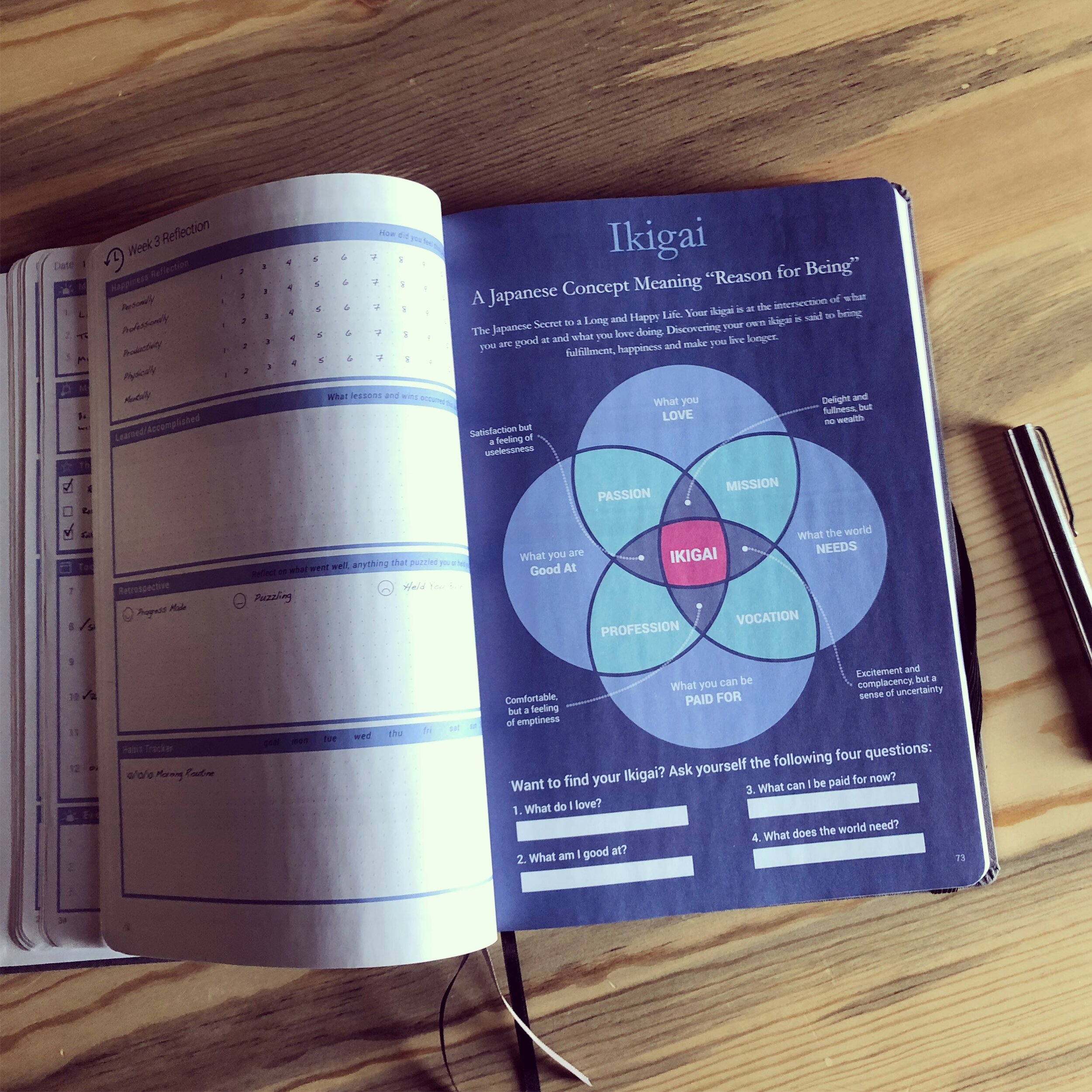
Along with writing down the long-term and short-term goals, the OAK Journal provides the method of how to achieve them. One of the things it encourages everyone to do is to follow Warren Rustand’s 10-10-10, wherein 10 minutes are spent on meditating, another 10 minutes on reading and another 10 minutes for journaling.
It is all about creating healthy habits from morning routines to evening activities. Keith stresses that it is an exercise in building willpower and discipline and motivating others to finish what they have begun. The journal additionally has sections where one can write down and track their daily and weekly progress.
“Be afraid, not of failing but of never trying.”
– Adam Beasley

As Keith recommended, more than just putting pen to paper, the best way to make sure that healthy habits are being developed and that the 90-day goals are being achieved is to have an accountability partner. Finding one in EO may not be too difficult as most members of this business community have similar experiences, qualities and aspirations.
Apart from gaining access to learning events like this, one of the advantages of joining EO is being surrounded by like-minded leaders, which provides life-enhancing connections and real conversations that can help one unlock their potentials and grow beyond their personal limits.
What is your goal in 2021? How do you plan to achieve it? Share your answers in the comment box below.
EO Melbourne Members who were recognised in 2020 for their outstanding achievements
The year 2020 is perhaps one of the most challenging times due to the current global crisis that everyone is experiencing. Yet, amidst the sullenness that the pandemic may have brought upon us, some shine bright, inspiring and encouraging us to keep on and face the difficulties with optimism and determination.
Among them are entrepreneurs and companies that have been recognised by various institutions and organisations in their respective industries for the hard work and brilliance they have shown through their businesses.
The year 2020 is perhaps one of the most challenging times due to the current global crisis that everyone is experiencing. Yet, amidst the sullenness that the pandemic may have brought upon us, some shine bright, inspiring and encouraging us to keep on and face the difficulties with optimism and determination.
Among them are entrepreneurs and companies that have been recognised by various institutions and organisations in their respective industries for the hard work and brilliance they have shown through their businesses.
2020 SmartCompany Resilience Awards

Since its inception in 2007, SmartCompany has been paying tribute to the fastest-growing SMEs in the country through its Smart50 Awards. While it took a break in 2019 and was bound to come back this year, present circumstances have stirred it to change tracks and recognise companies that have exhibited the knack for problem-solving, flexibility and rebounding from disappointments. Thus, the first-ever SmartCompany Resilience Awards was conceived.
There are four categories: Adaptation, Community, People and Agility. Five businesses were shortlisted per category and one of them was announced as the winners by a panel of judges. Work Health Australia, founded and owned by Dr James L Murray, bagged the top position in the People category “for its focus on keeping its team connected and productive during Victoria’s multiple lockdowns.”


Other shortlisted businesses by EO Melbourne Members are Arosh Fernando’s Woohah Productions and Mark Calabro’s HungryHungry under the Adaptation category.
TEMI’s 2020 Australasian Mobile Workforce Awards

The Employee Mobility Institute (TEMI) introduced the Australasian Mobile Workforce Awards in 2019 to give merit to those who excel in the talent mobility industry, ranging from talent management to HR, employee engagement, remuneration, taxation, relocation, mobility, immigration, diversity and inclusion, corporate travel or housing, and other disciplines related to this field.
The Award Program acknowledged individuals, teams and initiatives in the industry at a local and regional level. Twelve awardees were honoured in this program; three winners each for the Leadership Excellence Awards, Business Advancement Award, and Employee Engagement Awards; and one awardee each for the Employee Mobility Champion of the year: Highly Commended Award, 2020 GMP1 Outstanding Achievement Award, and 2020 GMP1 Highly Commended Award.
Jamie Lingham, Global Immigration Lead of Absolute Immigration, is hailed as one of the Employee Engagement Awards Winners. “Receiving The Employee Mobility Institute’s award for Wellbeing Initiative of the Year for 2020 was a huge honour, especially given the impact COVID has had on the mobility and immigration industry. With passenger arrivals to Australia down by 99%, our objective was to keep the team engaged and employed while retaining the investment and corporate memory of the business. We know that the investment made in employee wellbeing will pay dividends into 2021 and beyond!” he said.
ARN Women in ICT Awards 2020

The Women in ICT Awards (WIICTA) was launched in 2012 to honour the accomplishments of female innovators and leaders who have played notable roles in the local ICT industry.
This year, over 110 individuals were included in the final shortlist in the following categories: Entrepreneur, Rising Star, Shining Star, Community, Technical and Achievement. Under the Shining Star – Partner category, Jeni Clift of DWM Solutions is among the finalists. The Shining Star awards are candidates that have eight or more years of experience in the ICT industry and have significant feats in a flourishing profession, as shown through milestones and successful projects.
“I was thrilled to be recognised within my industry as a Finalist in the category SHINING STAR – PARTNER of ARN’s Women In ICT Awards. I am familiar with the calibre of women who work in this industry and am honoured to be included amongst leaders who are making a difference!” Jeni expressed.
Ragtrader’s The Power 30

Every year, Ragtrader, a publication that comes up with news, features, analysis and opinion on Australia’s clothing, footwear and accessories sector, celebrates people in the industry that have innovated and created a remarkable impact in eCommerce, retail and design.
This year, among the influential fashion traders that made it to the Power 30 list is Lee Munro of Munro Footwear Group. Its productive partnership with suppliers, especially with the challenges that 2020 has brought, has helped them overcome obstacles in inventory.
-----
Congratulations to all business leaders who have been recognised this year and cheers to all entrepreneurs that have braved the proverbial storms and painstakingly led their teams through the crisis. You all deserved a pat on the back for all your efforts to navigate through the current situation.
EO Melbourne events during the first half of 2020-2021
It is halfway through the 2020-2021 term, and amidst all the challenges of lockdown and other restrictions, EO Melbourne has endeavoured to provide various avenues for its community of entrepreneurs, as well as their families, to grow in their journey.
Despite events taking place virtually, it didn’t stop the chapter from coming up with interesting, informational and enjoyable activities that are beneficial to its members. Here are some of the online events that have happened for the last six months.
It is halfway through the 2020-2021 term, and amidst all the challenges of lockdown and other restrictions, EO Melbourne has endeavoured to provide various avenues for its community of entrepreneurs, as well as their families, to grow in their journey.

A well-attended Mentorship Program Launch and Online Training.
Despite events taking place virtually, it didn’t stop the chapter from coming up with interesting, informational and enjoyable activities that are beneficial to its members. Here are some of the online events that have happened for the last six months:
Learning events
Committed to providing opportunities for personal and professional growth and development to its members, EO Melbourne has lined up several learning events online that could equip them with tools and additional knowledge.
This included webinars and Zoom calls with experts and business leaders who shared their experiences, lessons learned and insights to the EO community. These virtual talks featured the following speakers: Jeffrey Cole (The Coronavirus Disruption Project), Dr Emma Fulu and Hannah Kassay (Diversity and Inclusion), Austin McChord (his entrepreneurial journey), Joe Pane and Katerina Papamarkou (Readjusting to life after lockdown), Adam Ross (Launching a VC-backed startup during the pandemic), and Adam Bennett (In conversation with a “White Hat Hacker”).
There were also member-led virtual events such as the “Building Brands that Last” with Andrew McKinnon and the “Influencer Marketing” with Hannah Vasicek. There were also various online sessions with the chapter’s Strategic Alliance Partners like Airwallex, BlueRock, EOS, and Evans & Partners.
Moreover, it was a successful Mentorship Program launch and online training that saw the participation of 27 pairs of mentors and mentees.
Socials and family events
Apart from the learning events, EO also organised social events to provide fun and light moments for the members and even their families.
There were virtual wine tasting nights where participants and their partners enjoyed a thing or two about winemaking while exchanging stories over bottles of wine. It was an entertaining and magical day for parents and kids as they learned new tricks from Australia’s greatest magician, Cosentino, during the EO Academy of Magic.
With the absence of physical gatherings, EO came up with catch-up events, such as the Chat Roulette and Needs & Leads, that allowed members to get to know one another and lend support to each other.
APAC events
The EO Asia-Pacific region has also put together several webinars and special interest virtual events for chapters within the area. The APAC Celebrity Webinars featured the likes of Marc Randolph of Netflix, Jack Daly, Dr Angus Hervey and Tane Hunter of Future Crunch, Bhutan's former Prime Minister Tshering Tobgay, and Starbucks Coffee Company International’s former president Howard Behar.
Meanwhile, the EO APAC Inspiring CEO Series took participants through the entrepreneurial journeys of Globe CEO Ernest Cu, Jindal Steel & Power Limited Chairman Naveen Jindal, Taylor's Education Group CEO Dato' Loy Teik Ngan, and Flight Centre Travel Group co-founder and CEO Graham “Skroo” Turner.
Apart from these activities, forums within the chapter continued to meet-up online. As restrictions are now easing after lockdown, some activities and events move towards the physical space. Although there is a face-to-face interface, safety measures and protocols are still strictly observed.
The calendar year 2020 is almost coming to an end and a new chapter in 2021 is about to unfold. Despite the challenges, EO Melbourne remains true to its mission of supporting entrepreneurial education by supporting the needs of the 360° entrepreneur through business, family, community & personal experiences and offering world-class learning events, skills-specific workshops and a venue to exchange business stories that can help its members learn and grow.
---------
Do you need this kind of support in your entrepreneurial journey? Check out here on how you can join and be part of EO Melbourne.
Have you ever wanted to chat with a real-life hacker?
Due to restrictions on physical movements to contain the spread of COVID-19, more and more activities and transactions have moved from the physical space into the virtual space. As online transactions flourish and become more widespread, the threat to cybersecurity and privacy also becomes more prevalent.
Small and medium enterprises are not exempt from such risks and probable attacks. Concerns like these are what Adam Bennett and his team in Red Piranha are trying to address. They are white hat hackers, also known as ethical hackers, who are the good guys that break into computers and devices to test an organisation’s defence against the bad guys.
Due to restrictions on physical movements to contain the spread of COVID-19, more and more activities and transactions have moved from the physical space into the virtual space. As online transactions flourish and become more widespread, the threat to cybersecurity and privacy also becomes more prevalent.
Small and medium enterprises are not exempt from such risks and probable attacks. Concerns like these are what Adam Bennett and his team in Red Piranha are trying to address. They are white hat hackers, also known as ethical hackers, who are the good guys that break into computers and devices to test an organisation’s defence against the bad guys.
Speaking to the EO community, Adam shared his knowledge and experiences with regards to cybersecurity, the realities and risks that are present in businesses as well as the struggles in building and running a business.
He began hacking as a hobby and has an intensive experience in professional management, especially in the security and risk management industry. He first talked about how hacking has begun and how it played a crucial role in hacktivism.
However, the influx of cybercrimes and cyber-attacks have disrupted many businesses that led to the closing down of ventures, especially SMEs. With more and more industries connected to the network and relying on digital technology, it is inevitable for online problems to increase. Adam sees two major challenges in countering such setbacks:
People don’t know where to start. Many businesses think that having an antivirus is enough to shield their online assets from possible attacks. However, these antiviruses can only protect a small percentage of the business. Professional help is needed to safeguard the remaining percentage.
Marketing. Promoting and campaigning for products and services, such as cloud services, before putting defence structures in place can expose businesses to risks. A good network design is needed to address such hazards.
Network architecture is built for office structures to defend a company. But the onset of COVID where many work-from-home arrangements are currently done, the cybersecurity landscape for businesses has changed as it provided many doorways to an organisation’s system.
As problems and threats evolve throughout the years, cybersecurity measures have also improved through technology and companies that help lessen the risks to one’s business. However, it was not an easy path for Adam and his business. While providing the solutions to cybersecurity problems, he also had to build his venture and ensure its longevity.
The entrepreneurial journey is like a rollercoaster ride and the first struggle he had to surpass was communicating a concept when the concept was not thought of before. They have to make people understand and accept a new idea. The second struggle was buy-in as more people want to invest in technology than on the business side.
Notwithstanding such challenges, Adam pressed on and continued to pursue his vision for his company and his mission to help SMEs. He is proud of their mission-driven culture as his teams endeavour to serve their clients.
It is important to have a full grasp of the risks and opportunities that technology may bring to your organisation. It is better to always consult with an expert and seek help when needed.
---------
How are you protecting your business from cyberattacks? What challenges have you encountered in your entrepreneurial journey? You can share your story by emailing communications@eomelbourne.org.