

BLOG
Applying a childhood lesson to the entrepreneurial journey
Entrepreneurial insights flourish from experiences, resources, education and learning events. Yet, some of the lessons that business owners now carry in their entrepreneurial journeys may often be traced from childhood. Some develop their skills and knack for business since their early years, whether it’s through their family or their self-learning.
Founder and Director of Graman Advisory and Executive Director of Clark Rubber Graeme Goldman looks back to his early years and realised the gem of lessons he got during those times.
Entrepreneurial insights flourish from experiences, resources, education and learning events. Yet, some of the lessons that business owners now carry in their entrepreneurial journeys may often be traced from childhood. Some develop their skills and knack for business since their early years, whether it’s through their family or their self-learning.

Founder and Director of Graman Advisory and Executive Director of Clark Rubber Graeme Goldman looks back to his early years and realised the gem of lessons he got during those times.
“I grew up in Rhodesia (now Zimbabwe) in Africa. Rhodesia was and still is a third world country, which means there is a lot of poverty. My father was a pharmacist, so whilst we were not wealthy, we were comfortable,” Graeme shared.
He recalled his childhood days and how he would enjoy it with his family. “When I was 6 or 7 years old, we, as a family, would have a big outing for the week and go to the movies on a Sunday night. This was a big event because in Rhodesia at the time, we did not even have TV (yes, think about how lucky I was to grow up without TV).”
However, one incident was ingrained in his mind and brought a valuable lesson that he still carries to this day. “On this particular Sunday, I was walking with my dad, my hero, and we walked in and bought the tickets. Next step was to go to buy popcorn and lollies. But my dad bent down and asked me if I would like to do something instead of spending money on popcorn and lollies. I said no because I was entitled to those, just like every other Sunday at the movies,” he recalled.
“Dad asked me if I saw the beggar on the pavement as we walked in and I said, ‘no, I did not’. Dad explained to me that the beggar was begging because he had no money and no food, and we could give the money for the popcorn and lollies to the beggar to buy food, but I would have to forego my treats,” Graeme continued.
The next thing that happened made little Graeme realise something important. “Begrudgingly, I walked with my dad to the beggar and dad gave the beggar the popcorn money, shook the beggar’s hand and wished him well. As we walked back to the movie, my dad said something to me that I have never forgotten and something that I have lived my life by:
‘there but for the grace of god, go I.’”
What his dad meant was that Graeme was fortunate not to be in a similar situation as the beggar, which is why he has to empathise with them. That lesson has shaped Graeme’s view of the entrepreneurial path and helped him overcome the challenges he encountered along the way.
“As entrepreneurs, we have all faced difficulty and hardship in our journeys. At least I know I have. Every time I think how challenging life is for me at that moment, I remember those words my dad said to me more than 40 years ago. It reminds me that life could have been a lot harder for me than what it is and I am grateful for what I have and for what I have been allowed to achieve,” he remarked.
Truly, the path of entrepreneurship may be full of ups and downs. However, many more may be in an even worse situation than the one you may be in. The entrepreneurial life calls for perseverance, endurance, relentlessness and determination. It may also need human values like sincerity, compassion and honesty. One does not learn all these overnight. Some of them you may already have picked up from your childhood lessons or your experiences, which you may be able to apply to your role as a business leader.
The entrepreneurial journey of Datto’s Austin McChord
Reading about the life journey and insights of successful entrepreneurs is inspiring and educational. But there’s a different kind of learning experience that you get when you hear their stories firsthand and have the opportunity to ask them questions that have been lingering in your mind. Such was the opportunity that EO Melbourne has presented to its members and community when it held a virtual event with Austin McChord, the Founder of Datto.

Reading about the life journey and insights of successful entrepreneurs is inspiring and educational. But there’s a different kind of learning experience that you get when you hear their stories firsthand and have the opportunity to ask them questions that have been lingering in your mind. Such was the opportunity that EO Melbourne has presented to its members and community when it held a virtual event with Austin McChord, the Founder of Datto.
Becoming a unicorn startup is one of the goals many entrepreneurs want to achieve. But how does one start small and become a global success? It was not a smooth journey for Austin as he shared the ups and downs that he went through during the process of growing his business.
Austin started Datto from his parents' basement in 2007 and went on to build it as the first unicorn startup from his home state of Norwalk, Connecticut. With the mission of bringing best-in-class data protection solutions to underserved small and medium-sized businesses, he was able to make Datto as the world's leading provider of IT solutions delivered through managed service providers (MSPs).
According to Austin, there were some hits and misses as he began making his first products from limited resources. He built his online store, created a website and had his products listed on Amazon only to see no sales. However, out of his not-so-glorious beginnings, he kept on creating and innovating until he saw some promise from the ideas that he and his team have executed.
Moving out of the basement to a bigger office and later several locations across the US and around the world, Datto has grown and Austin, as the founder, continued to chart that distance to the future. While coming up with new concepts and creations, he made sure to look after his team and customers, as well as respond to the needs of the community, especially during times of disaster.
One particular incident that Austin couldn’t forget was when he received a strategic deal where a company wanted to buy his business. He didn’t believe it at first, but when he realised they were bent on offering his venture, he took Datto even more seriously. At that time, the deal didn’t get through and Austin went on to build Datto to the point wherein they even bought their competitors’ products.
As Datto became huge, Austin wanted to move towards his next big journey and give the company a new leadership space. He stepped down as Datto’s Chief Executive Officer after serving for over 10 years. Now, he invests in and advises other technology growth companies, while continues to invent and experiment in his lab in Norwalk, CT.
Since then, Austin has received various distinctions and awards. He was named to Forbes Magazine’s 30 Under 30 list in 2015, named an Ernst & Young Technology Entrepreneur of the Year in 2016, and earned recognition as one of the nation's top 50 philanthropists in 2017 by the Chronicle of Philanthropy.
It was an inspiring entrepreneurial journey worth emulating. Austin showed that with determination and perseverance, along with a passion for his craft and commitment to his team and clients, he can achieve his goals.
-----
EO holds chapter, regional and global events for its Members that help them in their entrepreneurial journey. Interested to join the EO Melbourne chapter? Check out how through this page.
President's Update - October
From the President
Dear EO Melbourne,
As we roll into the last quarter of 2020, these last few months can easily become a haze. In a blink of an eye, we’ll be welcoming a brand new year.
So how do we become more intentional about how we end the year? How do we muster up the motivation to make it truly memorable?
Here’s a start, ask yourself this question: “What are you most proud of this year?”
From the President
Dear EO Melbourne,
As we roll into the last quarter of 2020, these last few months can easily become a haze. In a blink of an eye, we’ll be welcoming a brand new year.
So how do we become more intentional about how we end the year? How do we muster up the motivation to make it truly memorable?
Here’s a start, ask yourself this question: “What are you most proud of this year?”
This year has been wild, and amidst all the uncertainty we’ve had to deal with, perhaps we haven’t given ourselves the space to recognise the accomplishments we’re truly proud of.
Invoking pride in ourselves is uplifting. It builds confidence and it brings joy. Revel in it.
Invoke pride in others by taking the time to ask your closest friends and forum buddies this powerful question next time you’re able to connect (hopefully in real life).
If you’re wondering - I’m most proud of being able to create boundaries that keep me mentally and emotionally strong. This quote was my inspiration.
“In order to lead others, you must first lead yourself.”
I'm also proud of what our chapter has achieved in the first quarter -- our high renewal rate of 87.41% (globally, we have renewed more members this year than any year in EO’s history; South Pacific Area achieved the highest renewal rate on record at 90.75%), 17 EO Melbourne events since July 2020 with Event Median Score of 9.19, and the high interest received for the Mentorship Program that we're launching next week with 27 pairs (thanks to our Mentorship Chair James Murray for driving this initiative).
Thank you to everyone who contributed to these milestones. Be proud of what you have done and look forward to the rest of the year with hope and determination.
Warmest regards,


Sheryl Thai
President 2020/2021
5 books every entrepreneur should read
Crowd Culture Director Blake Brunne and Orange & Green Founder and Executive Director Rudi van der Vlies share the books that have helped them navigate through the business space and understand their market better.
Crowd Culture Director Blake Brunne and Orange & Green Founder and Executive Director Rudi van der Vlies share the books that have helped them navigate through the business space and understand their market better.

According to Blake, “There are a lot of books about Marketing and Entrepreneurship out there at the moment but for me, the two that have stuck out the most for me are The 4-Hour Work Week by Tim Ferriss and Purple Cow by Seth Godin.”
As to why he chose these books, “Both of these books gave me some great insights and learnings when I was getting Crowd Culture off the ground in 2016 and a lot of which I still use today. The books itself isn’t too long and are easy to digest especially in Audio Book form, which makes it a great starting point for any busy entrepreneur,” Blake explained.
1. Purple Cow by Seth Godin
Blake shares what he has learned from the book. “Purple Cow was the book that gave me early insights on how to understand my customer better. Although my business has changed a lot since 2016 when I read it for the first time, my key takeaway from the book remains the same: Passion. In the book, Godin writes 'If you make something that you’re passionate about, it’s sure to be remarkable; if you create something that others are passionate about, it’s sure to have a market. Passion is key.’ I feel if that even you don’t read any more of the book, then you would have still learnt a valuable lesson from this.”
“We all want to do something we are passionate about or that we find a sense of joy in, and for a lot of us that could be the reason we became entrepreneurs. But for the majority of us, eventually, we are going to have to work on something that we are not passionate about. Godin writes 'you still need to project an air of passion, even if it’s not real.’ It sounds straightforward, but for me, it isn’t that simple. I was hell-bent on finding a way to do something I was passionate about, and I hadn’t thought about the fact that if I only did things I was passionate about, then I was leaving a whole heap of clients and markets left untapped,” Blake shared.
Blake has learned since and has adjusted his mindset. “It took a while and I still need to work at it today, but when I speak to clients about their event now I can show genuine excitement and share in their passion. In my game, that means a better solution for my clients and could be the difference between winning and losing the job.”
2. The 4-Hour Work Week by Tim Ferriss
Tim Ferriss’ The 4-Hour Workweek: Escape 9–5, Live Anywhere, and Join the New Rich tackles lifestyle design. Citing several case studies, the book presents examples of those who have multiplied their income, shortened their work time and enjoyed their life due to wise decisions, practical solutions and smart adjustments in their work regimen.
One doesn’t have to work round-the-clock, wear themselves out and wait for retirement when they can start to enjoy life. In his book, Ferriss shows that people can work smart enough to be able to attain financial freedom, location independence and frequent vacations or what he refers to as ‘mini-retirements’ while continuing their business journey.

And while Blake has gained considerable tips and advice from these two books, Rudi, on the other hand, believes that good business leaders should have the following three books at the front of their mind so that they can always act and manage accordingly. These books have presented mind-blowing concepts that have guided many entrepreneurs and helped them attain the success they were aiming for. They have also helped business owners reach their goals at an accelerated rate.
3. Scaling Up by Verne Harnish
If you want to master the four major decision areas of your business: People, Strategy, Execution, and Cash, then Verne Harnish’s Scaling Up: How a Few Companies Make It…and Why the Rest Don’t is a must-read.
The book contains practical tools, techniques and approaches that have been tried and tested by various companies and businesses. It also includes one-page tools that readers can use in scaling up their ventures. Entrepreneurs can learn from this book on how to grow a business that can dominate an industry without killing it.
Aside from authoring books, Verne Harnish is also the Founder and CEO of Gazelles, a global education and coaching company, and also the Founder of EO.
4. Good to Great by Jim Collins
“Good is the enemy of great” is a famous line of Jim Collins in his book Good to Great: Why Some Companies Make the Leap... and Others Don't. The question that this book wishes to address is ‘can a good company become a great company, and if so, how?’ Based on the five-year research on various companies, the book presented several findings: the Level 5 Leadership; First Who, Then What; Culture of Discipline; Hedgehog Concept; Technology Accelerators; and The Flywheel and the Doom Loop.
It’s a great read that reveals significant thoughts from the data and examples of companies cited in the book. The concepts are helpful tools for entrepreneurs that can challenge their mindset and motivate them to aim for better results.
5. The Ideal Team Player by Patrick Lencioni
Jeff Shanley is a leader who tried to save his uncle’s business by bringing back the commitment of the organization towards teamwork. He needs to find out the virtues that team players must have so that he can hire and build the team based on such virtues. His story is the central point in Patrick Lencioni’s book, The Ideal Team Player.
Apart from the story, Lencioni includes in the book a powerful framework and actionable tools that can be used in recognising, employing and fostering ideal team players. Since good human resource is an important factor in the success of a company or enterprise, the book is a valuable guide to business leaders in developing and nurturing an ideal team that can help them drive their ventures towards their goals.
This is a good list that you can take with you on your entrepreneurial journey and growth as a business leader. What books have you read that have helped you face the challenges of entrepreneurship? Tell us your recommended books in the comment section below.
The Coronavirus Disruption Project: a webinar with Jeffrey Cole
Jeffrey Cole, Director of the Center for the Digital Future in the USC Annenberg School for Communication and Journalism, recently held a webinar with EO Melbourne on The Coronavirus Disruption Project and shared the findings of this study, which provided insights that help better understand the people around us, such as our family, friends, staff members, clients and customers, who go through similar life experiences, anxieties and coping mechanisms.
"Daily life is far more disrupted by the pandemic than after 9/11 or the beginning of World War II, and anxiety is at levels only seen after Pearl Harbor and the Great Depression," said Jeffrey Cole, Director of the Center for the Digital Future in the USC Annenberg School for Communication and Journalism. The Center conducted a study titled "The Coronavirus Disruption Project: How We are Living and Coping During the Pandemic," which found rapid life changes and concerns as to how Americans confront the pandemic.

Jeffrey recently held a webinar with EO Melbourne on The Coronavirus Disruption Project and shared the findings of this study, which provided insights that helped better understand the thoughts of people who go through similar life experiences, anxieties and coping mechanisms.
Jeffrey has been at the forefront of media and communication technology issues both in the United States and internationally for the past three decades. An expert in the field of technology and emerging media, he serves as an adviser to governments and leading companies around the world as they craft digital strategies. In 2016, Jeffrey was one of the founders of the Global Disruption Fund (GDF), a technology investment fund based in Australia. He is one of the members of the Investment Committee identifying innovative companies and those about to be disrupted, making investments based on his work.
Veering from the Center's traditional work in annually examining digital change since the year 2000 in 35 countries, The Coronavirus Disruption Project took an extended look at life during the pandemic. As people are living through the greatest social science experiment of all time without warning or preparation, millions have had to suddenly move their work, learning, buying and everything else online. To see how everything has changed and will continue to change, Jeffrey gave a detailed look at how people have lived and coped during the crisis.
It was an insightful webinar for the attendees as Jeffrey elaborated on the data they gathered last April and June. People revealed what they missed most when isolated due to the pandemic. He also tackled people’s hobbies, habits, and sources of information with the new lifestyle that COVID-19 has brought to people's lives. With the shift of activities to the online and virtual space, the study revealed how people are navigating through the changes and how they perceive the transformations in their lives. Following his presentation was a healthy discussion as Jeffrey answered questions from the webinar participants related to the topic.
EO Melbourne continues to hold online learning events like this that allow its members and community to acquire additional knowledge and deeper understanding not only of the business environment and the entrepreneurial journey but also of the adjustments and modifications entrepreneurs can employ to adapt to the present environment.
Check out EO Melbourne’s past events in this page and its 2020-2021 Q1 events through the video at the homepage. Are you interested to be part of EO Melbourne? Read here on how to join.
Leading with Hope
One’s success in business or organisation can be attributed to various factors, the primary of which includes leadership, particularly when it faces several challenges, such as a global pandemic that is affecting lives and economies.
Which is why this year’s theme of EO Melbourne – “Lead with Hope” – is very relevant and timely to the present situation. As business owners, the chapter members are also leaders in their respective fields and companies that need to bring their teams towards their goals despite stormy weather.
EO Melbourne President (2020-2021) and League of Extraordinary Women CEO and Co-Founder Sheryl Thai and Absolute Immigration Global Immigration Leader Jamie Lingham share their insights on leadership, their experiences and style of leading, and how they become a guiding light to the people they lead.
One’s success in business or organisation can be attributed to various factors, the primary of which includes leadership, particularly when it faces several challenges, such as a global pandemic that is affecting lives and economies.
Which is why this year’s theme of EO Melbourne – “Lead with Hope” – is very relevant and timely to the present situation. As business owners, the chapter members are also leaders in their respective fields and companies that need to bring their teams towards their goals despite stormy weather.
EO Melbourne President (2020-2021) and League of Extraordinary Women CEO and Co-Founder Sheryl Thai and Absolute Immigration Global Immigration Leader Jamie Lingham share their insights on leadership, their experiences and style of leading, and how they become a guiding light to the people they lead.
Steering the company towards a brighter future through hope

“Over my decade of leading teams in my business or being involved in Boards, my leadership style has evolved as I’ve gained more insight and experience working with people,” said Sheryl Thai who, apart from her leadership roles in League of Extraordinary Women and EO Melbourne, is also a Board Member of Project Gen Z and the founder of Cupcake Central, her first business that she has successfully exited. “In this point in time, I relish in a collaborative and coaching leadership style where I’m able to guide my team to assist them to unlock their potential.”
Empowering her team is what Sheryl applies in her business and organisations where she is involved. “I seek their input and collaboration to keep our company innovative and relevant. Whilst we still operate the business on systems and processes, I provide them with the autonomy and freedom to carry out their role how, when and wherever they see fit.”
Leading her team efficiently also helps her in serving well the communities they cater to. For her, effective leadership shapes the right culture for the company that is fit to their purpose and mission. “As a company that seeks to connect and inspire women globally, we have to constantly move with our community to keep them engaged. For us to achieve that, we must have a culture that is inspiring and engaging. This style of leadership provides the autonomy for the team to follow their intuition to allow for creative and innovative content delivered to our audience,” Sheryl explained.
And how does Sheryl give hope to people around her, especially when they are met with difficulties? “During times of uncertainty and doubt, it has been imperative for me to continually return to hope to steer the company towards a brighter future. For us, this means focusing on how we’re able to make a difference to those that need inspiration and connection more than ever in a world that has been forced to stay apart and connect virtually instead.”
Leadership that encourages openness, teamwork and innovation
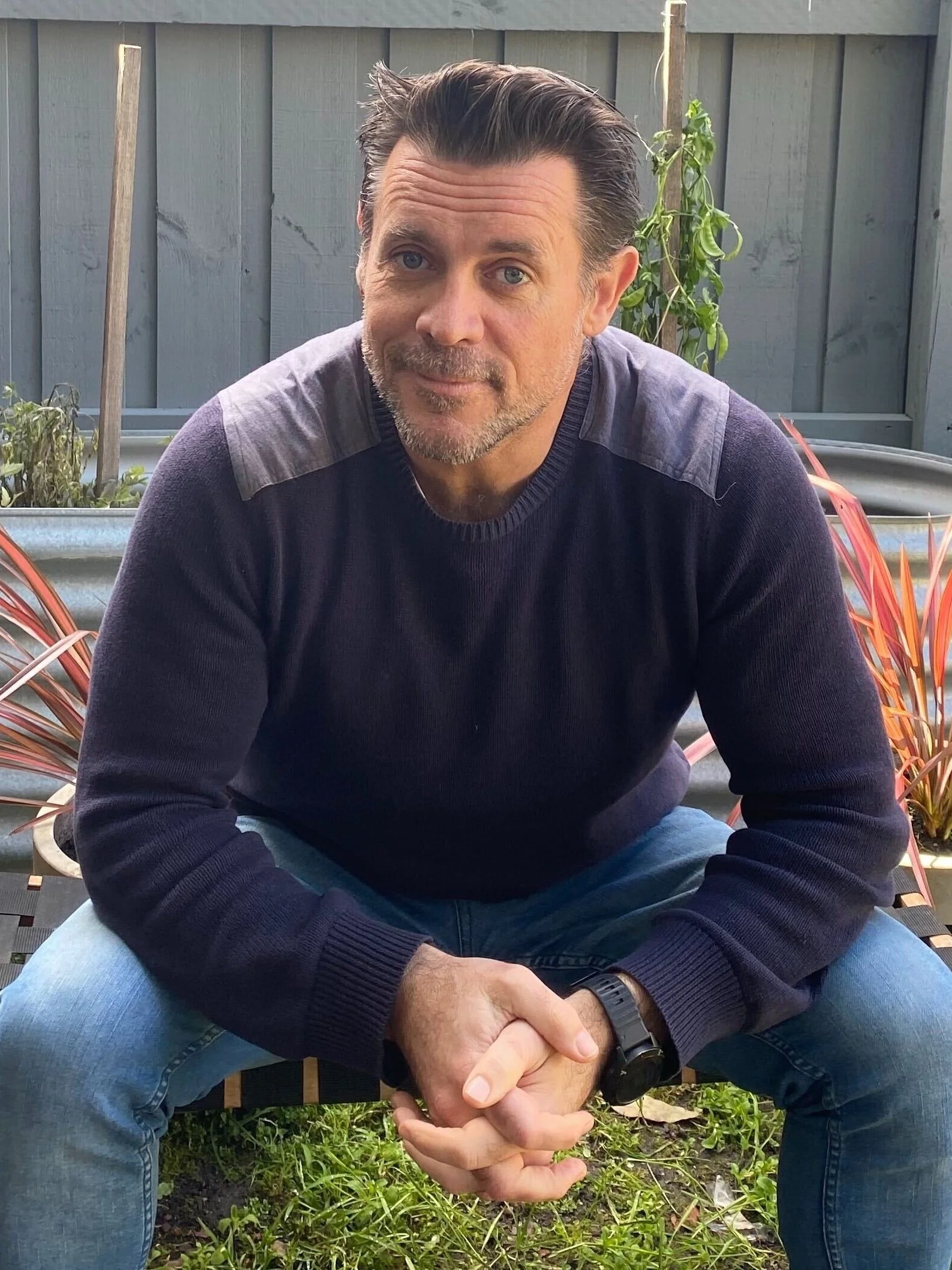
Jamie Lingham describes his leadership style as one that promotes teamwork and openness and encourages ownership and innovation. “Sometimes I feel like I ‘over-share’, but this has always served me well, especially during the difficult times when we need to brace as a team and get through the challenge that has presented itself. Our team is very close. We support one another, and everyone is willing to jump on to any project that needs to be completed, no matter what the task or time it takes or the deadline.”
As a leader, he sees to it that the atmosphere is healthy for growth for him and his team. “I am a huge fan of ‘delegate to grow’ for both my benefit and also the benefit of my team members. When giving them work, we prefer the ‘sink-or-swim’ approach, but ensure that it is in a safe environment, with senior staff guidance and systems and processes in place to protect them from any ‘live fire’ issues. If a mistake is made, we work to pick this up before it gets to the client, but the learnings are still relevant,” he stated.
His approach is to constantly push his level of comfort and ‘give until it hurts’ when it comes to passing on his responsibilities, “which I believe is the only way that I can truly grow and be available to new opportunities,” he remarked. “I also support promoting innovation throughout the team and encourage everyone to take opportunities as they come up and run projects on their own.”
Other than that, Jamie also describes himself as a leader who looks after the quality of their work. “While I love to delegate, I also lead by example through being involved with reviewing work before it goes out. I provide feedback on the quality of work when measured against the level of service expected to deliver to meet our service promise and client expectations. This ensures that I keep connected to the day-to-day output, which demonstrates to the team that they can confidently follow my lead.”
By taking advantage of his strength in helping and motivating others, his leadership has facilitated a cooperative culture at Absolute Immigration. “Our cooperative culture is strengthened by the fact we are in constant communication with each other, especially in turbulent times such as COVID. Our team catches up daily over Zoom meetings so we have the opportunity to engage with one another through sharing ideas, helping each other solve any issues that arise, and have a fun element which includes games, quizzes, and mindfulness exercises.”
COVID-19 has affected their industry and, as a result, their company. Jamie had to make adjustments within his organisation for them to survive. But he also has to step up to carry the torch of hope for his people. “I continuously encourage our team to promote positive mental health measures and to keep the humour going. Yes, it is a serious time, but we need the release and positivity that humour provides,” he said.
“When I reflect on this topic, it made me realise how important good leadership is in the time of a crisis. COVID-19 has been a great time for us to come together and grow as a team, as well as for me as a leader,” the Global Immigration Leader declared.
---------
What is your experience in leading your team during this challenging time? We want to hear from you. Share your story through the comments section below or email us at communications@eomelbourne.org.
What are the 3 most important items on an entrepreneurs’ desk
by: Bernie Fernandez
With considerable surprise, I receive the email from EO Melbourne. I am being invited to write a blog as a subject matter expert. Painful anxiety mixed with disdain rises as I read the subject “What are the 3 most important items on an entrepreneurs’ desk”. I hate it.
This idea, however, stumbles into my head days later as I hear the quote below from the book, You Can’t Hurt Me by David Goggins.
“In a society where mediocrity is too often the standard and too often rewarded, there is intense fascination with those who detest mediocrity, who refuse to define themselves in conventional terms, and who seek to transcend traditionally recognised human capabilities.” – Navy Seal Commander
by: Bernie Fernandez
With considerable surprise, I receive the email from EO Melbourne. I am being invited to write a blog as a subject matter expert. Painful anxiety mixed with disdain rises as I read the subject “What are the 3 most important items on an entrepreneurs’ desk”. I hate it.
This idea, however, stumbles into my head days later as I hear the quote below from the book, You Can’t Hurt Me by David Goggins.
“In a society where mediocrity is too often the standard and too often rewarded, there is intense fascination with those who detest mediocrity, who refuse to define themselves in conventional terms, and who seek to transcend traditionally recognised human capabilities.” – Navy Seal Commander

I do not believe I am the subject matter expert on the topic handed to me. So taking a cue from the seminal business book, Tools of Titan by Tim Ferris, I asked 3 of my ex-clients, each who demonstrated elite leadership and standards throughout their careers, to identify the single most important item on their desks.
CHAPTER 1: GRAEME STRANGE – WHITE SPACE
I hear a lot of people calling 2020 a write-off. With absolute respect to the many people of unfortunate circumstance, I belong to the ‘other’ many that do not see 2020 that way.

In late February, I received the news that two of my Spanish family contracted COVID-19. With the impending situation being broadcast to the world, I naturally made sure I kept constant contact. It seems like a blessing now as my cousin shared advice on how to deal with the inevitable lockdown here. “Go find something you’ve always wanted to do, something you’ve put off because you never had the time and do it. You now have time and space.”
Graeme may not know this, but early on in one of many workplace project meetings, without Graeme in attendance, the term “repressed hunter” was coined to describe the cultural leadership and design direction of the business leader. One morning, I approached Graeme sitting at his desk. Embodying Indiana Jones, the adventurer had swapped the worn leather and fedora for neat business attire. As he sat in plain sight in an open plan with 60+ staff, I had to ask:
“How do you manage to get any work done sitting here?”
The ever calm and compassionate man, with all the time in the world for anyone, replied, “When I’m at work, the door is always open. When I truly need something done, I go home”. That was 2015.
The ensuing conversation stayed with me and now will be expanded upon from a recent conversation to answer the question: What is the most important item on your desk?
The answer – space.
An empty desk reflects an empty mind. Space is required to focus on and solve problems. A leader’s role is to work on solving problems. Space must be allowed to work on Challenges, Staff, Business and Customer Needs. After all, staff are looking after your customers. Your desk is simply a place to work. What is required for productivity is a state of mind and technology.
CHAPTER 2: ANOU KHANIJOU – THE POWER OF THE PENCIL
Passing through Indonesian customs, our group was greeted by an attaché and luggage hands. They led us towards a nice bus just a short walk from the front doors of the airport. In what might have been a humid Kuta minute and two quick words, the “nice” bus disappeared. A shiny new leather-lined, stereo-amplified Mercedes instantly turned the corner. “Now, this is a little more to my standards,” revealed Anou.

Over the following five days, my understanding of a business retreat became redefined forever. What was increasingly obvious was that in her “spare time”, Anou had meticulously hand-curated royalty-level experiences for us, one after the other. Spectacular private adjoining villas. As I come to understand, they were practically impossible to book. Yoga instructors and masseuses were scheduled to arrive every morning. Onsite chefs were to serve us breakfast and lunch by the pool.
I knew enough of Anou’s life to know that as the PR representative to Hollywood in Australia, this afforded her a well-connected network. National theatre level “opera” was simply one of the many performances conducted by Anou at any given time around the world.
About a year later, I visited Anouconcept’s soon-to-be new office space. I admired the décor and the hum of the productive office in full swing and found myself reflecting on this amazing person. So humbly inspiring, so unfathomably busy, yet with so much time for others.
With curiosity, I asked the trailing query and key point to this blog - “What is the single most important item on your desk?” To which, Anou replied, “A pencil.”
I will not lie, during COVID-19, I have struggled for focus and to stay on top. Capturing the many important details and concepts of the creative and delivery process has been tough. Here is someone I look up to, orchestrating similarly complex projects for the likes of Universal Studios, Chris Hemsworth and Justin Bieber!
What I have learnt was that Anou has created and orchestrated these multiple once-in-a-lifetime experiences, crafted incredible stories, and built multiple businesses by learning the simple, yet the very important habit of taking time in writing things down.
She explained, “I always write my ideas and plans – big or small – with a pencil. It’s the most essential tool on my desk juxtaposed with all this technology.”
Artists ensure there is a direct and physical connection between brain, hand, medium and paper. There is pure artistry in Anou’s inquisitive mind. Gentle and empathic, yet also critically honest and transparent. Anou makes time and space for scribing and reflection, later sharing with others and directing these learnings into her daily life.
CHAPTER 3: MINA SHEHATA - TRUE GRIT
True Grit. The movie instantly flashed delicious, memorable images of amazing characters and a wonderful story spun together by the genius of the Coen Brothers. We, the viewers, are swept away by the stellar performances, story, action and incredible scenery. At the end of the film and in that unique twist we all enjoy so well, we realise the protagonist deserving of label “True Grit” is the often sidelined fourteen-year-old girl Mattie Ross. This female lead is astounding, uncompromising and determined to achieve her mission at all costs.
True Grit, as defined, is passion and perseverance for long-term and meaningful goals. It is the ability to persist in something you feel passionate about and persevere when you face obstacles.
Enter this story - Mina Shehata.
“There are 3 types of engineers. One - the technician: socially inept, but detailed and brilliant. Two - the social butterfly: great at sales and people, but hopeless engineers, and three - a bit of both. Mina is a lot of both.” Wes Malek of ECM Building Services Engineers shared this with me over a lockdown telephone interview. “What separates Mina from the typical engineer – it’s his intellect!” Wes Malek leads a team of 30 and has run his business for about 17 years. “ECM practically recommends Mina and Mina’s business, RMS Manufacturing, exclusively on every project.” ECM is not alone.
Wes also told a great story of first meeting Mina on a cruise trip up the Nile over 20 years ago. As the night closed in over the cruise through this magical desert scene, Wes recalled, “this massive guy being dressed in Bedouin headgear, passionately dancing with Sheesha pipe in hand all night long! Mina simply squeezes out every single last drop of life he can.”
Ten years ago, RMS began from absolutely nothing. Led by someone like Mattie Ross, Mina uncompromisingly brought it to become the premier switchboard manufacturer of Victoria. Mina sits on the board as President of NESMA (National Electrical Switchboard Manufacturing Association), while RMS switchboards sit in the basements protecting the biggest and most important government and commercial buildings in Australia.
Recently, I had the pleasure of working with Mina and his growing business to assist in accommodating RMS into a new custom-built 2400-sqm Manufacturing and Office facility in Derrimut. Knowing Mina for his relentless drive — True Grit — and as living evidence of the Law of Attraction, I simply had to ask, “What is the single most important item on your desk?”
“My two screens,” flatly replied Mina. “I’m set up to work from anywhere – this week Queensland, next Dubai.” Knowing that Mina vibrates at this high frequency, his response did not surprise me at all. “Two screens allow me to work as efficiently as I can, anywhere.”
As we all face a return to a “normal” work-life now finally integrated into our sacred homes, any semblance of “work-life balance” should irrefutably be as dead Josh Brolin’s Tom Chaney. Mina’s relentless pursuit of efficiency provides the space to be the best he can be at work, which results in having a clear mind and choices to live a life of freedom which he deserves.
---------

About the author:
Bernie Fernandez is the Founder of Agero Group and Sustainable Stripout. He is also a member of EO Melbourne.
The importance of mentorship in the entrepreneurial journey
The entrepreneurial path can be quite daunting for those who are contemplating to take it. But even when you’re already in the journey, there are times when the ride can be tough and you seem to be lost midway due to the pressures coming from various directions. Having a guide, someone that has been through this before, to point the way can help ease the anxiety of not knowing what lies ahead and can even be instrumental in accelerating things. This is where mentors come beneficial to one’s entrepreneurial journey.
Entrepreneurs Damian Blumenkranc, Co-Founder of Creativa, Attento, and Just Click Videos, among others, and Benjamin Trinh, Founder and Managing Director of Life Ready Health Group share that having mentors have helped them in the success of their endeavours. Apart from being on the receiving end as mentees, both have also become mentors to other entrepreneurs, helping others in their businesses as well.
The entrepreneurial path can be quite daunting for those who are contemplating to take it. But even when you’re already in the journey, there are times when the ride can be tough and you seem to be lost midway due to the pressures coming from various directions. Having a guide, someone that has been through this before, to point the way can help ease the anxiety of not knowing what lies ahead and can even be instrumental in accelerating things. This is where mentors come beneficial to one’s entrepreneurial journey.
Entrepreneurs Damian Blumenkranc, Co-Founder of Creativa, Attento, and Just Click Videos, among others, and Benjamin Trinh, Founder and Managing Director of Life Ready Health Group share that having mentors have helped them in the success of their endeavours. Apart from being on the receiving end as mentees, both have also become mentors to other entrepreneurs, helping others in their businesses as well.
“I have experience at both ends, been a mentee and a mentor many times, and planning to continue getting mentors and helping others.”
- Damian Blumenkranc, Co-Founder of Just Click Videos

From his experience being a mentee and later on as a mentor, Damian recognises the value of mentors in one’s entrepreneurial journey. “Having mentors has been critical to my success in business. It can take years to go through the experiences and the mistakes you need to make to know what to do best in each situation. As entrepreneurs, we face new challenges daily and having someone that can guide you through those hard or strategic challenges based on their success & failure experiences can mean a life-changing difference,” he stated.
Yet, to be able to give back by guiding others has become a fulfilling experience for Damian as well, providing him with a different perspective and understanding as a business owner. “As a mentor, it is extremely rewarding to not only see your mentees’ businesses flourish, double and triple, but also to know that all those hard-earned experiences are useful beyond your realm and gives you the energy to tackle any new challenges to come, hopefully with the help of a mentor to guide you through it as well.”
Choosing a good mentor to guide you may not be easy. But there’s no need to look too far, according to Damian. “For those that haven't had a mentor before, I think the best mentors are not necessarily those that are 100 steps ahead of you (they are great for contacts and inspiration), but those that are just 2-3 steps or maybe 3-5 years ahead of you because they will not only be able to relate better to your situation but also have fresher memories similar to what you are facing and a contemporary approach to solving your current hurdles.”
“Ensuring people have access to mentorship ensures they learn and grow within your organisation.”
- Ben Trinh, Founder & Managing Director of Life Ready Health Group

Ben has experienced the benefits of having a mentor in shaping his growth as an entrepreneur. “When I joined EO at 23 years old, my business had barely scraped over the $1 million and Accelerator hadn't existed. Thankfully, some mentors helped guide and shape my business into what it is today,” he said.
Acknowledging the value of mentors to startup owners like him, he later went on to guide other entrepreneurs who are in the same situation he once had. As a result, Ben shared, “I participated in the EO mentorship program as a mentor for 2 years. Apart from that, I also sit on numerous advisory boards and provide help to other founders.”
Moreover, he found that mentorship done internally is also significant when running a business because it develops the people within that organisation. “Succession planning is critical in any business. Without it, businesses get stuck with young people leaving for other opportunities elsewhere. Ensuring people have access to mentorship allows them to learn and grow within your organisation. It also ensures you are replicating the strong aspects of your key people for each of your managers. In our corporate culture, we must ask, ‘who will replace you?’ This culture, combined with forum-style governance, has allowed us to scale from 3 people to now over 400 across 3 states,” he shared.
EO Melbourne Mentorship Program
EO Melbourne Mentorship Chair Dr James L Murray revealed how the chapter is working on this program to help entrepreneurs learn from others who have the experience to guide them in their journey. “This year, we have gone above and beyond to recruit some amazing Mentors from outside the chapter. Some are absolute rock stars in the Melbourne entrepreneurial community. There are also many YPO members and lots who have exited multiple times successfully.”
According to James, “Mentorship ranks as the #2 member experience after their forum. The program ranks higher than learning events, retreats and universities. For a small-time investment of only 20 hours for the year, they may meet and get to know someone who can change their life and their business forever. Also, training in how to be both a Mentor and a Mentee will serve them in all aspects of their life.”
If you are interested to know more about this program, visit our Mentorship page for more details.
EO Melbourne's online catch-up events: Chat Roulette and Needs & Leads
In a time when physical interaction is limited and most people are at home due to restrictions, reaching out to one another is of great importance. Having a community where members can seek help or extend assistance can make a huge difference in people’s lives. This is how EO Melbourne has become a flourishing environment for entrepreneurs where continuous growth and constant support takes place.
Recently, the chapter held virtual catch-up events that allowed members to get to know each other at a deeper level and lend a hand to those in need. Members were more than enthusiastic to participate in such endeavours that provided them with an avenue to strengthen their bond as they navigate the challenges of the current crisis together.

In a time when physical interaction is limited and most people are at home due to restrictions, reaching out to one another is of great importance. Having a community where members can seek help or extend assistance can make a huge difference in people’s lives. This is how EO Melbourne has become a flourishing environment for entrepreneurs where continuous growth and constant support takes place.
Recently, the chapter held virtual catch-up events that allowed members to get to know each other at a deeper level and lend a hand to those in need. Members were more than enthusiastic to participate in such endeavours that provided them with an avenue to strengthen their bond as they navigate the challenges of the current crisis together.
Needs and Leads
The EO Melbourne community is always thriving due to the rich exchanges of ideas among members. Taking this a step further, the chapter created an exclusive virtual event with structured networking and business matching.
It was an opportunity for members to connect, express their needs, and provide leads for each other. Participants of this online session had the chance to share their three core areas where help was required, and at the same time, offer introductions or solutions for the other participants.
Based on the positive feedback received, the chapter offered a second round of this online event. Needs & Leads 2 included Board Members from EO Brisbane and EO Sydney to assist participants who had needs in those states, a great benefit for members with national businesses.
Chat Roulette
Ever heard of Chatroulette? It's a site that took the internet by storm in 2010 that pairs random users for webcam-based conversations. EO Melbourne introduced its version of it, but on Zoom. Instead of random users, EO automatically paired members with each other.
EO Melbourne's "Chat Roulette" Social Hour was an enjoyable event for those who love to network, wherein speed dating and Forum One2One was combined into a single, fun, and cool activity.
This event allowed members to have four one-on-one conversations with other members for ten minutes each. Conversation starters were provided to help move the chats along. It was an opportunity to catch up with other participants and an amazing way for them to get to know someone new.
So, who says one can’t have fun and enjoy other people’s company despite the restrictions of the lockdown? It’s often nice to spend some time with friends and surround yourself with like-minded individuals, even though it’s in the virtual realm. Moreover, having a group like EO Melbourne can help and support you through the challenges that the present situation may bring.
Interested to be part of EO Melbourne? Click here to join.
How do successful entrepreneurs get continuous professional growth?
No matter how good one is or even if they are an expert on a particular thing, there will always be room for improvement and growth. It applies to everyone, including entrepreneurs. Each one of us has strengths that we can capitalise for our chosen fields of endeavours, as well as weaknesses which we can still work on to expand our knowledge and hone our skills set.
And when you reach the peak of success in your career, how do you ensure that you continue to grow professionally? Entrepreneurs Rick Nieuwenhoven of Nieuvision, Rob Roy Rankin of Rankin Business Lawyers, and Adam Stewart of Debt Recoveries Australia, ADC Legal and Nova Team Solutions share their experiences and learnings when it comes to pursuing their professional growth.
No matter how good one is or even if they are an expert on a particular thing, there will always be room for improvement and growth. It applies to everyone, including entrepreneurs. Each one of us has strengths that we can capitalise for our chosen fields of endeavours, as well as weaknesses which we can still work on to expand our knowledge and hone our skills set.
And when you reach the peak of success in your career, how do you ensure that you continue to grow professionally? Entrepreneurs Rick Nieuwenhoven of Nieuvision, Rob Roy Rankin of Rankin Business Lawyers, and Adam Stewart of Debt Recoveries Australia, ADC Legal and Nova Team Solutions share their experiences and learnings when it comes to pursuing their professional growth.
“There are times I realise the sponge is full and I have to squeeze it dry and start again.”
- Rick Nieuwenhoven, Founder and CEO of Nieuvision

When it comes to learning, Rick finds that it is different for everyone. “As a lecturer for 10 years, I’ve seen this first hand. Firstly, to constantly grow, I remind myself of the best way for me to learn and grow. I learn most from others and by talking to others,” he declared.
Acknowledging that he thrives in an environment where he gets to interact with other people, Rick saw the significance of joining groups like EO. He continued, “With that, the forum is fundamentally important to my learning experience. I also find MyEO events a practical environment to learn from others because the conditions are more relaxed and I can spend more time with people.”
Yet, there are times when he often faces a wall in his growth and development as an entrepreneur and as a person. “I don’t stress if I hit a plateau. There are times when I realise that the sponge is full and I have to squeeze it dry and start again. Otherwise, I can get bogged down in my learning mode and lose balance with execution. However, what I do is that I set goals based on my learning desire to assists me in keeping focused,” he shared.
“As an entrepreneur, there is a constant need to improve, adapt and grow as a person.”
- Rob Roy Rankin, Principal and Founder, of Rankin Business Lawyers

Rob recognises the reality that entrepreneurs like him need to constantly grow, improve and adapt. “To do so, I regularly challenge myself and try to have a mindset of always learning. Some simple and readily available tools I use include podcasts and books. The more I read and listen, the more references and recommendations I pick up, which leads to more reading and listening,” he explained.
Beyond the books and podcasts, Rob also grows through his interaction with his surroundings. For him, “Another way to ensure you’re constantly challenged is to meet new people, look at new industries, and visit new places – all of these things challenge the perspectives and prejudices we accumulate when we stagnate.”
However, it is not at all times that the journey is an uphill climb. According to Rob, “Feeling like you’ve hit a plateau in your professional life is often the result of success and usually by doing the same thing, over and over again, very well. To reinvigorate ourselves we need to recalibrate or adjust our perspective. Two ways of doing this are:
Go back and examine our purpose. Why do we do what we do? The answer will be different for everyone, but getting back in touch with this reason will inspire new thinking;
Look at what’s happening in other industries, other cultures, other places. There is always something to learn from others, and by examining what’s strange or new to us and contrasting with our own lives, we come up with new ideas about how to improve.”
“Steady growth over the years was achieved with careful planning and goal-setting.”
- Adam Stewart, Founder and owner of Debt Recoveries Australia, ADC Legal and Nova Team Solutions

“My first business, Debt Recoveries Australia, was born in 2002. I was living in a one-bedroom flat in Balaclava and ran the business from that flat with a P.O. Box in Balaclava. Right from the start, I made all my plans with the big picture in mind. Everything – from the name, website, office space and debt collection software – was chosen with the end-goal in mind: to be the most successful and profitable debt collection agency in Australia,” Adam narrated.
Starting small, his business grew big. “Constant demand and new clients coming on board meant I very quickly moved the office from that one-bedroom flat into an office in the city. We now have offices all over Australia. Demand for legal services led to the addition of a legal arm in 2012, called ADC Legal Litigation Lawyers.”
By 2013, Debt Recoveries Australia, along with ADC Legal, was well on the way to becoming one of the most successful debt collections agencies and litigation firms in Australia. To accommodate the increasing demand for their services and to provide the best possible service for their clients, they had to have the manpower to back this up. “Again, I wanted control over this part of my company. So in 2010, I set up my BPO (Business Processing Outsourcing) centre in the Philippines, called Nova Team Solutions,” Adam remarked.
As Adam grew his businesses and expanded his reach, he found that he was also growing as a person and an entrepreneur. “Today, I am still as excited about the future of my companies as I was in 2002. I could not do it without the amazing staff I have today, whom I owe much of my success to. I also like to invest in myself, especially when I have hit a plateau in personal growth.”
To do this, Adam sought for groups and individuals that can help him continue his professional growth. “I like to reach out to business networking groups, apart from EO. Recently, I joined the Victorian Chamber of Commerce. I always have at least one mentor who helps me one-on-one. I love getting the personal experiences of someone who’s been in the same boat as me before. I also mentor others. This helps me to give back what I have learnt.”
--------
If you have tips and learnings to share on continued professional growth, share them with us through the comment section below.
EO Melbourne's virtual Wine-Tasting Nights
A week loaded with various tasks and business concerns to attend to deserves a relaxing Friday evening. A glass or two of wine is a wonderful way to cap the work week and welcome the weekend. EO Melbourne recognises this as the chapter recently held virtual wine-tasting events for its members.
A week loaded with various tasks and business concerns to attend to deserves a relaxing Friday evening. A glass or two of wine is a wonderful way to cap the work week and welcome the weekend. EO Melbourne recognises this as the chapter recently held virtual wine-tasting events for its members.

To start our virtual wine tasting journey, EO Melbourne Member Hugh Jones and his wife Raquel, the couple that established Weathercraft Wines, hosted a wine-tasting night where participants enjoyed three of their wines: 2018 Limited Chardonnay, 2019 Rosé, and 2017 Shiraz.
Hugh and Raquel shared the story behind each wine, its characteristics and how they are processed. Produced from the Weathercraft Wines vineyard in Beechworth, their wines are a result of fruits handpicked from painstakingly managed vines.
But there’s more to just the bottles of wine that the group enjoyed. They were also inspired by the journey that the Jones couple took in turning Weathercraft Wines into a reality. “In 2016, my wife Raquel and I fulfilled a long-held dream and purchased an established, premium vineyard, at Beechworth in North East Victoria. We immediately started producing our wines from the site. Raquel focuses on the winemaking, whilst I focus on the business side,” Hugh revealed.
“Vintage dependent, we produce around 1,800 cases of wine per year from our little winery, and we are very fortunate to be located within spitting distance of some of Australia’s most iconic producers, such as Giaconda, Savaterre and Castagna, to name but a few. Although our focus is on Chardonnay and Shiraz, Raquel’s European heritage has inspired us to grow alternate Spanish varieties best suited to the climate, rainfall and soil composition of our site,” he added.

The following wine-tasting event was a Wine Masterclass brought by Willow Creek Vineyard & Jackalope Hotel and Brad Hampel, EO Melbourne Member and Director of Solution Entertainment. Attendees learned more about the art of winemaking and food pairing during this virtual event.
Glass-in-hand, winemaker Geraldine McFaul walked guests through the winemaking process and shared her viticultural secrets. Participants were also led to a guided wine tasting experience with Jackalope Hotel’s Food & Beverage Director (and Sommelier), Ollie Tucker.
McFaul’s understanding of the terroir and its subtleties is instinctive. When working with exemplary fruit, McFaul says the biggest challenge is “doing less rather than more”. For the wines from the Willow Creek Vineyard, it’s all about letting the vineyard shine through.
With a fastidious focus on cool-climate chardonnay and pinot noir, McFaul makes some of the most elegant single-vineyard wines on the Mornington Peninsula. Under the expert hands of original viticulturists Robbie O’Leary and, more recently, Ant Davenport, Willow Creek Vineyard’s fruit is hand-tended, block by block, which includes pruning, canopy management, yield control, and harvest. The vineyard consistently produces the fruit of excellent quality, lending itself to minimal intervention and manipulation in the winery.

Members additionally experienced a wine and cheese night with Austin’s Wines, who delivered a virtual pairing of 2018 Austin’s Chardonnay and 2018 Austin’s Pinot Noir as well as L’Artisan Cheeses & crackers in the comforts of their homes.
Austin’s is a family-owned vineyard in Victoria’s beautiful Moorabool Valley. They have been producing wine since 1982 and is now owned by the second generation of Austins.
————
These virtual wine-tasting events have been popular among members of the EO Melbourne chapter where they were able to connect online and enjoy the experience amid restrictions imposed due to the pandemic.
How about you, what activities do you engage in to relax your mind and body after a hard day’s work? We’d love you to share your story with us.
Experimentation in business: the risks and rewards
Taking risks is a huge part of the entrepreneurial journey. You need to invest resources, time and effort to bring your venture to greater heights, and it is guaranteed that there will be many forks on the road and lots of trial and error before you can get there.
We’ll take a look at two circumstances where entrepreneurs had to experiment in their business and take the risks to reap the rewards.
Taking risks is a huge part of the entrepreneurial journey. You need to invest resources, time and effort to bring your venture to greater heights, and it is guaranteed that there will be many forks on the road and lots of trial and error before you can get there.
We’ll take a look at two circumstances where entrepreneurs had to experiment in their business and take the risks to reap the rewards.
An exciting, yet unfamiliar, endeavour that becomes a success
Barnbougle Polo was only an afterthought due to an available area in the Barnbougle Resort property. Despite the unfamiliarity with the sport, Barnbougle Golf Managing Director and Barnbougle Polo Co-Founder Penelope Sattler and her team took the plunge, not knowing that Barnbougle Polo would become a sought-after event in Tasmania.

“The Barnbougle Resort comprises of two golf courses – Barnbougle Dunes and Barnbougle Lost Farm – which are separated by the Great Forester River. Between the courses, there is a piece of land that is part of Barnbougle Farm, which wasn’t utilised for the courses as it was too flat – terrible for golf, perfect for polo fields! We had very little knowledge of the sport. However, we felt that polo and golf were a match made in lush green grassy heaven and therefore decided to delve into the ‘Sport of Kings’,” she explained.
While the idea was interesting enough, it was not without challenges as it involved a costly investment. “The biggest risk was the substantial financial outlay and the possibility of a lack of return in this investment. Secondly, running a major event and doing so poorly could be extremely detrimental to the brand we had created,” Penelope disclosed.
Yet, they went ahead with their plans, and the result was an overwhelming success. Penelope revealed, “The event has become a staple on the summer social calendar in Tasmania which has widened our brand exposure and strengthened our appeal to the younger demographic and non-golfers. The North-East of Tasmania hosts very few large scale events so the polo has been a great opportunity for Tasmanians to experience the ‘Sport of Kings’ in their state and enjoy a fun day out. It has also given us a great outlet to showcase our amazing Tasmanian producers and give back to the local community.”
Managing risks and making them a springboard to the next level
“Like most entrepreneurs, I have always had big dreams and goals I have set myself to achieve,” Crisp Solutions Founder and CEO Michael Clark declared. “To make these things happen, I have had to make big moves and take what could be considered as large risks.”

As he started his entrepreneurial journey at a young age, Michael is grateful to find guidance from entrepreneurs who have made their journey ahead of him. “Fortunately, one of the first books that I read cover to cover was Losing My Virginity by Richard Branson. I was about 19 at the time, and one of my biggest takeaways from that book was that you really can do anything if you set your mind into it. You can approach deals and so-called high-risk situations, such as starting an airline with creativity and a plan to protect the downside, in such a way that what appears on the surface as very risky offers very little risk at all.”
He recalled the time he ventured into entrepreneurship with no experience and limited resources. “In the very first business I founded while still at university, I locked myself into a long-term supply contract with a national retailer. Problem was I had under $3000 in the bank, no access to investment and had zero business experience. My minimum commitment to the large manufacturer was to buy 10,000 units of one product which cost tens of thousands of dollars. Plus, I needed to find the money for additional business startup costs. My family and friends either said it was too risky and thought it was a bad idea or simply couldn’t help.”
After feeling completely stuck for a long time and ready to give up, Michael luckily came up with a plan. “I arranged terms with the retailer to agree to an initial order that would cover all my expenses. I then got a commitment from them for very short payment terms of 14 days from in-store delivery. Lastly, I negotiated with the manufacturer to allow me 60-day payment terms on the first delivery. And there it was – an almost zero-risk scenario where I was profitable and cashflow-positive a little over 2 weeks after the business started,” he narrated.
That was 18 years ago and Michael’s business is going stronger than ever today. He has since gone on to apply this approach to risk in many other businesses and opportunities.
Out of the courage to take the risk and jump into the water, Michael has reaped the rewards of his hard work, persistence and determination to keep going forward. “I have built houses and a real estate portfolio in different corners of Australia, as well as in England, with a small amount of capital, even when I have never visited those parts of the world prior. I invested in a unique trading opportunity, which on the surface was high-risk and had a direct negative impact of more than a million dollars when it fell apart, but turned out that the real fall out was minor. I walked away from a good-paying job at a leading global consumer goods company to take a chance on a new idea. I’ve started several business partnerships where capital and energy were required and at risk. But through smart preparation and agreements covering, if they didn’t work out, the downside was minimised.”
Looking back, Michael has learned a lot out of the decisions he has made, not only for business but also in life. The lessons are nuggets of wisdom that he has taken with him as he continues with his entrepreneurial journey. “From my experience for any growth at all in life, there are tradeoffs. You constantly need to take big risks to take your life and business to the next level. I strongly believe that if you manage that risk the right way you will be able to stay in the game much longer and give yourself more chance of making it big,” he imparted.
We’d like to hear from you. Share with us if you have experienced taking risks by experimenting in your business and how it brought you huge rewards.
President's Update - September
From the President
Dear EO Melbourne,
How are you doing? Are you okay?
As a fellow Melburnian & Victorian, I know better to bring up yet another reminder of the unique situation we’re finding ourselves in.
What I do want to remind you about is that, as the leaders in our companies, the amount of responsibility and pressure we have on our shoulders is incredibly unique. We have to deal with making tough decisions on a daily basis. We have to constantly think about the future and how we can survive & thrive. We have to come up with a plan C, D, E and F.
From the President
Dear EO Melbourne,
How are you doing? Are you okay?
As a fellow Melburnian & Victorian, I know better to bring up yet another reminder of the unique situation we’re finding ourselves in.
What I do want to remind you about is that, as the leaders in our companies, the amount of responsibility and pressure we have on our shoulders is incredibly unique. We have to deal with making tough decisions on a daily basis. We have to constantly think about the future and how we can survive & thrive. We have to come up with a plan C, D, E and F.
Our businesses are very much like ships at sea. We are the captains that have to navigate the rough stormy seas and ensure our vessels reach its destination, whilst keeping our crew safe.
After almost 6 months on choppy waters, it’s been our responsibility to solve problems, restore productivity within our teams, keep the team morale up and keep this ship afloat.
This is no small feat.
As captains, we’ve also had to display strength and instil confidence in our crew. It is not often that we get asked if we are okay, ourselves.
Over the last few weeks, I’ve had several fellow EOers reach out to see how I’m going. I love that in this community; we’re able to be completely honest and dive deep instantly. There’s no need to sugar coat it. There is no judgement. Just understanding.
Last Thursday was R U OK? Day, and with the lack of social interaction, it’s more important now than previous years to open up a conversation and to seek support or give support.
I want to take this opportunity to ask you, R U OK? Email me, let me know.
Book in a session with our Resident Psychologist, Katerina, for a chat. (Her contact details are found below at the Resources Section.)
Check-in on your forum buddies individually. Reach out, open up, lend an ear.
Warmest regards,
Sheryl Thai
President 2020/2021
Hiring the right person is not enough, then it comes the induction process…
Hiring new staff members is crucial because it takes a lot of time and effort in introducing them to the team and your corporate culture as well as briefing them on how things are done in our organisation. It’s one thing to have a strong recruitment process where you ensure you select the right candidate and it’s another to bring that person on board to be part of the team. the Induction training puts structure and system in making sure that nothing is missed in the process of onboarding.
Lauren Staley, Managing Director of Infolio Property Advisors, an experienced collective of buyer advocates, vendor advocates & property managers, and Miguel Donnenfield, Co-Founder of Creativa Videos, an animation and video production studio, share how they train new members of the team to make sure that the new hires acquire the necessary knowledge and skills needed for the job.
Hiring new staff members is crucial because it takes a lot of time and effort in introducing them to the team and your corporate culture, as well as briefing them on how things are done in our organisation. It’s one thing to have a strong recruitment process where you ensure you select the right candidate and it’s another to successfully bring that person on board to be part of the team. The Induction training puts structure and system in making sure that nothing is missed in the process of onboarding.
Lauren Staley, Managing Director of Infolio Property Advisors, an experienced collective of buyer advocates, vendor advocates & property managers, and Miguel Donnenfield, Co-Founder of Creativa Videos, an animation and video production studio, share how they train new members of the team to make sure that the new hires acquire the necessary knowledge and skills needed for the job.
1. Have an induction plan or process in place
According to Lauren, the induction training they do in Infolio comes in two parts. “The first one is an overview of the administrative details, while the second part dwells more on the practical side of the business,” she explained.
On the other hand, Creativa has been through different stages when it comes to inducting its new personnel, “which we learned along the way and kept improving,” as Miguel would describe it.
He elaborated, “We ended up with a solid induction process, which never stayed still and was refined every single time. Our tool for the induction process included:
A plan with the usual steps depending on the role
An internal comprehensive tasks sheet
A Learning Management System (LMS) with a series of videos and documents
Reviewing the "Prism" Behavioural tool and showing them the one from their peers
The LMS had a series of videos that allow the new person to be familiar with the various aspects of the company, such as the company’s purpose, why the company exists, the company’s Values, Vision and Mission, and its corporate culture. It also covered the tools that the company uses, which included emails, internal phone, Slack, and how they are utilised in the organisation. Their LMS also had specific videos depending on the role the new person is taking with options for freelancers and interns.”

“We make sure we follow a process and a checklist for their induction.”
- Lauren Staley, Managing Director of Infolio Property Advisors
2. Create a task list and training manual
One of the important things that Lauren cited is having a task list for the new hire. “We make sure we follow a process and a checklist for their induction. We spend a whole day completing the induction, which has a task list that requires signing off before they can be handed over for practical on-the-job training. Both the inductee and the inductor have to sign off on each task to say they have adequately explained and understood the learnings.”
Similarly, Miguel stated that the tasks sheet is within their project’s process. “These tasks were grouped depending on the topic. The technical details included were creating a new email account, the signature, giving access to different platforms and accounts and other people's calendars, creating the alarm code, the access code, buying licences, etc. We even had a list of what needs to be done when an employee leaves the company.”
Apart from the checklists, Lauren also finds training manuals as an invaluable tool in the induction training. “Training manuals and checklists for staff are important to ensure they have accountability. But apart from that, they will also feel they have something to lean on when they need assistance before coming to you,” she said.
3. Spend time with the new member and connect them with other members
“The most import thing I have learnt is to spend ample time with the new staff, ensure they understand the business, ensure they know what resources they have and give them the time to learn properly,” Lauren noted. “We now have our staff spend a morning or afternoon with any of the other teams within the office so that they understand the connection and importance of each role and division within the organisation,” she added.
Meanwhile, Miguel described how the first two weeks of the induction process goes. “We would usually plan a series of internal meetings with different people, going over the content of the LMS videos and explaining them in-depth. Other meetings would include people from the role's team, where we go over more specifically into the role, the position description (PD) and what is expected from the person.”
And it doesn’t end there. “The initial month or so would be in close contact with the person to ensure it is clear what needs to be done. It is also to check how the person feels and how they are adapting to the company culture and the team. Then we will spread out the meetings to a monthly schedule for the initial probation period, which is usually 6 months,” described Miguel.

“From the moment the decision to bring a new person on board is there, you have to start planning.”
- Miguel Donnenfield, Co-Founder of Creativa Videos
4. Other tips and key learnings
For those without an induction training yet in their organisation, Lauren suggests getting outside help from experts. “If you don’t have a process in your company, find someone who does. Find someone who does it well and get their advice.”
For Miguel, the key is having a concrete plan. “From the moment the decision to bring a new person on board is there, you have to start planning. Ensure that the PD is correct, succinct and doesn't have hundreds of tasks and responsibilities. Sometimes, we divide them into the Main/Most Important Tasks and regular tasks. Start planning right from the beginning where the person will seat, what computer will use, etc. Who will be assigned as the buddy to be there when needed? How much time does this person have? Maybe we need multiple people? Start blocking time on their calendars, even though you might end up moving it once you know when the person will start.”
Let us know some of your best practices when it comes to training your new personnel. Share your tips, too, through the comment section below.
An ounce of fun in your workplace to make work enjoyable for you and your team
How do you make your workplace fun for your staff? Or do you have enjoyable days at work with your team? StudioHawk Founder Harry Sanders, Etto Street Pasta Bars and Truly Deeply Founder David Ansett and Blackhearts & Sparrows Co-founder Paul Ghaie share what they do in their respective businesses to inject fun into their work environment, as well as how they care for their teams.
“All work and no play makes Jack a dull boy.”
That’s a famous saying that we’ve heard time and time and again. Good thing that many companies and organisations inject fun into their work culture to make the environment more encouraging and energetic. Others even cap their workweek with an enjoyable Friday pursuit where the staff can unwind and bond together. Moreover, some are not deterred by the current crisis and even find it helpful to have a fun Friday activity to motivate their team.
Take inspiration on how these entrepreneurs create a delightful business culture for their people and get some ideas on how you can also enliven your work atmosphere.
Organise team activities and social events with your team

Fun! That is one of the core values of StudioHawk, which Harry Sanders founded in 2015. As a specialised SEO agency, they take their work seriously, but not themselves. Which is why they were named SEMRush’s 2019 agency of the year, as well as 2019 Optus Media Marketing and Advertising Business of the Year.
With restrictions in place, they try to still make working as enjoyable as possible. According to Harry, “We do 3 things every Friday during isolation to keep things fun and the team as connected as possible while working from home. Every Friday, our office manager will send around a random fact for a thing she likes to call 'Fun Fact Friday'. We also have a 'StudioHawk Friday Feels playlist' wherein every week, each team member picks a song to add to the playlist and 20 different songs are included each week on the playlist. Then at 5:00 pm every Friday, we have a team Zoom catch-up and end-of-week drinks.”
In addition to all these, “once or twice a month on a Friday, we host a team social event. So far, we have had a couple of games and pizza nights. Last week, we did Cork ‘n Canvas, then next Friday we will be doing pottery! We set aside a 'culture' budget each quarter that we use for activities to bring the team together,” Harry shared.
And if these are not enough, they are planning more activities these coming days. Harry revealed, “We are about to kick off our fitness and health month in September called 'SWEAT-TEMBER'. As a team, we will be doing a PT session run by one of our clients once a week, meditation a few mornings a week and a fitness challenge that includes a step challenge! This will help us all keep connected, active and, hopefully, help unwind.”
Because of these efforts, it strengthens their corporate culture while continues to build relationships among their team members. “We have a really strong team culture at StudioHawk, ask anyone here and they will tell you their favourite thing about working here is the people and culture. This is one thing that we did not want to lose while working in isolation. Bringing people together is made even more important. These initiatives and small tokens of appreciations help drive people forward in a time when things may seem a little lonely and allow us to continue excelling with our values. In David Ogilvy's words, agencies that don't enjoy what they do don't put out good work - so make a culture that people love working for,” stated Harry.
Build sustainable ways for work to be enjoyable

It is a different case for those in the food industry, such as Etto Street Pasta Bars. As explained by its Founder, David Ansett, who is also the Founder of the marketing tech company Brandvas and branding agency Truly Deeply, “We’re a 7 day-a-week business with different staff working different shifts so there’s never a sense of ‘end of the week’. Our end-of-shift each night is our ‘Friday’. Once the last customer has gone, the doors are closed and the volume of the music goes up. Clean-up and pack down is a pretty casual affair.”
So how do they inject fun into the work environment? “Our 7 day-a-week trade means we have to try to build sustainable ways for work to be enjoyable. For us, this is all about a relaxed but hard-working place to come to work. For instance, we encourage social chat throughout a shift,” David remarked. Not only that, but they also provide certain benefits for their people. “All the staff get a free meal of their choice for any shift they work. Managers have the authority to open a bottle of wine after a tough shift or to celebrate a birthday, for example,” he added.
While they try to make their work environment an enjoyable place for their team members, they also make sure that quality is observed at all times. “We have a pretty strict framework for performance, but from there, it’s up to each manager to make a workplace that fits with them as a leader and their staff as a culture. It means each restaurant has its own culture. South Melbourne has a cheeky, Italian culture, while Kirkdale has more of a South American love-for-life feel.”
“As we encourage each manager to see their restaurant as their own business, they create their versions of the Etto culture. Having run a branding agency for 30 years, keeping a positive culture in restaurants is easy by comparison. Although the role of a hospitality worker is tougher than working in a creative agency, the type of people the industry attracts, the form of work, their expectations and the camaraderie formed between teams lead to a relatively positive staff culture that requires less management. It helps that we pay award wages, which for many of our staff is a relatively positive experience in our industry,” David shared.
Create a culture of caring

It’s almost the same case for wine store brand Blackhearts & Sparrows. Co-founder Paul Ghaie described the scenario they have in their stores, “Due to the flexibility of our working hours and the fact that we are a 7-days-a-week, 362-days-a-year type of business, we don't so much do ‘Fridays’.”
But it doesn’t mean that they don’t do something for their team members. Fun things don’t need to have a lot of fanfare and can be done at any given time that is convenient for everyone. As long as your people enjoy what you do for them, that is what matters most. “We keep things pretty simple, such as regular dinners and drinks with the staff,” he clarified.
Caring for their people is important in their organisation, recognising the long-term effect of this on their members and their business, as well. “We tend to focus on ensuring our staff group is looked after really well over the year. We think this creates a culture of caring with the staff feeling their welfare is a priority,” Paul added.
Do regular catch-ups with some rewards and surprises
Since most staff meetings are now done virtually, add a bit of fun to your weekly catch-ups by doing online socials. Add a dash of surprise or some rewards that they can look forward to each week by having fun talks over their choice of drinks or playing games with prizes that you can do over Zoom.
If you have other ideas for fun activities with your team members, especially during these interesting times, please share them with us through the comments section below.
Overcoming self-doubt in the entrepreneurial journey
It is not at all times when business leaders are confident of themselves or of the decisions they make. The reality is that there are moments of self-doubt, which can often freeze you on your tracks. We wonder when such instances occur along the business journey, how do entrepreneurs overcome their weaknesses and move ahead towards their goals?
KHQ Lawyers Founder and Managing Director David Kelly and Lights Lights Lights Director Danielle Mastro reveal how they embraced the experience and used it to strengthen themselves.
It is not at all times when business leaders are confident of themselves or of the decisions they make. The reality is that there are moments of self-doubt, which can often freeze you on your tracks. We wonder, when such instances occur along the business journey, how do entrepreneurs overcome their weaknesses and move ahead towards their goals?
KHQ Lawyers Founder and Managing Director David Kelly and Lights Lights Lights Director Danielle Mastro reveal how they embraced the experience and used it to strengthen themselves.
“Over the years I have learnt the hard way that my self-doubt is one of my greatest strengths.”
- David Kelly
Founder and Managing Director of KHQ Lawyers

For David, self-doubt is not always a bad thing. “It keeps me sharp. It helps me see the other person’s perspective. It saves me from hubris, arrogance and blind faith in my correctness,” he stated. But it was not an easy thing for him to do.
“It took me a long time to get to this point – a lot of reading and even some counselling. Now, I cherish my self-doubt as one of the keys to whatever success I have achieved in my life. If I didn’t have self-doubt, I think I would much more frequently blunder into mistakes by making assumptions and that I would not be at all self-aware or prepared (not that I’m saying I am very self-aware or prepared) for anything,” he reasoned.
Because of that, David has come to accept that part of him and uses it to be more conscious of himself and others. “I have come to love my self-doubt. Whenever I interact with another person who seems to have no self-doubt, who is sure they are right, who just knows they are right, I see a risk. I see a gamble. If that person is truly right, then great. They can congratulate themselves on their self-belief and their unshakeable confidence. However, if they are wrong and their lack of self-doubt leads them to blunder again and again into the same mistakes, I see a fool and I remind myself that my self-doubt is not my Achilles heel but a great asset.”
“The moments of uncertainty give birth to my most abundant personal growth.”
- Danielle Mastro
Director of Lights Lights Lights

Self-doubt can happen in different points of one’s entrepreneurial journey. It can occur even to someone who has tons of experience and successes on their backs. Especially at present with a pandemic and economic crisis to face, many people, including business owners, start to rethink of many things, including their views of themselves.
“Let’s face it, amidst the madness of 2020 and the madness of life in general, there are moments when I sit in uncertainty and chaos. In these moments, there is a pervasive and natural tendency to question my skill, my ability, and my belief in myself,” Danielle shared.
She continued, “I will start by saying that I am still a work in progress. But when I face self-doubt, I journal it while doing it beside a soft light and with the scent of Palo Santo to cleanse my space as I write. I write for pages and pages. I dump my often nonsensical thoughts onto paper and as I furiously try to keep up with the pace of my mind, I expose my thoughts and begin to make sense of the stories. This plants a seed that maybe, just maybe, the story I originally told myself has another ending. As the day progresses, the words and memories and moments of journaling surface in my mind and my narrative changes. This process of a mind-shift only works when I create space and time to find and collect my thoughts. Fresh air, breathwork, and some tunes as I walk in the moonlight of the early and late hours of the day help me to find the answers I needed to the questions I didn’t know I had.”
For Danielle, those moments of uncertainty enabled her to grow. “Each time I go to an EO event I take with me the words of Carlos Santoro: ‘What was the ONE BIG THING, the single greatest moment of learning that will stay with you from this EO event?’ Well, some time ago I sat with my EO family under the Leonard French stained glass ceiling of the NGV in the evening (I still have to pinch myself whenever I remember the moment) and I listened to Janine Ellis say, and I loosely quoted, ‘Facing self-doubt and challenge was like taking a subject at University on how to survive a challenge, how to learn about yourself and how to sit in acceptance of the now.’ That was the ONE BIG THING I learned from that night. I have taken that with me in my quest to overcome the moments when I have uncertainty on myself.”
It is a moment of great realisation for Danielle. “Once I make it past the initial reaction of catastrophe, fear and guilt (the list goes on), I write, I breathe, I listen to my thoughts and I study the moments, the feelings and the beliefs. I pass the subject with honours and learn at the very least ONE BIG THING in the university of my life.”
From such realisations blossom swift actions that lead to great successes. “I have introduced the ONE BIG GOAL (OBG) into our business. We collectively set an OBG for each member that stems from a growth point that each of us has encountered in our life. We make it our focus for 3 months and we openly discuss it with the team. It has nurtured personal and professional growth in a way that connects us to our life’s journey in that the OBG is something that we find ourselves, not something that is imposed upon us. It is natural and effortless and the LLL family love it,” she remarked.
What do you do when you experience self-doubt?
If you have experienced it ourself and want to share your story, email us at communications@eomelbourne.org or leave your comment below.
Online training: how to conduct it effectively
To adapt to the present challenges, events like meetings, seminars, conferences and training sessions move from the physical space to online platforms with the use of technology. There are pros and cons to this scenario -- it allows everyone the opportunity to take part of these virtual sessions regardless of location, but poses some limitations on what can be done and cannot be done.
Anthony Lam, Managing Director of Punchy Digital Media, and Jeni Clift, Professional EOS Implementer and the Director/General Manager of DWM Solutions provide some tips and pointers on how you can conduct your online training sessions more effectively.
To adapt to the present challenges, events like meetings, seminars, conferences and training sessions move from the physical space to online platforms with the use of technology. There are pros and cons to this scenario -- it allows everyone the opportunity to take part of these virtual sessions regardless of location, but poses some limitations on what can be done and cannot be done.
“We conduct our online training by first having our systems and processes documented.”
Anthony Lam
Managing Director, Punchy Digital Media

As one of Australia's leading animated explainer video production agency, Punchy Digital Media has been serving several big names in various industries through their teams across major cities in the country. Training their people is essential in getting the work done successfully.
Documentation and proper systems and processes are essential. Other than that, Anthony cites other points that make online training done effectively in their organization. “We have someone on our team create a flow chart which is colour coordinated and outline a certain workflow. We use a tool called Lucidchart which is very easy to create and edit flow charts and share online. We then create an additional flow chart which outlines every single task this particular person has to do.”
“Finally, we use screen recording tools, such as Loom.com, to talk through a certain process and explain how and why we are doing certain tasks. We record and store these videos for ongoing training.
I've found this approach to be very visual and easy to follow and gives team members a reference to go back to. As the business owner, I find I am the worst person at documenting anything! Luckily, we have team members who are great at this so I delegate the task out. This is ideally someone who is very process-driven and has great attention to details,” said Anthony.
But how do they keep their training engaging and effective? “We always start with a communication starters/ice breakers,” Anthony shared. He also mentioned these following pointers:
Use Lots of screen sharing
Make it visual and fun by using lots of videos
Communication is mostly non-verbal so we turn our camera on for that sense of connection
Ask for permission to record your training sessions, so you can send them a copy of the video
Keep the sessions short
“What I have learned is to set the guidelines and expectations upfront very clearly.”
Jeni Clift
Professional EOS Implementer and Director/General Manager, DWM Solutions

Jeni is a Professional EOS Implementer and a transformational coach specialising in business, leadership and personal development who give other entrepreneurs the skills and systems for ongoing success. As such, training is part of her routine.
“I normally run full-day sessions of face-to-face training. Of course, in recent months, I have had to learn how to deliver these sessions virtually. As the training is focused on business strategy, planning and review, it can be quite difficult to keep people engaged whilst in the room. The thought of having to do this virtually was daunting, to say the least,” Jeni remarked.
Moreover, shifting towards the online space is not only the only concern Jeni has to deal with when it comes to training people. “I work with leadership teams, so I have everything from highly visionary people, some of whom are very busy and may have very short attention spans, to those wanting to go into all the details and analyse all the data, such as engineers and accountants, to name a few, as well as everything in between. Thus, keeping the sessions interesting for so many different personalities keeps me on my toes.”
Training different kinds of people in various settings have brought so many learnings to Jeni. “What I have learned is to set the guidelines and expectations upfront very clearly. The camera should be on. Let everyone know that they can stand up if they need to, but to keep the camera on. All distractions off, such as notifications of emails or messages on Teams or Slack. Phones must be silent, turned off or on flight mode and face down. Watch for distractions and call them out. Ask if we need to take a break so people can take a 5 to 10-minute walk around the house or outside for some fresh air and then get everyone back on track.”
Jeni also cited a few tips to keep the online training sessions more engaging:
Do some short activities. “I watch closely when people start to flag, then we take a break or have some exercises or activities to get people up and active for a few minutes. Sometimes I let them run around their house on a ‘treasure hunt’. The great thing about entrepreneurs is that they are very competitive? You’d be surprised at what you can get people to bring back to their desk.”
Ensure attendees have plenty of water. “I always have insulated water bottles to make sure I have a supply of cold water. I advise my participants to have water ready as well.”
Allow everyone to participate. “I have found with online sessions, it is easy for the noisier people to dominate the sessions, and the quiet ones to either not speak up or they just don’t get heard. Make sure you set an ‘order’ for the participants in the session and as you go through the day, follow the same order and constantly check in with everyone.”
Ask for feedback from everyone at the end of the session. “I always ask ‘what worked well and what didn’t work’. I am constantly learning from this feedback on how to do things better. You start to understand the different personalities and how to manage the sessions to suit as many people as possible.”
Make the most of online/virtual training. “I also tend to not make such a big deal of online/virtual training. I believe it will be our only way of doing things for a while and we are now used to working and training this way. The more of an issue I make it, the more it is an issue -- it is what we have and we will make the most of it.”
Put the fun in learning. “Make it as fun and interesting as you can. My cat often jumps up on to my desk, so I just introduce him. I was hosting a fireside chat session for our clients and my two dogs came and sat with me. I have met so many animals and babies, sung happy birthday to people’s kids. None of this would have happened without our current online sessions!”
Share your tips
What new insights have you learned from the tips and experiences mentioned above? If you have additional tips to share, feel free to leave your comments below.
The biggest hurdle in the first 3 years of my entrepreneurial journey
The entrepreneurial path is always filled with risks and challenges. It is not a smooth ride but the journey can be rewarding. The most difficult phase is the early stage where birth pains mixed with the lack of experience can make the trials seem insurmountable. But it is also at this point where entrepreneurs can learn a lot and use those lessons as tools towards achieving their goals.
Laiken Kerr Clarke, Director at MediSound, and Cesar Aldea, Founder and Director of Aldea Consulting, share the biggest hurdle they had to surpass in the first three years of their business. Read through their stories and learn from their experiences.
The entrepreneurial path is always filled with risks and challenges. It is not a smooth ride but the journey can be rewarding. The most difficult phase is the early stage where birth pains mixed with the lack of experience can make the trials seem insurmountable. But it is also at this point where entrepreneurs can learn a lot and use those lessons as tools towards achieving their goals.
Treating challenges as sources of motivation

“What was the biggest challenge I encountered in the first three years of my business? This has been an interesting question to grapple as I struggled to articulate exactly what a challenge meant to me over this journey of starting the business,” quipped Laiken Kerr Clarke, Director at MediSound, a distributor of medical devices to the Australia and New Zealand market.
“Without sounding cliché, from the outset, every ‘challenge’ almost seemed fun, like a puzzle to solve, which I was confident, if I put into motion a set of moves or combinations, would eventually lead us on the right track. Don’t get me wrong, there were, of course, many obstacles that we had to overcome as all start-ups would have experienced,” she clarified.
As a small player, Laiken cited many hurdles when she was starting her business, “From competitors, which are large multi-nationals with resources we could only dream of at the time, to the difficult task of changing customer’s opinions and beliefs in a slow-moving and conservative medical community. There’s also the challenge of navigating personal financial instability in the early phase of the business, as it was my primary source of income with little profit in the first 12 months.”
But she believes that the internal struggles were the most difficult ones. “Looking back now, I would have to say, with many parts of my life, the biggest challenge lay with me and my mindset of what I believed about myself and, in turn, the business. It was that space between who I believed I was and who I needed to be for the next step that this business demanded from me. I clearly remember the different mental and emotional layers that unfolded along the way.”
“For the longest time, I seemed to resist owning the experience, almost as if I was playing ‘business’ like one would play ‘house’ when I was a child. Friends, colleagues and associates would often ask me what I did for work and without thinking, I would respond with some job title and space I had previously held, not yet integrating the transition from employee to the business owner who makes the decisions. This is one example of the challenges I continue to come up against my mindset, which has also been the biggest catalyst for my growth as well as the growth of the businesses. It is that trust muscle you build within yourself by being able to step into a space of expansion, without fully knowing how just yet,” Laiken shared.
Turning a challenge into an opportunity

It’s an interesting experience for Cesar Aldea, Founder and Director of Aldea Consulting. “Within the first 12 months from launching my business, I received a legal threat from a large corporate that forced me to kill all the momentum gained, where I had to consider shutting down the business. Fighting them back was certainly not an option.”
Acknowledging his limitations, Cesar decided to change course rather than challenging them head on. “Against all legal advice, I decided to follow my gut and approach them personally. Not with a legal letter but with a business proposal. I knew that having them as a client would be a gamechanger,” he stated. And while there was also a risk of getting rejected, Cesar’s boldness, persistence and positivity paid off. “It’s now been over three years since I can call them my best client,” he declared.
Challenges may come with hardships and sufferings, but no obstacle may be too difficult for entrepreneurs who have the determination and relentlessness to move forward to achieve their goals.
What’s the biggest hurdle you had to surpass during the early stage of your business? Share with us your experience by commenting below.
Music Makes Better Entrepreneurs
How has music played in your personal and entrepreneurial journey? For some, it helps relieve them of stress while others use it to pump some energy into their day.
Entrepreneurs live busy lives as it is, which are often filled with stress and pressure from various angles. With the challenges that the current crisis brings and the uncertainty that the future beholds, they need more than ever to turn to methods and solutions that can contribute to their mental health. Music is one tool that brings energy to a lethargic mind and respite to a weary soul.
Let’s get a closer look at WeTeachMe Founder Kym Huynh, Koh Living Director Tui Cordemans, Liston Newton Advisory Director John Liston, and Marketing Melodies CEO and Founder Dean Cherny on the role music has played in their lives.
Entrepreneurs live busy lives as it is, which are often filled with stress and pressure from various angles. With the challenges that the current crisis brings and the uncertainty that the future beholds, they need more than ever to turn to methods and solutions that can contribute to their mental health. Music is one tool that brings energy to a lethargic mind and respite to a weary soul.
Let’s see how busy entrepreneurs use music as they go through the rigours of their journeys.
“Music has a significant effect on my mood and my emotions.”
– Kym Huynh

WeTeachMe Founder Kym Huynh finds music as an integral part of the human experience. “I use it to lift my mood and comfort, boost general happiness, and reduce anxiety. For me, music is an easy – and powerful – way to transform how I feel and, consequently, how I think.”
Kym, former President at EO Melbourne, also talked about how music has piqued his interest in the human mind. “I'm particularly curious about how music can influence cognitive function. A tool I use for concentration – https://brain.fm/ -- creates functional music that is optimised for focus. I find that the frequency of this music shifts me into one of focus and concentration, and the cerebral shift starts from minute 2 onwards.”
“I also listen to 432 Hz frequency music as part of my morning routine that was taught to me by Warren Rustand, called the 10.10.10. Without fail, this frequency of music, combined with the 10.10.10. in my morning routine, prepares me for an exceptional day. As a side benefit, music tuned to 432 Hz is softer and brighter. It is said to provide greater clarity and is easy on the ears,” Kym added.
“Music is good to start your day and end your night.”
– Tui Cordemans

For Tui Cordemans, Director at Koh Living, there is nothing like a hard trance to move your stress levels and get the energy flowing. “As COVID hit, I went back to my 20’s and started running and listening to hardcore trance which stopped any thought patterns and got me ready and pumped for the day.”
She described how she starts her mornings with energy-boosting music. “I have been listening to albums such as trance essential and hard trance anthems. I highly recommend this strategy if you are experiencing any negative thought patterns because the music is so intense and loud that you just have no place for any other thoughts. During stressful times, having an empty mind is potentially the best place to go to have a mental break. In the mornings, it is very easy to start with this music because your mind is not exhausted from the day.”
This is in stark contrast as to how Tui ends her nights, as well as the kind of music she listens to when she caps her day. “On the flip side, when I want to relax at the end of a night, I often enjoy pure silence. I find this extremely relaxing. I became accustomed to this after spending years doing meditation. If I do listen to music at the end of a day, it has to be classical as I find it dissolves my day into pure bliss. Pretty extreme change from my morning music, I know. My brain is fairly exhausted from the day, so silence or listening to classical music works for me. Something like Swan Lake from Tchaikovsky, The Four Seasons, Vivaldi or even Rigoletto by Pavarotti – all great stress busters!”
“Music has a huge effect on my wellbeing.”
– John Liston

“I would go as far as to say it’s the single most important thing in my day-to-day life,” said John Liston, Director at Liston Newton Advisory. “I have Spotify on throughout the entire day. I use it for energy and momentum when doing work. I use a good song to celebrate a win during the day or to get my energy back up if it’s been a hard day. I use it when cooking dinner and spending time with the kids to make things more upbeat and fun.”
Apart from having it at home, music is also part of his work environment. “In the pre-COVID days, we would have a UE Boom in our open-plan office and play music throughout the day. It’s hard to always get everyone to agree on taste, but it’s a great way to generate mood and energy in the office,” John shared.
John’s top three chill songs include: “Give Me Tonight” by Dustin Tebbutt; “Old Pine” by Ben Howard; and “Fading” by Valis Alps.
“Music is core to me as an individual.”
– Dean Cherny

Dean Cherny has been in the music industry for so many years. He is the CEO and Founder of Marketing Melodies and storePlay, as well as Managing Director of DJ Dimension – all of which are related to music. “As you might expect, music plays a massive part in my well-being. It is core to me as an individual and something that compliments almost every part of my life. From training in the morning to hanging out with the kids, I love having a soundtrack to everything I do,” Dean remarked.
He shared an experience he recently had with his family. “Only last weekend, I watched my two daughters grooving and singing along to Donna Summer’s Hot Stuff as we built Lego, and it bought such a smile to my face. These soundtracks also allow me to build a bridge with my kids as I share stories about the artists and my time in the music industry.”
Outside of the home, music still plays an integral part in his entrepreneurial life. “While my company Marketing Melodies primarily focuses on using music to help create ambience in retail spaces, we also realise the importance of using music to stimulate, boost, and motivate the workforce in these environments.”
Dean stated the significance of music in a work environment. “The correct playlists can indeed help boost productivity in shops and offices. More laidback, relaxing music works best for periods of concentration, whilst more upbeat music helps to boost energy levels towards the end of the day.”
And if you’re curious as to what are Dean’s must-listen music, here are his top five ‘chill’ artists and albums:
David Gray - White Ladder
Massive Attack - Blue Lines
Maxwell - Maxwell’s Urban Hand Suite
Morcheeba - Big Calm
George Benson - Give Me The Night
What is music to you?
Let us know how music has played in your personal and professional journey. Comment below your thoughts or share your favourite songs that have become a significant part of your life.
President's Update - August
From the President
Dear EO Melbourne,
Are you a hedgehog or a fox?
The fox, a cunning creature, is able to devise multiple complex strategies for sneak attacks on the hedgehog. The fox eagerly waits for the hedgehog to wander on its path each day to be able to pounce and say, “Ahah, I’ve got you!”
The hedgehog rolls its eyes and says, “Here we go again, will the fox ever learn?” and rolls into a ball with its sharp spikes flaring out. The fox, midway through pouncing, sees the hedgehogs defence and calls off the attack.
Each day, this game of fox and hedgehog continues, but despite every calculated attack, the hedgehog always wins.
From the President
Dear EO Melbourne,
Are you a hedgehog or a fox?
The fox, a cunning creature, is able to devise multiple complex strategies for sneak attacks on the hedgehog. The fox eagerly waits for the hedgehog to wander on its path each day to be able to pounce and say, “Ahah, I’ve got you!”
The hedgehog rolls its eyes and says, “Here we go again, will the fox ever learn?” and rolls into a ball with its sharp spikes flaring out. The fox, midway through pouncing, sees the hedgehogs defence and calls off the attack.
Each day, this game of fox and hedgehog continues, but despite every calculated attack, the hedgehog always wins.
Last month, we saw 75 of us from EO Melbourne join in a stellar exclusive event with Jim Collins. As I trawled through my list of learnings, one key learning rolled out at me... the hedgehog concept.
“The fox knows many things, but the hedgehog knows one big thing.”
Understanding what you can be the best at is incredibly powerful. As Jim mentions, this requires piercing insight and egoless clarity. And to dive deep into the core of what you believe your company is the best at -- takes effort, honesty and awareness.
I’ve read the book Good To Great before. I understood the concepts, but it wasn’t until I leaned on EO was I able to really put this into practice. This goes with much of the ongoing leadership learning, I find ways to intentionally integrate it into my life through EO.
Forum - being my first and foremost go-to for accountability and experience share.
Secondly, being active in the wider EO community, whether it be our private WhatsApp group, Facebook group or finding new members to connect with on our Member’s Directory.
We all know by now that knowledge is not enough. We really must “do” to reap the benefits. Otherwise, we just continue to consume and become knowledge chubby.
What you’re part of here is much more than just a bunch of interesting events where people come together.
EO is a whole entire ecosystem of valuable connections, a support network to help you stay on course, a gateway to a life without limits. Use it.
Warmest regards,
Sheryl Thai
President 2020/2021